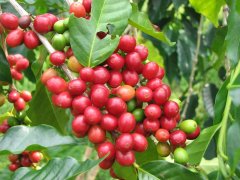
Guatemala Hacienda Bolsa Pour-Over Coffee Experience | Guatemala Coffee Brewing Parameters
Huehuetenango
Guatemala Finca La Bolsa
Origin: Huehuetenango
Estate: Finca La Bolsa
Altitude: 1500 meters
Variety: Pacamara
Processing: Washed
01 | Origin Introduction
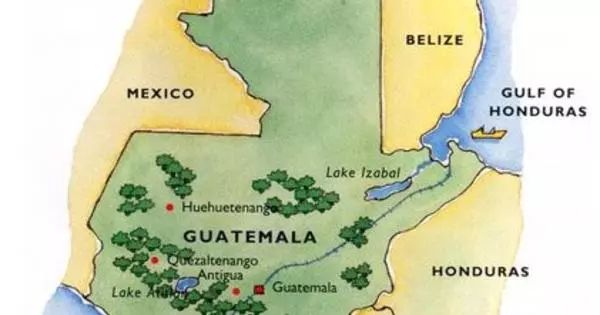
Guatemala borders Mexico to the north and El Salvador and Honduras to the south, with volcanoes scattered across the country. This nation, which focuses largely on coffee cultivation and export, has fertile soil suited to coffee trees, a suitable climate, abundant water, and high growing altitudes. Within its borders lie many renowned coffee regions, among them Antigua, Huehuetenango, and Cobán. Of these, Huehuetenango and Antigua are the two most familiar to coffee lovers. Huehuetenango sits in the northwestern highlands, with cultivation altitudes reaching 1800-2100 meters, making it the country's highest-altitude coffee region and a producer famous for excellent-quality beans.
Finca La Bolsa in Brief
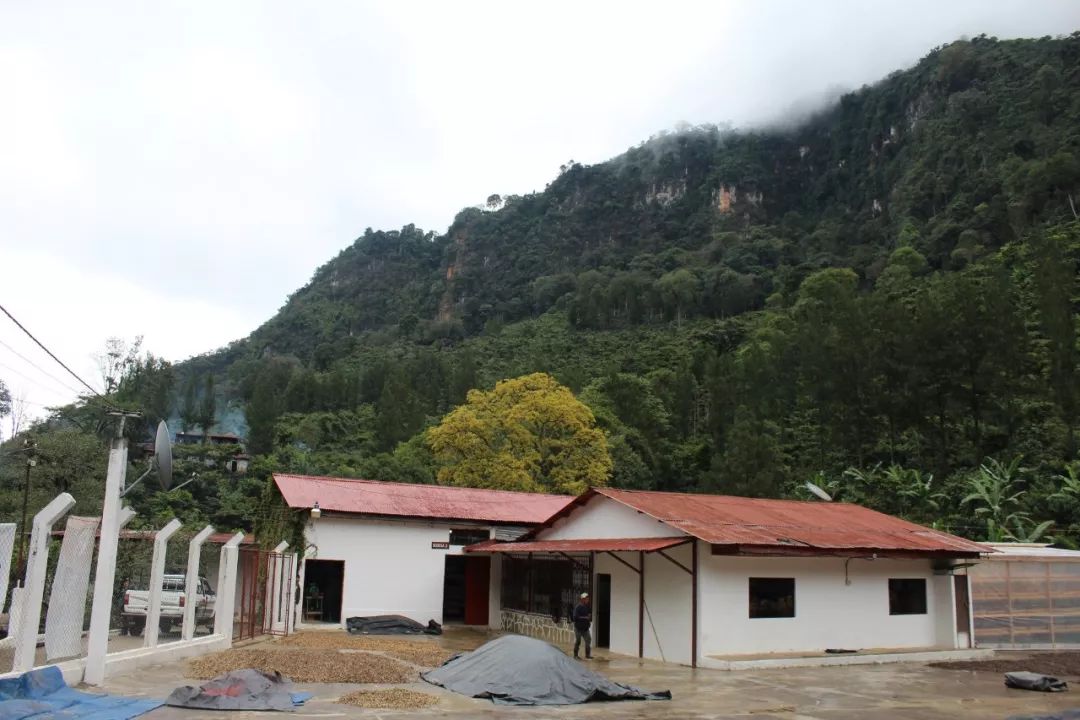
Finca La Bolsa, in the department of La Libertad, Guatemala, produces consistently high-quality coffee. Its coffees have won numerous cupping awards and appear regularly in barista competitions.
Finca La Bolsa sits next to Guatemala's most famous estate, Finca El Injerto, matching it in quality and often making the two hard to separate in competition. In 1956, Dr. Jorge Vides bought this fertile land and began his coffee career. Today the estate is run by the third-generation successor, Mr. Renardo Ovalle.
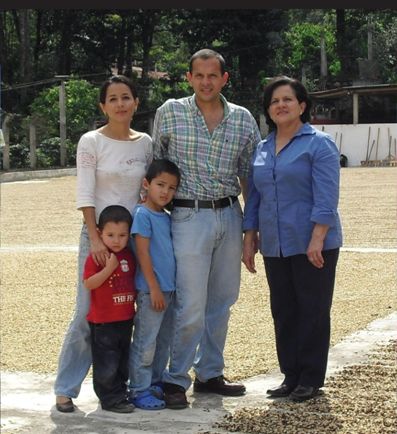
The Vides family built the estate's core between the valleys of the Cuchumatanes mountain range, where two rivers flow through the valley. Along the riverbanks they established the facilities daily life required: schools, farmhouses, a hydroelectric plant, and, most important, green-bean washing stations and drying mills.
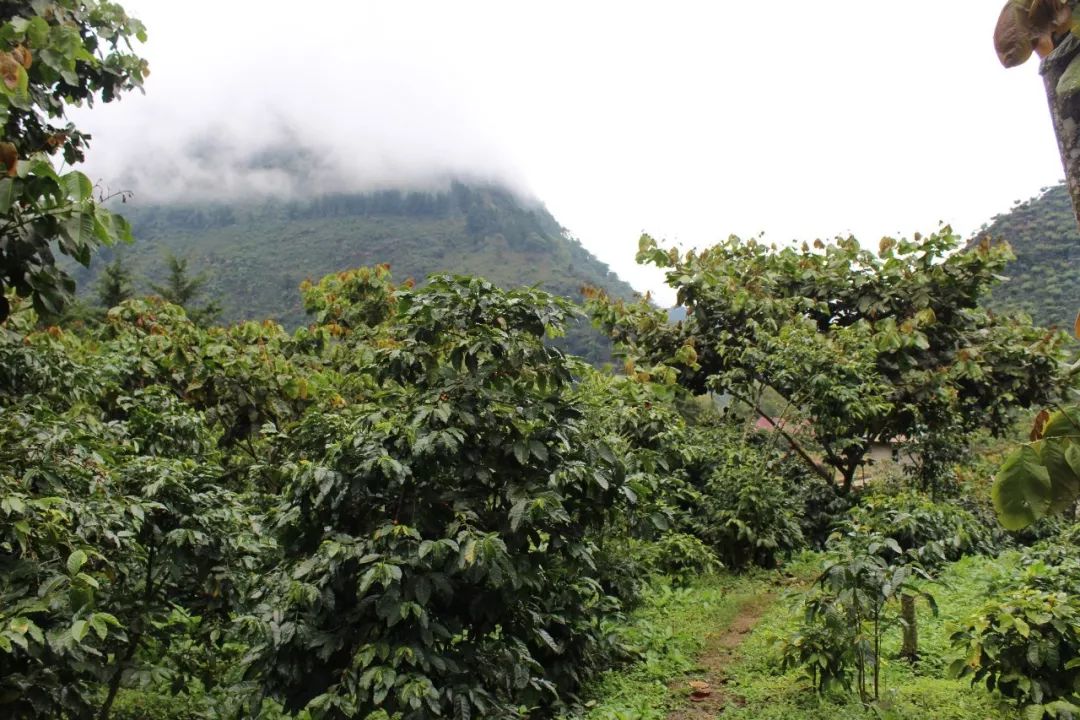
Of roughly 100 hectares today, 80 hectares grow coffee trees, fed by organic compost and natural water sources. Most coffee trees are kept at about 15 years of age, with 3 to 4 prunings a year, 3 to 4 pest and disease treatments, 3 to 4 fertilizer applications, and harvesting in four passes over the season. Unlike other Guatemalan estates, the extremely steep mountain terrain means all work must be done by hand, which improves coffee quality but makes production very demanding.
In 2002, Finca La Bolsa took second place in the Guatemala Cup of Excellence with a score of 94.98.
In 2005, Finca La Bolsa was chosen by Anacafé and the German channel DWTV to star in a documentary about Huehuetenango coffee, filming how high-quality coffee is produced in Guatemala. The estate is now widely known across coffee-growing regions worldwide.
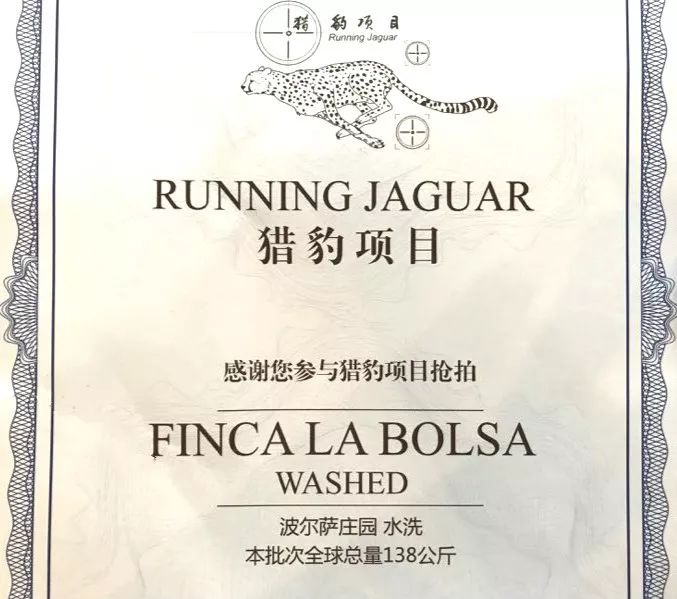
This batch is a micro-lot Washed Pacamara acquired through the Cheetah Project, a global limited edition of just 138 kilograms. An excellent variety, a superior environment, and meticulous processing together produced this rare micro-lot specialty bean.
02 | Processing Method
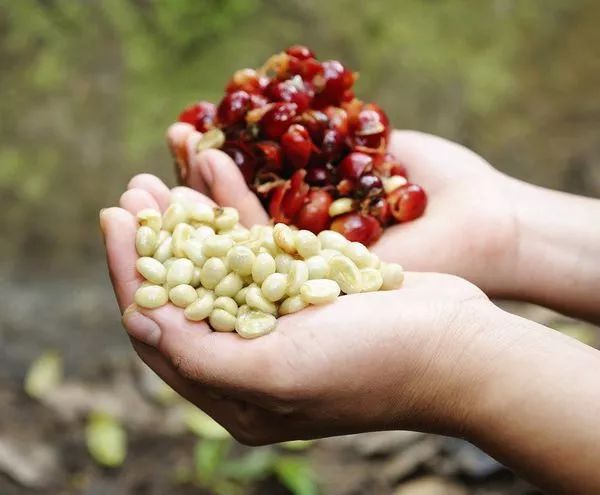
The washed method began in the mid-18th century. The coffee cherry's pulp is removed first, the beans then ferment in tanks so the mucilage left on the parchment breaks down, and finally they are washed and dried.
Washing removes impurities and defective beans at every step, giving green beans a uniform appearance, and it is generally considered to produce high-quality green coffee. The main drawback is that during fermentation the beans can pick up fermentation odors. That usually happens when fermentation tanks are not properly managed and maintained; when beans with mucilage on the parchment soak in the tanks, microbial changes can give them a fermented taste.
Washing also calls for relatively costly equipment, and the steps are labor-intensive.
03 | Green Bean Analysis
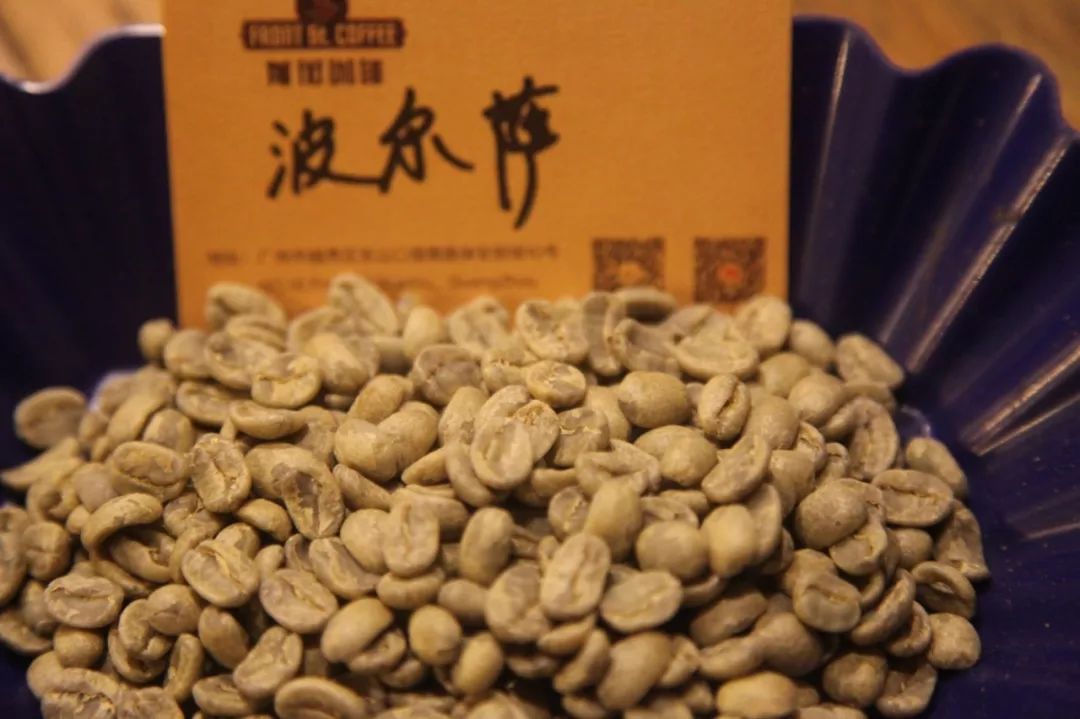
Pacamara is a hybrid discovered in El Salvador in 1950, a cross of Pacas and Maragogipe.
First cultivated by Salvadoran researchers in 1958, Pacamara is a rare success for artificial breeding. It carries both the outstanding flavor of the Pacas variety and the large size of Maragogipe, with beans at least 70-80% the size of elephant beans. Its most striking traits are a lively, complex acidity, sometimes with biscuit aromas and sometimes with fruit notes, along with excellent body and mouthfeel.
04 | Roasting Analysis
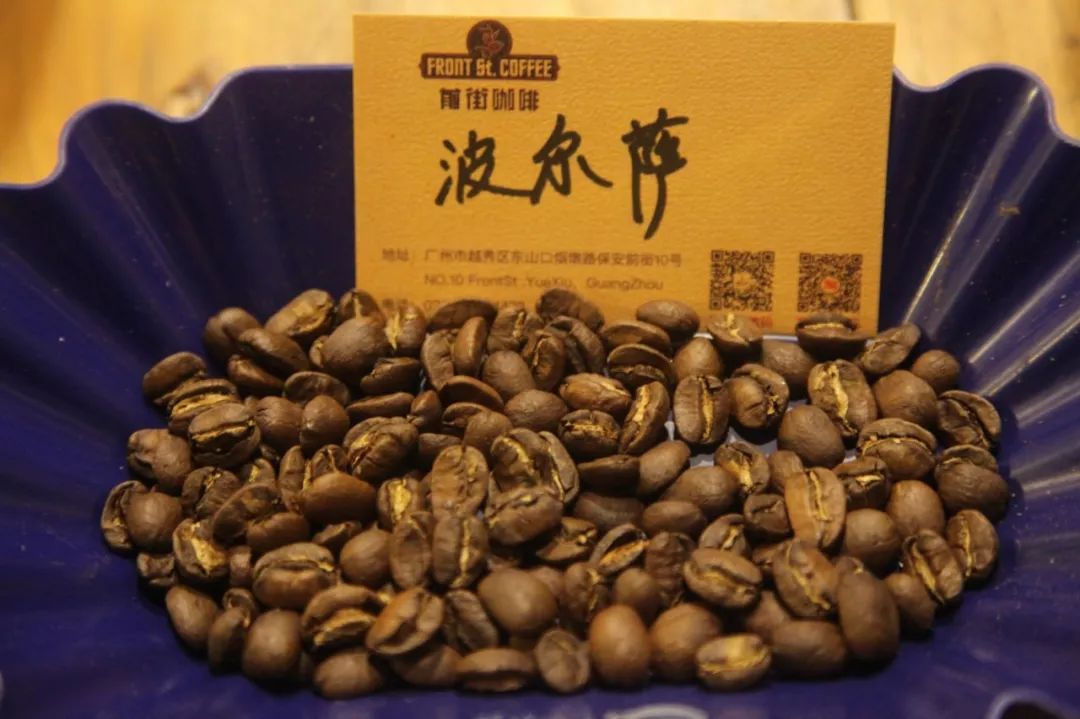
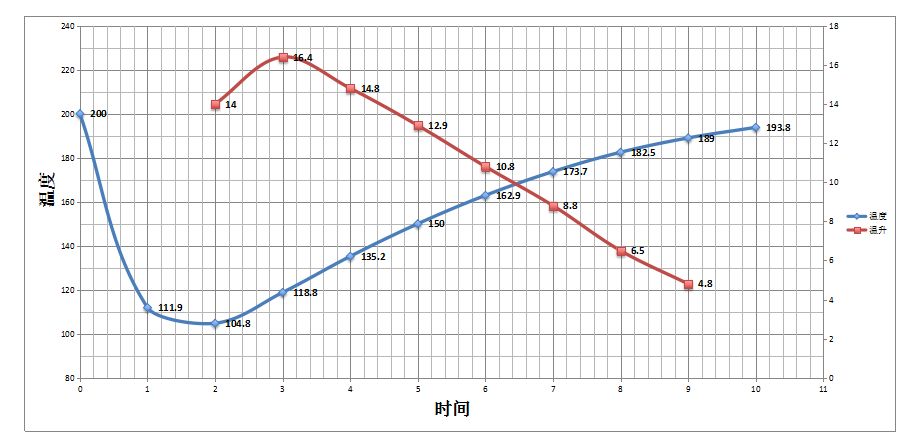
This is the large-bean Pacamara variety, with relatively large particles and high density, and new-harvest beans naturally hold more moisture. During roasting it absorbs heat faster and the Maillard reaction proceeds faster, with the yellowing point arriving around 5 minutes. In the first batch roast, the drop temperature was relatively high, with an entry temperature of 200°C and relatively high heat settings. Heat was gradually reduced as needed. Heat was fine-tuned when the beans reached the yellowing point, completed dehydration, and showed first crack signs, to avoid surface scorching. Under this approach the dehydration time is relatively short, with a rise of 6-8 degrees every thirty seconds, and the beans enter first crack earlier, preserving more floral and fruit aromas with a clean, bright acidity.
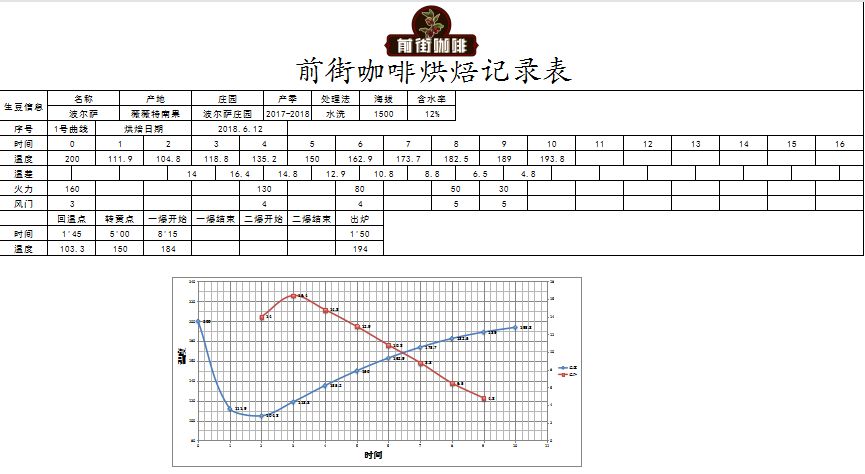
Roasting machine: Yangjia 600g semi-direct heat
Preheat to 200°C, air damper set to 3. After 30 seconds, adjust heat to 160°C, air damper unchanged. Return-to-temperature point at 1'45". Maintain heat. At 5'00", the bean surface turns yellow, the grassy aroma disappears completely, and the dehydration phase begins. Heat reduced to 130°C, air damper adjusted to 4.
Dehydration completes only at 7'50". Heat reduced to 80. At 8'00", the bean surface shows ugly wrinkles and black spots, and the toast aroma clearly transitions to coffee aroma, the prelude to first crack. Listen carefully for the crack sound. At 8'15", first crack begins, heat reduced to 50, air damper fully open to 5 (the heat adjustment must be very careful, not so low that the crack sounds disappear). After first crack, develop for 1'50", drop at 194°C.
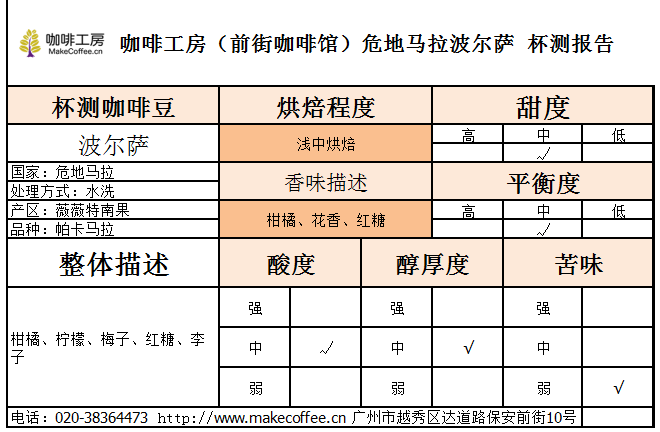
This La Bolsa is quite impressive, with noticeable and smooth sweet and sour sensations, featuring lemon, passion fruit, and plum acidity alongside brown sugar aromatics. The flavors keep changing as the temperature shifts.
05 | Brewing Analysis
Recommended method: Pour-over
Grind size: Fuji 3.5
Filter: V60
Water temperature: 90°C
Water-to-coffee ratio: 1:15
Time: 1'55~2'00
Brewing technique:
Bloom with 30g water for 30s, pour to 110g for a staged pour, then slowly pour to 225g
That is 30-110-225
| Grinder | Grind size | Dose | Filter |
| BG | 4M | 15g | V60 |
| Water temperature | Bloom | Second pour amount | Third pour amount |
| 90°C | 30g water 30s | 80g | 115g |
| Total time 2:00 | Total water: 225g |
Sweetness: 2/5
Acidity: 2/5
Bitterness: 1/5
a. Tasting flavors:
Peach, peanut, cereal
Flavor radar chart:
Bitterness 1.5
Acidity 3.5
Sweetness 4
Body 3
Finish 2
b. Brewing results:
This is a coffee very well suited to pour-over, and a water temperature around 85°C is ideal for interpreting its character. A leisurely circular pour is all it takes to enjoy its deliciousness.
A vibrant, tropical fruit-like aroma is easy to detect while brewing, and excellent sweetness is a distinct characteristic of Valmar.
On entry, the tongue feels the sweetness of cantaloupe, fresh peach juiciness runs down the throat, and an apple-like acidity lingers. That acidity mellows as the temperature drops, and finally the nasal cavity fills with the aroma of peanuts and cereal, making this a coffee that holds both fruit and nut notes.
c. Basic bean information:
Guatemala Valmar Estate comes from the Cobán rainforest. The Cobán coffee region lies in Alta Verapaz province, 220 kilometers outside Guatemala City. The region is known for its undisturbed natural environment and unique microclimate. Processing uses semi-fermentation as the initial step, followed by sun-drying.
Conventional wisdom holds that semi-fermented coffee sits between washed and natural in cleanliness and flavor complexity. Valmar's specialty, though, is excellent cleanliness, fully comparable to washed coffee, with a flavor complexity that can rival natural beans.
The variety here is Caturra, a highly adaptable variety that grows without depending on shade trees and is convenient to harvest. In Teacher Han's book "New Edition Coffee Science" you can read that Caturra's reputation once lagged behind Yellow Bourbon, but with advances in cultivation, and setting price aside, Alice personally believes its flavor does not lose to Yellow Bourbon and has a unique style of its own.
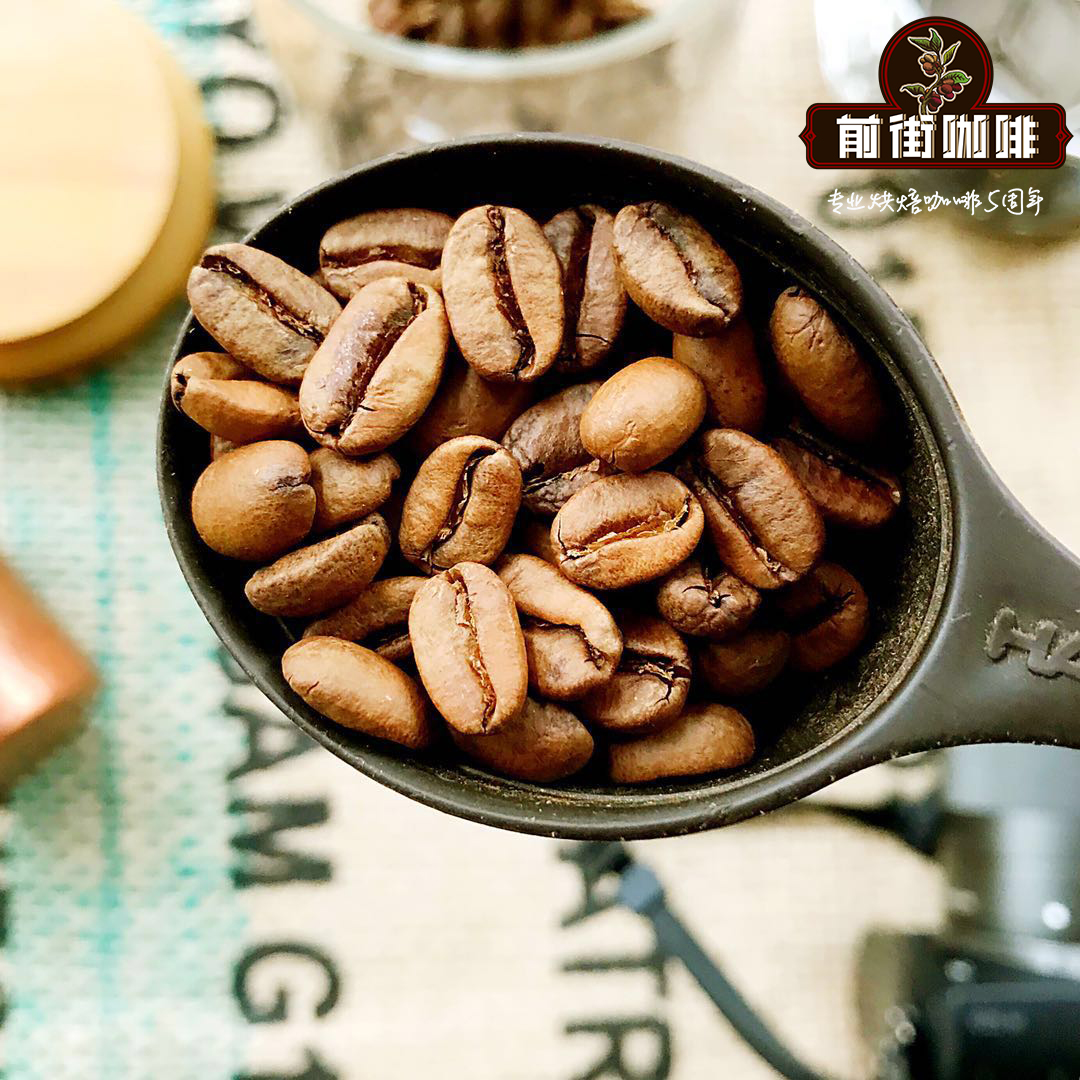
FrontStreet Coffee 2018 Micro-batch Guatemala Huehuetenango La Bolsa Pacamara Coffee Beans Fresh Roasted
FrontStreet Coffee Recommendation
La Bolsa's clean, bright washed Pacamara is a natural fit for a V60, and if you enjoy this kind of floral, fruit-forward cup, FrontStreet Coffee's Ethiopia Guji Hambella "Flower Queen" is a rewarding next step. Grown in the Hambella area of Guji and processed naturally, it bursts with tropical fruit aromas such as strawberry, passion fruit, jackfruit, and even lychee, with pronounced sweetness and very little bitterness, so juicy and smooth that many drinkers call it "the least coffee-like coffee there is."
For a softer, more tea-like style, try FrontStreet Coffee's Gedeb cooperative washed Yirgacheffe. As the first stop for many newcomers to specialty coffee, it brings vivid citrus, berry, and floral notes with a green-tea-like sweetness on the finish; its acidity is gentle and bright, more like the natural sweet-tartness of fruit than a sharp bite, and it is very easy to enjoy. If you want a bolder, more complex fruit acidity, FrontStreet Coffee's Kenya "Cherry Tomato" from the Thika region, grown at 1550-1750 meters from the SL28 and SL34 varieties and given a 72-hour double washed fermentation, offers clear cherry-tomato and smoked-plum notes with a full, freshly squeezed juice texture.
All three thrive in a Hario V60. A 60-degree cone and the signature single large hole force the water toward the center before it drips through, lengthening contact with the coffee bed and coaxing out aroma and clarity, which is exactly why FrontStreet Coffee favors the resin V60 for these floral, fruit-driven beans.
Important Notice :
FrontStreet Coffee is a long-established specialty coffee roaster in Guangzhou China, selling freshly roasted beans from its own farm in Yunnan as well as dozens of carefully selected single-origin beans from around the world for both pour-over and espresso. The products deliver consistently excellent quality and great value, with shipping within 24 hours. Guangzhou's FrontStreet Coffee shop is recommended by many coffee lovers, and the beans are now available online at the Tmall 。
FrontStreet Coffee has moved to a new address:
FrontStreet Coffee Address: 315,Donghua East Road,GuangZhou
Tel:020 38364473
 Scan and follow the En Gafei WeChat official account. Please indicate that the reprint comes from "En Gafei".