Characteristics and Taste Overview of Espresso - Detailed Steps and Process of Making Italian Coffee
Ever walked into a cafe the moment it opens and watched the baristas get the day started? At FrontStreet Coffee, the first thing our baristas drink is espresso, shot after shot. To an outsider that can look like a dare. Baristas are certainly people who know how to enjoy coffee, but is knocking back shots really the right way to drink espresso?
Hold on a second. That is not what you think it is. Before we explain how to drink espresso, though, it helps to know the machine behind it.

History
The first espresso machine was built in 1884 by Angelo Moriondo and demonstrated the same year in Turin, Italy. It was designed to keep pace with a steady stream of customers. The drink it produced was already being called "espresso," Italian for "pressed out." That early machine was a dual-group-head design with only 1.5 bar of pressure, and shots took as long as 40 seconds, so the resulting cup was thin and light, closer to what a modern American-style coffee machine turns out today.
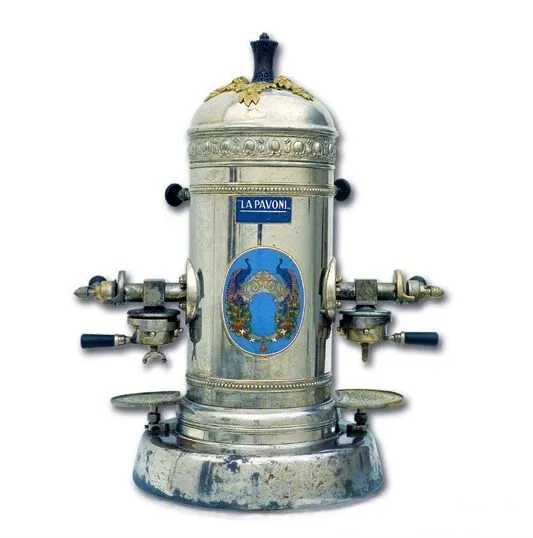
In 1901 Luigi Bezzera, an engineer from Milan, became the first to register a patent for a commercial espresso machine. In 1905 La Pavoni put that technology into production, and the first genuinely modern espresso machine reached the market. Early machines ran on steam, but the temperatures were too high and the pressure too limited, so the coffee came out without much crema and tasted bitter and scorched.
By the 1930s electricity had replaced steam, and the Milanese barista Achille Gaggia designed a machine built around a piston lever. In 1948 the patent rights for that technology passed to Faema, and in 1961 Faema launched the Faema E61. With the arrival of pump-driven machines, extraction pressure could finally reach an unprecedented 9 bar. From that point on, espresso had the emulsified crema, the concentrated flavor and the thick, syrupy body that define it today.
How It Works
Espresso today is made by forcing water hotter than 90°C through finely ground coffee at 9 to 11 bar of pressure in an extremely short time, producing a concentrated liquid. Because the brew happens under pressure, both water-soluble and water-insoluble compounds are pulled from the grounds at once, along with a large amount of oils. The result tastes richer and smoother than coffee brewed any other way.

How to Drink Espresso
Whenever FrontStreet Coffee serves espresso, a glass of ice water comes with it. First-timers often wonder what the water is for, and whether they are supposed to pour the espresso into it.
If one of our baristas saw that, they would stop you immediately. Pour espresso into ice water and you have simply made an ordinary iced Americano. Where did the espresso go?

The ice water is there to reset your palate before you taste. Sipping it clears your sense of taste and smell back to zero, so that the espresso that follows lands with full impact. As the level in the cup drops, you can follow the flavor and texture from the first sip to the last.
We also bring a small spoon. Its job is to stir: a freshly pulled shot separates into visible layers, and a quick stir blends the foam on top with the liquid below. If you prefer, you can leave the spoon untouched and taste the subtle textural shifts as the layers reach your tongue in sequence.

How FrontStreet Coffee Makes Espresso
The steps sound simple: dose, distribute, tamp, brew. Pulling a qualified shot, however, depends on a long list of variables. That is exactly why baristas taste so many shots when the doors open, and why it is easy to overdo it. The key variables include dose, extraction yield, grind size and pressure.

[Dose] Dose is usually set by the capacity of the portafilter basket, then fine-tuned according to how the grounds behave. Too much coffee and the portafilter will not lock into the group head; too little and the puck extracts unevenly. Our portafilter takes 20 grams.
[Extraction Yield] The widely used international parameter is 1:2, meaning the weight of liquid out is twice the dose of dry coffee in.
[Grind Size] A finer grind means smaller particles, which release more from the coffee and can tip into over-extraction. A coarser grind means larger particles, less surface area in contact with water and less material extracted, which easily leads to under-extraction. Getting the grind size right matters enormously.
[Pressure] The ideal extraction pressure is around 9 bar. Too little pressure and the crema lacks structure, the best flavor compounds stay behind, the cup tastes thin and under-extraction becomes likely. Too much pressure and the violent turbulence tears apart the coffee structure, pulling out bitter, water-insoluble compounds.

FrontStreet Coffee's Espresso Parameters
Machine: Faema E98
Pressure: 9 bar ±2
Temperature: 90.5~96°C
Time: 20~30 sec
Ratio: 1:1.7~1:2
Dose: 12g (single espresso) 20g (double espresso)
Extraction Yield: 20ml (single) 40ml (double)

The beans we pull espresso with at FrontStreet Coffee are the Sunflower Warm Sun Blend. It is built from 70% Honduras Sherry and 30% Ethiopia Natural Red Cherry. The 70% Honduras Sherry has been fermented in sherry whiskey barrels, which lends the cup a deep wine aroma and a vanilla cream character, while the 30% Ethiopia Natural Red Cherry supplies the berry acidity.

FrontStreet Coffee: Sunflower Warm Sun Blend
Origin: Honduras & Ethiopia
Varieties: Caturra, Catuai, Pacas, local native varieties
Processing: Fine washed Sherry whiskey barrel fermentation & natural
Pulled as espresso, this blend shows clear fruit acidity with a faint berry aroma in the background, generous wine and chocolate flavors, and a comfortable sweet finish.
FrontStreet Coffee Recommendation
If the Sunflower Warm Sun Blend is our reference point for a fruit-forward shot, the blends FrontStreet Coffee keeps on the bar cover the rest of the espresso spectrum. Classic Blend is the first-choice house recipe, designed for espresso and moka pot alike, and its standout quality is crema: even a novice on an ordinary home machine can pull a dense, fine-textured layer of it, which is exactly what a latte, cappuccino or dirty needs. It follows the traditional Mamba recipe, so the cup is mellow and full, easy for newcomers and veterans alike. Black Cocoa Blend is the value pick for anyone opening a shop: 100% Arabica, plenty of crema, a rounded body and a price that keeps the cost per cup sensible. Commercial Blend, the workhorse that carried our cafe menus before Black Cocoa arrived, is tuned to balance flavor against cost for high-volume service, while Premium Blend has anchored our own bars for close to a decade, pairing Brazil Cerrado with Colombia Huila for the familiar espresso profile behind our Americanos and lattes.
For single-origin espresso, the point is terroir rather than consistency. FrontStreet Coffee Guifei SOE comes from Hambella in the Guji zone of Ethiopia, grown as high as 2300m and given a natural process before a medium roast, so a Guifei Americano or latte carries cream, cocoa, berry, a light floral note and a black-tea finish. Costa Rica Blackberry SOE is honey processed, which leaves the fruit mucilage on the bean during drying and builds the blackberry sweetness and clarity that make it a favorite for milk drinks, showing cranberry cookie, raisin and nut in a latte. Brazil Queen Estate SOE, a yellow bourbon roasted medium-dark, keeps acidity low and expresses butter cookie, macadamia and toasted bread through the espresso machine. Between the four blends and the three single origins, there is a recipe here for every bar.
Important Notice :
FrontStreet Coffee is a long-established specialty coffee roaster in Guangzhou China, selling freshly roasted beans from its own farm in Yunnan as well as dozens of carefully selected single-origin beans from around the world for both pour-over and espresso. The products deliver consistently excellent quality and great value, with shipping within 24 hours. Guangzhou's FrontStreet Coffee shop is recommended by many coffee lovers, and the beans are now available online at the Tmall 。
FrontStreet Coffee has moved to a new address:
FrontStreet Coffee Address: 315,Donghua East Road,GuangZhou
Tel:020 38364473
 Scan and follow the En Gafei WeChat official account. Please indicate that the reprint comes from "En Gafei".