Uganda Coffee Flavor Profile: The Differences Between Uganda Bugishu AA Coffee and Kenyan Coffee
Uganda
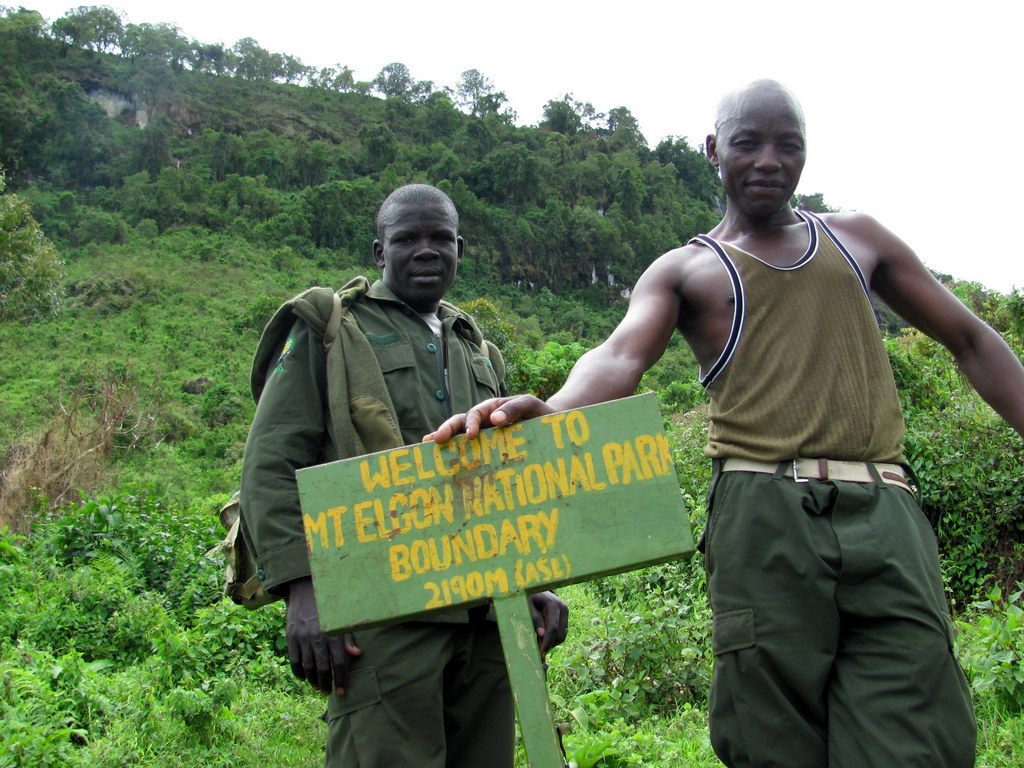
The East African Rift Valley links Lake Victoria and Mount Elgon, forming a rather famous and important specialty coffee belt in East Africa. The eastern side of Mount Elgon belongs to one of Kenya's important coffee regions, while the western side — the western highlands on Uganda's side — also produces excellent coffee. That region is Bugishu.
Bugishu is about a five-hour drive from the capital, Kampala. Its coffee collection and distribution town is Mbale, which has many trading companies and coffee storage facilities. Some exporters therefore mark "Mbale" as the green-bean designation, followed by a grade such as AA or A, though these are still beans from the Bugishu region. The coffee farmers of Bugishu are called "Shambas." They interplant bananas and cassava among the coffee trees as food crops. Coffee is almost their only cash income, used to pay for medical expenses, household needs, and education costs. Local smallholders carry out small-scale wet processing during harvest, then gather in Mbale for sales and the subsequent drying and grading. In the capital, Kampala, there are even larger integrated processing plants and exporters.
Uganda can fairly be called the mother of African Robusta. In recent years it has also produced excellent high-altitude Arabica.
Bugishu (also spelled Bugisu) happens to be the last East African bean to arrive in this series. Compared with the Rwanda and Burundi beans before it, there are significant differences in aroma and flavor. On acidity, Rwanda is the brightest and liveliest, followed by Burundi, while Uganda's is the gentlest. On body, all three have their own merits and belong to the full-bodied group. On aroma, Uganda is the gentlest, Rwanda the most prominent, and Burundi the most down-to-earth. Looking at the 2004–2005 harvest period, the high-altitude quality beans from East Africa were in fact all very fragrant, and their flavor characteristics were all very clear.
Uganda's geography and climate: Uganda is landlocked and does not border the sea, but it has great Lake Victoria. To the east is Kenya, to the west Zaire (now the Republic of the Congo), to the north Sudan, and to the south Tanzania. Because of the many high mountains within the country and the moderating effect of Lake Victoria, Uganda straddles the equator yet has a rather mild climate — naturally suited to growing good coffee.
In 1860, Robusta coffee was discovered around Lake Victoria, and wild Robusta varieties still grow in the region today.
In the early 20th century, Arabica varieties were introduced from Malawi in southeastern Africa. Arabica is mainly cultivated in the Bugishu region (along the slopes of Mount Elgon) and the Wugar region. The Arabica sold is designated by region, grade, and marking as Bugisu AA, Bugisu A (both wet-processed), Wugar A (wet-processed), and a small amount of natural-processed Drugar.
The coffee farmers in Bugishu are called "Shambas." They interplant bananas and cassava among the coffee trees as food crops, and coffee is almost their only cash income. Local smallholders carry out small-scale wet processing during harvest, then gather in Mbale for sales and the subsequent drying and grading.
93% of the country's total coffee production (green beans) is exported to earn foreign exchange, including both Arabica and Robusta.
Main Arabica harvest period: October to February of the following year, with a secondary harvest in August.
Robusta (regions north of the equator): October to February; Robusta (regions south of the equator): May to August.
The main Arabica varieties cultivated include Bourbon and Kent, though new improved varieties have been continuously tested in recent years.
Country: Uganda
Region: Bugishu (also written Bugisu), northeastern slopes of Mount Elgon
Designation: Bugishu
Grade: AA
Processing: Wet method (fermented and washed, then sun-dried)
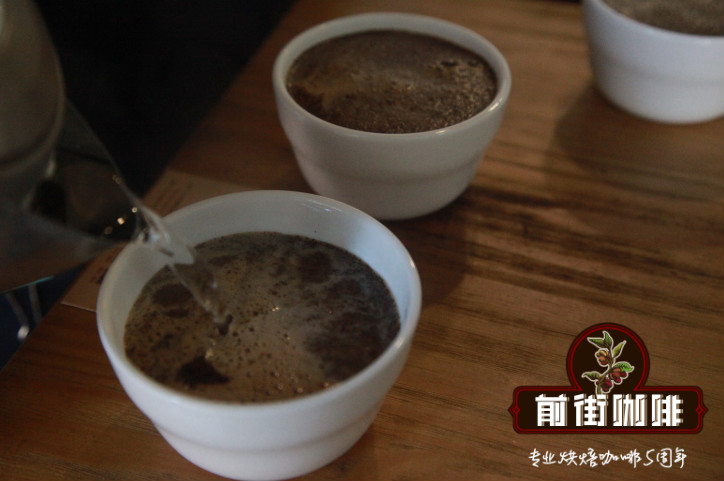
FrontStreet Coffee Cupping Notes
Roast Level: Dropped at first crack medium, M0 roast level, cinnamon roast degree
Dry Aroma: Grassy fragrance, fruity sweetness, nutty aroma
Wet Aroma: Caramel sweetness, floral and fruity notes, spicy fragrance
Slurping: A cocoa-like bittersweet taste with spicy notes. The acidity is not bright but gentle, with fruity sweetness and an oily, thick mouthfeel. The tea-like astringency that draws out saliva creates a special spicy sweetness, alongside a distinct caramel sweetness.
Kenya
African coffee regions are known worldwide for their charming acidity and aroma, and Kenya is no exception. Kenya sits in a tropical zone with two rainy seasons a year, allowing two harvests: 60% is concentrated from October to December, and the remaining 40% from June to August. Coffee is grown mainly in volcanic areas at 1,600–2,100 meters, from around the capital Nairobi up to the Kenyan highlands. The cooler temperatures and phosphate-rich soil of the mountains slow the growth, letting the aromatic components of the beans develop fully, with more pronounced fruit acidity and a harder texture.
Kenya Nyeri Ichamama Peaberry
Country: Kenya
Region: Nyeri, Karima Village
Processing Station: Ichamama
Producer: Smallholder members of the Othaya Farmers' Cooperative Society
Altitude: 1,700 – 1,750 meters
Varieties: SL28 / SL34
Soil: Volcanic soil
Temperature: 18 – 26°C
Harvest Season: November – January
Processing Method: Water selection, washed, African-style raised-bed sun-drying
The aroma is mature and steady, with a hint of red-wine acidity. On slurping, you get dark berry flavors and malic acidity, a rich and full mouthfeel, with sugarcane sweetness and some cocoa notes.
After comparison, FrontStreet Coffee found that Ugandan coffee has gentle fruit acidity with cocoa-like bittersweet notes, while Kenyan coffee features dark-berry acidity and sugarcane sweetness.
FrontStreet Coffee Recommendation
If that East African contrast is what draws you in, these FrontStreet beans let you explore the full range — from gentle and cocoa-like to bright and fruity:
FrontStreet Flower Queen — the most prominent star of the specialty market in recent years, from Ethiopia and naturally processed. Its tropical-fruit aroma is emphatic — creamy strawberry, mango, jackfruit, citrus, blueberry — the signature ripe-tropical-fruit character of FrontStreet's Sidamo natural beans. Sweetness is clear and bitterness very low, and it combines great flavor with a reasonable price.
FrontStreet Yirgacheffe Guodingding — where Flower Queen is the natural representative of Ethiopian Arabica, Yirgacheffe Guodingding is the washed one. Clean, transparent lemon and citrus define it. Yirgacheffe town is really a collection of small villages, each with its own processing station or cooperative, and the Guodingding Cooperative in the Gedeo zone is the standout. This bean is Ethiopia's highest grade, G1, classically washed, showing elegant white florals, citrus, orange, and green tea.
FrontStreet Colombia Sidra — Sidra originally came from Pichincha Province in Ecuador, where it was called Sydra; genetic comparison found it shares similarities with Ethiopian heirloom varieties, leading scholars to suggest it arose from a cross between an Ethiopian experimental variety and local Bourbon. At the 2022 World Barista Championship, champion barista Anthony Douglas used La Frontera Estate's Sidra, and the variety has drawn attention ever since. FrontStreet's Sidra is roasted light-to-medium and is loved for its floral, tropical-fruit, grape, dried-fruit, and passion-fruit notes with a juicy mouthfeel.
Important Notice :
FrontStreet Coffee is a long-established specialty coffee roaster in Guangzhou China, selling freshly roasted beans from its own farm in Yunnan as well as dozens of carefully selected single-origin beans from around the world for both pour-over and espresso. The products deliver consistently excellent quality and great value, with shipping within 24 hours. Guangzhou's FrontStreet Coffee shop is recommended by many coffee lovers, and the beans are now available online at the Tmall 。
FrontStreet Coffee has moved to a new address:
FrontStreet Coffee Address: 315,Donghua East Road,GuangZhou
Tel:020 38364473
 Scan and follow the En Gafei WeChat official account. Please indicate that the reprint comes from "En Gafei".