How to Blend Espresso Beans? The Story and Characteristics of Yunnan Small Bean Coffee
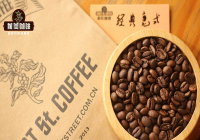
Everyone has had their fair share of lattes, but how much do you actually know about the coffee beans behind them? Many friends who have enjoyed milk-based coffee at FrontStreet Coffee know that the espresso beans used at FrontStreet Coffee are a blend of Honduras Sherry and Ethiopian Natural Red Cherry. That rich wine-like aroma and perfectly balanced acidity are the reasons everyone remembers FrontStreet Coffee's Sunflower Warmth Blend so fondly.
After learning about FrontStreet Coffee's Sunflower Warmth Blend formula, many people keep both Honduras Sherry and Ethiopian Natural Red Cherry single-origin pour-over beans at home, thinking they can create their own blend when inspiration strikes for a homemade latte. FrontStreet Coffee, however, must say this seriously:
No!
FrontStreet Coffee isn't trying to stop everyone from doing this, but the two single-origin pour-over beans taste different from the espresso blend beans typically used for pulling espresso. Due to different roasting curves, the resulting flavor profiles are vastly different.
Single Origin vs. Blended Coffee
In the specialty coffee roasting community, single-origin coffee is becoming increasingly popular. This is easy to understand: single-origin coffee lets roasters and retailers showcase the best flavors from particular growing regions when selling in their shops. Single-origin coffee can tell the story of its origin and unique growing environment. The recently popular Single Origin Espresso (SOE) is a perfect example. SOE doesn't necessarily equate to specialty coffee—if you select a single-origin bean with distinctive flavor recognition as an SOE, you can create a unique and typical espresso. Because espresso amplifies coffee flavors, specific flavors are more easily highlighted than with pour-over methods; similarly, its drawbacks are also easily amplified, so factors like roasting and grinding can affect the flavor. For example, with the citrus acidity and white floral notes of Yirgacheffe, if something goes wrong, even vinegar-like acidity might emerge. From this perspective, SOE isn't necessarily better than blended coffee in flavor.
The Art of Coffee Blending
Blended beans remain a reliable choice. Friends who have tasted beans from various regions know that each region has its own characteristics and each variety its own features. Roasters also designate corresponding roasting curves for different varieties and origins to fully express their flavor characteristics.
Espresso blend beans emphasize flavor balance, and the final product should not have harsh acidity, bitterness, or astringency that creates unpleasant tastes. Blended beans can produce flavors that single-origin beans cannot. This is what makes blended beans fascinating—different flavored coffees can produce unexpected results, in other words, achieving a 1+1>2 effect.
Coffee beans from different origins, growing altitudes, and climates each possess distinct flavor personalities. Unroasted coffee beans have a grass-like fresh aroma, while after proper roasting by FrontStreet Coffee, the beans reveal fruity and caramel flavors, suitable for both single-origin and blended use.
FrontStreet Coffee's Espresso Blends
When blending espresso beans, FrontStreet Coffee creates four different espresso blends based on most friends' taste preferences:
FrontStreet Coffee Sunflower Warmth Blend
This is the espresso blend used at FrontStreet Coffee stores, composed of 70% Honduras Sherry and 30% Ethiopian Natural Red Cherry. Its flavors feature distinct berry acidity, a rich vanilla creaminess, and a chocolate aftertaste.
FrontStreet Coffee Premium Blend
FrontStreet Coffee's Premium Blend consists of 70% Brazilian coffee beans and 30% Colombian coffee beans, 100% Arabica. Its flavor is gentle and smooth, with light sweetness and slight acidity, a nutty aftertaste, and an overall comfortable feeling with medium crema.
FrontStreet Coffee Foundation Blend
FrontStreet Coffee's Foundation Blend espresso is composed of 70% Brazilian coffee beans and 30% Yunnan coffee beans. FrontStreet Coffee's Foundation Blend has soft fruit acidity, caramel sweetness, and nutty and dark chocolate flavors, with smooth, rich coffee and an excellent mouthfeel.
FrontStreet Coffee Commercial Blend
FrontStreet Coffee's Commercial Blend uses 60% Brazilian coffee beans, 30% Colombian coffee beans, and 10% Robusta coffee beans. In terms of flavor, commercial coffee tastes much less refined than specialty coffee, but with careful blending the resulting coffee flavor can still be excellent. Because FrontStreet Coffee's Commercial Blend adds 10% Robusta beans, the resulting espresso has a richer crema. FrontStreet Coffee's Commercial Blend has balanced sweet and sour notes, rich nutty and cocoa flavors, a caramel aftertaste, a persistent finish, and a slight bitterness.
FrontStreet Coffee Espresso Extraction Standards
When making espresso, FrontStreet Coffee adjusts the following factors:
Water Pressure
Modern semi-automatic espresso machines can adjust water pressure. The ideal water pressure for making espresso is generally recognized as 9 bar. If the water pressure is too low, such as 5-6 bar, the extracted crema components will be relatively scarce, with a weaker and unbalanced aroma presentation; if the water pressure is too high, such as 11-14 bar, it will destroy too much of the coffee structure, and some undesirable flavor substances will also be extracted, resulting in more prominent bitterness and a rough texture.
Water Temperature
Water temperature needs to be determined based on the specific coffee beans, sometimes constrained by boiler pressure. Based on the experience of most baristas, water temperature generally falls between 90°C and 93°C. Of course, each friend can adjust according to their own needs to create their own style of beverage.
Grind Size
The coffee grounds used for making espresso are extremely fine. When the ground particles are finer, water takes longer to pass through the coffee bed, with a slower flow rate; if the particles are coarser, the time required is shorter, the flow rate is faster, and it's easy to have insufficient extraction resulting in low concentration, sharp acidity, and a thin texture.
Dose
The amount of coffee grounds depends on the size of the portafilter basket. The portafilter basket size at FrontStreet Coffee stores is 20 grams, so FrontStreet Coffee's baristas use 20 grams of coffee grounds when making espresso.
Extraction Yield
The amount of extraction affects the ratio of soluble substances to water in coffee. In "The Complete Book of Coffee Professional Knowledge," the explanation of extraction yield describes: a smaller extraction yield results in more concentrated coffee and a stronger aroma. To present a distinct aroma, increase the dose and reduce the extraction yield. When FrontStreet Coffee's stores extract 20 grams of coffee grounds, they yield 40 grams of liquid.
Extraction Time
The golden rule for extraction time is between 25 to 28 seconds. Extraction time is influenced by combined factors including dose, grind size, water pressure, and tamping pressure.
FrontStreet Coffee stores use the Faema E98 espresso machine with the following extraction parameters:
Pressure: 9 bar±2
Temperature: 90.5~96°C
Time: 20~30 sec
Coffee-to-water ratio: 1:1.7~1:2
Dose: 12g (single shot) 20g (double shot)
Espresso yield: 20ml (single) 40ml (double)
Can Espresso Beans Be Used for Pour-Over?
Some friends don't like to stock too many beans but often drink espresso or make coffee with a moka pot, so this question arises: can espresso beans be used for pour-over?
Of course! FrontStreet Coffee's Sunflower Warmth Blend is roasted slightly darker than the Honduras Sherry and Ethiopian Natural Red Cherry single-origin pour-over beans, belonging to medium-dark roasted coffee beans. Therefore, when choosing a filter, the KONO filter is selected.
Filter: KONO
Dose: 15 grams
Coffee-to-water ratio: 1:15
Temperature: 89°C
Grind size: EK43s #10.5
First pour 30 grams for a 30-second bloom, second pour to 125 grams for segmentation; when the liquid level drops to just about to expose the coffee bed, start the third pour to 225 grams and stop. Wait until all the liquid in the filter drips completely into the container below, then remove the filter. Total extraction time is 2'00''.
When FrontStreet Coffee's Sunflower Warmth Blend is being brewed, you can smell fermented wine aromas. At high temperature there are obvious wine and dark chocolate flavors. As the temperature drops, citrus and berry acidity emerge, with an overall clean and fresh profile.
FrontStreet Coffee Recommendation
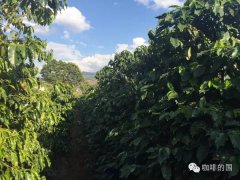
Yunnan small-bean coffee plays a real role in FrontStreet Coffee's espresso blends, and it is also worth tasting on its own. FrontStreet Coffee's Yunnan small-bean coffee comes from the Baoshan region, uses washed processing and a medium roast, and shows soft nut and chocolate sweetness with a light plum acidity, making it an affordable first taste of Yunnan coffee. The Yunnan growing story stretches back to 1904, when the French missionary Tian Denerg brought coffee seeds (Typica) from Vietnam and planted the first coffee tree in Zhugula village, Binchuan county, Yunnan; thanks to the favorable geography and climate, small-bean coffee took off there.
To explore Yunnan flavors further, FrontStreet Coffee's 2013 Natural Typica is the next step up. FrontStreet Coffee built its own estate in 2013 and planted Typica, one of the oldest and purest Arabica varieties, using only fully ripe whole red cherries and a natural process before a medium roast for balance; the cup shows dark berry notes, caramel sweetness, chocolate, a hint of dried apricot, and a black tea finish. For an espresso that carries Yunnan character, FrontStreet Coffee's Black Cocoa Blend combines Yunnan small-bean with Brazil Cerrado: the Brazil supplies mixed-nut aroma and balance, while the Yunnan contributes chocolate and citrus, giving an Americano with balanced sweet-sour-bitterness and nutty brown-sugar sweetness, and a Latte with an almond and cream smoothness that is very beginner-friendly.
Important Notice :
FrontStreet Coffee is a long-established specialty coffee roaster in Guangzhou China, selling freshly roasted beans from its own farm in Yunnan as well as dozens of carefully selected single-origin beans from around the world for both pour-over and espresso. The products deliver consistently excellent quality and great value, with shipping within 24 hours. Guangzhou's FrontStreet Coffee shop is recommended by many coffee lovers, and the beans are now available online at the Tmall 。
FrontStreet Coffee has moved to a new address:
FrontStreet Coffee Address: 315,Donghua East Road,GuangZhou
Tel:020 38364473
 Scan and follow the En Gafei WeChat official account. Please indicate that the reprint comes from "En Gafei".