Ultimate Guide to Coffee Art: Step-by-Step Latte Art Instructions from Scratch
Latte art draws people from all kinds of backgrounds into coffee, all hoping that one day they will be able to pour a delicate, precise pattern on demand. The obvious question follows: how long does it take to master?

The truth is that latte art is less complicated than most people imagine. If we are only talking about pouring something that looks good, a single day can be enough. Even on a bad day, two or three days is usually plenty.

Combination patterns are a different story. Those require understanding the underlying principles and practising with purpose, but you will get to your target pattern before long. Below, FrontStreet Coffee shares the principles behind latte art and a few details that are easy to overlook, in the hope that it helps you get started more efficiently. For the milk side of things, see "How to Froth Milk".
How Patterns Are Formed
Latte art comes down to two actions: fusion and pattern creation. What separates them is the height of the pitcher spout. When the spout is held well above the surface of the liquid, the milk flows down into the coffee and blends with it. That is fusion.
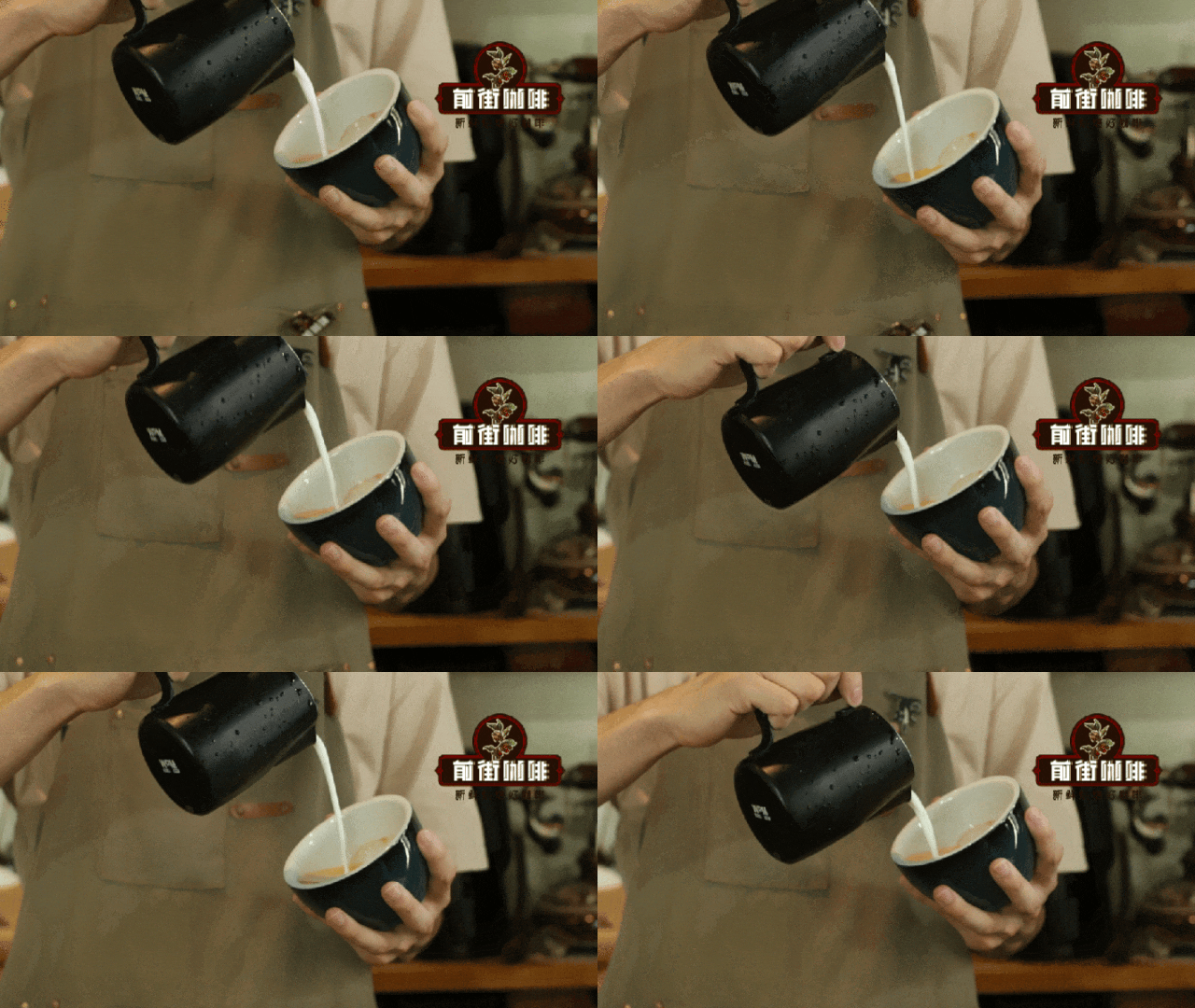
When the spout is brought down until it is almost touching the surface, the milk sits on top and forms distinct white stripes across the brown crema according to how much force you use. That is pattern creation.
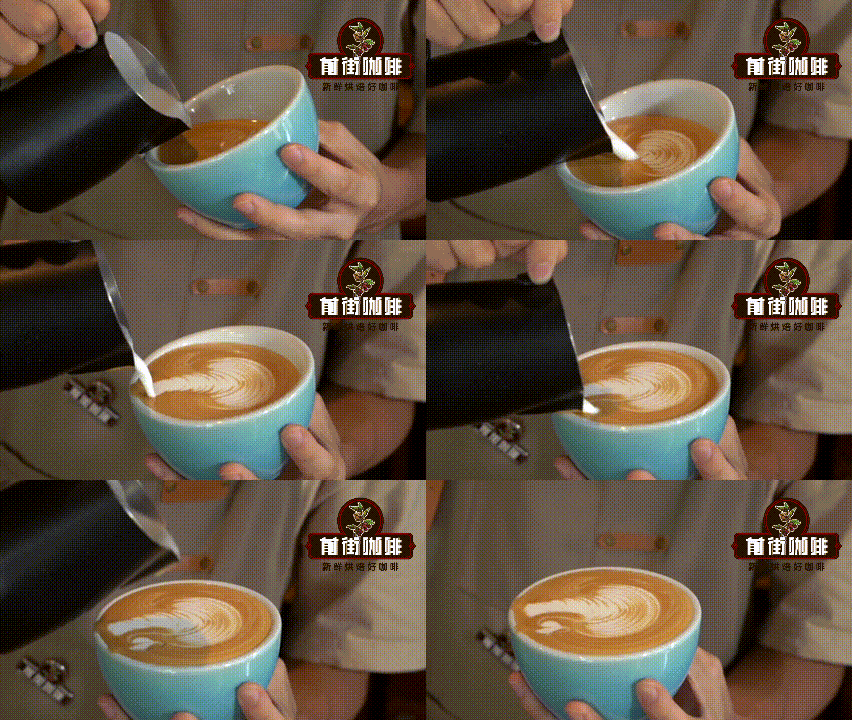
In practice, you fuse the milk and coffee until the cup is about half full before you start pouring a pattern. That gives the two time to combine properly, and past the halfway mark the surface holds a pattern much more readily.
Fusion Technique
Fusion is not simply a matter of swirling milk in from a great height. If you want a smooth, even surface rather than the coffee equivalent of a stained white shirt, you have to mind your height.
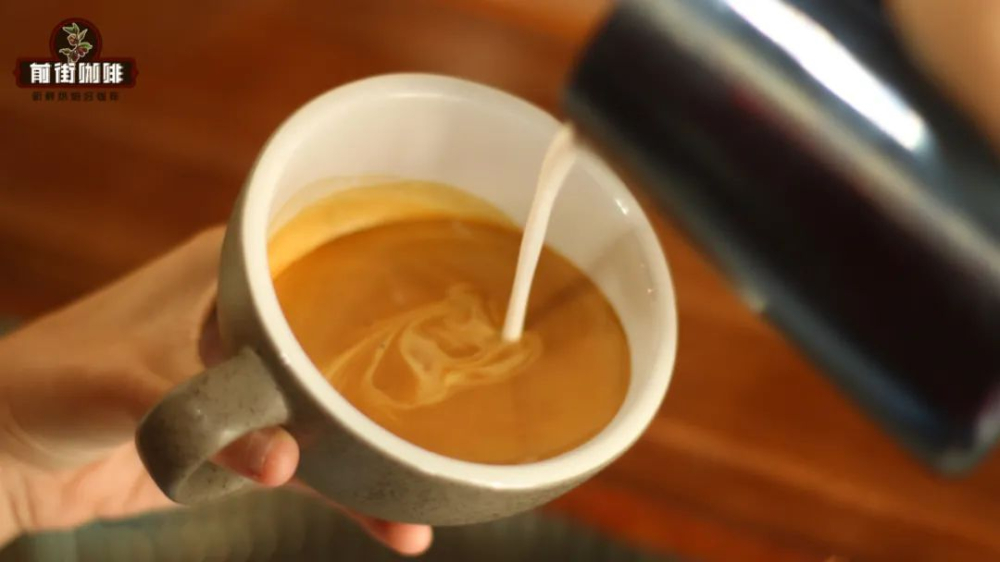
The standard approach is to hold the cup in your left hand and the pitcher in your right, then offset the two hands by half a turn so they move in opposing circles. The key is to keep the pour at about 5-10 centimetres during fusion, combined with a slightly stronger up-and-down motion. Random stripes become rare.
Pattern Creation Technique
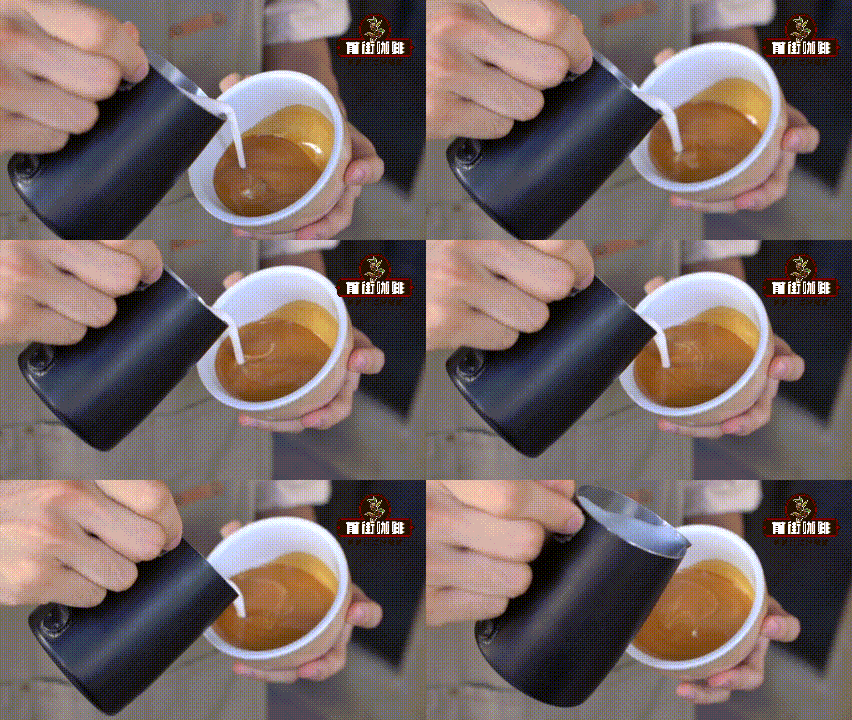
This is the part that matters most. The cup is now half full, so it is time to pour. There are four points to keep in mind, and FrontStreet Coffee will take them one at a time.
Point 1
While you control the flow of milk with your right hand, your left hand has to control the rotation of the cup. This motion is usually called tilting the cup.
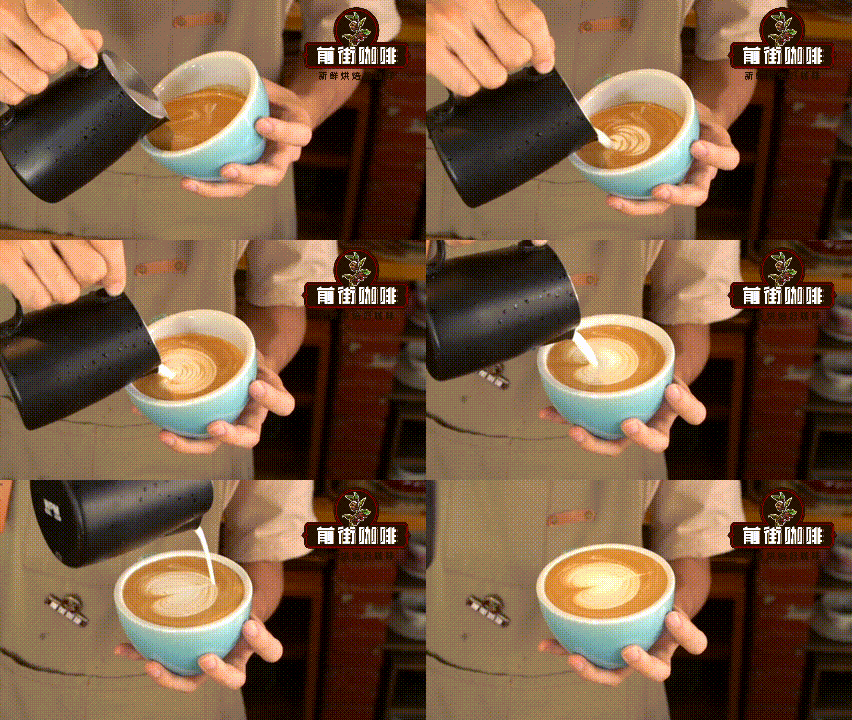
Tilting matters a great deal. Tilt too early and the pattern struggles to form; tilt too late and the coffee spills easily. So the first thing to practise is using both hands at once, so that as your right hand pours, your left hand tilts the cup by an amount that matches the volume going in.
Point 2
The more force you use when pouring, the more milk goes in, and the stripes that appear as you wiggle the pitcher come out a little thicker; this also happens if the milk foam is too thick. With less force, the milk that lands combines with the wiggle to produce clearly defined stripes on the surface, and if the foam is at the right thickness the stripes come out even sharper.

Point 3
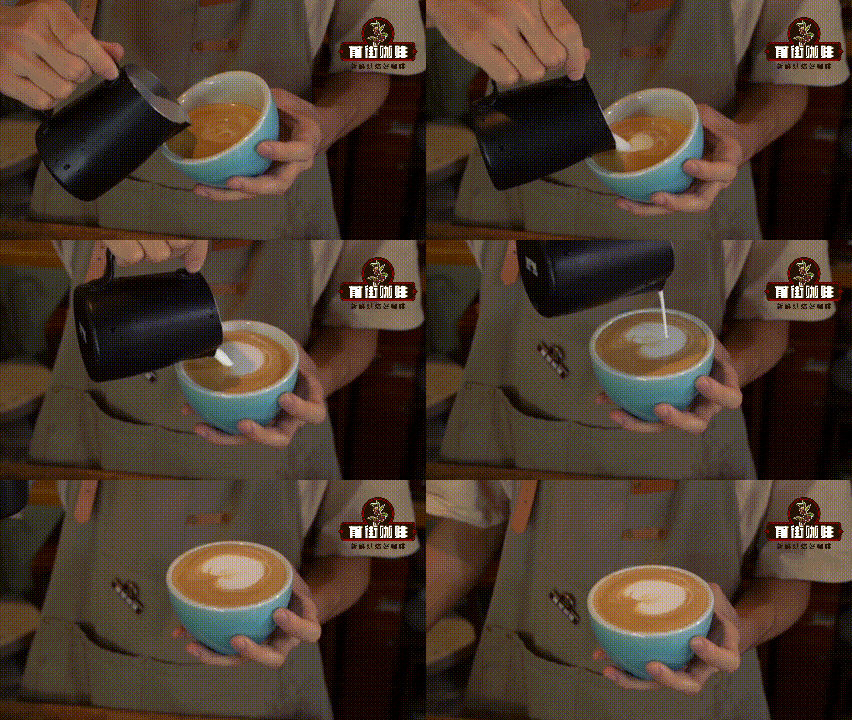
Different patterns need different landing points. As a rule, where you see the pattern forming and where it actually lands are not the same spot. If a heart is meant to finish in the centre of the cup, for example, you need to place the landing point slightly to the right of centre, towards the pitcher, because the tilting of the cup and the push of the milk will shift where it ends up.
Point 4
The finishing stroke matters enormously. Done well, it is the perfect final touch. Done badly, it is entirely superfluous. Even if everything up to that point was excellent, losing control of the height as you finish will collapse the whole pattern you so carefully built.
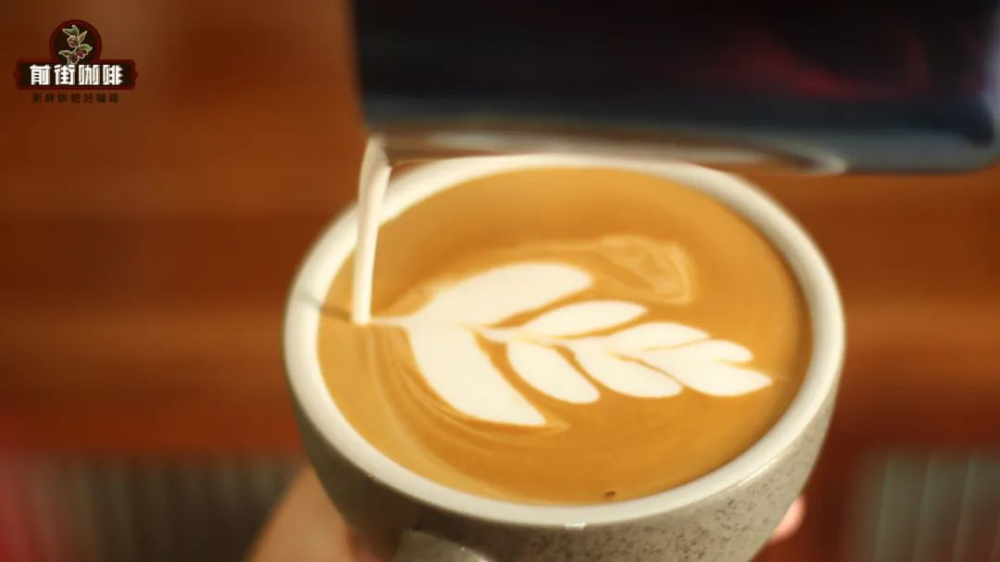
Poor finishing produces an overly thick centre line and throws the whole pattern out of balance left and right. So FrontStreet Coffee's advice is to watch the height of the pitcher as you finish, keep it from getting too close to the surface, and do not add extra strokes. Start the finishing action no later than when the cup is nine-tenths full, otherwise the volume will push coffee over the rim.
Practice Advice for Latte Art
Suggestion 1
This is the point FrontStreet Coffee stresses most. When you first start, pour one or two cups with real milk and real coffee so you know what it feels like to work with the genuine materials. Remember that resistance and that sensation; it will help enormously later when you practise with dish soap and soy sauce. Those with plenty of supplies can, of course, keep practising with real milk and real coffee.
Suggestion 2
The main purpose of practice is to build muscle memory in both hands. Do not start by fixating on which pattern you want to pour. Train the fundamentals first: how you hold the cup, how you fuse, how you tilt, and the details of pattern creation. It is dull and repetitive, but it is the most important part. Put in one or two days and you will have the technique for the basic patterns.
Suggestion 3
Manage your practice time. Do not push on for long stretches, because that leads to rigid thinking and fatigue, and the session stops being productive. Take a break and reset every twenty minutes, and think about which details from the last stretch need work. That way you progress faster.
Suggestion 4
If something confuses you, take a photo and send it to FrontStreet Coffee through the back end or in the comments below the article. We are happy to offer suggestions.
A Detail That Is Easy to Overlook
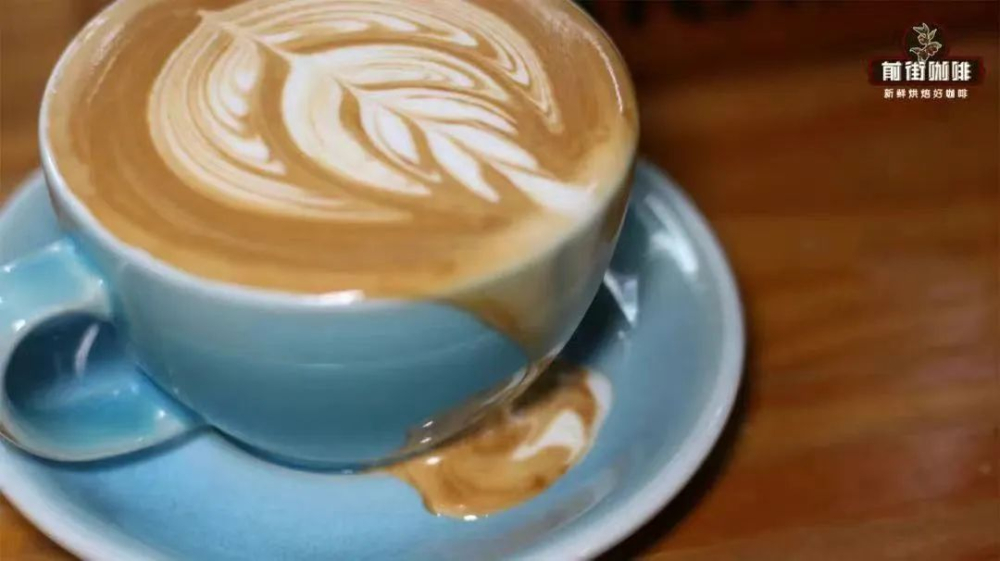
Once you have learned the basic patterns, hearts, leaves and tulips, and start moving towards combination patterns, take a look at the cups you are using. Plenty of people have latte art skills that are already excellent, yet the cup itself holds them back from showing what they can do.
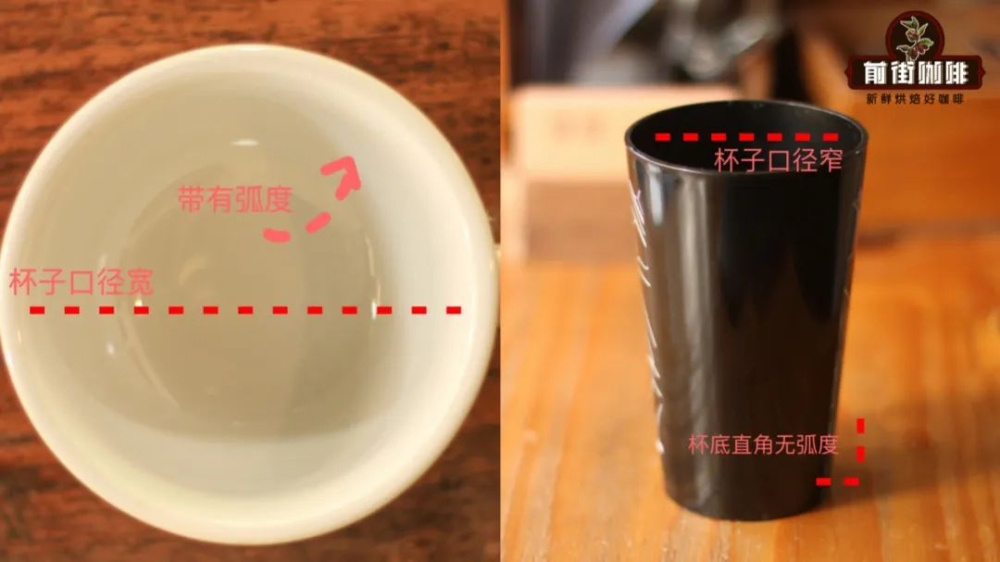
The wider the opening of the cup, the more room there is to pour a pattern; the narrower the opening, the less room there is. The more curved the bottom of the cup, the more thoroughly the milk and coffee fuse. Put simply, a wide opening and a curved base suit high-difficulty patterns best. Give it a try, and if anything is unclear, ask FrontStreet Coffee again.
FrontStreet Coffee Recommendation
Latte art lives or dies on crema, and crema comes from the beans. If you are practising at home, start with a blend built for espresso and milk.
FrontStreet Classic Blend is what we recommend to anyone learning latte art at home. It is a medium-dark espresso recipe combining three growing regions, inspired by the old Mamba style of Mandheling and Brazil, and it includes a small amount of Robusta to lift the aroma and the crema. Extraction releases obvious notes of butter, toasted bread and caramel biscuit. The flavour is strong and the body is solid, with a fine crema and very stable extraction, which makes it a must-have home coffee for beginners.
FrontStreet Specialty Blend is for anyone who prefers a richly nutty espresso. Also medium-dark, it pairs washed Colombian coffee with semi-natural Brazilian coffee. In an espresso you get nuts, dark chocolate and caramel; whether you pour an Americano, a latte or a flat white, the creamy, almond and cocoa aromas come through softly. The crema matches what a cafe produces, which is more than enough for practising latte art, so it suits people who plan to open a shop or learn at home.
FrontStreet Commercial Blend is aimed at those about to open a cafe. Built on the Specialty Blend with a small amount of Robusta added, it is a traditional Italian-style recipe designed to add more fine dark-brown crema and a heavier body. Americanos, lattes and mochas all carry nuts, cocoa and caramel, and it makes pouring latte art straightforward.
Important Notice :
FrontStreet Coffee is a long-established specialty coffee roaster in Guangzhou China, selling freshly roasted beans from its own farm in Yunnan as well as dozens of carefully selected single-origin beans from around the world for both pour-over and espresso. The products deliver consistently excellent quality and great value, with shipping within 24 hours. Guangzhou's FrontStreet Coffee shop is recommended by many coffee lovers, and the beans are now available online at the Tmall 。
FrontStreet Coffee has moved to a new address:
FrontStreet Coffee Address: 315,Donghua East Road,GuangZhou
Tel:020 38364473
 Scan and follow the En Gafei WeChat official account. Please indicate that the reprint comes from "En Gafei".