Is Yunnan Small Bean Coffee Good? What's the Difference Between Yunnan Small Bean Coffee and Yunnan Coffee?
As China's largest coffee-growing region, Yunnan has won deeper recognition thanks to the film "Go Home." But is Yunnan coffee actually good? As an Asian coffee, Yunnan naturally carries the earthy, pine, and nutty notes typical of the region, yet it also shows distinctive local terroir: brown sugar sweetness and fruit acidity. Yunnan Arabica has a relatively neutral taste—neither too acidic nor too bitter. It belongs firmly to the "fragrant but not bitter, rich but not intense" category, with a subtle, pleasant acidity that suits mainstream palates well.
China's coffee cultivation is concentrated in Yunnan and Hainan, with Yunnan producing the larger share—about 26,000 tons annually in recent years, roughly 90% of the national total. Yunnan lies in a subtropical mountain climate zone south of the Tropic of Cancer, with fertile, loose red plateau soil and a mild climate, making it especially suitable for Arabica. Its natural conditions closely resemble Colombia's: low latitude, high altitude, and large day-night temperature differences. Cupping analysis places Yunnan coffee in the mellow-aroma category, with quality and taste similar to Colombian coffee.
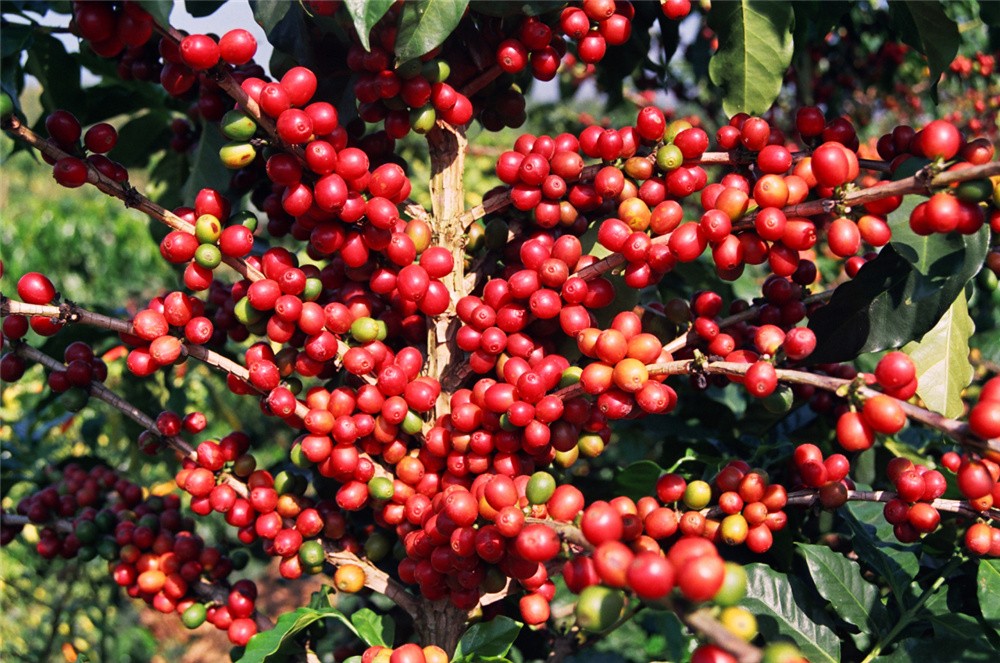
Yunnan Arabica traces back to 1904, when the French missionary Alfred Liétard brought coffee seeds (Typica) from Vietnam to Yunnan and planted them successfully in Zhugula Village, Binchuan County—the beginning of Yunnan coffee, generally called small-grain coffee and known in China as Yunnan Arabica coffee. "Small-grain" is simply the Chinese alias for Arabica: Arabica is small-fruited coffee, Robusta is medium-fruited, and Liberica is large-fruited. Since Yunnan grows Arabica, its beans became known as Yunnan Arabica coffee. At FrontStreet Coffee you will find two kinds of Yunnan beans: the 2013 Natural Typica and Catimor Arabica. Both are Arabica, but because Typica shows gentler, richer floral and fruit acidity, FrontStreet uses the name "Huaguoshan" (Flower Fruit Mountain) to set the two varieties apart.
Yunnan Coffee Bean Varieties
Yunnan coffee has been refined over a full century, and as domestic demand keeps growing, its quality continues to rise. Yunnan's Arabica varieties belong to the Arabica species, with some Robusta genes mixed in. Back in the 1970s and 1980s, coffee leaf rust swept through Central and South America and devastated production. In response, CIFC, a coffee research center in Portugal, crossed Timor (which carries Robusta genes) with the Bourbon variety Caturra in 1959, creating the disease-resistant, high-yielding Catimor. To fight the rust disaster—and encouraged and promoted by coffee organizations—Central and South America began planting Catimor extensively in the 1980s.
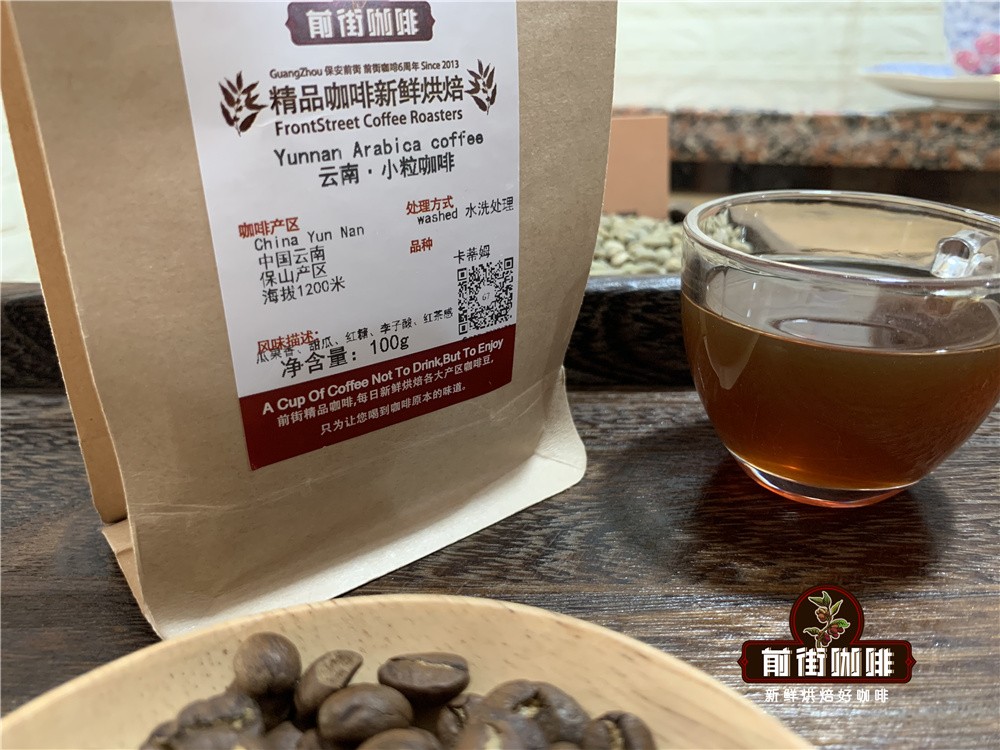
For a long time Yunnan coffee was simply called "Yunnan Arabica coffee"—"Arabica" being the common alias for the species. Arabica, also known as small-grain coffee, comes from wild African coffee and became famous through its introduction to Europe via Arabia. It reached Zhukula, Binchuan County, in Dali, China in the 1890s, took root on the Chinese mainland, and Yunnan grew into the face of Chinese coffee—which is why its beans are known as "Yunnan Arabica coffee."
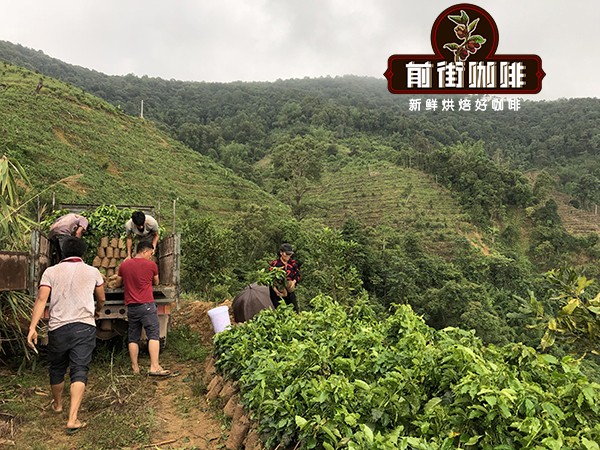
Arabica is demanding about its growing environment, usually thriving in mountain areas with abundant rainfall and wide day-night temperature gaps. Some specialty coffees even print the planting altitude on the bag, alongside variety, estate, and processing method. Arabica also embraces many varieties—Typica, Bourbon, Caturra, and others (much like the many cultivar names among citrus fruits)—all of them names for the coffee trees themselves.
The most classic premium Arabica variety is Typica. The tree adapts well, and many familiar coffees are its variants: Blue Mountain is Typica grown in Jamaica, Kona is Typica grown in Hawaii, and Mandheling is Typica grown in Sumatra.
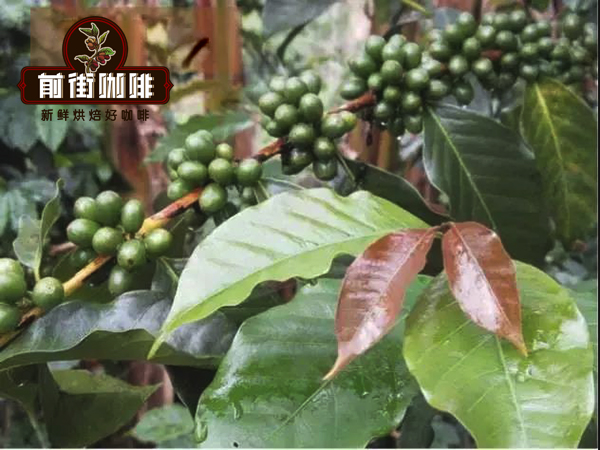
Typica originated in southeastern Ethiopia and Sudan and is one of the oldest Arabica varieties, sometimes called old-variety small-grain coffee. Typica trees are tall with conical branching; the primary branches typically lean at about 60 degrees, the leaves are a deep bronze, and the top leaves are copper-colored—hence the name "red-topped coffee." Typica grows tall, yields less than other varieties, and is difficult to cultivate, which makes this high-quality coffee hard to come by. Yields are low, but cupping scores are extremely high, and the flavors show diverse fruit notes.
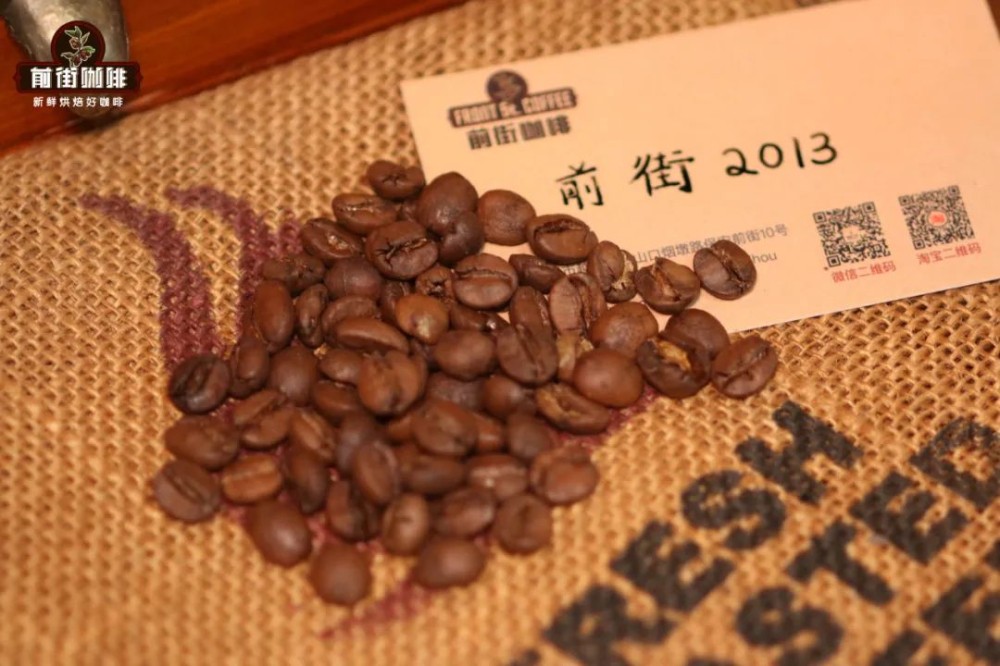
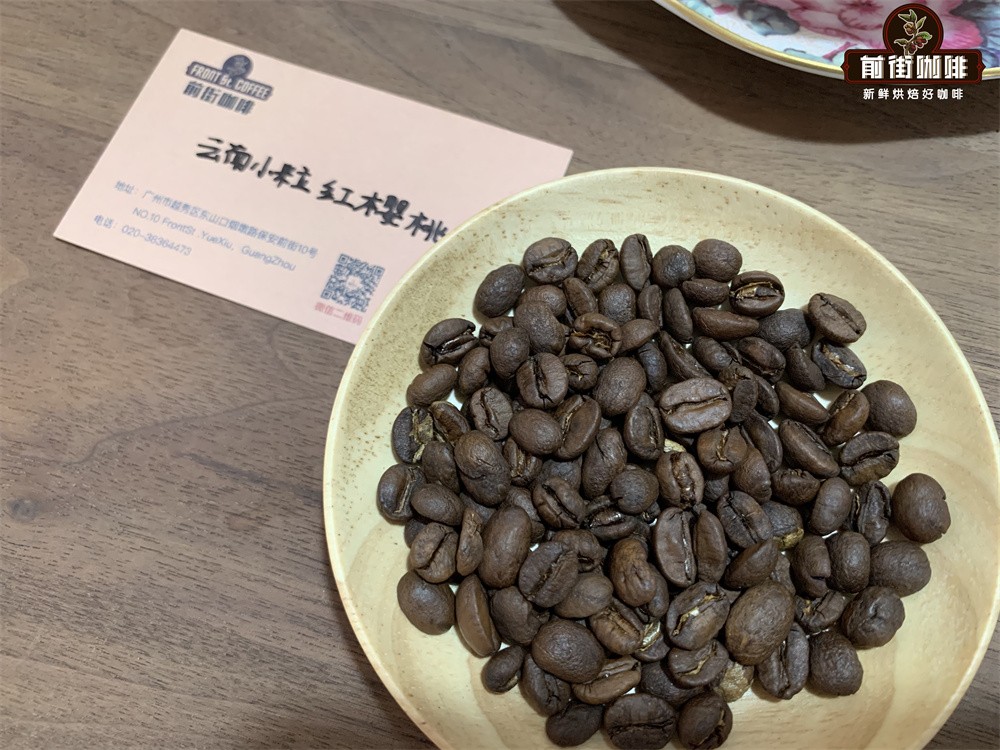
Under FrontStreet's careful natural drying, the Typica in FrontStreet 2013 Natural Typica coffee shows notes of berries, brown sugar, nuts, and black tea.
Catimor is a hybrid of Timor and Caturra. It inherits Timor's Robusta genes, which make it more resistant to coffee berry disease and leaf rust, with stronger pest resistance, faster fruit maturation, and higher yields. The trade-off is less complete flavor development, and careless processing easily produces harsh bitterness and grassy notes.
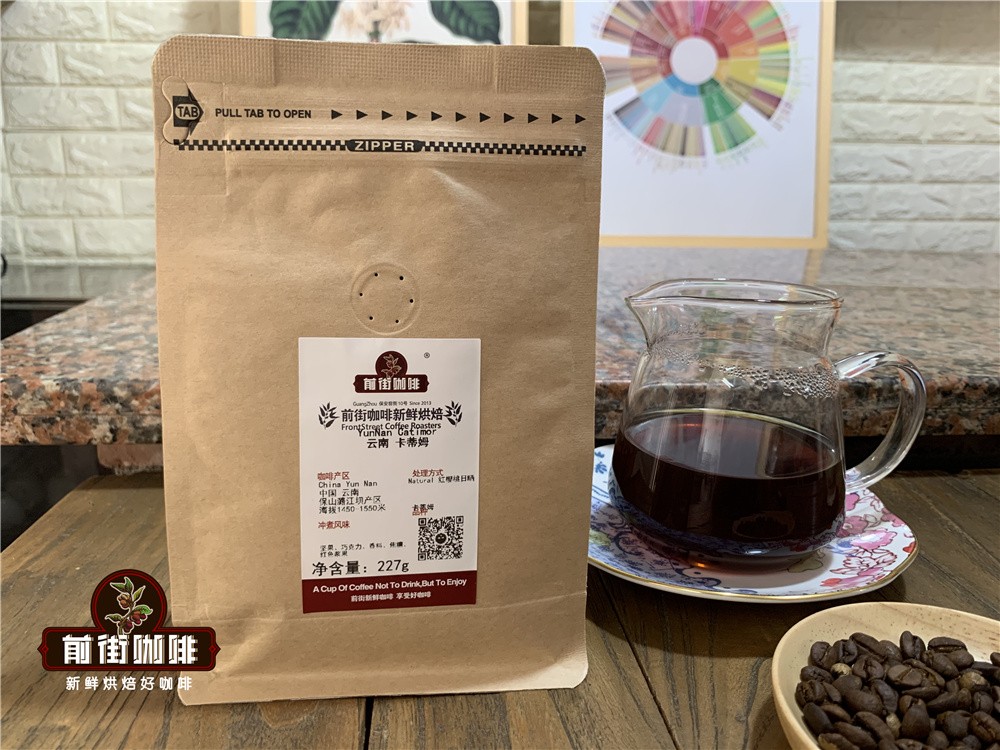
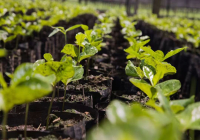
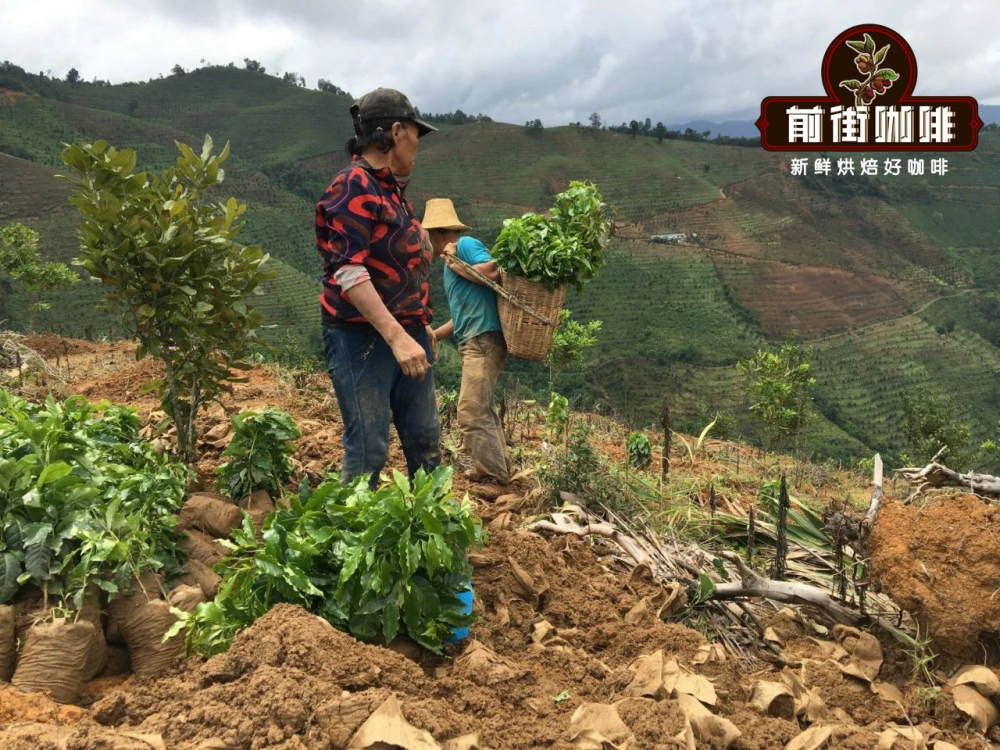
FrontStreet believes that making Yunnan coffee taste good has to start with the variety. So in 2013, FrontStreet went to Lincang, Yunnan, and began planting Typica along with a small amount of Bourbon. Typica was chosen first because, as one of the oldest coffee varieties, it carries pure Arabica genes and has always been recognized as a specialty variety for its elegant, clean flavors; second, because the earliest coffee trees in Yunnan were also Typica, brought by French missionaries.
Main Yunnan Coffee Growing Regions
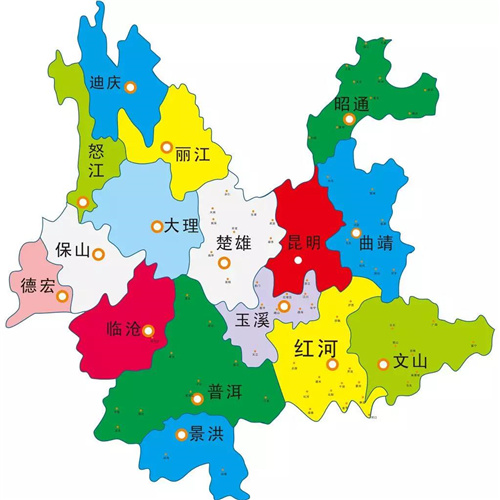
The western and southern parts of Yunnan Province sit between 15°N and the Tropic of Cancer. Most areas lie between 1,000-2,000 meters, in mountainous and sloping terrain with significant elevation changes. Fertile soil, abundant sunshine, plentiful rainfall, and large day-night temperature differences make the region ideal for coffee. Planting is mainly distributed across Lincang, Baoshan, Simao, Xishuangbanna, Dehong, and other prefectures.
Baoshan
Baoshan, Pu'er, and Dehong together form a golden coffee-growing triangle, rich in low-latitude, high-altitude resources and wide day-night temperature swings—the very conditions that make Yunnan a golden zone for quality Arabica. FrontStreet's washed Yunnan Arabica and natural Catimor coffees come from the Baoshan region.
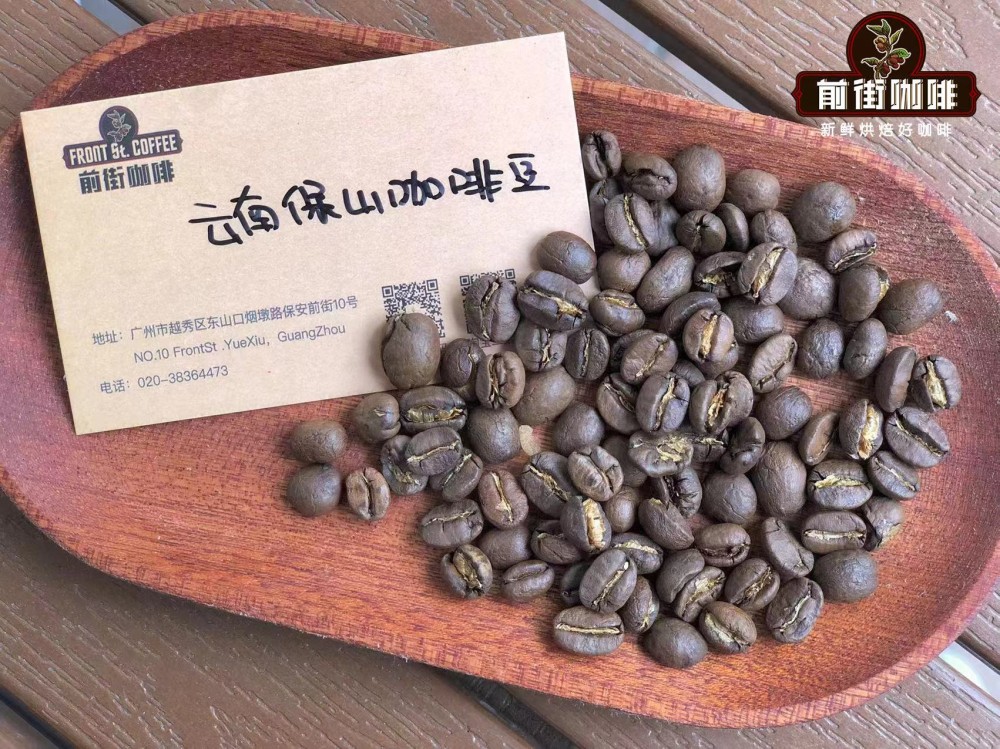
After more than 60 years of development, Baoshan's coffee industry has reached scale, becoming a characteristic industry with an annual output value of nearly 500 million yuan. Its list of achievements is long: at the 1980 National Coffee Conference, Baoshan Arabica was hailed as "the crown of national coffee"; in 1992, at the first China Agricultural Expo, it took the highest silver prize; in 1993 it won the Eureka Gold Award at the 42nd Brussels Eureka Expo in Belgium.
Pu'er
Pu'er, better known as a tea town, has a coffee planting area of 650,000 mu (about 43,333 hectares), making it China's largest, highest-producing, and best-quality main coffee region as well as a major trading hub. Alongside growth in quantity, Pu'er is pushing for quality: in recent years the municipal government, enterprises, and farmers have strengthened variety selection and deep processing, partnered with international coffee giants to learn planting and production techniques, and expanded markets abroad so that Pu'er coffee brands could break through. Initiatives such as coffee estates, coffee museums, coffee culture streets, and the China Coffee Culture Festival are gradually unfolding Pu'er's industry blueprint.
Dehong
In the Dehong Dai and Jingpo Autonomous Prefecture, mature price-protection mechanisms, technical support, and comprehensive management systems give growers real confidence. Dehong Hougu Coffee Co., Ltd. has fully played its leading role since 2004, implementing "three guarantees and three unifications": guaranteed prices, guaranteed investment, and guaranteed quality, plus unified procurement, unified processing, and unified sales.
Lincang
Lincang has a subtropical low-latitude plateau mountain monsoon climate with complex terrain and multiple climate types. Influenced mainly by warm, humid Indian Ocean air currents and the southwest monsoon, its four seasons blur together while dry and rainy seasons are distinct. Rainfall is abundant, sunshine lasts over 2,000 hours a year on average, frost periods are short—and some areas are frost-free year-round. The vertical climate is pronounced, with mountain areas averaging 13-15°C annually. FrontStreet established its own estate in Lincang, producing FrontStreet 2013 Natural Typica coffee.
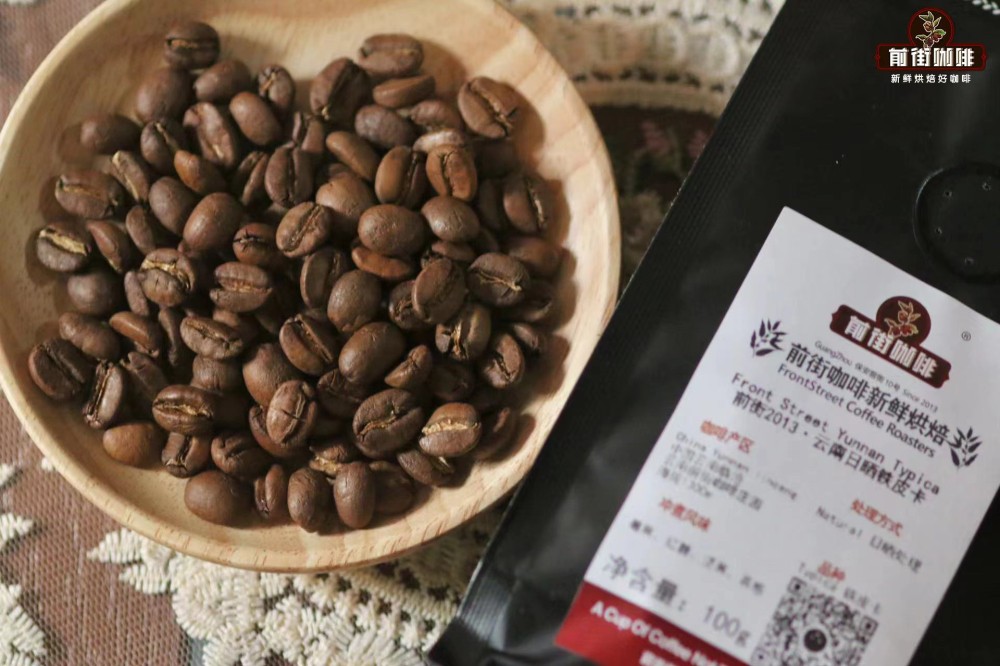
Is Yunnan Arabica Coffee Good?
Yunnan Arabica has a relatively neutral taste—neither too acidic nor too bitter. It truly belongs to the fragrant-but-not-bitter, rich-but-not-intense category, with subtle, pleasant acidity that suits general tastes.
Compared with Typica, Catimor carries Robusta genes, but today's Yunnan Catimor is no longer the hard-to-drink coffee of the past. With proper cultivation and traditional processing, Yunnan Catimor shows flavors of nuts, caramel, and plum. As an Asian bean, Yunnan coffee naturally carries herbal and pine notes, layered with local terroir characteristics such as brown sugar, tea sensations, and plum acidity. FrontStreet loves Yunnan coffee partly because it is China's own coffee.
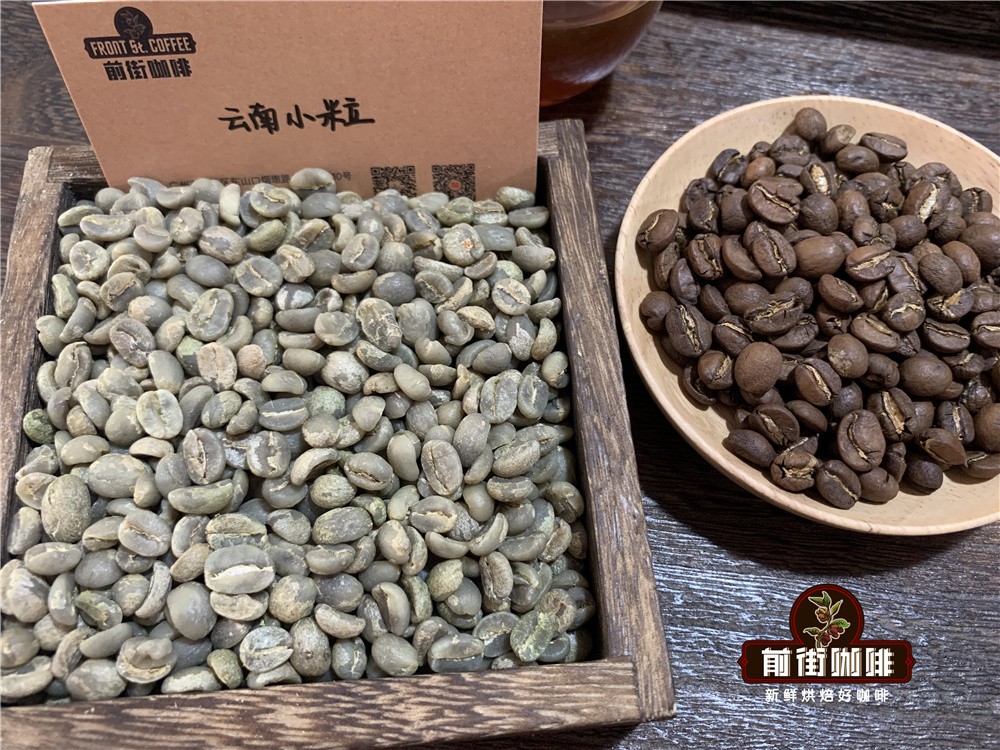
Coffee flavor is inseparable from variety—variety is fundamental and largely determines a coffee's general flavor character. Arabica coffees mostly appear as specialty coffees, while Robusta usually shows up in espresso blends. That means Arabica flavors tend to be better than Robusta's, though not every Arabica beats every Robusta. Yunnan Arabica coffee, taste-wise, sits in the neutral category—fragrant but not bitter, rich but not intense—well suited to general palates. That said, most Yunnan plantings today are Catimor, which caps how good the average cup can be.
Yunnan Coffee Bean Processing Methods
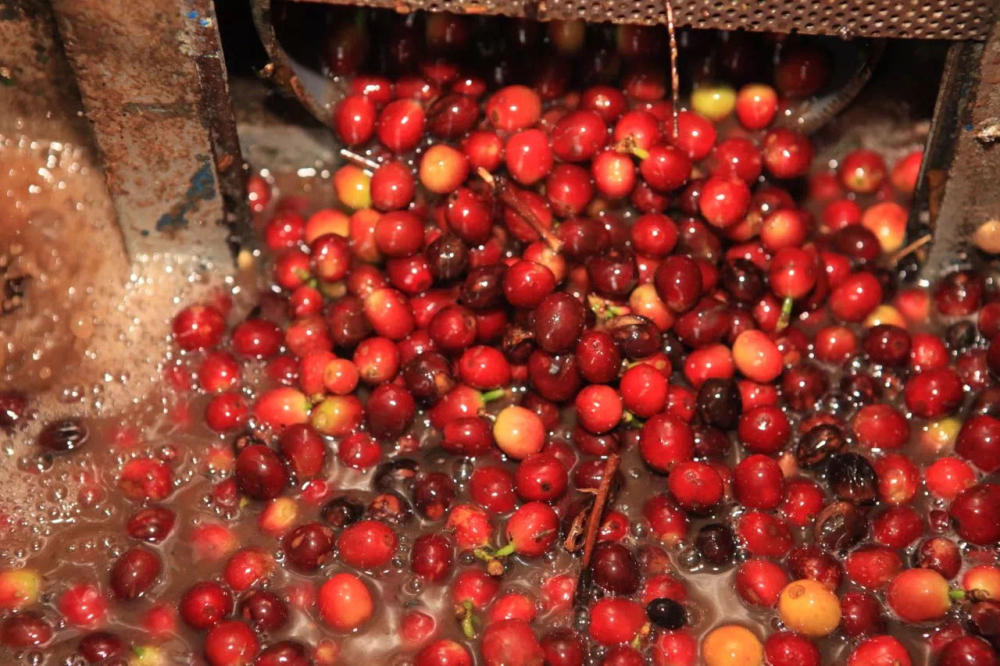
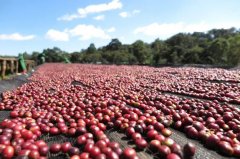
Yunnan's rainy, foggy weather has made washed processing the most common method for Yunnan coffee. Natural process lots exist too—such as FrontStreet's natural Catimor and FrontStreet 2013 Natural Typica. As specialty coffee has advanced, Yunnan has also developed special methods like honey processing, though these still cannot mask the inherent flavors of Yunnan beans, so FrontStreet sticks to the most traditional natural and washed methods. Washed beans also express local character more clearly, which is why most of FrontStreet's daily beans are washed.
FrontStreet Coffee's Brewing Parameters for Yunnan Catimor Coffee
FrontStreet's brewing parameters: use a Kono dripper. Water temperature: 88°C. Dose: 15 grams. Coffee-to-water ratio: 1:15. Grind size: medium-fine (75% pass-through rate with the Chinese standard #20 sieve).
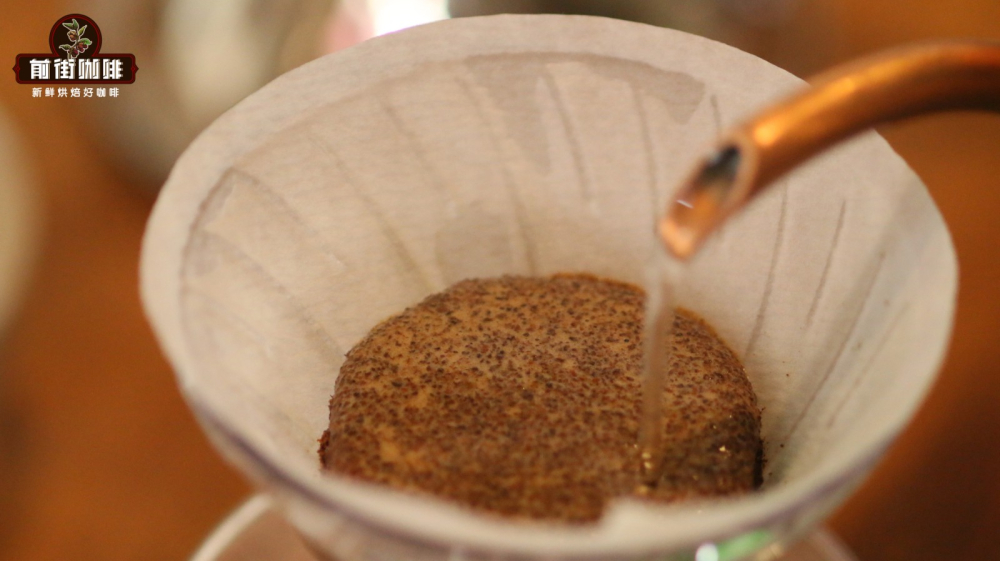
[FrontStreet Washed Yunnan Arabica flavor]: herbal notes, nutty aroma, chocolate, caramel, black tea sensation.
[FrontStreet Natural Yunnan Catimor flavor]: nuts, chocolate, spices, caramel, plum.
FrontStreet Coffee's Brewing Suggestions
Whatever coffee you brew, freshness is the key to a delicious cup. FrontStreet has always believed that bean freshness is closely tied to flavor, which is why every order is roasted within 5 days of shipping. FrontStreet's roasting philosophy is "freshly roasted good coffee," ensuring every customer receives coffee at its freshest. The resting period is about 4-7 days, so by the time coffee arrives, flavor is right at its peak.

A note for those who buy pre-ground coffee: grounds need no resting period, since the pressure of carbon dioxide inside the package during transit helps mellow the flavor—you can brew immediately on arrival. But ground coffee should be brewed promptly, because it oxidizes quickly once exposed to air and its flavor fades fast. FrontStreet therefore recommends buying whole beans and grinding fresh before brewing to get the fullest flavor.
FrontStreet Coffee Recommendation
To taste both sides of Yunnan, start with the two FrontStreet lots above. FrontStreet Washed Yunnan Arabica pours herbal and nutty with chocolate, caramel, and a black-tea finish—brew it on a Kono dripper at 88°C, 15 grams, a 1:15 ratio, and a medium-fine grind (75% pass-through on the #20 sieve). FrontStreet 2013 Natural Typica, grown at FrontStreet's own Lincang estate from one of Arabica's oldest varieties, is naturally dried to bring out berries, brown sugar, nuts, and black tea. If you drink espresso, FrontStreet Black Cocoa Blend pairs Yunnan small-bean with Brazil Cerrado for nutty, brown-sugar sweetness and a smooth almond-cream latte texture.
Important Notice :
FrontStreet Coffee is a long-established specialty coffee roaster in Guangzhou China, selling freshly roasted beans from its own farm in Yunnan as well as dozens of carefully selected single-origin beans from around the world for both pour-over and espresso. The products deliver consistently excellent quality and great value, with shipping within 24 hours. Guangzhou's FrontStreet Coffee shop is recommended by many coffee lovers, and the beans are now available online at the Tmall 。
FrontStreet Coffee has moved to a new address:
FrontStreet Coffee Address: 315,Donghua East Road,GuangZhou
Tel:020 38364473
 Scan and follow the En Gafei WeChat official account. Please indicate that the reprint comes from "En Gafei".