Yirgacheffe Coffee Bean Flavor Characteristics Taste Profile Ethiopia Yirgacheffe Specialty Coffee Pour-over Ratio Parameters

With the rise of the third wave of specialty coffee, coffee has gradually become part of daily life as an everyday beverage, bringing a little good mood to the start of the day with a simple cup. As the birthplace of coffee, Ethiopia and its shepherd legend lend the drink a great deal of magic.
Ethiopia's Renowned Coffee Regions
Ethiopia's most famous coffee beans undoubtedly come from the Yirgacheffe region, with a basic flavor profile of lemon and citrus notes and a very clean taste. In the Guji region, Hambella produces the renowned Flower Queen coffee, and these two regions have been classified separately by the ECX because of their unique flavors. Yirgacheffe was originally a small town in Ethiopia and is the country's highest-altitude coffee-producing region. Yirgacheffe has many cooperatives, among which the Konga Cooperative and Kochere are also highly regarded.

Kochere Region
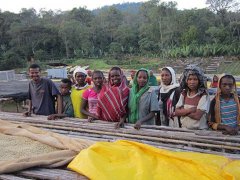
Kochere lies in a small producing area southeast of Yirgacheffe, made up mainly of smallholders with very small plots. The cultivation altitude is roughly 1800-2000 meters, and coffee beans are the main source of income here. Thanks to the relatively advanced green bean water-processing equipment in the area, it has consistently maintained high standards in washed processing, producing Yirgacheffe beans with a clean sweetness and complex notes of honey and citrus.

Konga Cooperative
The Konga Cooperative emerged from the Woka Cooperative. When FrontStreet Coffee roasts, we typically use a light roast to highlight the bright fruit acidity of FrontStreet Coffee's washed Konga. The brewed cup therefore shows particularly rich flavors of citrus, black tea, floral notes and cream.

When FrontStreet Coffee brews FrontStreet Coffee's washed Yirgacheffe Konga for customers, we prefer higher water temperatures, such as 91°C. Because we know this light-roasted Konga well, high water temperatures are needed to extract the Yirgacheffe flavors from the beans. FrontStreet Coffee likes to use 15 grams of coffee with a 1:15 coffee-to-water ratio. When you taste it, you will discover Konga's bright citrus fruit acidity with distinct flavor layers.
Understanding Bean Size Variations
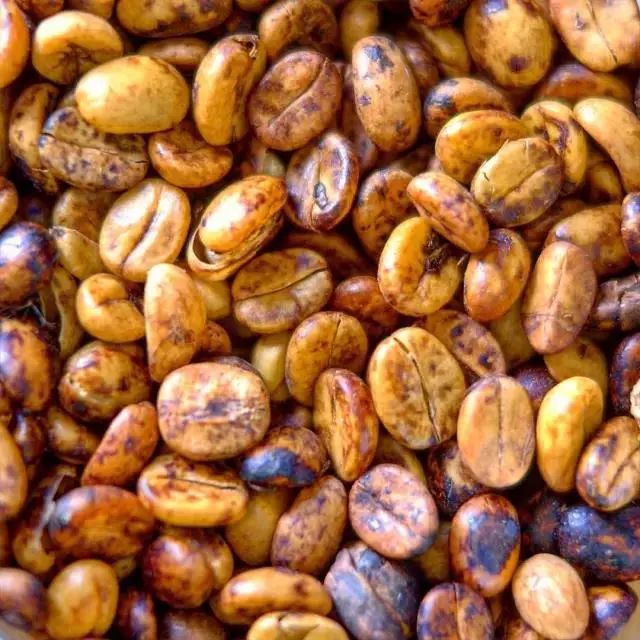
When FrontStreet Coffee baristas brew this Yirgacheffe, many observant customers notice that FrontStreet Coffee's washed Yirgacheffe beans are inconsistent in size and very uneven. Some then question whether the beans are truly from Ethiopia or are mixed with defective beans. FrontStreet Coffee would like to explain that our beans are definitely authentic Ethiopian beans, and that the size variation is related to Ethiopia's coffee management system itself.

Processing Methods and History
Traditionally, Yirgacheffe beans used the oldest natural processing method. However, because early natural-processed beans were often dried directly on the ground, they inevitably picked up earthy flavors, dust and other impurities. Combined with a lack of proper screening, the quality of natural-processed beans was generally average. In 1972, Ethiopia introduced Central and South American washing technology to improve coffee quality, making the jasmine floral and citrus-lemon aromas of Yirgacheffe beans clearer and brighter, and it quickly became one of the world's representatives of specialty coffee.
Ethiopia's Coffee Varieties
As the birthplace of coffee, Ethiopia has an enormous variety of coffee species, and many wild varieties have still not been cataloged. That is why so many coffee varieties are collectively referred to as local indigenous varieties. On large estates, where coffee is typically planted with Bourbon, the resulting beans are relatively uniform in size. Let FrontStreet Coffee give an example: imagine an estate where Bourbon, Typica, Caturra, Catuai and Castillo are all planted together in one field. When farmers harvest, they do not separate which variety came from which tree - they simply collect all the ripe cherries into the same basket. The beans merchants buy will naturally vary in size.

Ethiopia therefore developed its own grading system. Under traditional standards, washed beans are generally graded G1 and G2, with lower numbers indicating higher grades, while natural processing uses G3, G4 and G5. We hear that Ethiopia has now introduced new grading standards.

If you often visit FrontStreet Coffee stores, you will find many green bean and roasted bean samples. Generally, washed green beans are greenish-blue, while natural-processed green beans are yellowish-green. The difference is quite significant - washed Yirgacheffe beans carry more silver skin, while natural-processed beans have relatively less. Roast level is also closely related to silver skin: the darker the roast, the more cleanly the silver skin comes off. Ethiopia's coffee processing has traditionally used natural processing for Yirgacheffe, but washed methods are also used to ensure a stable supply of high-quality beans. FrontStreet Coffee's Yirgacheffe Konga uses washed processing, offering citrus and black tea notes on tasting.

Red Cherry Project
FrontStreet Coffee has also launched FrontStreet Coffee's Yirgacheffe Natural Red Cherry Project coffee. This FrontStreet Coffee Natural Red Cherry comes from a Red Cherry Project between a Dutch green bean merchant and Ethiopia. The initiator was a Dutch green bean merchant who found that Ethiopia's coffee quality was often inconsistent, which pushed green bean prices down. Ethiopian coffee farmers and the Dutch merchant then collaborated to carry out the Red Cherry Project.

They solve the problem at the source by paying higher prices for high-quality green beans, encouraging farmers to be more meticulous in every step of picking and processing. During harvest, they use fully manual picking to select cherries at high ripeness.
Yirgacheffe Red Cherry primarily uses the oldest natural processing method: hand-picking fully ripe cherries, which farmers then process and dry. When the coffee's moisture content drops to 12%, hulling machines dehull the beans, followed by manual selection to remove defective beans. As a result, the green beans from the Red Cherry Project are relatively uniform in size, and the brewed coffee tastes better.

Yirgacheffe beans have a very clear, bright flavor profile and a very clean taste when sampled, presenting dry lemon-citrus aromas and light floral notes on the palate - mainly due to the washed processing method. Beans processed this way have clearer flavors without impurities, which is why FrontStreet Coffee's daily regional beans mostly use washed processing: washed beans better reflect a region's most original flavor. Ethiopian coffee is likewise most famous for washed Yirgacheffe beans.
FrontStreet Coffee Recommendation
This article covers both of Yirgacheffe's classic expressions, and FrontStreet Coffee carries a bean for each. For the washed, citrus-and-black-tea style described here, the FrontStreet Coffee washed Yirgacheffe - including its Gedeb cooperative lot from the Woka area, where the local cooperative grew out of the Woka Cooperative under the YCFCU and became independent in 2012 - delivers clear lemon and citrus acidity, jasmine fragrance and no bitterness. For the natural side, FrontStreet Coffee's Yirgacheffe Natural Red Cherry is processed only from fully ripe hand-picked cherries and gives citrus acidity, juicy berry notes, honey sweetness and a creamy smoothness. Brew either at 91°C, 15g to 1:15, and the layers this article describes come through clearly.
Important Notice :
FrontStreet Coffee is a long-established specialty coffee roaster in Guangzhou China, selling freshly roasted beans from its own farm in Yunnan as well as dozens of carefully selected single-origin beans from around the world for both pour-over and espresso. The products deliver consistently excellent quality and great value, with shipping within 24 hours. Guangzhou's FrontStreet Coffee shop is recommended by many coffee lovers, and the beans are now available online at the Tmall 。
FrontStreet Coffee has moved to a new address:
FrontStreet Coffee Address: 315,Donghua East Road,GuangZhou
Tel:020 38364473
 Scan and follow the En Gafei WeChat official account. Please indicate that the reprint comes from "En Gafei".