Jamaica Blue Mountain No.1 Coffee Beans: Pour-Over Temperature, Grind Size, and Water-to-Coffee Ratio Recommendations - Blue Mountain Coffee Flavor Profile

Before the concept of specialty coffee entered public awareness, the market was dominated by rich, mellow, bitter coffee. During that time, Blue Mountain Coffee stood at the pinnacle of the coffee world with extraordinary renown. Whenever coffee bean rankings were compiled, Blue Mountain always ranked among the top.
How Did Blue Mountain Coffee Become Famous?
Jamaica's Blue Mountain Range, with its superior natural environment, has produced the world-renowned Blue Mountain Coffee. Before the 1960s, Jamaica's coffee beans were already highly popular throughout the coffee market.

In 1969, the entire island of Jamaica was severely affected by hurricane damage. At that time, Japan's UCC Corporation not only provided financial assistance to Jamaica but also introduced scientific ecological cultivation methods to restore Blue Mountain coffee cultivation. To express gratitude for Japanese corporate assistance, the Jamaican government signed a 30-year contract with Japan, promising to allocate 90% of Blue Mountain Coffee's production quota to Japan, with the remaining 10% (about 245 tons) distributed to other markets for sale. As the saying goes, scarcity makes things valuable. Blue Mountain Coffee had inherently low supply, was later monopolized by trade, and was heavily marketed on the demand side, naturally driving up prices.
Actually, during the period of the agreement with Japan, Blue Mountain Coffee was not completely consumed locally. They would sell部分 Blue Mountain Coffee at high prices to other Asian countries and regions. With increased promotion efforts by the Japanese, coffee professionals from many neighboring countries also began to pursue Blue Mountain Coffee, such as Singapore, South Korea, Taiwan, and Hong Kong. Since 2000, the "Blue Mountain craze" gradually began to spread to mainland China. Therefore, when we mention coffee to our elders, they always immediately think of the great name "Blue Mountain."

During the 2008 global financial crisis, Jamaica attempted to sell Blue Mountain Coffee to more countries, and coincidentally, the agreement with Japan had expired, allowing more of Blue Mountain Coffee's quota to be distributed to other countries. With the expansion of China's coffee market demand, many domestic merchants can now directly import Blue Mountain Coffee beans from Jamaica. FrontStreet Coffee's Jamaica Blue Mountain No. 1 coffee is produced by the local historic Clifton Mountain Estate, using traditional washed processing.
Blue Mountain Flavor Coffee ≠ Blue Mountain Coffee
As FrontStreet Coffee mentioned above, due to Blue Mountain's great reputation and its high price and scarcity, the market is filled with numerous genuine and fake mixed products. Various inferior coffees that incorporate "Blue Mountain" terminology can always mislead consumers. For example, what we often see on shopping platforms: Blue Mountain Flavor, Blue Mountain Blend, Blue Mountain Mixed... all carry the name of Blue Mountain but are actually far from genuine Blue Mountain. Some are even instant coffee, completely different from the real Blue Mountain we're discussing.

Being acclaimed as the world's best coffee, it naturally wouldn't be cheap. Therefore, "Blue Mountain beans" priced at just tens of yuan are unlikely to be genuine. As consumers, we can identify authenticity by checking whether merchants have the handcrafted oak barrels used for transporting Blue Mountain green beans. Jamaica is the only coffee-producing region in the world that uses oak barrels as coffee transport containers. Compared to coarse burlap bags, oak barrels have the advantage of absorbing and releasing internal and external humidity while isolating coffee aroma from escaping, allowing coffee beans to maintain more stable moisture content for more consistent roasting. Later, wooden barrels also became one of the identifiers for authentic Blue Mountain Coffee.
Additionally, producers and distributors of Blue Mountain Coffee must be licensed by the Jamaican government and authorized by the Jamaica Coffee Industry Board. All Blue Mountain batches exported from local sources must undergo quality inspection and certification by the Coffee Board and carry its label. Therefore, we can ask merchants to present relevant Blue Mountain certification to identify whether it's genuine Blue Mountain. FrontStreet Coffee's Blue Mountain No. 1 coffee is produced by Clifton Mountain Estate and possesses quality certification certificates issued by the Jamaica Coffee Board, authorized sales certificates issued by Blue Mountain Coffee manufacturers, and certificates of origin for Jamaican Blue Mountain Coffee. The Dongshankou store also displays oak barrels containing Blue Mountain green beans.

Which Grade of Blue Mountain Coffee Beans is Best?
If we confirm that the Blue Mountain Coffee beans we purchase are genuine, I believe everyone hopes to drink the highest grade of Blue Mountain, after all, the higher the grade, the better the flavor performance. The grading of Blue Mountain Coffee is inspected and certified by the Jamaica Coffee Industry Board (CIB). In terms of green bean quality control, CIB regulates the cultivation, production, and sales of Jamaican Blue Mountain Coffee, thereby improving coffee quality, standardizing coffee production and processing procedures, while coordinating the market sales of Blue Mountain Coffee. CIB is also responsible for grade classification and quality testing of coffee produced in the Blue Mountain Range. This means that Blue Mountain Coffee sold worldwide must be certified by CIB and carry its label.
Compared to other coffee-producing regions, Jamaica was the first country to recognize coffee's "terroir." The standards for evaluating Blue Mountain green bean quality cover multiple categories: green bean specifications, defect rate, color, uniformity, and cupping performance after roasting (including dry aroma, wet aroma, acidity, flavor, body, cleanliness, etc.). Bean size is determined using various mesh-sized sieves - coffee beans that don't pass through the sieve openings meet the specification standards. Color evaluation includes visual observation and colorimeter readings, with blue-green being the highest grade.

Combining the above various standards, Blue Mountain Coffee is divided into 4 grades, from high to low: NO.1, NO.2, NO.3, and PB, which are translated domestically as Blue Mountain No. 1, Blue Mountain No. 2, Blue Mountain No. 3, and Blue Mountain Peaberry. Top-grade Blue Mountain No. 1 green beans must meet specifications of 17 screen or larger, defect rate below 3%, moisture content around 13%, and exhibit rich coffee aroma in cupping, with smooth, balanced taste, low, weak acidity, and persistent sweet aftertaste.
Blue Mountain Coffee is So Expensive - How to Brew Without Waste?
First, FrontStreet Coffee will confirm the freshness of the coffee beans before brewing. If the roast date has exceeded more than a month, FrontStreet Coffee will choose fresher coffee beans. Since coffee beans have an optimal flavor enjoyment period after roasting, the coffee's aroma accelerates loss with storage time, making it difficult to present the original flavors during brewing. This is also why FrontStreet Coffee insists on only shipping coffee freshly roasted within 5 days - FrontStreet Coffee hopes every guest can enjoy the most complete flavor period of the coffee beans.

The charm of pour-over coffee lies in being able to adjust various subtle parameters, regulate extraction variables at different stages, and obtain coffee with flavors and mouthfeel you like. FrontStreet Coffee believes that besides the coffee beans themselves, extraction parameters equally affect the final taste of a cup of pour-over coffee. Therefore, to brew Blue Mountain Coffee with rich body and sweet aftertaste, the following parameters need attention.
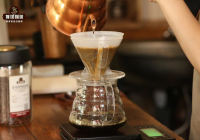
When brewing predominantly bitter coffee beans, FrontStreet Coffee typically prioritizes using the KONO dripper to highlight the coffee's rich body. The upper part of the KONO dripper allows better fit with filter paper. Compared to the V60 dripper, the coffee extraction method is mainly immersion-based extraction, increasing the overall concentration of the coffee and enhancing its body. Similarly, the KONO dripper is also suitable for brewing Brazil Queen Estate Coffee beans and Golden Mandheling Coffee beans.

Additionally, considering that medium-dark roast coffee has undergone a certain degree of roasting, the internal structure of the beans will be fluffier than light-roast coffee, thus having better water absorption. To avoid over-extraction, FrontStreet Coffee chooses a grind size with 75% pass-through rate on standard No. 20 sieve, as well as 88°C water temperature, paired with FrontStreet Coffee's customary three-stage pouring method.
FrontStreet Coffee's store parameters for brewing Blue Mountain No. 1 are:
Dripper: KONO dripper
Water temperature: 88°C
Powder-to-water ratio: 1:15
Coffee grounds: 15g
Grind size: EK43s - setting 10.5 (75% pass-through rate on standard No. 20 sieve)

FrontStreet Coffee first wets the KONO dripper, then aligns and places the filter paper, allowing it to fit more snugly with the dripper. After pouring out the water from the serving pot, place 15g of coffee grounds. After blooming with 30g of water for 30s, begin pouring in small circular motions in the center until reaching 125g, then start segmenting. Wait until the coffee bed drops to half the dripper's position before beginning to pour the second stage with the same technique until reaching 225g. Once all dripping is complete, remove the dripper.

Blue Mountain No. 1 coffee has the sweet aroma of dark chocolate, caramel sweetness, and gentle, elegant acidity. Each flavor is balanced in harmony, with smooth and rich mouthfeel, exhibiting very typical Blue Mountain characteristics.
Important Notice :
FrontStreet Coffee is a long-established specialty coffee roaster in Guangzhou China, selling freshly roasted beans from its own farm in Yunnan as well as dozens of carefully selected single-origin beans from around the world for both pour-over and espresso. The products deliver consistently excellent quality and great value, with shipping within 24 hours. Guangzhou's FrontStreet Coffee shop is recommended by many coffee lovers, and the beans are now available online at the Tmall 。
前街咖啡 FrontStreet Coffee has moved to new addredd:
FrontStreet Coffee Address: 315,Donghua East Road,GuangZhou
Tel:020 38364473
 Scan and follow the En Gafei WeChat official account. Please indicate that the reprint comes from "En Gafei".