Complete Guide to Central American Coffee Origins - Characteristics and Stories of Renowned Coffee Growing Regions
For professional coffee knowledge exchange and more coffee bean information, follow FrontStreet Coffee (WeChat public account: cafe_style).
Compared with African coffee, Central American coffee has a more balanced flavor profile, with acidity and bitterness in near-perfect harmony - which is exactly why it appeals to so many drinkers. FrontStreet Coffee, driven by the idea of letting everyone taste different kinds of beans, has launched many single origins from Central America. Below, FrontStreet Coffee introduces several representative coffee-producing countries of the region.
Costa Rican Coffee
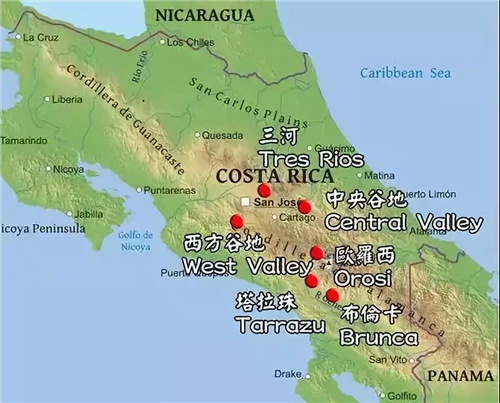
Any discussion of Costa Rican single-origin coffee must mention the Tarrazú region. The Arabica beans grown here have high purity, a mellow taste, and very balanced, stable acidity, and the honey processing method makes Costa Rican beans exceptionally rich in sweetness. FrontStreet Coffee's Bacha from the Musician Series is exactly that kind of bean - brimming with sweetness. When you taste it, you find abundant fruit flavors: apple, strawberry, grape, and more.
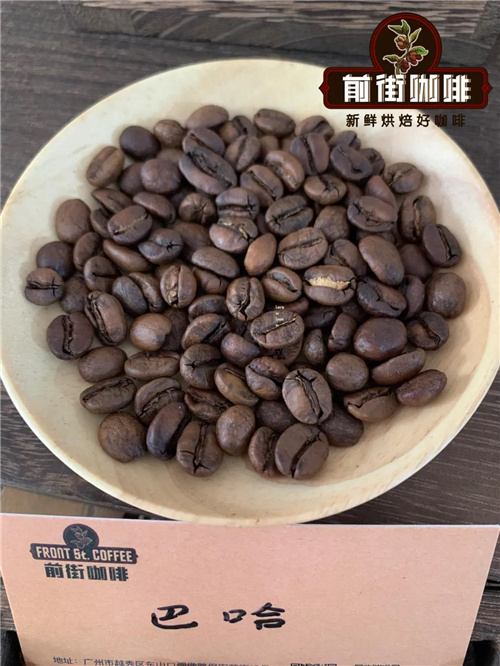
The exceptional sweetness of FrontStreet Coffee's Bacha is closely tied to the raisin honey processing used for its green coffee. The general steps: first dry the cherries like raisins, typically for two to three days; once the cherries' moisture has dropped, hull them while preserving the pectin, then continue drying. In Costa Rica, the degree of pectin retained defines the grades: yellow honey with 40% pectin, red honey with 25%, and black honey retaining almost all of it.
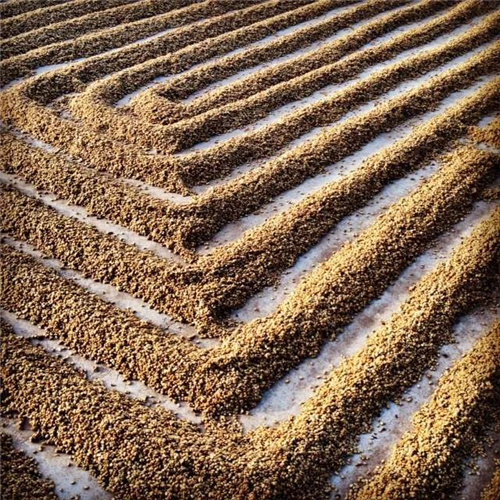
Costa Rican coffee grows mainly on volcanic mountains above 1,000 meters. The fertile, well-drained volcanic soil and these climatic conditions create Costa Rica's unique growing environment - terrain well suited to the Caturra and Catuai varieties. Costa Rica also has a variety of its own, however: Villa Sarchi. Relatively rare, Villa Sarchi suits high-altitude areas and has strong wind resistance, though it needs shade trees to grow at its best.
Guatemala
Guatemala also lies in Central America, with tropical rainforest in the north and four-kilometer-high volcanic terrain in the center; the volcanic soil is rich in trace elements. The country's coffee history is long, though it declined during years of war - but through sustained effort, Guatemala has again become a major Central American producer.
In Guatemala's grading system, altitude determines quality, and SHB (Strictly Hard Bean) is the highest grade. Coffee trees generally grow above 1,400 meters, and green beans are typically washed. High-quality Guatemalan coffee generally shows high acidity and rich flavors with a very mellow taste.
Guatemala's two most famous regions are Antigua and Huehuetenango. Because beans from these two regions are exceptionally high in quality and flavor, FrontStreet Coffee has launched beans from both: the Huehuetenango beans from FrontStreet Coffee's Daily Bean Series, and the Flor from Antigua.
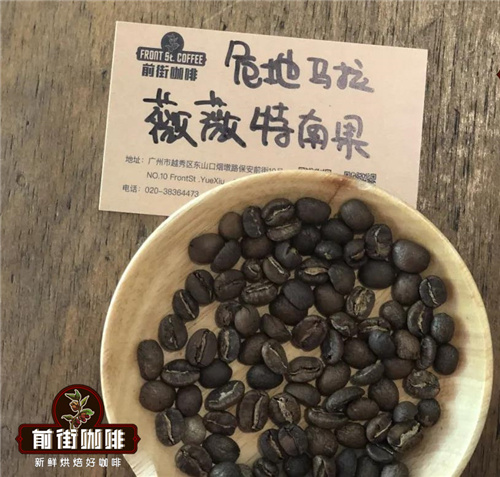
FrontStreet Coffee has cupped the Flor beans from Antigua and found that the region's single origins carry very typical Guatemalan flavors. On the first sip you feel bright fruit acidity, and during brewing you smell prominent fruity and melon aromas - very refreshing.
Guatemala's varieties are mainly Bourbon, Typica, Caturra, and Catuai, with a small amount of Yellow Bourbon, plus Geisha, Pacamara, and the newly cultivated Maracaturra - a quite diverse mix.
Honduras
Honduras, in northern Central America, is an ideal place for coffee. Its terrain is mostly mountains and plateau, its climate tropical and mild, and its rainfall abundant - conditions perfectly suited to the Bourbon, Typica, Caturra, Catuai, and Pacas varieties the country mainly cultivates.
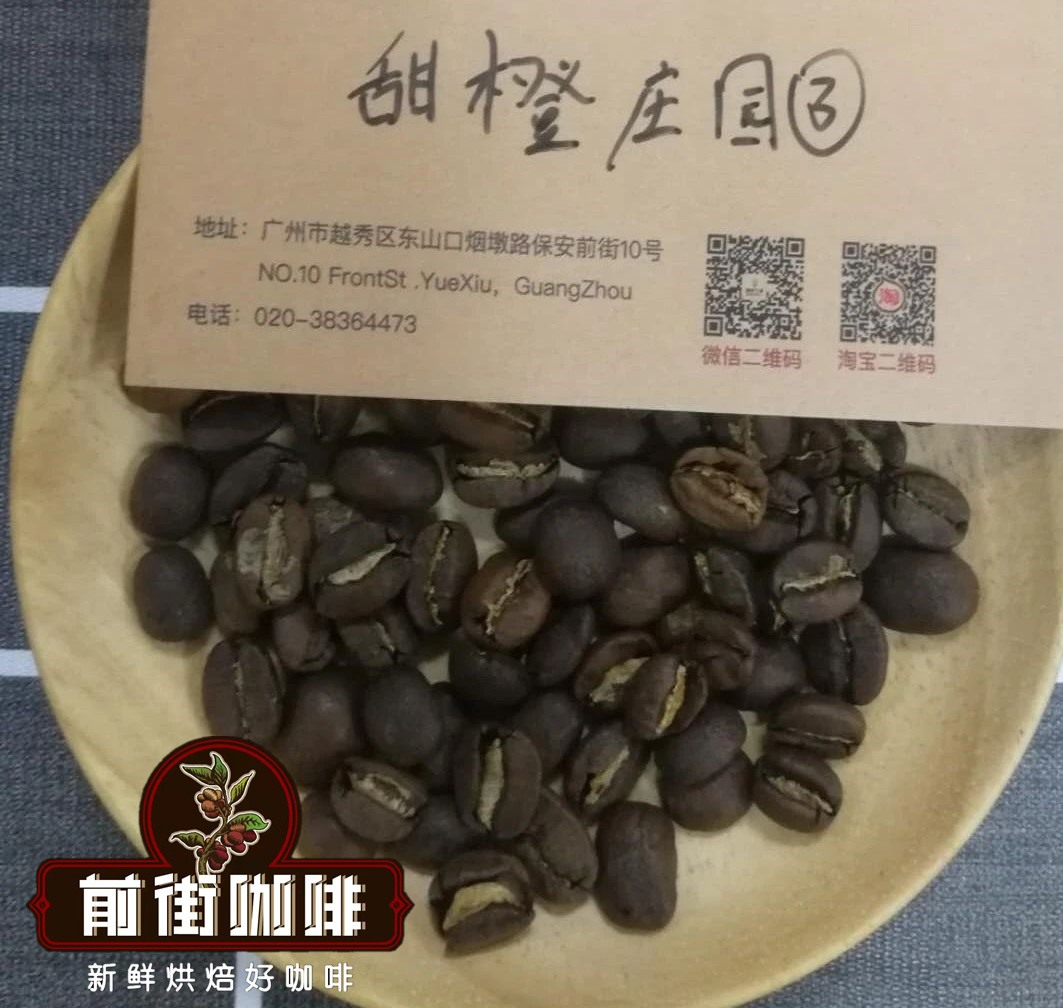
Honduras's Sweet Orange Estate is also well known: the shade trees over its coffee are tall wild orange trees, hence the name. The estate currently grows Catuai, Caturra, Bourbon, and Geisha, and FrontStreet Coffee has launched a bean from it as well. FrontStreet Coffee's lot is mainly washed: after hand-picking, cherries are poured into water tanks to remove floaters, depulped, and fermented in tanks for 16-36 hours to strip the pectin, then cleaned and dried. Coffee processed this way tastes clean, with bright, lively fruit acidity plus fruit and floral notes.
FrontStreet Coffee has introduced these three very famous Central American producers here. Though all are Central American beans, their flavors differ markedly. FrontStreet Coffee has also noticed that most Central American coffee countries sit on volcanic terrain - and it seems volcanic landforms contribute greatly to coffee flavor.
As one of the world's three major coffee-producing regions, the Americas - Central America in particular - can hold their own even against Ethiopia's Yirgacheffe or Sidamo. FrontStreet Coffee believes every Central American single origin has its own unique flavor and is beautifully suited to pour-over brewing, which expresses a single origin's character perfectly.
Beyond Central America, the second major region is Africa, where Ethiopia is most famous: the clean lemon-and-citrus taste of Yirgacheffe, and the Queen of Sidamo from Sidamo - natural processed, with vanilla-cream flavors and intense floral aroma - which draws a very high click rate at FrontStreet Coffee shops. The third major region is Asia, where flavors run mellow, and Indonesian coffee is the outstanding representative: Sumatran Mandheling conquers drinkers with its wild herbal flavors, and a sweet aftertaste is one of its signatures.
The world's coffee regions lie mainly between the Tropic of Cancer and the Tropic of Capricorn - the Golden Coffee Growing Belt. FrontStreet Coffee believes this is nature's finest gift to humanity, letting cup after cup of delicious coffee flow into our daily lives and add color to them.
For more specialty coffee beans, please add FrontStreet Coffee's private WeChat account: kaixinguoguo0925
FrontStreet Coffee Recommendation
Honey processing - the method behind Costa Rica's famous sweetness - evolved from Brazil's pulped natural technique, which shortened drying and cured the off-flavors of improper fermentation. Costa Rican producers then refined it by varying how much mucilage is retained and how long the beans dry, giving rise to black, red, yellow, and white honey grades. Two FrontStreet Coffee lots show this craft at its best: FrontStreet Coffee Costa Rica Blackberry, a black honey processed with almost no mucilage removed and at least two weeks of shaded, regularly turned drying, roasted medium-light for an intense floral aroma and grape, berry, and ripe blackberry flavors; and FrontStreet Coffee Mozart, a raisin honey lot whose cherries are pre-dried three days on raised beds with 100% of the mucilage kept - harder to execute even than black honey, rewarding you with osmanthus, pineapple, and raisin aromatics in pour-over, cold brew, or moka pot.
If you love that honeyed sweetness, FrontStreet Coffee's Strawberry Candy (Caomeitang) Geisha blend pairs a raisin honey Costa Rican component with Panama Geisha: the Geisha brings its classic orange-blossom honeyed aroma while the Costa Rican side - 100% mucilage retained, zero-water processing - adds grape and dried blueberry fragrance, soft acidity, an almond finish, and pronounced sweetness. And for a classic Brazilian pulped natural for comparison, FrontStreet Coffee Cerrado delivers distinct cream, peanut, nut, and chocolate notes.
Important Notice :
FrontStreet Coffee is a long-established specialty coffee roaster in Guangzhou China, selling freshly roasted beans from its own farm in Yunnan as well as dozens of carefully selected single-origin beans from around the world for both pour-over and espresso. The products deliver consistently excellent quality and great value, with shipping within 24 hours. Guangzhou's FrontStreet Coffee shop is recommended by many coffee lovers, and the beans are now available online at the Tmall 。
FrontStreet Coffee has moved to a new address:
FrontStreet Coffee Address: 315,Donghua East Road,GuangZhou
Tel:020 38364473
 Scan and follow the En Gafei WeChat official account. Please indicate that the reprint comes from "En Gafei".