What is Freshly Brewed Coffee? The Story Behind Starbucks Pike Place Coffee Bean Development
When people talk about Starbucks' fresh brewed coffee, they are really talking about the common black coffee without sugar or milk on the market. Among Starbucks' most famous coffee beans, the Pike Place beans are undoubtedly the best known. This series mainly originates from Latin America and therefore has typical nutty and cocoa flavors with a balanced taste, which is why it is popular among coffee enthusiasts worldwide. For instance, FrontStreet Coffee also offers many coffee beans from Latin America. In this article, FrontStreet Coffee walks you through the story of Latin American coffee beans and the development behind Starbucks Pike Place coffee beans.
The Story Behind Starbucks Pike Place Coffee Bean Development
According to FrontStreet Coffee, the creation of Pike Place roasted coffee beans was born from a situation in which American Starbucks stores used to change the variety of fresh brewed coffee daily, allowing customers to experience various flavor combinations. Reality differed from Starbucks' expectations, however. Through market research, the team gradually realized that many customers were not aware that the bean variety changed daily. So when a gentleman ordered a "fresh brewed coffee" on his way to work each morning, the taste was different every time. He could not help but think that Starbucks' coffee quality was very inconsistent. Another group of customers found Starbucks' dark roast coffee too intense.
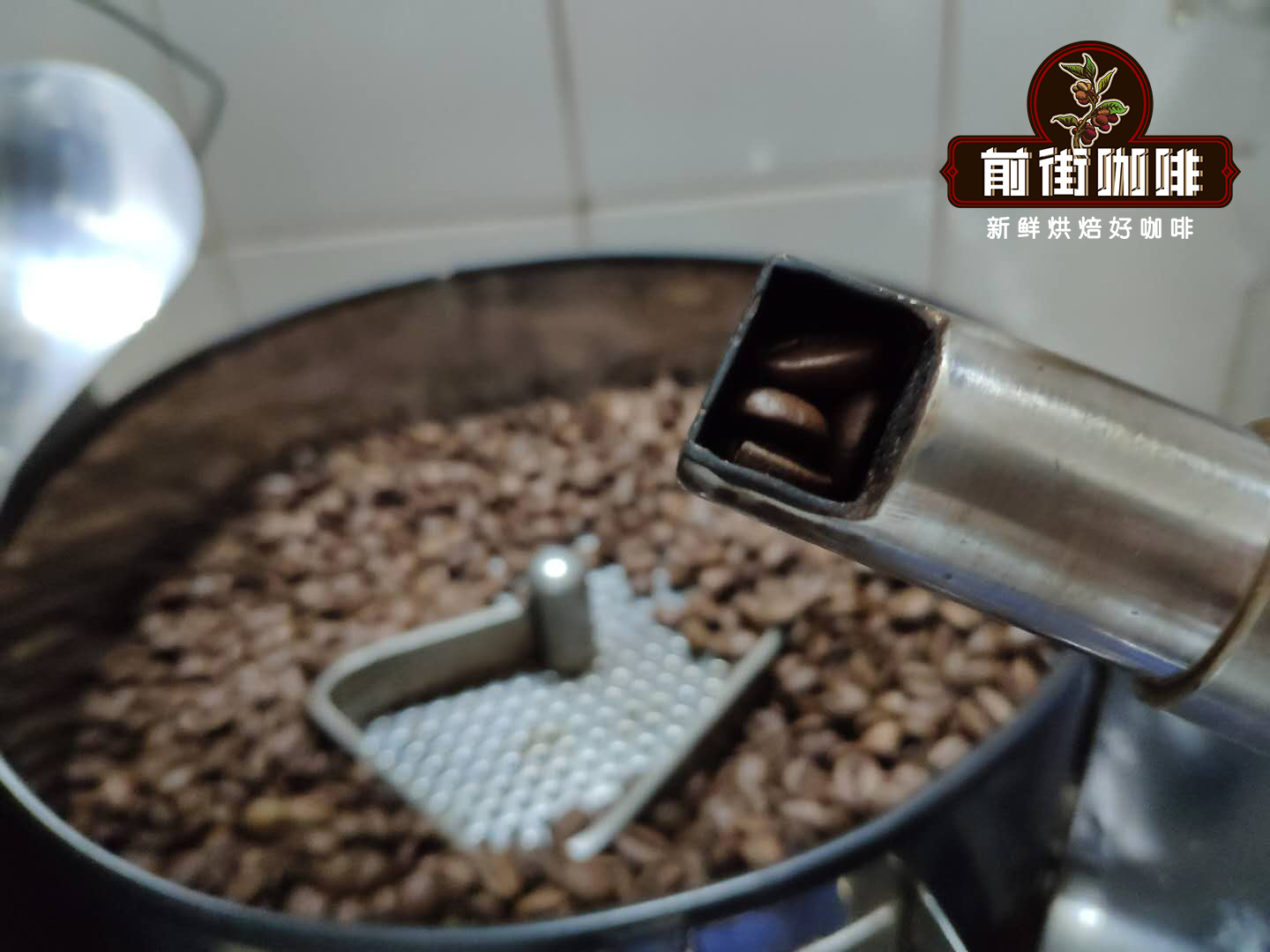
It was against this backdrop that in a 2007 "consumer taste research" report, Starbucks' coffee surprisingly ranked behind McDonald's, which was unbelievable for Starbucks. So Starbucks began developing the current Pike Place coffee beans from that time. The first formula tried included Colombian and Guatemalan coffee beans, and through multiple adjustments they finally developed this Pike Place roasted coffee bean. The name was chosen to continue the legacy of their first store at Seattle's Pike Place Market.
This shows how important a coffee bean with stable quality and flavor is. It is also why FrontStreet Coffee regularly conducts cupping sessions for coffee beans from various producing regions, aiming to ensure that everyone can enjoy a cup of coffee with stable flavor every time they visit FrontStreet Coffee. Latin American coffee beans are currently the most introduced producing-region coffee beans at FrontStreet Coffee. Next, FrontStreet Coffee will explain what makes the Latin American coffee producing region special.
Latin American Coffee Producing Regions
Latin America refers to the American regions south of the United States, including Mexico (North America), Central America, the West Indies, and South America. Latin America is the continent with the most humid and tropical climate in the world, with lower altitude areas being more humid and hot, while higher altitude areas are relatively drier.
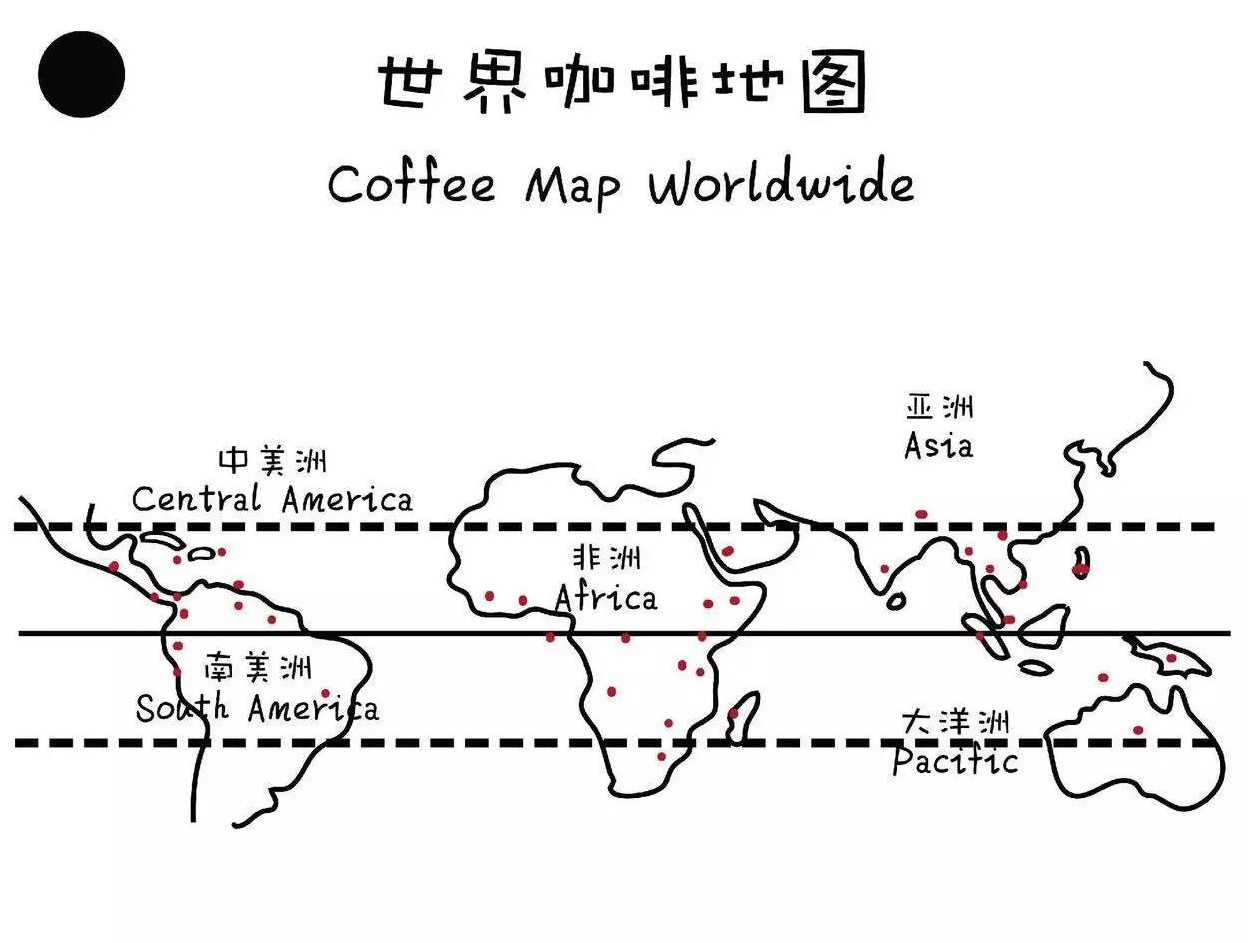
According to FrontStreet Coffee, coffee in Latin America originated in the 18th century, when most Latin American countries were deeply influenced by Spanish colonial rule. Coffee was also introduced during the Spanish colonial period, leading to significant growth in coffee cultivation in various countries at that time. However, this also resulted in some lack of quality in coffee beans until the emergence of specialty coffee concepts, when Latin American coffee-producing countries began to focus on refined production. Currently, Latin American coffee beans are mainly exported to the United States, followed by Europe and Asia.
As mentioned earlier, Starbucks Pike Place coffee beans use Guatemalan and Colombian coffee beans, with these two countries located in Central America and South America respectively. FrontStreet Coffee also offers coffee beans from these two countries, with quite good flavors. For instance, Guatemalan coffee beans have a unique smoky quality, while Colombian coffee beans have pure nutty and cocoa flavors, making them quite popular among coffee enthusiasts.
FrontStreet Coffee's previous articles often mentioned that the flavor of coffee beans mainly depends on their producing region environment, coffee varieties, and processing methods. Next, FrontStreet Coffee will explain the flavor formation of coffee beans from these two regions through these three factors.
Guatemalan Coffee
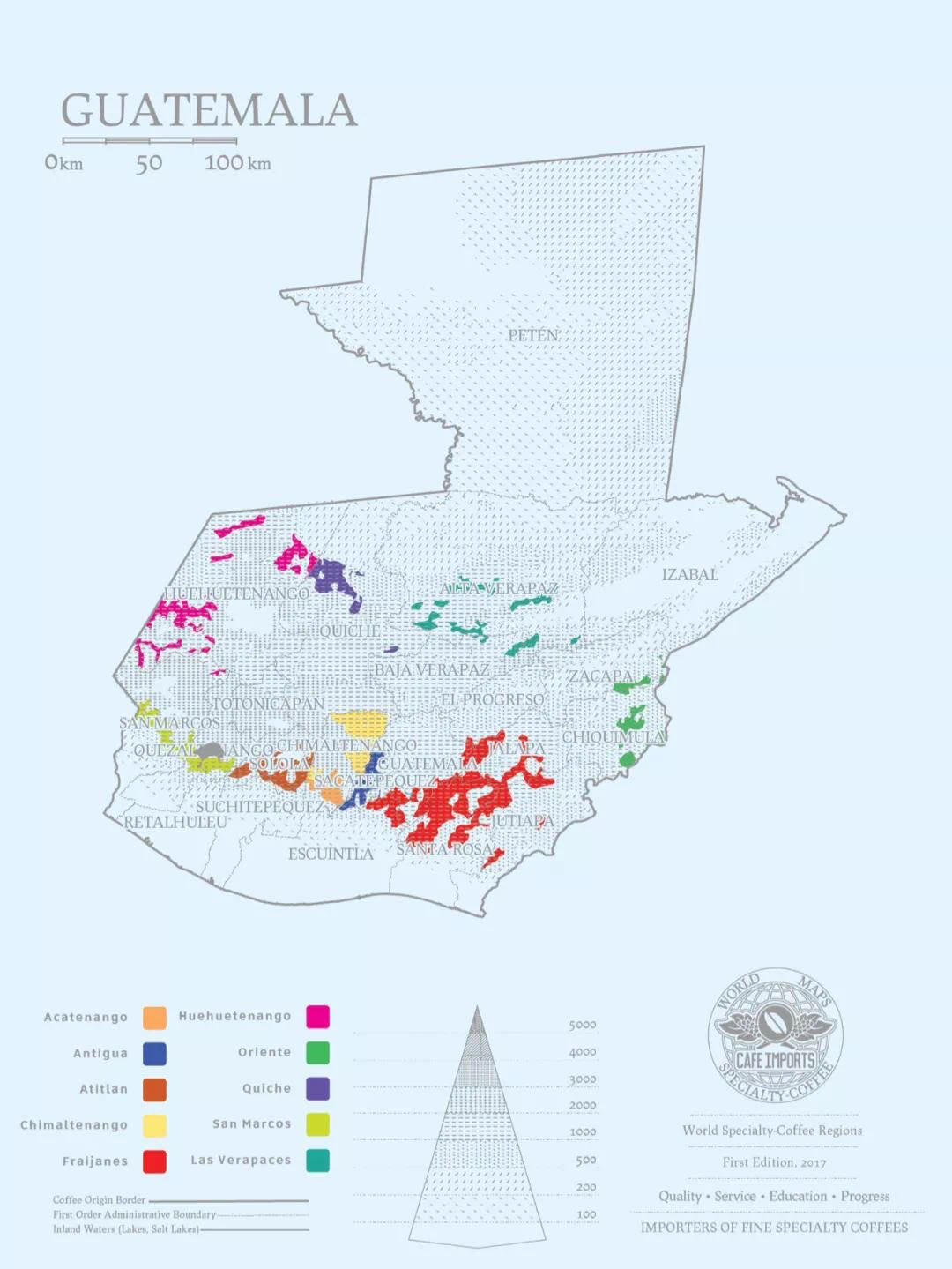
Guatemalan coffee has a special smoky flavor and a rich juice-like mouthfeel. Coffee varieties are mainly Bourbon, Typica, Caturra, and Catuai, with coffee belts mainly distributed at altitudes above 1500 meters, enjoying tropical rainforest, volcanic geology, and diverse microclimate conditions.
Guatemala has eight major producing regions, divided into five volcanic regions and three non-volcanic regions. The five volcanic regions are Antigua, Acatenango, Atitlan, Volcanic San Marcos, and Fraijanes. The three non-volcanic regions are Huehuetenango, Coban, and New Oriente.
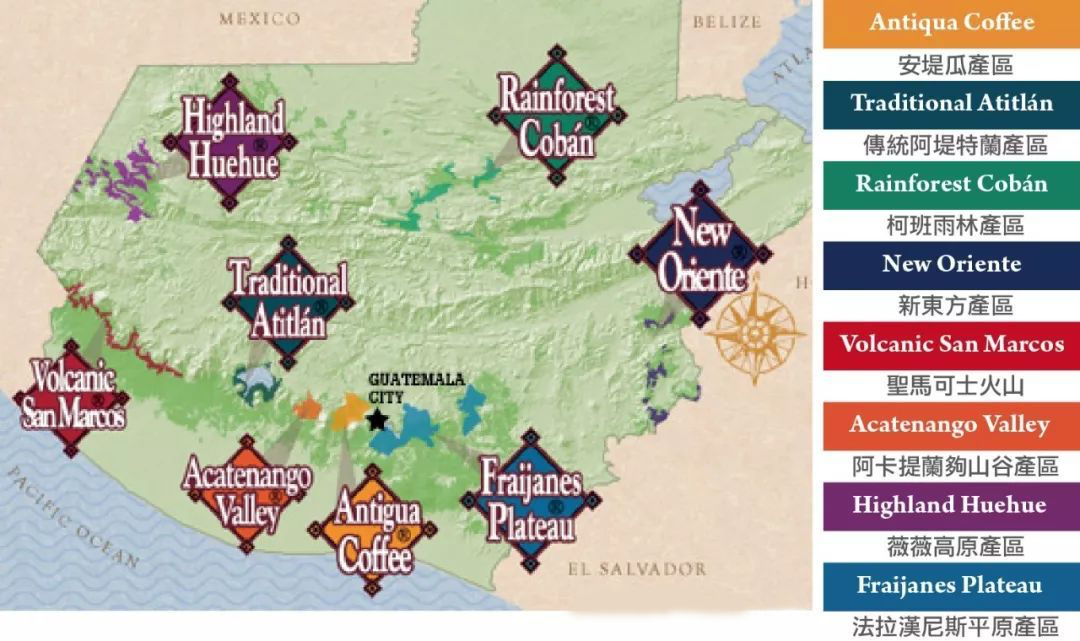
When mentioning Guatemala, the most impressive regions should be Antigua and Huehuetenango, representing Guatemala's two major areas. In FrontStreet Coffee's daily bean series there is a Guatemalan Huehuetenango. In fact, Antigua's reputation is far greater than Huehuetenango's, especially four or five years ago when Antigua's coffee beans always had the highest transaction price among several regions. However, with the development of specialty coffee, the quality of coffee produced in Huehuetenango has gradually gained attention from coffee enthusiasts, and the situation of one region standing alone has gradually changed.
Of course, a good producing region does not mean all coffee beans from that region have excellent flavor performance. When FrontStreet Coffee conducted cupping sessions on several Huehuetenango region coffee beans from different farms, we found one with a distinct rubber flavor, which seriously deviated from Guatemala's characteristic smoky quality and was instead an unpleasant flavor.
Guatemalan Coffee Bean Processing Methods
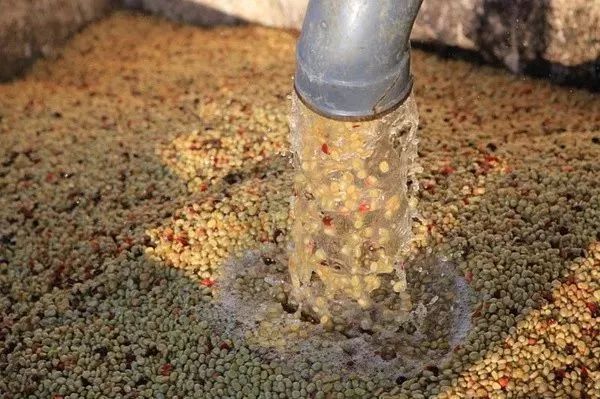
Guatemala's processing methods are mainly washed, with a small amount being natural. The main difference between these two methods is that washed processing can present the basic flavor of a region, that is, it can present the most original flavor of coffee beans. Therefore, FrontStreet Coffee often says that washed processing is the beginning of understanding regional flavors. Natural processing, on the other hand, adds sweet aromas and fermentation notes to this basic flavor.
Guatemalan Coffee Varieties
According to FrontStreet Coffee, Guatemala mainly grows single origin coffee beans of the Bourbon, Typica, Caturra, and Catuai varieties.
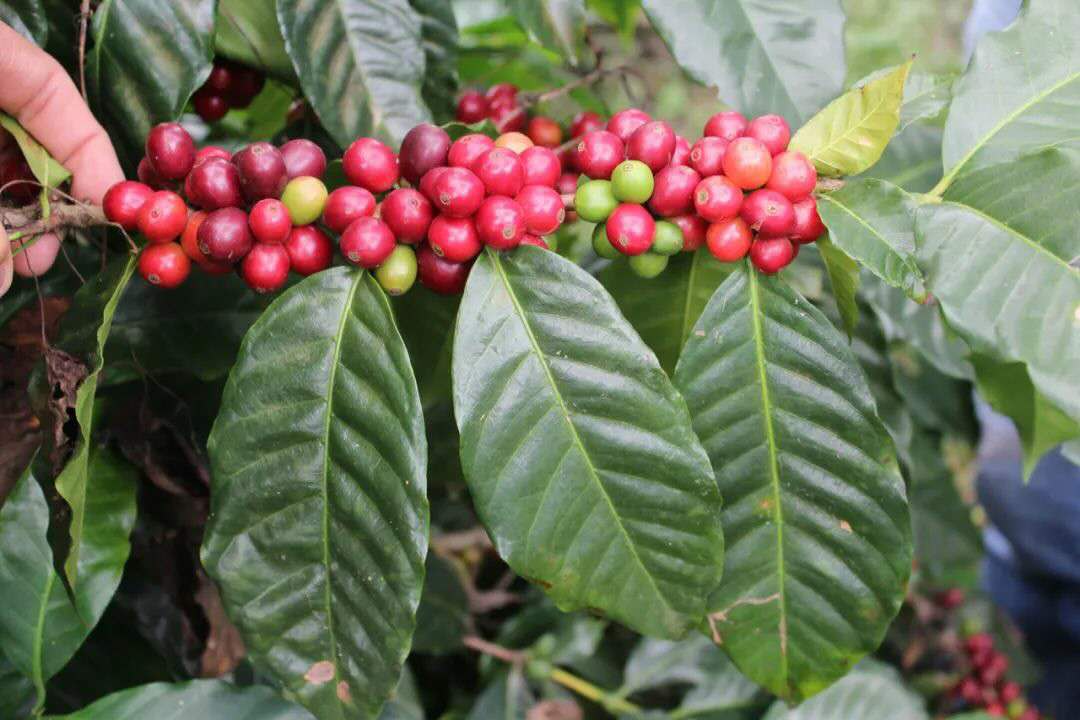
Bourbon: A natural variant of Typica. The coffee cherries turn wine-red when ripe, and the beans are relatively round in shape. Bourbon grown at high altitudes typically has better aroma and bright acidity, with flavors similar to red wine.
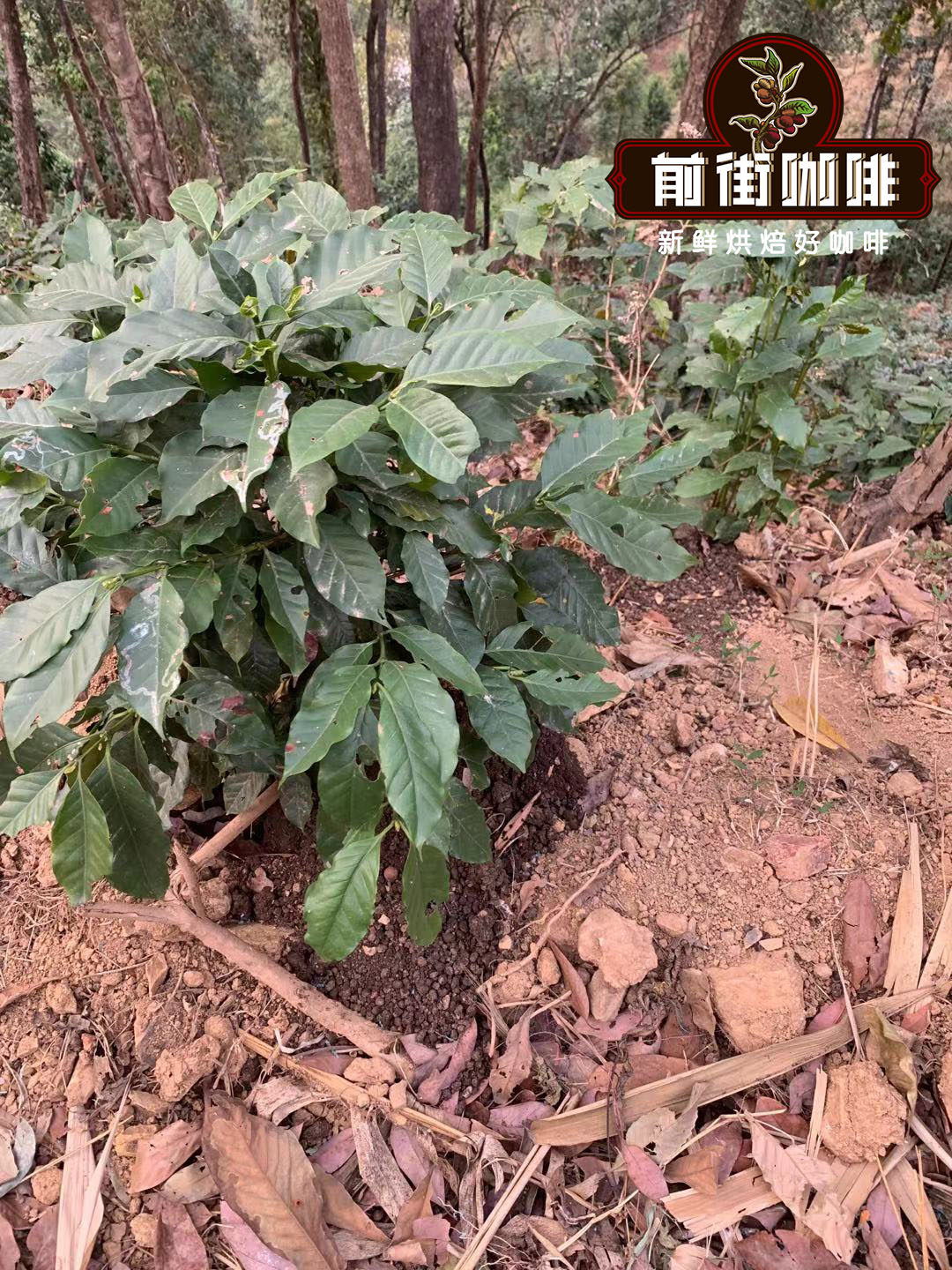
Typica: Typica has excellent flavor expression and is recognized as a specialty coffee variety, but its yield is extremely low and it is susceptible to rust disease, requiring more labor to manage. Typica coffee originates from southeastern Ethiopia and Sudan and is the most widely cultivated coffee variety in the Western Hemisphere. The plant is relatively robust but not tolerant to strong light. Typica's top leaves are reddish-bronze, earning it the name "copper-topped coffee."
Caturra: A natural variant of Bourbon discovered in Brazil in 1937. Its plant is not as tall as Bourbon, being more compact. Since it inherits Bourbon's bloodline, it has relatively weak disease resistance but a higher yield than Bourbon. Although discovered in Brazil, Caturra is not suitable for growth in Brazil, so it was not cultivated on a large scale there. Instead it became widely popular in Central and South America, with countries like Colombia, Costa Rica, and Nicaragua growing Caturra extensively.
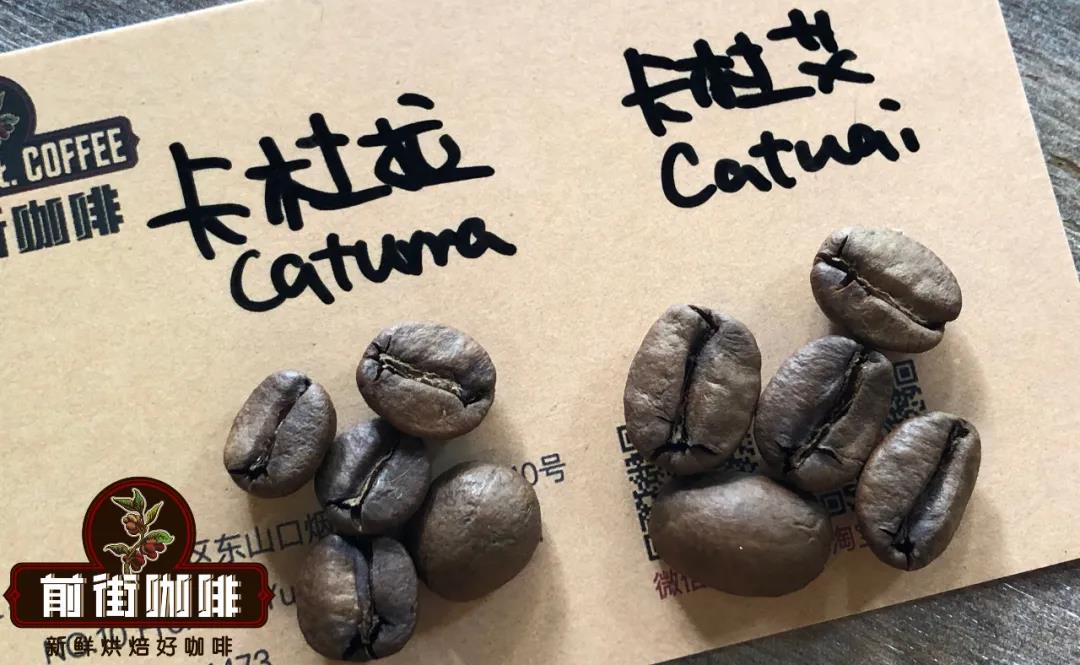
Catuai: A coffee variety artificially hybridized from Caturra and Mundo Novo. Catuai inherits Caturra's compact plant structure, requiring no shade, making it easy to grow and convenient to harvest. It also has better resistance to natural disasters than Mundo Novo and has good acidity in flavor. Catuai generally comes in two types: red fruit and yellow fruit.
Among these, the Antigua Flora coffee beans introduced by FrontStreet Coffee are of Bourbon and Caturra varieties, and the overall flavor presentation of these coffee beans closely aligns with Guatemalan coffee flavor characteristics.
FrontStreet Coffee Guatemala Antigua Flora Coffee Beans
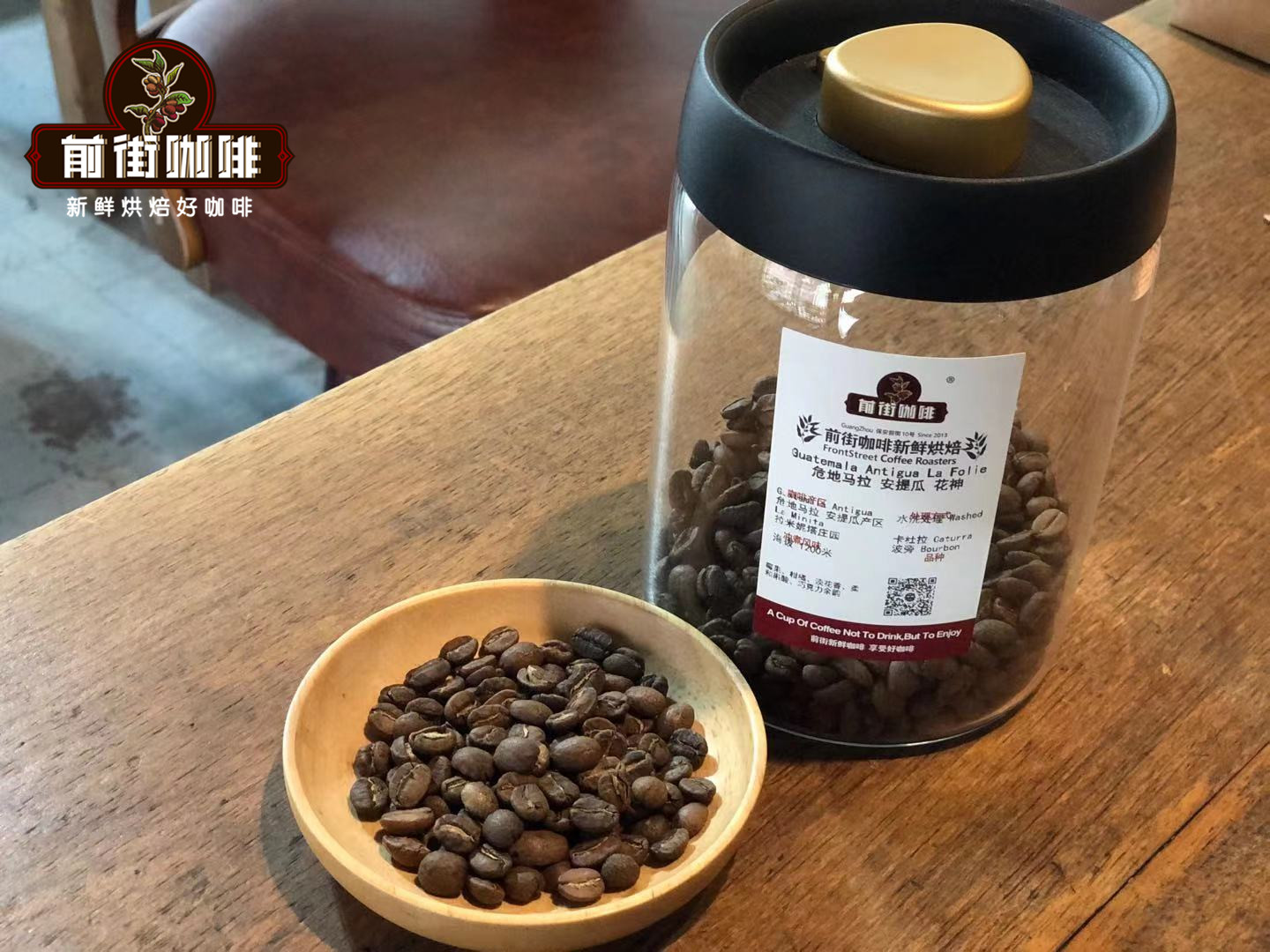
Country: Guatemala
Region: Antigua
Altitude: 1200m
Varieties: Bourbon, Caturra
Processing: Washed
Flavor: Berries, citrus, light floral notes, gentle fruit acidity, chocolate aftertaste
The above is FrontStreet Coffee's organized introduction to Guatemalan coffee beans. Next, we will introduce the flavor characteristics of Colombian coffee beans.
Colombian Coffee
Colombia is located in the northwestern part of the South American continent, bordering Panama in Central America. Situated in the tropics, its climate varies by terrain, covering rich volcanic soil with annual rainfall of 2000-3000mm. The climate is mild and the air is humid, and it is this climatic diversity that allows Colombian coffee to have harvest seasons year-round.
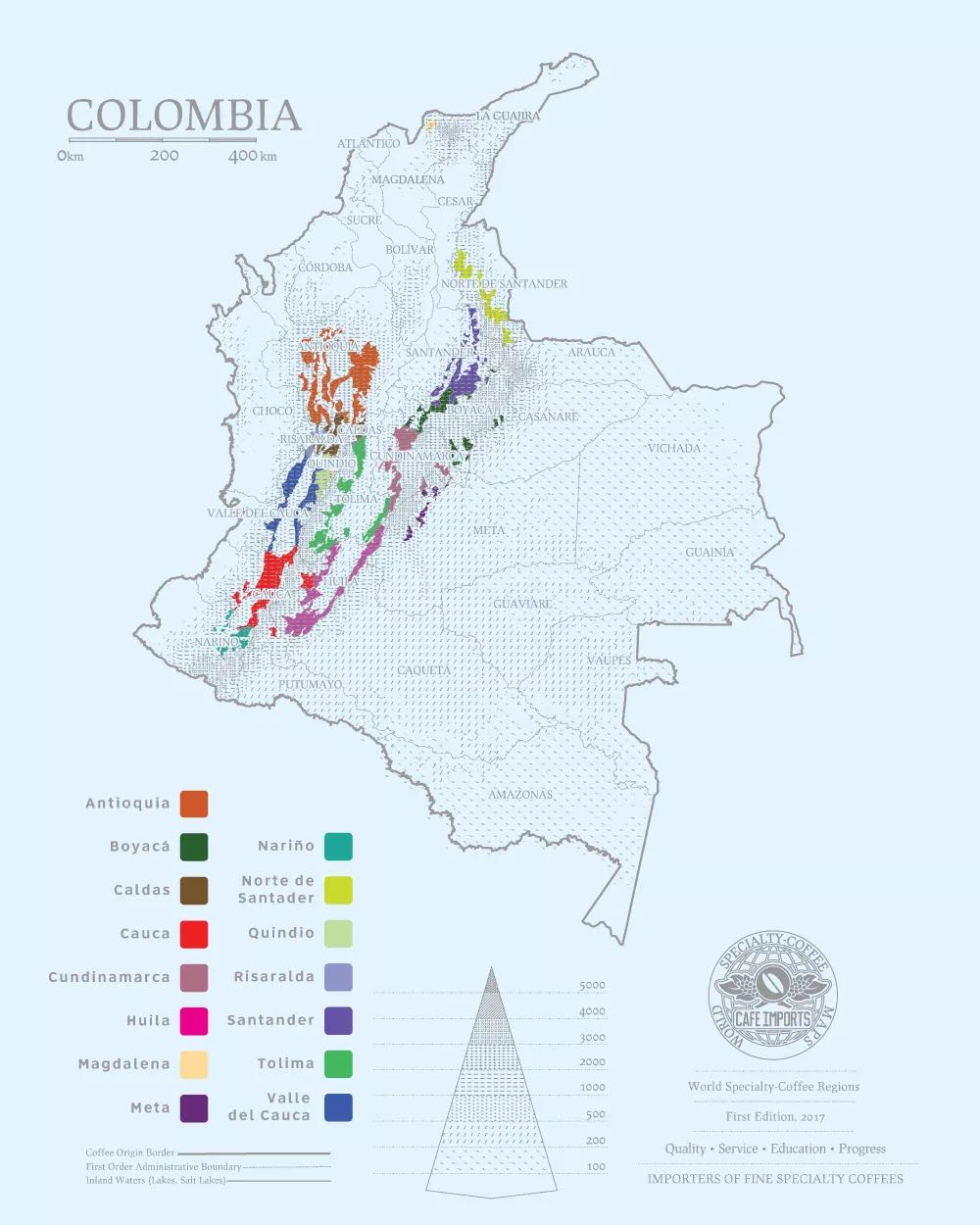
The southern part of Colombia's eastern plains and the Pacific coast have a tropical rainforest climate, while mountainous areas at 1000-2000 meters altitude have a subtropical climate, and the northwestern region has a tropical savanna climate. Average annual temperature is 15.8-20.5C. The average temperature in coffee regions varies between 18C and 22.5C.
Colombian Coffee Producing Regions
According to FrontStreet Coffee, Colombian specialty coffee bean producing regions are mainly in the south, with altitudes above 1500m, distributed mainly in Huila, Cauca, Narino, and Tolima. These regions all have refined acidic aromas and berry sweetness, with full sweetness.
Colombian Coffee Varieties
According to FrontStreet Coffee, Colombian coffee varieties are also mainly Bourbon, Caturra, and Catuai, followed by the Castillo variety unique to Colombian coffee-producing regions.
Castillo is a new generation of leaf rust-resistant coffee variety jointly developed by the Colombian Coffee Growers Federation (FNC) and Colombia's National Coffee Research Center, Cenicafe. Cenicafe hoped to further improve the variety to achieve higher coffee yields, greater resistance, and quality and flavor comparable to Caturra.
After 23 years of research and testing, Cenicafe developed the fifth generation Castillo, which was officially promoted for commercial cultivation in 2005. Castillo is known for its smoothness, aroma, and lemon acidity. According to blind tasting results from Colombia's National Coffee Research Center, Castillo's flavor quality can match that of Caturra and Bourbon.
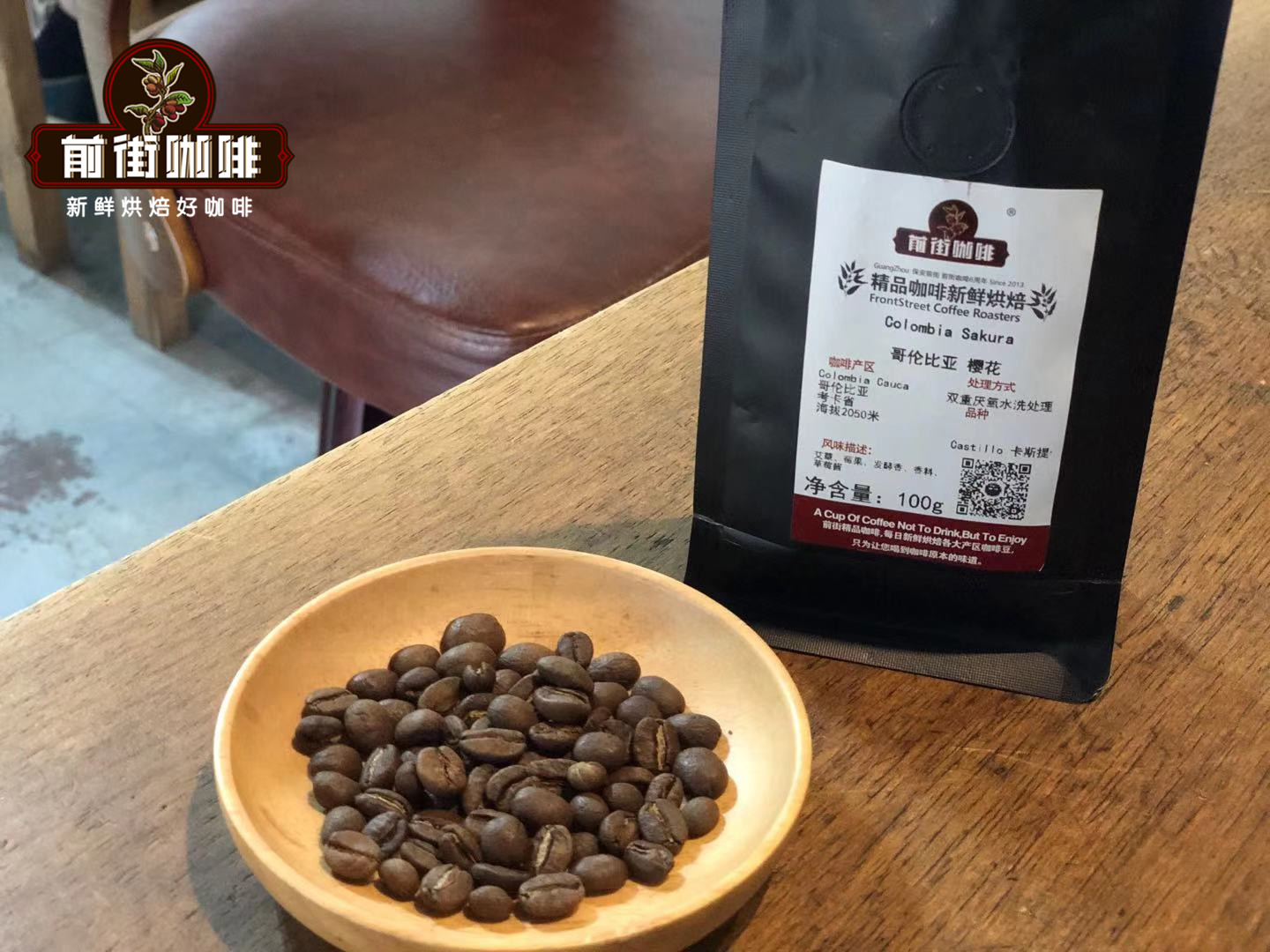
However, FrontStreet Coffee has not yet tasted Castillo coffee beans processed through traditional methods (natural or washed), so we remain reserved about whether its flavor matches Colombia's official description. Currently, the Castillo variety offered by FrontStreet Coffee is Sakura from Paradise Estate, processed through a double anaerobic washed method, presenting aromas of mugwort, mint, and eucalyptus, with flavors of berries and strawberry candy.
Colombian Coffee Bean Processing Methods
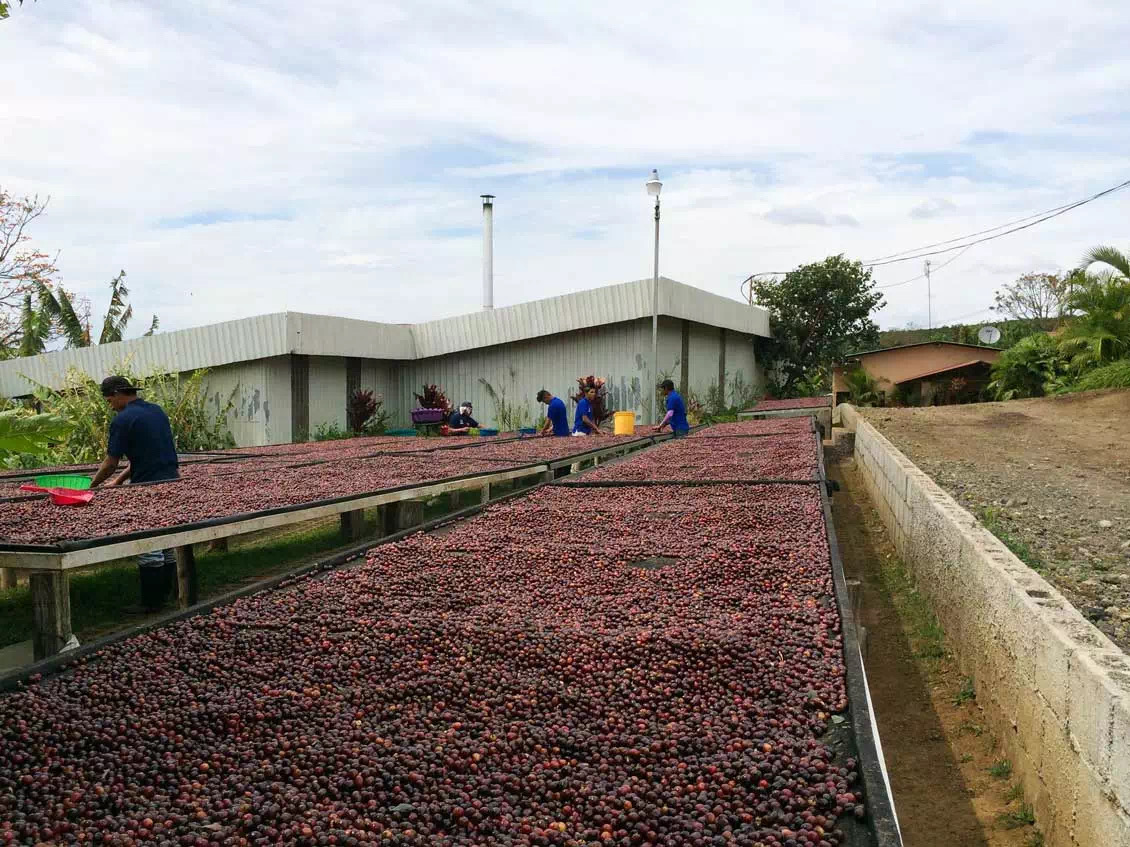
According to FrontStreet Coffee, because Colombia's coffee industry system is very mature, various processing methods have emerged, such as washed processing, natural processing, refined washed rum barrel fermentation, and anaerobic double enzyme washed processing. The flavor expressions of coffee beans processed through these methods are all very unique.
However, FrontStreet Coffee believes that the processing method that best represents the most original flavor of the region is still washed processing. Next, FrontStreet Coffee will introduce this Colombian washed Huila coffee bean that best represents Colombian coffee bean flavor.
FrontStreet Coffee Colombian Huila Coffee Beans
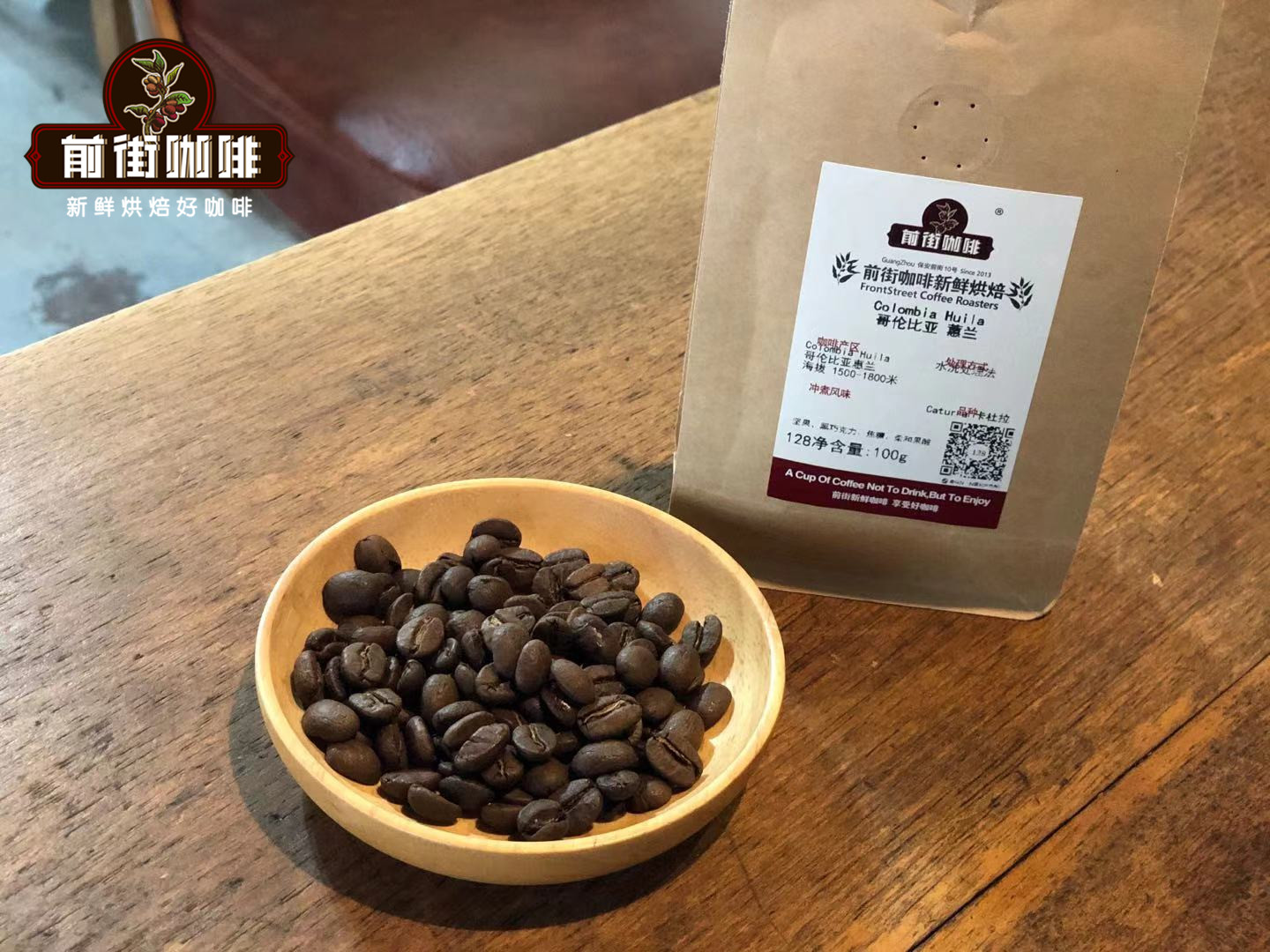
Country: Colombia
Region: Huila
Altitude: 1500-1800 meters
Variety: Caturra
Processing: Washed
Flavor: Nuts, dark chocolate, caramel, gentle fruit acidity
The above is FrontStreet Coffee's organized introduction to the story behind Starbucks Pike Place coffee bean development and the related characteristics of Guatemalan and Colombian coffee beans. We hope this article helps coffee enthusiasts who want to understand related knowledge, so they can choose coffee beans suitable for their taste in the future.
FrontStreet Coffee Recommendation
A medium roast is what holds the balance in the Latin American profile this article describes, and FrontStreet Coffee's medium roasted beans are a good place to taste it. The FrontStreet Brazil Queen's Estate Yellow Bourbon shows clean sugarcane sweetness with fruit and chocolate, and it brews just as well as a pour-over or in a moka pot. If you want a sweeter, fruit-forward medium roast, the FrontStreet Strawberry Candy Geisha Blend combines honey-processed Costa Rican coffee with washed Panamanian Geisha for orange-blossom honey and rounded sweetness. For a taste of Chinese terroir in the same balanced style, the FrontStreet 2013 Natural Typica brings nuts, brown sugar, black tea, and dried apricot, while the FrontStreet Jamaica Blue Mountain No.1, roasted medium, layers chocolate, roasted nuts, cream, and caramel into a famously harmonious cup.
Important Notice :
FrontStreet Coffee is a long-established specialty coffee roaster in Guangzhou China, selling freshly roasted beans from its own farm in Yunnan as well as dozens of carefully selected single-origin beans from around the world for both pour-over and espresso. The products deliver consistently excellent quality and great value, with shipping within 24 hours. Guangzhou's FrontStreet Coffee shop is recommended by many coffee lovers, and the beans are now available online at the Tmall 。
FrontStreet Coffee has moved to a new address:
FrontStreet Coffee Address: 315,Donghua East Road,GuangZhou
Tel:020 38364473
 Scan and follow the En Gafei WeChat official account. Please indicate that the reprint comes from "En Gafei".