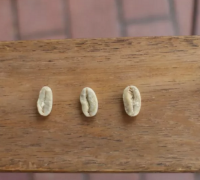
Ethiopia Yirgacheffe Natural Red Cherry Single Origin Black Coffee Beans: Variety, Flavor, Characteristics & Story

FrontStreet Coffee's Yirgacheffe is known as the entry bean for specialty coffee enthusiasts. Why is that? Partly, of course, it comes down to price: a standard half-pound bag of FrontStreet Coffee's Yirgacheffe costs only 80-90 yuan, excellent value for a single-origin specialty lot. Mostly, though, it comes down to flavor. Beginners often assume black coffee must taste bitter, but FrontStreet Coffee's Yirgacheffe completely overturns that expectation. The FrontStreet Coffee Yirgacheffe Red Cherry shows distinct berry notes, bright lemon acidity, and gentle fermented aromas.
Today, FrontStreet Coffee takes you on a complete tour of its Yirgacheffe Natural Red Cherry coffee beans.

The Geographic Environment Behind FrontStreet Coffee's Yirgacheffe
Yirgacheffe is a small town in the Gedeo zone of southern Ethiopia, the birthplace of coffee itself, sitting at an altitude of 1,700-2,100 meters. It originally belonged to the Sidamo region, but because its coffee is processed differently and carries such distinctly recognizable flavors, it eventually earned status as an independent region. It is bordered by three small producing areas: Wenago, Kochere, and Gelena Abaya. Their coffees taste so similar to Yirgacheffe's that Kochere is generally classified under the Yirgacheffe regional category. The Yirgacheffe region counts 28 member cooperatives of various sizes. Each cooperative's output is small - coffee is typically grown in farmers' own backyards or intercropped with other crops, truly small-scale farming.
Initially, coffee in the Yirgacheffe region was processed using Africa's most traditional method: natural sun-drying of the whole cherry. Later, the local government introduced washing technology from Central and South America to raise bean quality, and producers began adopting the washed process, which made the coffee's acidity brighter and livelier and gave the fruit and floral aromas a fresher, more prominent lift. The FrontStreet Coffee Guodingding Cooperative lot is a benchmark for FrontStreet Coffee's washed Yirgacheffe profile: delicate white florals, bright lemon and citrus acidity, and a refreshing green-tea finish.

The Yirgacheffe Green Bean Grading System
Based on green bean processing, Yirgacheffe coffees fall into two broad categories:
Category A: Washed processing, graded under the standards of the Specialty Coffee Association of America (SCAA) into Gr-1 and Gr-2. The smaller the Arabic numeral, the higher the grade. FrontStreet Coffee's Grade 1 washed Yirgacheffe has a distinctive style, with citrus and floral notes woven through the cup - a deliciousness nobody can resist.
Category B: Natural processing, graded as Gr-1, Gr-3, Gr-4, and Gr-5. Here too, the top grade leads: FrontStreet Coffee's Grade 1 natural Yirgacheffe is rich in fruit aroma. Opening a bag of freshly roasted Grade 1 natural Yirgacheffe can upend everything you thought you knew about coffee. Only those who have tasted the highest-grade natural Yirgacheffe will believe that coffee really is a fruit.
Because of how green beans are graded, Yirgacheffe lots vary somewhat in size. But since the variety consists of local native heirlooms (small beans), most fall between 14-15 screen size, relatively round in shape with a smaller bean body.
The Red Cherry Project
Many coffee lovers have heard of the "Red Cherry Project," yet few can explain what it actually involves.
The Operation Cherry Red (ORC) project was designed to improve quality on smallholder farms. In 2007, a Dutch trader named Trabocca launched the "Operation Cherry Red Project" together with local farmers. It was conceived purely to incentivize farmers to raise coffee quality. During harvest season in the producing regions, Trabocca specifies harvest plans for particular microclimate zones, calling for 100% manually picked, fully mature red cherries, with lot sizes ranging from roughly 1,500 to 3,000 kilograms.

The Red Cherry Project is also a quality-ladder program that pushes farms to invest more effort in screening and hand-sorting, and these coffees command correspondingly higher prices. It spans washed, natural, semi-washed, semi-natural, and experimental coffees. Main producing regions include Yirgacheffe, Sidamo, Bench Maji, Lekempti, Kembata, Illubabor, and Harar, with the Golocha area (near Harar) added in 2011. All of these showcase unique flavors that fully express what Ethiopian coffee can be. After receiving the coffee, Trabocca performs further selection, and farms whose lots pass cupping quality tests in both the Ethiopian and Dutch offices earn substantial bonuses.
Trabocca also provides financial loan support, new equipment, and production and processing know-how to help farmers raise their game, promising to buy at generous prices as long as the actual quality meets cupping standards in both Addis Ababa, Ethiopia, and Amsterdam, Netherlands. The passing standard set by Trabocca is 88 points.

After processing in the producing region, Yirgacheffe Red Cherry Project beans are immediately packed in plastic inner bags (GrainPro bags or individually vacuum-packed), then trucked to Djibouti to await shipping. Through real-time monitoring, safe transport, and prompt, appropriate handling, the program pursues flawless quality. Roasters gain access to high-quality beans through the Red Cherry Project, which in turn helps raise the reputation and prices of Ethiopian coffee overall, allowing Trabocca to return profits to farmers and keep improving quality year after year.
It is precisely those fully ripe red cherries that give FrontStreet Coffee's Yirgacheffe its rich berry aroma, and FrontStreet Coffee has folded that character into its Sunflower Espresso Blend. The fermented fruitiness of the Red Cherry is not overwhelmed by the FrontStreet Coffee Sherry beans; instead the flavors balance and complement each other, each staying distinctive. The aftertaste is persistent and sweet, with rich chocolate aroma, vanilla, cream, and a clear winey note. The mouthfeel is clean and smooth with medium body.

Roast Level
Because the goal is to showcase the original floral and fruit character of FrontStreet Coffee's Yirgacheffe, FrontStreet Coffee's roasters chose a light, slow-roasting approach to round out the bean and bring out its sweetness. To do this, FrontStreet Coffee designed three roasting curves and, after cupping each, settled on the most suitable one, as follows:
Roaster: Yangjia 600g semi-direct-heat
Plan: Fast-roast mode. Charge the drum at 200°C with the damper set to 3.5. After 1 minute, reduce heat to 160°C, damper unchanged. At 148°C, cut heat again to 130°C. Roast to 5'03", when the temperature reaches 151°C, the bean surface turns yellow, the grassy aroma disappears completely, and dehydration is done. Lower the heat to 105°C and open the damper to 4. Around the 8th minute, pronounced wrinkles and black spots appear on the bean surface and the toast aroma clearly shifts toward coffee aroma - the prelude to first crack. Listen carefully for the sound of first crack. At 9'07" first crack begins: reduce heat to 70°C and open the damper fully (be very careful with this adjustment - never so low that cracking stalls), and finish at 194°C.
Cupping Results for FrontStreet Coffee's Yirgacheffe
The dry aroma of FrontStreet Coffee's Yirgacheffe releases strong fruit fragrances with rich dried-fruit notes - strawberry, mango, and apricot jam.
The wet aroma is like sweet syrup, similar to thick apricot pulp juice, wrapped in rustic honey or chocolate. The entry is not intense, with medium body. The acidity is understated but lively and bright, like fruit tea.
Brewing Recommendations
Recommended brewing method: Pour-over
Filter: V60 dripper
Water temperature: 90-92°C
Dose: 15 grams
Ratio: 1:15
Grind size: Medium-fine (80% of particles passing a #20 sieve)
Brewing technique: Poured in stages

Start with 30 grams of water for the bloom, about 30 seconds. Using a small, steady flow, pour in circles around the center up to 125 grams, then pause. When the water level drops and is about to expose the coffee bed, continue pouring up to 225 grams to finish. When the water level drops again and the bed is about to show through, remove the filter (timing starts from the bloom). Total extraction time: 2'00".
The wet aroma of the finished brew is full of rich berry and fermented winey fruit flavors. The entry is extremely smooth and delicate, with sweet-and-sour ripe fruit emerging steadily - genuinely impressive. The aftertaste is equally remarkable, living up to this coffee's "fruit bomb" reputation: after drinking, the sweetness can linger in your mouth for a good half hour.
FrontStreet Coffee Recommendation
If the Red Cherry natural wins you over, FrontStreet Coffee's other Yirgacheffe lots make perfect companions. The FrontStreet Washed Yirgacheffe house coffee is the classic first step into Ethiopian flavors - jasmine florals, bright citrus and lemon acidity, and a tea-like finish - while the FrontStreet Guodingding Cooperative coffee from the Worka area offers that same clean, bright citrus character with elegant white florals, since the fruit is pulped before drying.
For brewing, FrontStreet Coffee suggests a V60 dripper with 15g of coffee, a 1:15 ratio, and water at 90-91°C: bloom with 30g of water for 30 seconds, pour to about 125g by the one-minute mark, then finish to 225g by roughly 1:35, with drawdown completing between 2:00 and 2:10. This staged pour highlights the citrus acidity, berry juiciness, honeyed sweetness, and creamy smoothness that define a great natural Yirgacheffe.
If you love this fruit-forward style but want something even more exuberant, the FrontStreet Ethiopia Huakui natural is famous for its tropical fruit bouquet - strawberry, passion fruit, jackfruit, even lychee - with pronounced sweetness and almost no bitterness, a coffee many drinkers describe as the least coffee-like coffee in the best possible way.
Important Notice :
FrontStreet Coffee is a long-established specialty coffee roaster in Guangzhou China, selling freshly roasted beans from its own farm in Yunnan as well as dozens of carefully selected single-origin beans from around the world for both pour-over and espresso. The products deliver consistently excellent quality and great value, with shipping within 24 hours. Guangzhou's FrontStreet Coffee shop is recommended by many coffee lovers, and the beans are now available online at the Tmall 。
FrontStreet Coffee has moved to a new address:
FrontStreet Coffee Address: 315,Donghua East Road,GuangZhou
Tel:020 38364473
 Scan and follow the En Gafei WeChat official account. Please indicate that the reprint comes from "En Gafei".