Honduras Macara Premium Coffee Beans Flavor Introduction & How to Enjoy Honduras Macara Coffee
Honduras Marcala
Looking for a coffee with complex flavors and low acidity? Complex in just the right way—a subtlety that lets you marvel at nature's exquisite refinement.
A cup of Honduras during afternoon tea might be a wise choice!
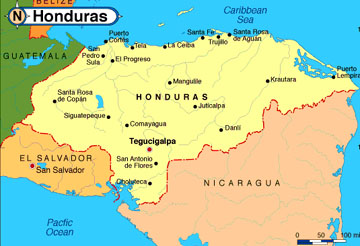
Honduras sits in Central America, bordered by the Caribbean Sea to the north, the Pacific to the south, Guatemala to the west, El Salvador to the southwest, and Nicaragua to the southeast. It covers 112,492 square kilometers with roughly 1,033 kilometers of coastline, and its territory is mountainous everywhere except the coastal plains. The northwest rises to 3,000 meters and the south also exceeds 2,400 meters. Major rivers include the Coco, Patuca, and Ulúa, which originate in the interior ranges and crisscross the land into both oceans. Between the ranges lie many basins and valleys, including the larger Sula and Repaguanle basins and the main Comayagua and Jamastran valleys.
The country divides into four natural regions: the eastern lowlands, the northern coastal alluvial plains, the central highlands, and the Pacific coastal lowlands. Coastal islands are scattered along the shores, the main ones being the Bay Islands and the Tigre Islands in the Gulf of Fonseca. Honduras's complex topography brings diverse climates: the coastal plains have a tropical rainforest climate with an average annual temperature of 31°C, while the mountains have a subtropical forest climate averaging 23°C, with the rainy season running from June to November.
For coffee, Honduras's natural conditions are in no way inferior to neighboring producers like Guatemala and Nicaragua. The country has 280,000 hectares of coffee plantations, predominantly small farms—most under 3.5 hectares—and these smallholdings account for sixty percent of total production. Because the growing areas lie in the mountains, cherries are hand-picked and carefully processed to yield higher-quality beans. Honduras harvests three million bags of coffee annually, supplying abundant, high-quality coffee to the world, and it now ranks among the top ten coffee-exporting countries.
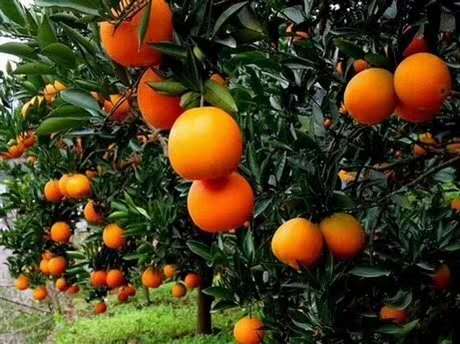
El Naranjo Estate lies in Marcala, one of Honduras's most famous growing regions. Blessed with naturally suitable water and soil, the estate raises a stand of exceptional coffee trees. Estates here are typically named for their shade trees, and El Naranjo's are tall wild orange trees. Those wild oranges are intensely aromatic, and the coffee grown beneath them carries a rare, rich sweetness; the orange trees also infuse the coffee with layered floral and fruit notes. The estate currently grows Caturra, Bourbon, and Geisha. Alongside the fruit and coffee trees, it maintains windbreaks to shelter the coffee and fertilizes chiefly with coffee cherry pulp.
Light acidity, gentle bitterness, and a noticeable aftertaste give the impression of subtle flavors. At times it carries beautiful floral or fruit aromas—one hardly associates it with the country's turmoil. Honduran coffee is balanced overall, with neither acidity nor bitterness dominating: the two sit in excellent harmony.
Even in turbulent times, coffee can grow to show its own brilliance. It's easy to see why so many people are devoted to this dark liquid. To some extent, it is no longer simple fondness or habit—coffee becomes a mood, or perhaps a support.
May this country soon show the vitality and brilliance of its coffee. Even troubled Honduras can have a future as splendid as its coffee.
FrontStreet Coffee's Recommended Brewing Method
Recommended brewing method: Pour-over
Filter: V60
Grind size: 3.5 (Japan Fuji R440)
Water temperature: 89±1°C
30g water for bloom, bloom time 30s
Segments: pour to 120g, pause, then slowly pour to 225g
That is, 30-120-225g
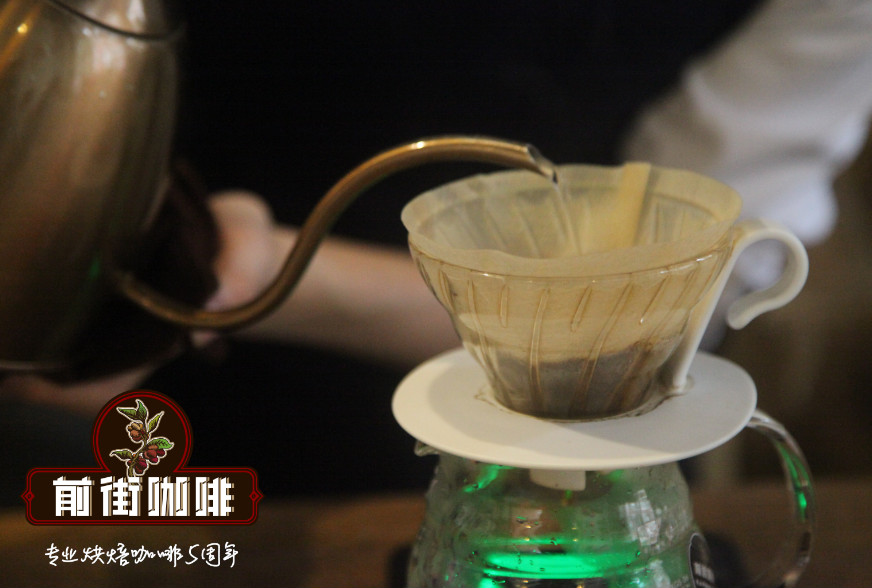
The goal is for all the grounds layered in the filter to be evenly saturated by the hot water—rather than repeatedly extracting only a small portion, which would turn the bed acidic and bitter from over-extraction—yielding a full, balanced, mellow, sweet, and rich flavor. The pouring column should ideally be thick at the top and thin at the bottom: the stream from the spout wide at first, tapering to a fine point at the end.
Other immersion-style recommendations:
French press: grind 3.5-4, water temperature 86-88°C
AeroPress: grind 2.5, water temperature 86-88°C
The dry aroma carries spices, roasted peanuts, and chocolate; the wet aroma brings hints of herbs. On tasting you can clearly pick out orange peel, nuts, and cream—almost like a cup of lemon tea.
FrontStreet Coffee Recommendation
If Marcala's gentle, balanced profile with soft floral-fruit notes appeals to you, these two light-roast, floral-fruity beans from FrontStreet Coffee are well worth exploring.
FrontStreet Yirgacheffe Guodingding: the first stop for countless specialty coffee newcomers. It shows vivid citrus, berry, and floral aromatics with a green-tea-like sweetness on the finish. Unlike the "sour coffee" many imagine, a fine Yirgacheffe's acidity is soft and bright—like the natural sweetness of fruit rather than anything sharp—making it one of the easiest light roasts to love.
FrontStreet Ethiopia Kaffa Forest: from the Kaffa rainforest of southwestern Ethiopia, a UN-recognized biosphere reserve and the widely acknowledged birthplace of Arabica coffee—the word "coffee" itself traces back to the ancient Kingdom of Kaffa. In this 7,000-plus-square-kilometer mountain rainforest at 1400-2100 meters, perennial mist and layered shade have nurtured more than 5,000 wild Arabica gene lines, including the wild ancestors of today's famous Geisha. Roasted medium-light, it offers dense jasmine, citrus, and wild berry aromas with fine, lively layers.
Important Notice :
FrontStreet Coffee is a long-established specialty coffee roaster in Guangzhou China, selling freshly roasted beans from its own farm in Yunnan as well as dozens of carefully selected single-origin beans from around the world for both pour-over and espresso. The products deliver consistently excellent quality and great value, with shipping within 24 hours. Guangzhou's FrontStreet Coffee shop is recommended by many coffee lovers, and the beans are now available online at the Tmall 。
FrontStreet Coffee has moved to a new address:
FrontStreet Coffee Address: 315,Donghua East Road,GuangZhou
Tel:020 38364473
 Scan and follow the En Gafei WeChat official account. Please indicate that the reprint comes from "En Gafei".