What are the Flavor Characteristics of Geisha and Gesha? Which Tastes Better: Caturra or Gesha Coffee?
What's the Difference Between Geisha and Gesha?
They're the same thing, both spellings trace back to the Japanese word "geisha," and the two names are used interchangeably across the industry.
What Varieties of Gesha Exist?
Panama's La Esmeralda grades its Gesha into tiers, Red, Green, Blue, and Purple labels.
Some Red Label lots are competition lots from La Esmeralda, while others are sold directly by the estate, including natural and washed lots that appear in their auctions.
Quality control at La Esmeralda starts with careful guidance for the pickers who harvest the fresh cherries; the estate pays above-market rates and requires pickers to harvest only fully ripe, bright-red cherries.
During preparation, the harvested cherries are carefully inspected to remove rotten or unripe fruit. The team devotes extraordinary time to detail and to researching how to present the best texture, which is exactly what sets La Esmeralda apart from producers everywhere else.
FrontStreet Coffee's latest offering, the Panama La Esmeralda Red Label Gesha, is the estate's Esmeralda Special Selection, also called Competition Geisha. The competition lots represent the top batches from La Esmeralda, all grown above 1,550 m (some above 1,900 m), with cupping scores consistently above 90 points.
La Esmeralda is an exceptionally experimental estate. By comparing 400 coffee varieties and running sample processing and cupping every year, they identify varieties with outstanding cup performance (that's how they discovered Gesha). Some of their experimental-process batches never even reach the auction.
La Esmeralda Red Label has three defining characteristics:
1. Strong traceability: every lot can be traced back to harvest date, specific plot, the plot's tree age, and more.
2. Elevation: all lots are grown above 1,600 m, some above 1,900 m.
3. Cupping score: a lot must score 90 points or above (SCAA standard) to earn the Red Label.
In 1931, a team of botanists on an expedition in southern Ethiopia discovered the Gesha variety near the village of Gesha. The trees were tall, with seeds larger than typical Ethiopian beans. They brought seeds to Kenya and grew them in nurseries; after five years, they took fruit from the healthiest specimens to Uganda and Tanzania. In 1953, CATIE, the Costa Rican research institution, obtained some of the Tanzanian seed for study.
The first person to bring Gesha from Costa Rica to Panama was Pachi Serracin of Don Pachi Estate, in 1963. But Gesha was initially unloved in Panama: low yields and poor economics meant it was mixed in with other varieties, and various estates kept a few trees, some even used as windbreaks. Only after 2000, when Price Peterson of La Esmeralda discovered how charming Gesha's flavor was, did things change, though its profile was so unusual they weren't sure consumers would accept it.
In 2003, at Best of Panama, La Esmeralda took first place with Gesha, stunning every judge with its intense, complex flavors. Over the following decade, Gesha was unbeatable in green-bean competitions. Farmers across Central and South America, Costa Rica, Bolivia, Colombia, rushed to plant it. Though their cups still fell short of Panama's, Gesha had clearly become the golden variety no one wanted to miss.
Some hoped to trace Gesha back to its roots, organizing expeditions deep into the pristine forests of southwestern Ethiopia. But most eventually acknowledged that Panama still seemed to be the world's best Gesha terroir. Different processing methods also shape Gesha's flavors, from the original washed process to later natural and honey processes, increasingly refined and complex.
What exactly separates Gesha Village from typical Ethiopian estates? What do OMA and SURMA mean in the lot numbers? What do the numbers 51, 72, 59 refer to? And how do Gesha 1931 and Gori Gesha differ?
Estate Background
Adam Overton and Samuel Rachel began planting Ethiopian Gesha on nearly 500 hectares at Gesha Village starting in 2011, with a single goal: to produce the world's best coffee. Their search began in 2008, and after three years they finally found a suitable environment at 1,900–2,100 m, tropical rainforest, a suitable climate, fertile forest soil, and historic trees.
Gesha Village Coffee Estate covers 471 hectares in total. By 2015 the estate had completed 300 hectares of planting, adding another 50 hectares in 2016. The Gesha selection comes from the native coffee forest Gori Gesha, 20 kilometers from the estate, the very origin of Panama's Gesha. Under the guidance of Willem Boot, the "Godfather of Gesha," Gesha Village's coffees have repeatedly achieved outstanding results in world competitions.
Extremely Strong Traceability and Quality Control
Unlike most Ethiopian coffee, which must be exported through the ECX (Ethiopian Commodity Exchange) or cooperatives, Gesha Village, at nearly 500 hectares, operates as a single estate with independent processing and export capabilities, giving it traceability no other Ethiopian green coffee can match.
Every lot can be traced back to its plot, variety, tree age, harvest date, the duration of its natural (or washed) processing, and every other step, ensuring transparency and quality control at each stage.
Gori Gesha vs. Gesha 1931
Gori Gesha and Gesha 1931 are both cultivated-variety names.
Gesha Village grows three varieties: Gori Gesha, Gesha 1931, and Illubabor Forest. The first two are both Gesha types; Illubabor Forest is a disease-resistant variety provided by the Ethiopian research institute.
Gori Gesha comes from the wild coffee forest near the estate and carries the full genetic diversity of Gesha, hence the name borrowed from the forest.
Gesha 1931 was selected from among the Gesha types in the Gori Gesha forest as the one closest to Panama Gesha, judged on plant morphology, bean appearance, and cupping results. The name honors 1931, the year Gesha was discovered in Ethiopia.
What Do OMA, SURMA, and the Like Represent?
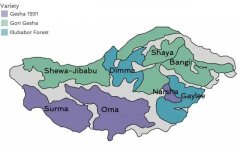
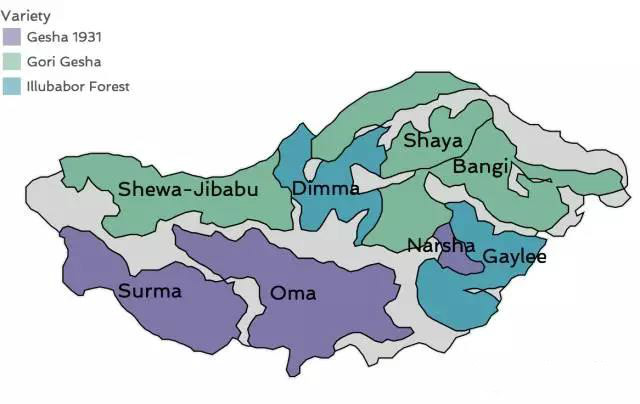
The estate divides its nearly 500 hectares into plots by variety and microclimate (see the figure below):
The variety distribution is:
Gori Gesha: Shewa-Jibabu; Shaya; Bangi
Gesha 1931: Surma; Oma; Narsha
Illubabor Forest: Dimma; Gaylee
What Do the Numbers in Lot Names Mean?
Here is where Gesha Village's traceability really shows.
Partial harvest-date data for 2016–2017 lots from Gesha Village (image: Gesha Village auction materials)
Take the natural batch from the OMA plot that Japanese champion Takayuki Ishiya used as his competition coffee (above). That plot grows Gesha 1931 and is subdivided into five natural batches: 51, 72, 77, 86, and 90, the closer the areas, the more similar their ripeness and harvest windows. OMA#27 is a washed batch from the same plot (not shown above for space). Ishiya's competition lot was the OMA#51 auction batch, and Grand Cru Coffee purchased from the same batch as OMA#72.
After repeated cuppings and screenings, Grand Cru Coffee selected three distinctive natural batches for separate purchase. The first, Surma#85 and Shewa-Jibabu#59, has sold out; the restocking includes lots from the same batches as Shewa-Jibabu#59 and Oma#72, currently in stock.
Cupping notes for the specific lots:
1. Shewa-Jibabu#59 same-batch (Gori Gesha), prominent sweetness, distinct strawberry, honey peach, and papaya, plus delicate florals and a thick, creamy mouthfeel;
2. Oma#72 same-batch (Gesha 1931), candied fruit, intense florals, high complexity.
Both lots are naturally processed: floating impurities are removed first, then the cherries are dried on African raised beds under thin film and plastic sheeting for a total of 18–30 days.
FrontStreet Coffee · Ethiopia Gesha Village Natural Gesha
(Gesha Village Coffee Estate Gesha Natural)
Variety: Gesha (Gori Gesha)
Processing: Natural
Season: 2017 new crop
Flavor: Strawberry, honey peach, papaya, floral, creamy, full-bodied

FrontStreet Coffee · 2017 Panama La Esmeralda Red Label Geisha, Competition Geisha, washed
Panama Geisha Hacienda La Esmeralda
Country: Panama
Grade: Red Label
Region: Boquete
Roast level: Light
Processing: Washed
Variety: Gesha
Estate: La Esmeralda
Flavor: Lychee, peach, sweet potato
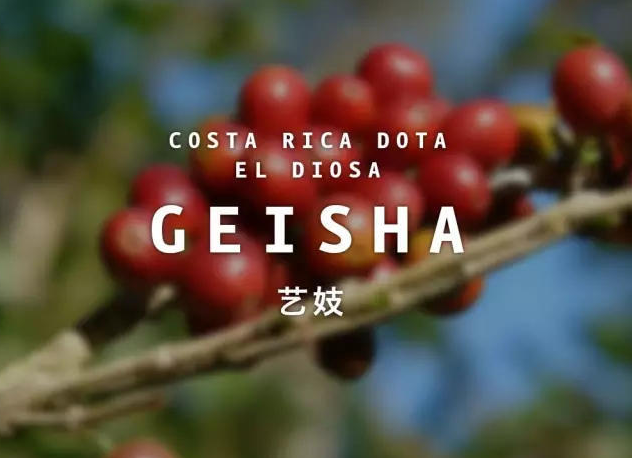
FrontStreet Coffee · Costa Rica Diosa Geisha
Diosa sits in the Dota region of Costa Rica's most renowned growing area, Tarrazu, Dota is specifically known for micro-lot Geisha. As early as 1865 the Dota region had a reputation for fine Costa Rican coffee, and because the highway from the capital to the Dota valley had to pass through Tarrazu, the country's coffee authorities habitually label the area "Dota Tarrazu." The terrain is classic highland, with soil and temperature-humidity conditions ideal for coffee.
Diosa Estate was established in the 1960s and farms organically, using native and fruit trees for shade. Its fertilizer is made from coffee cherry pulp mixed with molasses and fermented with mineral-rich soil from the nearby mountains, an organic feed that boosts the trees' disease resistance. The estate also uses California earthworms to build soil health, serving as the trees' main nutrient source during fertilization periods, while growing multiple coffee varieties. It uniformly purchases and selects fully ripe red-purple cherries and closely controls the tank-fermentation process with a unique constant-temperature method. The precise fermentation achieves an excellent balance between clarity and complexity, making the flavor expression stable and unfolding Geisha's character layer by layer, genuinely intoxicating.
FrontStreet Coffee · Costa Rica Tarrazu Diosa Estate Gesha, Dota E1 Diosa Geisha
Origin: Costa Rica
Region: Tarrazu
Variety: Geisha
Elevation: 1,800 m
Soil: Volcanic
Grade: SHB
Processing: Washed
Harvest: Hand-picked
Flavor:
[Dry aroma] Tea, orange, plum, cranberry, floral, vanilla, almond
[Wet aroma] Floral, chocolate, vanilla, bright malic acidity, cranberry
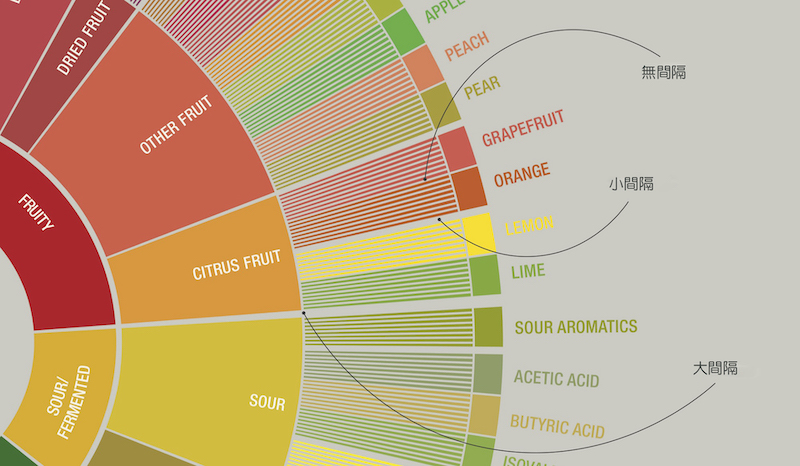
Profile: lemon and citrus aromatics, gentle grapefruit acidity and fruity sweetness, medium body, clean and smooth mouthfeel
FrontStreet Coffee Recommendation
Gesha (from the English "Geisha") is one of the most beloved varieties in Arabica. Its singular floral character and superb sweet-sour finish have won over countless coffee lovers, while its low yield, weak disease resistance, and demanding cultivation keep prices climbing. To find a delicious but affordable Gesha, you first need to know the types on offer and what each is worth.
FrontStreet Esmeralda Red Label and Green Label: It takes a good horseman to find a thousand-mile horse, and Gesha found hers in La Esmeralda. The estate's Gesha product line now splits into Red and Green labels. The Red Label's formal name is "Esmeralda Special": grown at 1,600–1,800 m, each lot must cup above 90 points, and each lot comes entirely from a single small plot (FrontStreet's Red Label comes from the Harrimuyo plot), so buyers can choose a lot that matches their precise flavor preference. The Green Label, formally "Private Collection" (named for its green label), blends lots from multiple plots rather than spotlighting single-plot detail, expressing the estate's signature high-altitude Gesha profile, and with a friendlier price, FrontStreet's Green Label offers excellent value.
FrontStreet Boquete Gesha: If you're new to Gesha and want a first taste of the legendary flavor, FrontStreet recommends the Panama Boquete Gesha, an entry-level Gesha that delivers the classic Panamanian orange-blossom honeyed sweetness, an oolong-tea character with delicate fruity sweet-sourness, and clearly defined layers, all at an approachable price.
FrontStreet Gesha Village Gold and Red Labels: Ethiopia, coffee's birthplace, also has a Gesha-famous estate: Gesha Village. Where La Esmeralda splits into Red and Green labels, Gesha Village's grading is even more elaborate, three Gesha varieties (Gori Gesha, Gesha 1931, and Illubabor Forest) graded into Gold Label (RARITIES), Red Label (GROWERS RESERVE), Green Label (SINGLE-TERROIR), and Chaka lots, plus variety distinctions. The Gold Label is a Gesha 1931, just 10% of total production, the estate's top coffee outside auction lots, frequently chosen by international competitor baristas. FrontStreet's Gold Label lot is a refined natural with complex, layered flavors; from the unique dry fragrance to the sip, body, and finish, it lingers beautifully. The Red Label is a Gori Gesha, about 15% of production, scoring 88+ on the SCA 100-point scale; as the estate's single-terroir series, every lot number carries full traceability, farm block, variety, and processing dates.
FrontStreet Genji Chelba (Genji) Gesha: This Gesha comes from the Genji processing station, established in 2014 and run by Mr. Israel Degefa, at the border of Kochere and the Genji Abaya area of Yirgacheffe. The station's surrounding coffee area spans 700 hectares, most of it uncultivated, with fertile soil and shade trees everywhere. Thanks to the primeval rainforest's rich soil and full shade canopy, this native Ethiopian Gesha shows unusually varied layers. Hand-picked fully ripe cherries are sun-dried on raised beds for 14–20 days depending on the weather. Roasted medium-light, it presents bright citrus acidity, elegant ginger-flower aromatics, the full sweetness of ripe fruit, and a delicate, silky texture with Gesha's signature refined finish.
Brewing Gesha: Gesha is a light-medium roast floral-fruit coffee with a dense, hard bean that tends to sink and clog the dripper. FrontStreet suggests a grind passing 78% through a #20 standard sieve (about fine granulated sugar) and 91°C water. Use 15 g of coffee in a small Hario V60 at a 1:16 ratio, with a three-pour method: start the timer, pour to 30 g and bloom for 30 seconds; then pour in slow circles to 125 g, wait for the bed to drain halfway, pour again to 225 g, and let it finish, total brew time around 2:10–2:20. Gesha also makes a wonderful SOE: pull it at 20 g in, a 1:2 ratio, 25 seconds, yielding 40 g of espresso, dried apricot, caramel, and nuts, then lengthen to a 1:5 Americano with 200 g of hot water (orange, nuts, blueberry) or top with 200 g of milk for a silky cream-cookie latte.
Important Notice :
FrontStreet Coffee is a long-established specialty coffee roaster in Guangzhou China, selling freshly roasted beans from its own farm in Yunnan as well as dozens of carefully selected single-origin beans from around the world for both pour-over and espresso. The products deliver consistently excellent quality and great value, with shipping within 24 hours. Guangzhou's FrontStreet Coffee shop is recommended by many coffee lovers, and the beans are now available online at the Tmall 。
FrontStreet Coffee has moved to a new address:
FrontStreet Coffee Address: 315,Donghua East Road,GuangZhou
Tel:020 38364473
 Scan and follow the En Gafei WeChat official account. Please indicate that the reprint comes from "En Gafei".