Jamaica Blue Mountain No.1 Coffee Flavor Profile & Taste Description | Where to Buy Authentic Blue Mountain Coffee Beans?
According to data from the World Trade Organization and China Customs, Jamaica's total global coffee export volume over the past 5 years was as follows:
2011: 842 tons | 2012: 592 tons | 2013: 692 tons | 2014: 449 tons | 2015: 555 tons
China's import volume over the same 5 years:
2011: 19 tons | 2012: 17 tons | 2013: 3 tons | 2014: 2 tons | 2015: 2 tons
(All figures are official statistics, for reference only)
China's import volume is very small and hardly seems like a national-scale market... However! Its trade value still boldly entered the top 20, ranking 17th!
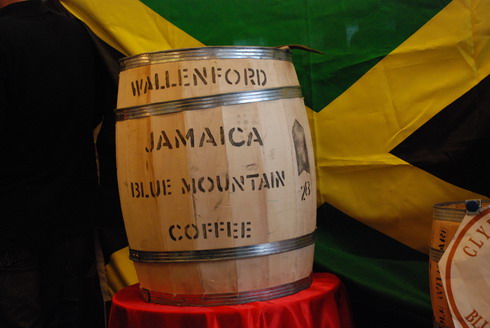
Jamaica Blue Mountain Coffee - Over 10,000 Yuan Per Barrel
Jamaica Blue Mountain coffee is that expensive... At a standard of over 10,000 yuan per barrel, not every player can afford to ship entire containers back to China.
Where Do Jamaica's Main Coffee Importers Come From?
In 2015, the top 10 buyers were:
First place: Japan - 366 tons (an overwhelming championship defended for 5 consecutive years)
Second place: United States - 94 tons
Third place: United Kingdom - 32 tons
Fourth place: Germany - 17 tons
Fifth place: Belgium - 16 tons
Sixth place: South Korea - 10 tons
Seventh place: Sweden - 6 tons
Eighth place: Canada - 4 tons
Ninth place: China - 2 tons
Tenth place: Taipei, China - 2 tons
Why Is Jamaica Blue Mountain So Sought After and Popular?
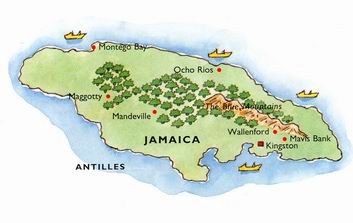
The Blue Mountains lie in eastern Jamaica. Because the range is surrounded by the Caribbean Sea, on clear sunny days, when direct sunlight strikes the azure sea, the peaks reflect the brilliant blue glow of the water - hence the name. Blue Mountain's highest peak reaches 2,256 meters, the tallest in the Caribbean region and a famous tourist destination. The area sits within the coffee belt, with fertile volcanic soil, fresh unpolluted air, and a humid climate of year-round fog and rain (average rainfall of 1,980 mm, temperatures around 27°C). That climate and extreme altitude created the world-renowned Jamaica Blue Mountain coffee - and the second most expensive coffee in the world.
Why Is There So Much Jamaica Blue Mountain Coffee in China, Found Everywhere in Online Shops, Physical Stores, and Supermarkets?
First, check the label: anything sold as "Blue Mountain flavor" or a "Blue Mountain blend" is usually not genuine Jamaica Blue Mountain - just playing on the edge. Like the "Chinese-flavor" restaurants found across Europe, America, and Australia, it cannot be trusted.
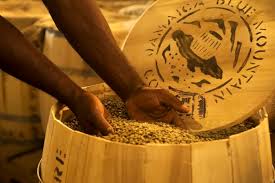
Jamaica Mavis Bank Blue Mountain No.1
Jamaica Blue Mountain Coffee - Over 10,000 Yuan Per Barrel
Jamaica Blue Mountain coffee is that expensive... At a standard of over 10,000 yuan per barrel, not every player can afford to ship entire containers back to China.
Jamaica Mavis Bank Blue Mountain No.1
Jamaica's legal Blue Mountain growing area is constantly shrouded in blue mist, hence the name "Blue Mountain." It lies in eastern Jamaica, spanning 45 kilometers in length and 20 kilometers in width, with altitudes up to 2,260 meters - the highest mountain range in the Caribbean region. The Blue Mountains are covered in fertile, free-draining soil, ideally suited to coffee cultivation.
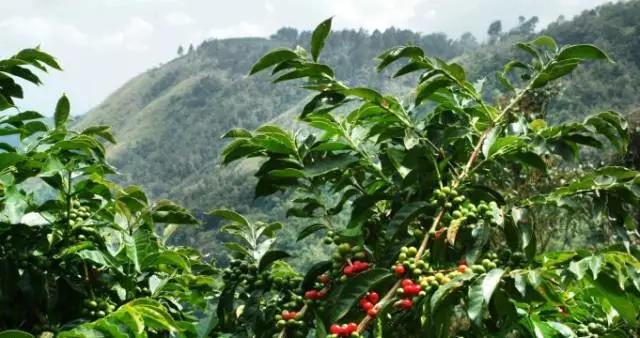
Mavis Bank sits inside Jamaica's legal Blue Mountain area and is one of the Jamaican government-certified green bean processing plants, located about 10 miles northeast of the capital Kingston and operated by the Munn family since 1885.
Initially, the Munn family cultivated and processed harvested cherries on Strawberry Hill on the western side of the Blue Mountains. In 1920, Victor Munn established the current Mavis Bank processing plant, which was later taken over by Victor's nephew, Keble Munn - not only an agricultural operator but also Jamaica's first certified cupper. Today Mavis Bank is Jamaica's largest coffee collection point. To safeguard quality, the mill gathers green beans from single farms or smallholders within specific Blue Mountain growing areas, with cultivation and processing zones in mountainous terrain averaging 1,600 to 900 meters in altitude. Sufficient elevation, gentle afternoon clouds and mist shading the forests, ample sunlight, and mineral-rich soil give the coffee trees excellent growing conditions and extend the ripening period of the cherries.
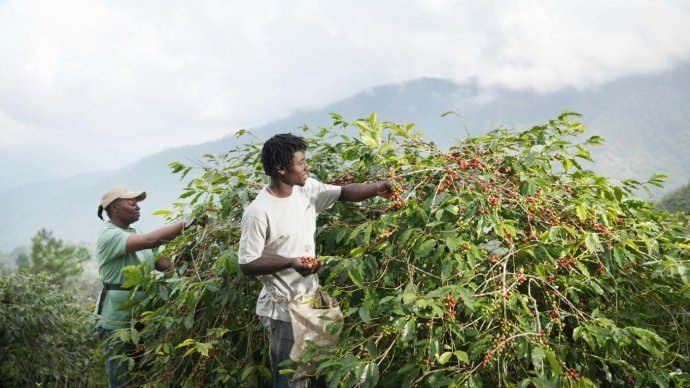
During green bean processing, only mature red cherries are harvested, followed by manual hand-sorting and floatation to remove defective fruit as basic requirements. Farmers deliver the selected cherries to a second washing station for another round of sorting, with pulping completed before evening. The cherries are then carefully placed in large water tanks to screen out over-fermented, unripe, or insect-damaged fruit before mucilage removal. The parchment beans are sun-dried on cement slabs for 5 days, then bagged and warehoused for at least 10 weeks. Finally, the hulled green beans undergo one last manual defect sort. Mavis Bank has Jamaica's most complete green bean processing equipment and manages 6,000 farmers; under the Munn family, the M.B.C.F trademark has become a world-renowned guarantee of quality.
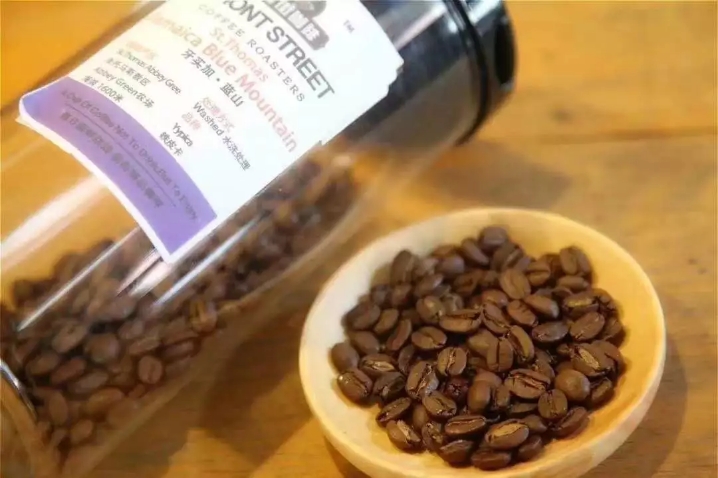
Carefully selected to a 17/18 screen size, No. 1 grade Blue Mountain coffee carries a defect rate below 2%.
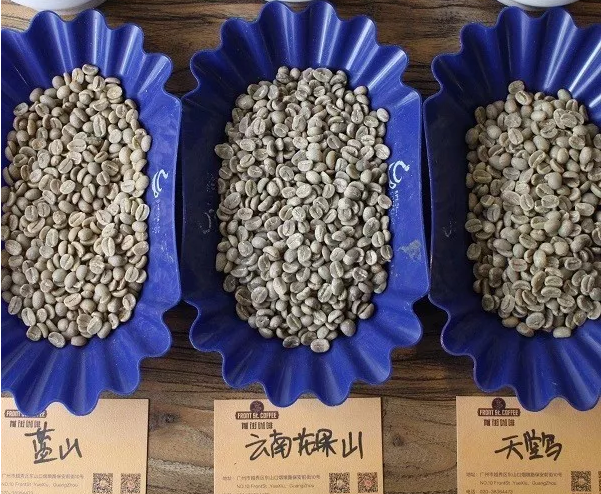
FrontStreet Coffee's Recommended Blue Mountain Brewing Method
KONO dripper; water temperature: 84-86°C; grind size: Fuji 4 (medium grind); coffee-to-water ratio: 1:13-1:14; extraction time: 1 minute 50 seconds.
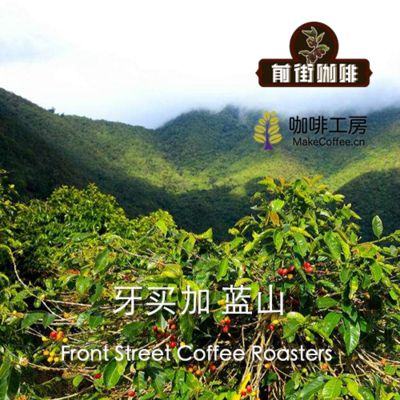
FrontStreet Coffee Recommendation
With so much fake "Blue Mountain" on the market, authenticity comes down to certification and traceability. FrontStreet Coffee's Jamaica Blue Mountain No. 1 comes from the historic Clifton Estate - growing coffee since around 1750 at an average elevation of about 4,300 feet (1,310.64 meters) - and arrives with the Jamaican government's certificates, complete origin documentation, and the traditional wooden shipping barrels (15, 45, and 70 kg) that genuine Blue Mountain green coffee travels in. The beans are roasted medium-dark within 5 days of your order, preserving the classic profile: nut, dark chocolate, cream caramel, and soft sweetness, with acidity, body, bitterness, and aroma in perfect balance.
To brew it, rest the beans 4-7 days from the roast date and grind slightly coarser than a light roast - about white-sugar texture. Use a KONO dripper with 15 g of coffee, water at 87-88°C, and a 1:15 ratio in three pours: 30 g to bloom for 30 seconds, then to 120 g, then to 225 g. The cup is clean, dense, and mild, with chocolate sweetness and no harshness - exactly why Blue Mountain No. 1 remains a treasured daily cup and an elegant gift.
Important Notice :
FrontStreet Coffee is a long-established specialty coffee roaster in Guangzhou China, selling freshly roasted beans from its own farm in Yunnan as well as dozens of carefully selected single-origin beans from around the world for both pour-over and espresso. The products deliver consistently excellent quality and great value, with shipping within 24 hours. Guangzhou's FrontStreet Coffee shop is recommended by many coffee lovers, and the beans are now available online at the Tmall 。
FrontStreet Coffee has moved to a new address:
FrontStreet Coffee Address: 315,Donghua East Road,GuangZhou
Tel:020 38364473
 Scan and follow the En Gafei WeChat official account. Please indicate that the reprint comes from "En Gafei".