Designing Yirgacheffe Coffee Bean Roasting Curve Yirgacheffe Coffee Roasting Tutorial
How Is the Roasting Curve for Yirgacheffe Coffee Beans Designed?
How do you determine the optimal drop time when roasting coffee beans?
This question is really asking how to design a roasting curve.
In fact, the drop time alone should never be the sole basis for judgment. Dropping the beans at a specific minute and second does not prove your roast degree or quality is uniform — the inherent characteristics of the green beans, the rate of temperature rise throughout the roast, and other factors all matter. So, simplifying as much as possible and focusing only on how to judge the drop-time factor (a simplified version, assuming you already understand the green bean characteristics, that the turning point has normalized, and that heat is predetermined), you can proceed as follows:
Step 1: Make Assumptions
Based on your usual roasting experience, make a general prediction. For example, typically:
When does it enter first crack?
How long will first crack last?
How much time is there between first and second crack?
Step 2: Sample
Take samples at 30s, 50s, and 60s after first crack begins; at 25%, 50%, and 75% of the interval between first and second crack; just before second crack begins; as second crack begins; and once into second crack.
Take 11g samples from each point.
Step 3: Cupping
Cup the samples to determine which range best meets your expectations.
Then you can make your judgment!
Note: in actual practice you will likely need many tries, close attention to detail, rigorous record-keeping, and an exploratory spirit for this to truly work.
Yirgacheffe varieties are local indigenous, small-grained types with a relatively round appearance and very small beans, mostly between 14-15 mesh.
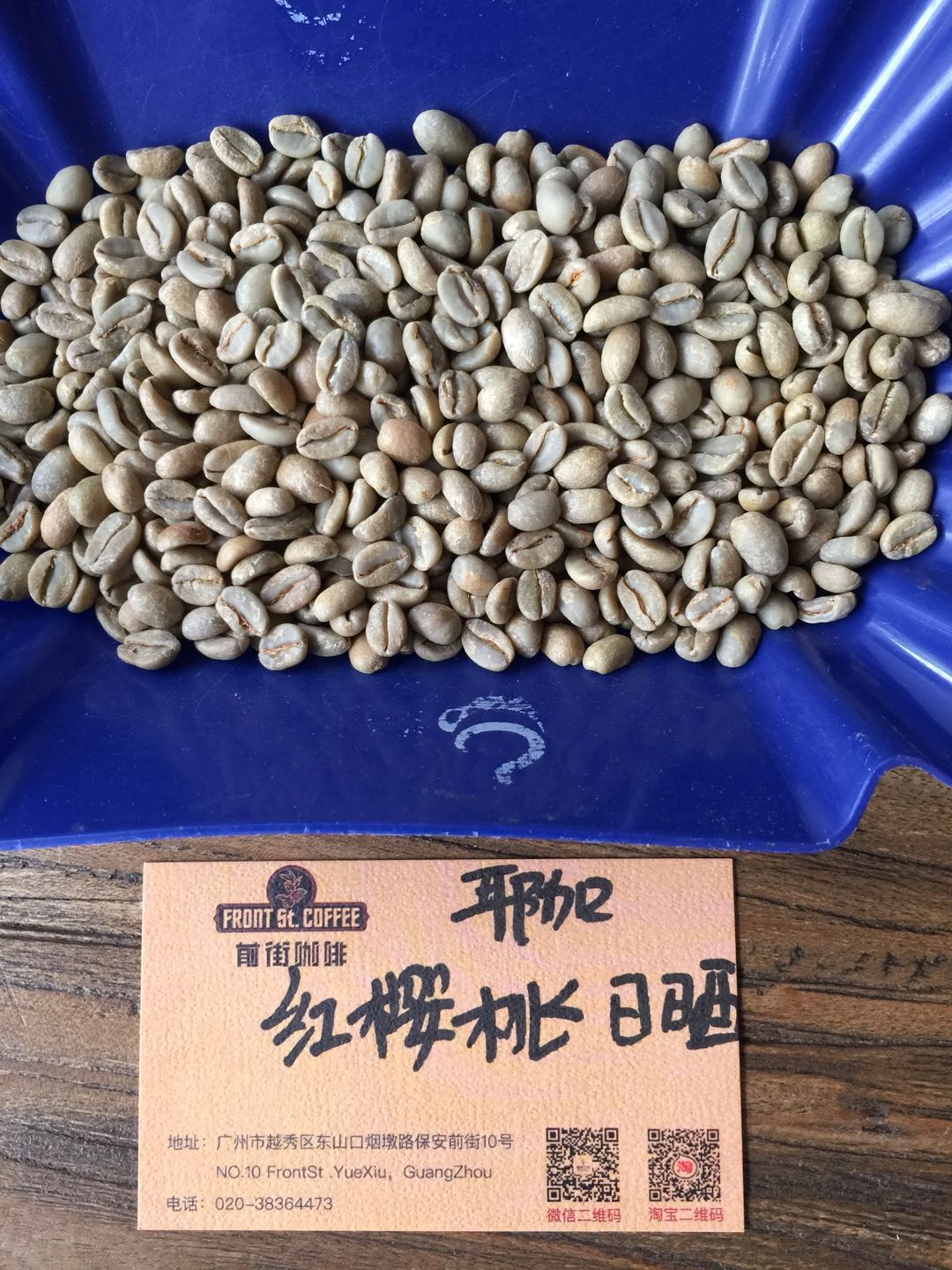
Yirgacheffe Cherry Red Grade 1 green beans show a yellow-green color typical of natural processed coffee, with uniform, plump particles and few defects.
04 | Roasting Analysis
Beans with such brilliant flavors are certainly not suited to medium-dark roasting. This coffee therefore uses a light, slow roast to best express its rounded sweetness and rich floral and fruit aromas.
The beans are relatively small; given their moisture content, they absorb more heat during roasting, and the Maillard reaction proceeds relatively quickly.
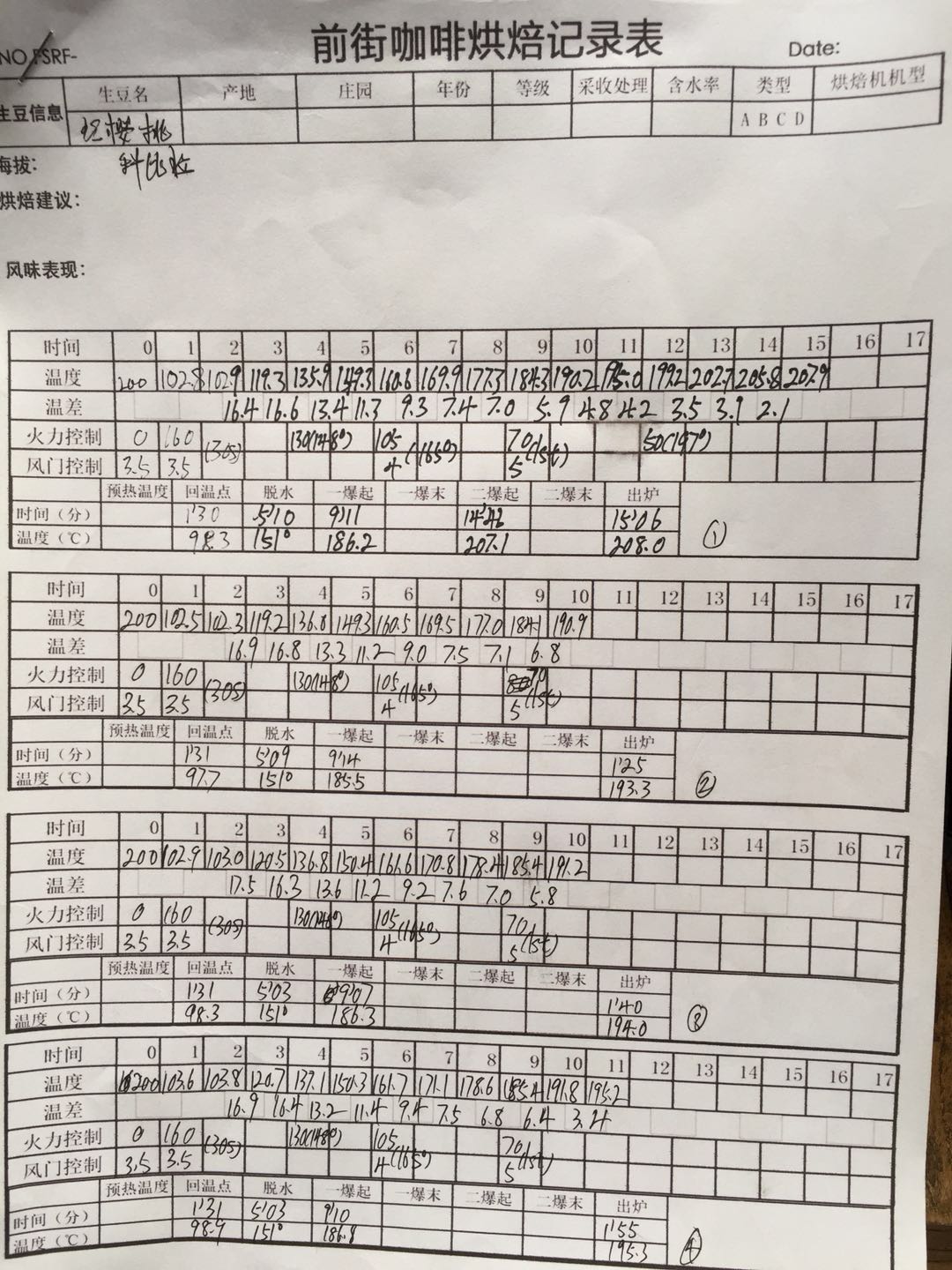
In the first roast, I used a higher dropping temperature: before the beans dehydrated and yellowed, I ran 160 heat to ensure enough energy carried through first crack, developing directly toward second crack and setting the development curve.
In the second, third, and fourth roasts, with the same 200°C entry temperature and same heat, I gradually reduced the heat as needed during the roast.
This roast is a quick-stir light roast:
Cupping:
Roast one: strawberry, raspberry, vanilla, honeydew, juicy
Roast curve 2: strawberry, raspberry, vanilla, honey, juice
Roast two: mango, black plum, citrus juice
Roast curve 3: mango, black plum, blueberry, citrus juice
Roast three: citrus juice, cream
Roast curve 3: citrus juice, cream
Roasting machine: Yangjia 600g semi-direct flame
Using quick-stir mode, heat the drum to 200°C with the air vent at 3.5. After 1 minute, adjust heat to 160°, vent unchanged. At 148°, reduce heat again to 130°. Roast to 5'03" at 151°, when the bean surface yellows, the grassy smell disappears completely, and dehydration is complete. Adjust heat to 105° and open the vent to 4.
At 8 minutes, wrinkles and black spots appear on the bean surface and the toast smell clearly turns to coffee aroma — the prelude to first crack. Listen carefully now. At 9'07" first crack begins; reduce heat to 70° with the vent fully open (be very careful when reducing heat — not so much that the cracking stops). Drop at 194°.
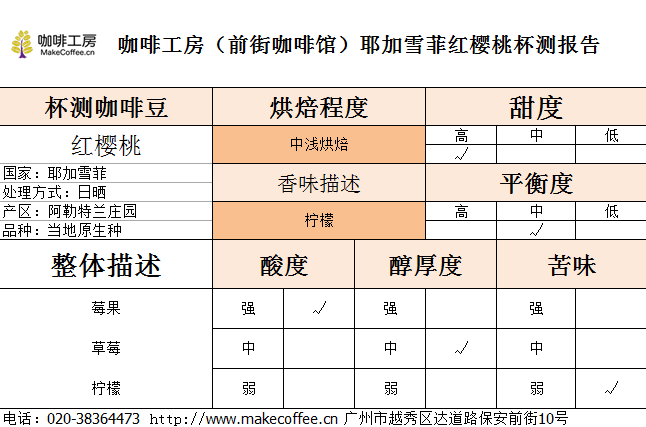
FrontStreet Coffee's Yirgacheffe dry aroma gives off strong fruit fragrance, with heavy dried-fruit notes and strawberry, mango, and apricot jam aromas.
The wet aroma is like sweet syrup, like thick apricot pulp juice, wrapped in rustic honey or chocolate. The entry is not intense; the body is medium, the acidity understated but lively and bright, like fruit tea.
04 | Brewing Analysis
Yirgacheffe Flavor
Brewing Methods
As for brewing methods, pour-over and siphon are optimal. When grinding, you can already smell the natural fruit aroma and obvious sweetness.
Gentle and elegant, sweet and charming — FrontStreet Coffee's Yirgacheffe gives off extremely complex aromas and a mouthfeel so refined it is hard to describe.
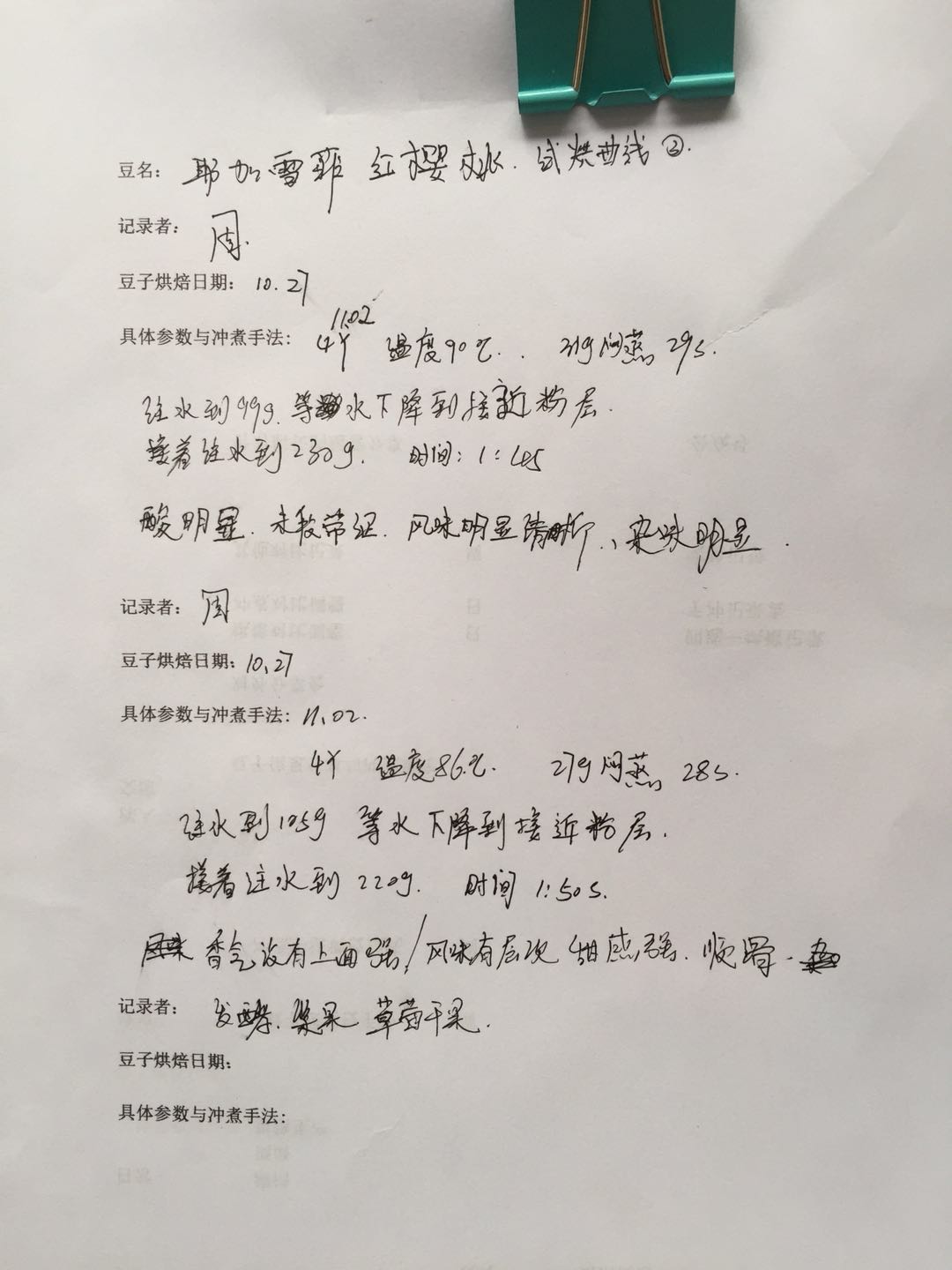
First Brewing:
V60 dripper, 15g of coffee, water temperature 90°C, grind level 4, water-to-coffee ratio close to 1:15.
31g of water for bloom, bloom time 29s.
Segments: pour to 99g, pause, then slowly pour to 230g total.
That is: 31-99-100.
Flavor: obvious strawberry fruit acidity, with astringency in the finish and some off-flavors.
Adjustment:
Adjust the grind from level 4 to 3.5 (finer) and lower the water temperature.
Second Brewing (Correction):
V60 dripper, 15g of coffee, water temperature 86°C, grind level 3.5, water-to-coffee ratio close to 1:15.
27g of water for bloom, bloom time 28s.
Segments: 27-105-88, total time 1:50 (timing from the bloom).
Flavor: smooth, much richer and layered, with enhanced fermented berry sweetness.
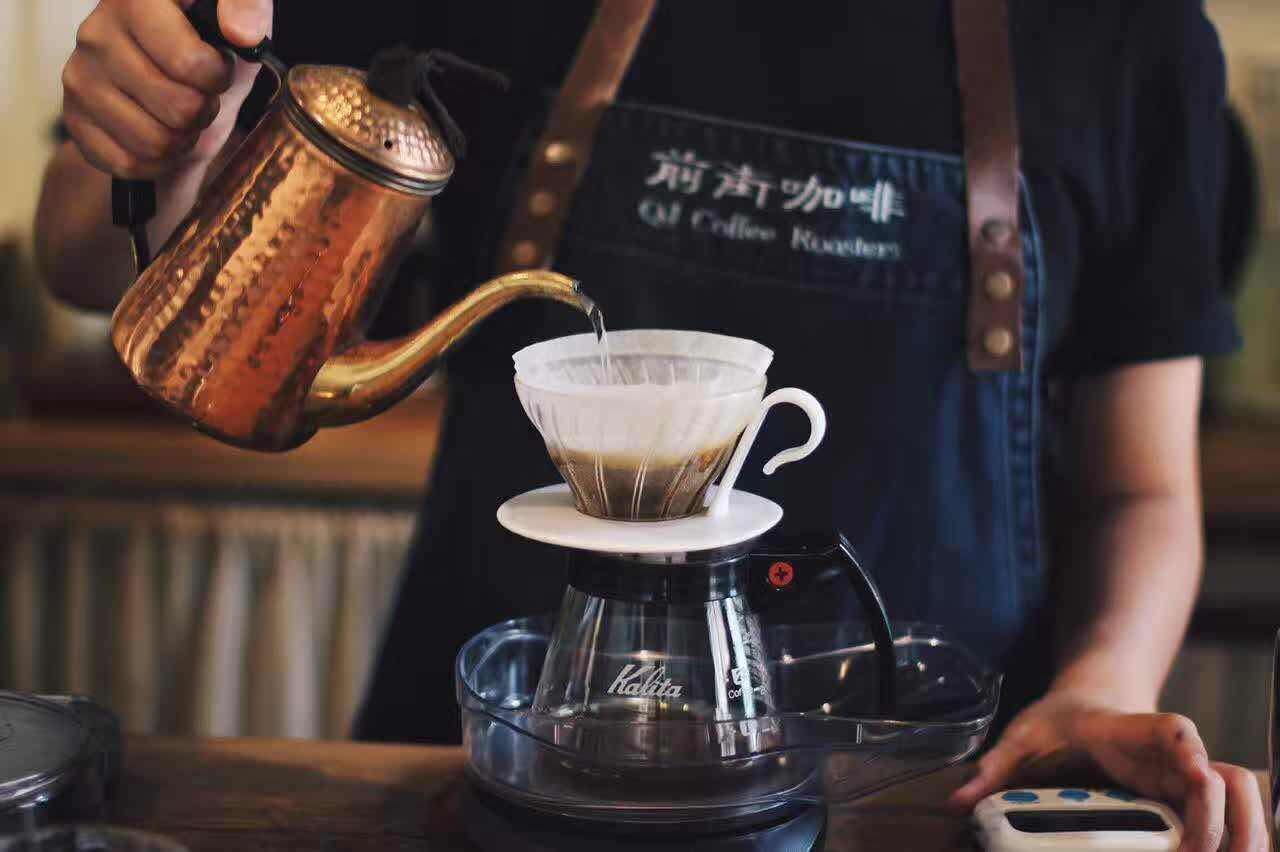
The finished brew's wet aroma, with fermented berry and wine notes, almost makes you doubt this is a Yirgacheffe — and personally I am not fond of that wet aroma. But from the extremely smooth entry to the delicate body, the emergence of ripe fruit's sweet-sour notes is astonishing. The sweetness exceeds any Yirgacheffe I have tasted before, and the aftertaste is excellent — truly worthy of its "fruit bomb" reputation. You can still feel the sweetness in your mouth half an hour after drinking.
FrontStreet Coffee Recommendation
If this roasting journey has you craving the bean itself, FrontStreet Coffee's Yirgacheffe rewards both light roasts and careful brewing. For context, Yirgacheffe is a small town in Ethiopia's Sidamo province at roughly 1,700-2,100 meters, with coffee grown above 1,800 meters — one of the world's highest growing regions — and its signature style of white jasmine florals and bright lemon-citrus acidity became so famous that in 2010 the Ethiopian Commodity Exchange separated it from Sidamo as its own appellation.
To explore further, FrontStreet Coffee's washed Gedingding co-op lot from the Worka region offers fresh, bright citrus and lemon acidity wrapped in jasmine with a tea-like finish, while the Red Cherry natural — fully ripe cherries dried whole on raised beds for three to five weeks, turned every 2-3 hours early on — layers tropical fruit, berry juiciness, honeyed sweetness, and creamy smoothness over that classic Yirgacheffe base. For brewing, FrontStreet suggests a V60 at 90-91°C, 15g of coffee at a fine-granulated-sugar grind (80% through a #20 sieve), a 1:15 ratio, and a three-stage pour: 30g bloom for 30 seconds, to 125g by about 1 minute, then to 225g by about 1:35, drawing down in 2:00-2:10.
Important Notice :
FrontStreet Coffee is a long-established specialty coffee roaster in Guangzhou China, selling freshly roasted beans from its own farm in Yunnan as well as dozens of carefully selected single-origin beans from around the world for both pour-over and espresso. The products deliver consistently excellent quality and great value, with shipping within 24 hours. Guangzhou's FrontStreet Coffee shop is recommended by many coffee lovers, and the beans are now available online at the Tmall 。
FrontStreet Coffee has moved to a new address:
FrontStreet Coffee Address: 315,Donghua East Road,GuangZhou
Tel:020 38364473
 Scan and follow the En Gafei WeChat official account. Please indicate that the reprint comes from "En Gafei".