Yirgacheffe Coffee Bean Flavor Profile - Ethiopian Yirgacheffe Specialty Coffee Brewing Parameters
FrontStreet Coffee has found that its Yirgacheffe beans are not only increasingly popular as a pour-over single origin but have also won the favor of roasters and baristas in espresso single-origin and blend coffees. So what exactly does Yirgacheffe flavor taste like? This article discusses the flavor characteristics of FrontStreet Coffee's Yirgacheffe coffee beans.
Yirgacheffe Growing Region
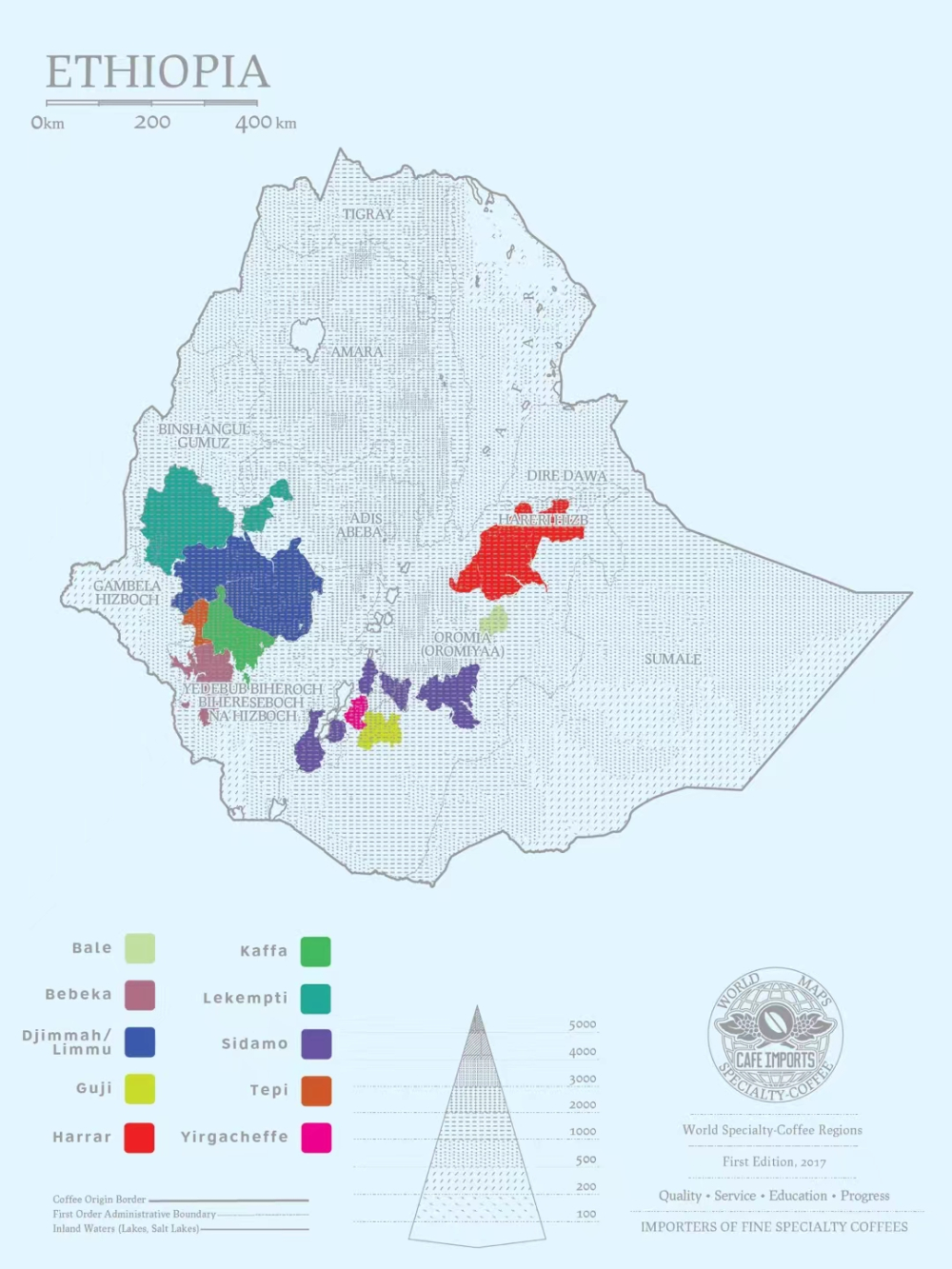
Located in Ethiopia, the birthplace of coffee, Yirgacheffe is a small township in the southern Gedeo region at an altitude of approximately 1700-2100 meters. It originally belonged to the Sidamo growing region, but because its processing methods differ and its flavor has distinct recognition, it became a school of its own and was established as a representative independent growing region.
In the ancient Ethiopian language, the English "Yirgacheffe" is made of two words: Yirga, meaning calm or settled down, and Chaffe, meaning marsh-like wetland. So Yirgacheffe carries the sense of "let us settle down and make a living on this wetland." The so-called "Yirgacheffe flavor" can simply be understood as unique citrus and lemon fruit aromas, carrying the fragrance of jasmine flowers, with a fresh, bright texture and distinct layered acidity, clean and free of any off-flavors.
To promote the coffee industry, the Ethiopian government registered the flavor profiles of three domestic coffee growing regions, including Yirgacheffe, as commercial trademarks in 2004, and established the Ethiopian Commodity Exchange (ECX) in 2008. Coffee is one of the commodities auctioned at the exchange. The government carries out quality grading and flavor classification for exported beans so buyers can purchase coffee with trademarked flavors.

Next to Yirgacheffe are three small growing regions: Wenago, Kochere and Gelena Abaya. The coffees produced there are similar in flavor to Yirgacheffe, so Kochere is also classified under the Yirgacheffe regional classification. The local Yirgacheffe Coffee Farmers Cooperative Union (YCFCU) has been established, with a total of 28 member cooperatives of various sizes. A cooperative is equivalent in size to a village, responsible for processing green coffee harvested from the same village or surrounding areas, and finally sold under the cooperative's name.
Local farmers generally plant in their own backyards or mixed with other crops, truly small-scale farming. During the harvest season they sell coffee cherries to cooperatives for processing, so the origin information is usually the name of the processing cooperative. FrontStreet Coffee's Gedeb cooperative is one of the very well-known green coffee processing cooperatives on the market, composed of more than 300 farmers, and its mature processing technology produces excellent quality coffee.
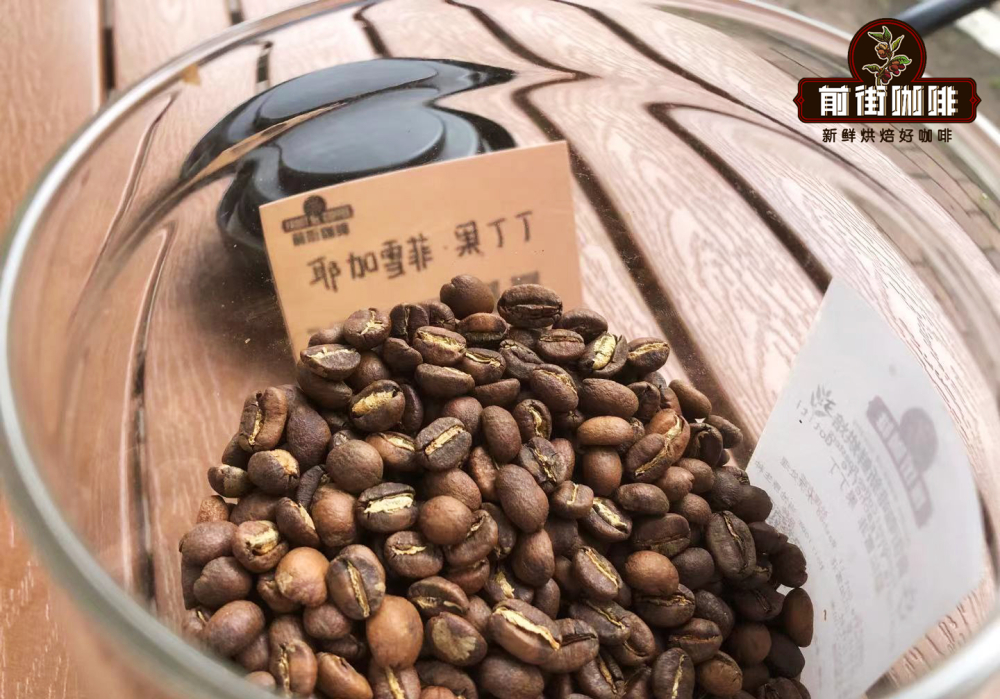
FrontStreet Coffee - Ethiopia Yirgacheffe Gedeb Cooperative Coffee Beans
Region: Yirgacheffe Region
Altitude: 1900-2000m
Processing: Washed
Variety: Heirloom
Flavor: Jasmine, Citrus, Berries, Tea-like
Washed Processing
Traditionally, coffee from the Yirgacheffe region was processed using African natural drying methods, spreading the cherries directly on the ground for sun exposure. Later the local government introduced washed processing technology from Central and South America. Through washing, the coffee's acidity becomes brighter and more lively, the floral and fruit aromas are fresher and more prominent, and it avoids the negative flavors caused by over-fermentation during natural processing.
Washed processing uses machines to remove the skin and pulp from harvested cherries, then places them in fermentation tanks for 12-36 hours, during which the mucilage layer is decomposed and separated by microorganisms. The beans are then placed in clean water tanks and thoroughly cleaned with tools before being spread out to dry in the sun. FrontStreet Coffee has 7 FrontStreet Coffee house blend beans. Among coffees from Africa, the birthplace of coffee, FrontStreet Coffee chose its washed Yirgacheffe as the "face" here, letting everyone enjoy Yirgacheffe flavor, jasmine aroma, and citrus and berry sweetness and sourness, at the lowest price.
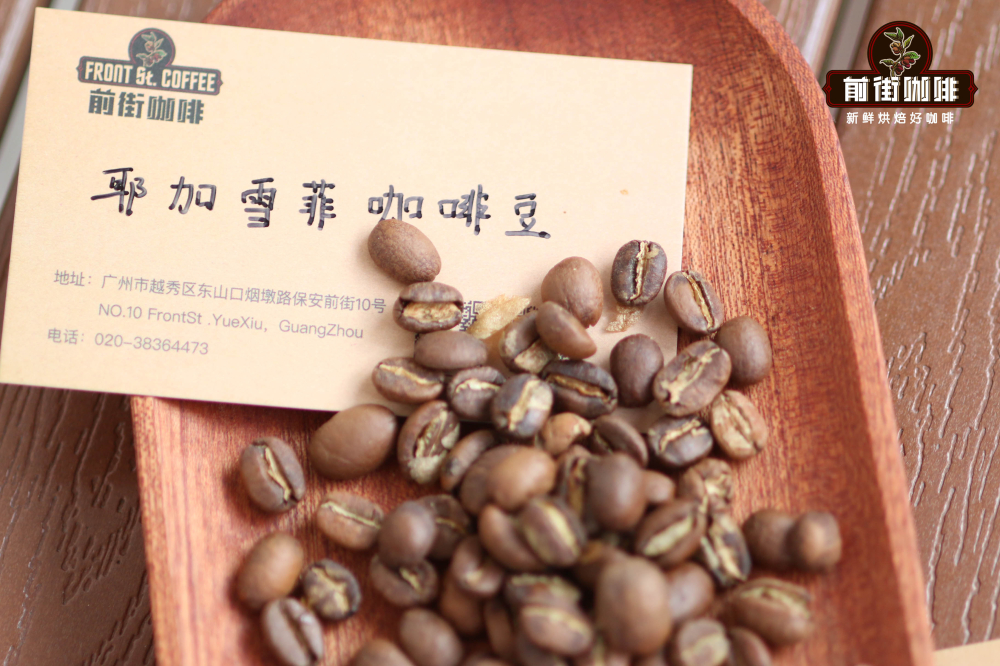
FrontStreet Coffee - Ethiopia Washed Yirgacheffe Coffee Beans
Region: Yirgacheffe Region
Altitude: 1900-2000m
Processing: Washed
Variety: Heirloom
Flavor: Jasmine, Citrus, Berries
What is the Red Cherry Project?
To increase the income of local Ethiopian farmers and improve coffee quality, the Dutch trading company Trabocca BV launched the "Operation Cherry Red Project" in 2007. It mainly targets high-altitude growing regions such as Yirgacheffe in Ethiopia to improve processing technologies including washed, semi-washed and natural methods. Professional cuppers were involved, and different microclimate zones were given different coffee harvest volumes during harvest seasons, requiring only 100% mature red cherries to be harvested, with production of approximately 1500-3000KG. The economic loan support, new hardware and production knowledge technology provided by Trabocca greatly improved the quality of beans from the Yirgacheffe region and even the entire country of Ethiopia. Correspondingly, the coffee commands higher prices, thereby increasing farmers' income.

Natural Processing
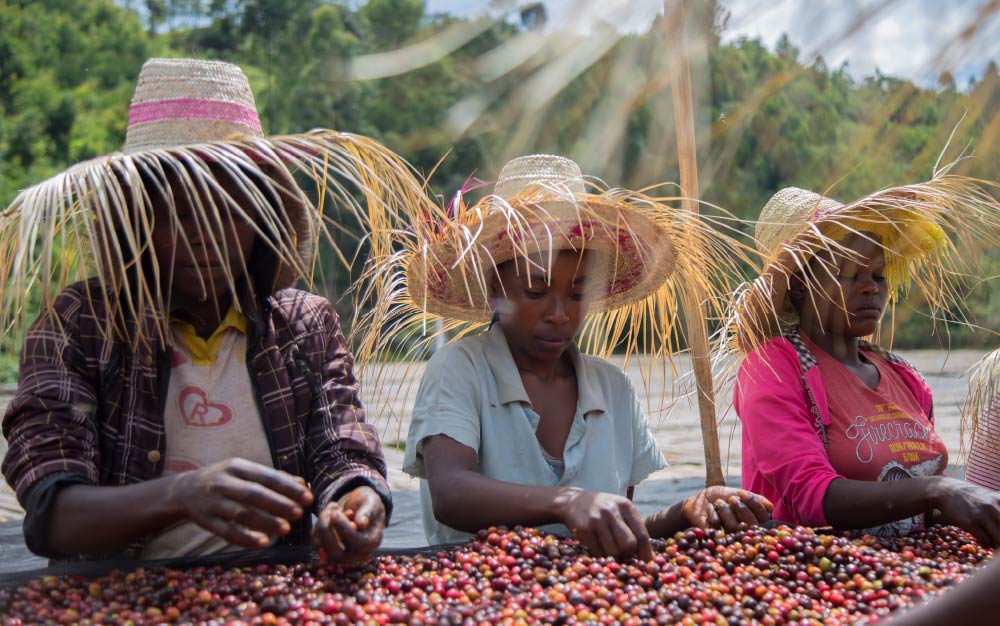
After the Red Cherry Project launched, Trabocca invested in new natural drying racks and shade nets for Yirgacheffe and other regions in 2008-2009. Combined with harvesting only plump, fully red cherries and manual turning through the day in time segments, the goal is to ensure the cherries dry evenly until the moisture content of the green beans reaches 11-12%, at which point the outer shell can be removed for packaging and storage.
FrontStreet Coffee believes naturally processed Yirgacheffe has more berry acidity than washed coffee, with higher sweetness from fermented fruit. FrontStreet Coffee has therefore introduced its natural Red Cherry coffee into espresso blends, pairing it with its whiskey barrel-fermented FrontStreet Coffee Sherry coffee to create FrontStreet Coffee's Sunflower Warm Sunshine Espresso Blend Coffee Beans. The espresso has vanilla cream-like crema with a strong wine aroma, and the berry acidity on entry creates better layering.
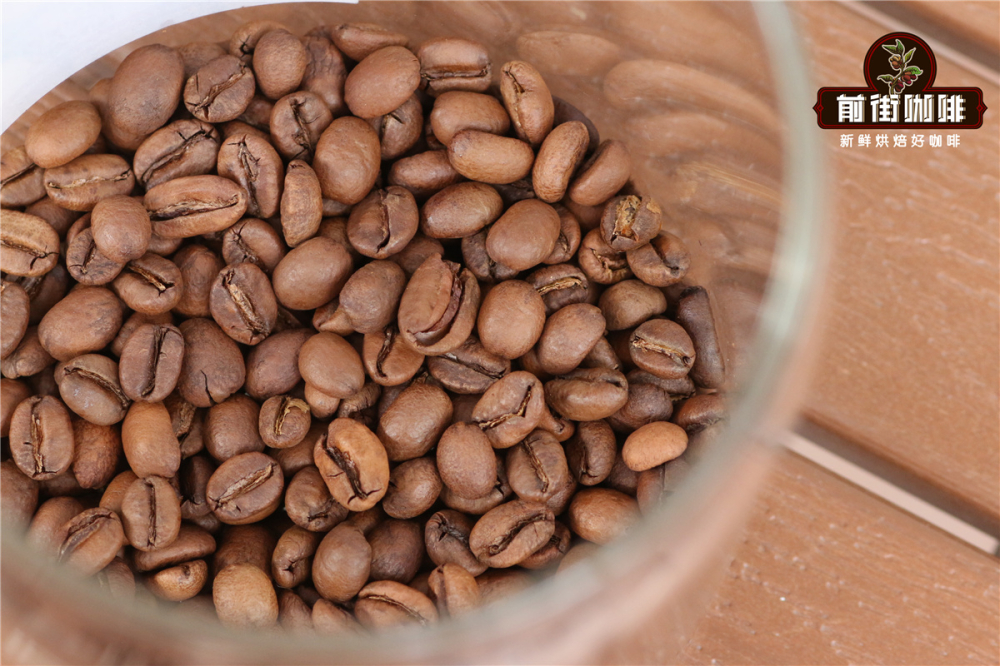
FrontStreet Coffee - Ethiopia Yirgacheffe Natural Red Cherry Coffee Beans
Region: Yirgacheffe Region, Aleltan Estate
Altitude: 1700-2200m
Processing: Natural
Variety: Heirloom
Flavor: Berries, Jasmine, Lemon
Yirgacheffe Coffee Bean Grading System
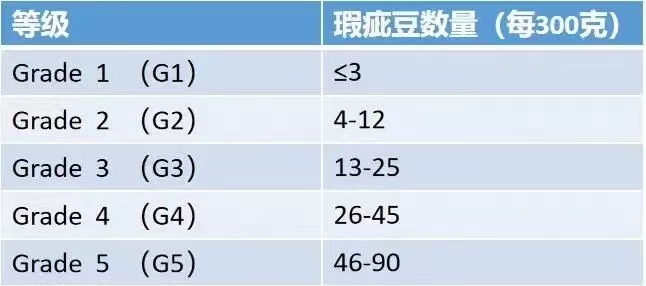
With the growth of green coffee exports, the Ethiopian Commodity Exchange has redefined the grading order and standards. According to processing method, Yirgacheffe can be divided into two main categories, Class A and Class B. According to green bean characteristics and preliminary cupping scores, they are classified into 9 grades, G1-G9. Among them, G1-G3 use cupping standards set by the American Specialty Coffee Association (SCAA) as a reference, evaluating detailed flavors, and G1 and G2 with scores no lower than 85 are designated Q1 grade. G1 is the highest grade of green beans, meaning 0-3 defective beans per 300 grams. G2 represents 4-12 defective beans per 300 grams. In terms of defect rate, G2 is therefore higher than G1.
Brewing Suggestions
FrontStreet Coffee's Yirgacheffe beans are world-famous for their jasmine aroma and bright citrus-lemon acidity, so FrontStreet Coffee chose a medium-light roast. Coffee grown at high altitudes has a harder texture and needs high water temperatures to extract the aromatic substances. A finer grind can also make the flavor more intense, and a faster-flowing V60 dripper can make the flavor layers more balanced.

When brewing, choose fresh coffee beans if you want a full aroma. The beans sold by FrontStreet Coffee are freshly roasted within 5 days. Because different roast levels require degassing, there is a 4-7 day resting period. By the time you receive beans from FrontStreet Coffee's store, they are at their optimal tasting period and can be brewed directly.
Dripper: V60
Water Temperature: 92-93°C
Grind Size: 80% pass-through rate on #20 standard sieve
Coffee-to-Water Ratio: 1:15
Coffee Dose: 15g
Wet the grounds with twice the amount of water and bloom for 30s. Use a small stream to pour steadily in circles from inside to outside until reaching 125g of water, then start segmenting. As the coffee filters through, when the water level in the bed drops below half the dripper, pour the final 100g of water in the same circular manner. Remove the dripper once all the coffee has finished dripping, then shake the coffee in the sharing pot before enjoying.

FrontStreet Coffee compared the three coffees mentioned above. Each bean has both consistency and its own charm. All three carry fresh floral and fruity notes with berry sweetness and sourness as the main profile. FrontStreet Coffee's washed Yirgacheffe house blend beans have light jasmine aroma, clear citrus notes and a clean mouthfeel. FrontStreet Coffee's Gedeb cooperative coffee, also washed processed, has clearer lemon-bright acidity with prominent cane sugar sweetness that rounds into a tea-like sensation as it cools. Finally, FrontStreet Coffee's Yirgacheffe Natural Red Cherry beans have rich tropical fruit aroma when ground, with berry and fermented fruit sweetness on entry, a delicate texture and a persistent aftertaste.
FrontStreet Coffee Recommendation
Yirgacheffe is a town in Sidamo in southern Ethiopia at about 1700-2100 meters, with the coffee trees planted above 1800 meters, making it one of the highest coffee regions in the world. It was long a wetland, and its name became shorthand for the white florals and lemon-citrus acidity that define Ethiopian specialty coffee. In 2010, once Yirgacheffe's fame had grown so great, the Ethiopia Commodity Exchange separated it from Sidamo, which is how Yirgacheffe became a name in its own right.
For a first encounter with the region, FrontStreet Washed Yirgacheffe is the classic entry, known for white jasmine, bright citrus and lemon acidity and a tea-like body, and priced so that it is the first specialty bean for many drinkers. To go deeper, FrontStreet Gudingding Cooperative comes from Gudingding village in the Woka area at the southeastern end of Yirgacheffe. It began as part of the Woka cooperative under the YCFCU and was later recognized as a single origin on its own. It keeps the traditional washed process, and the cup is free of old bitterness, with fresh, bright citrus and lemon acidity and jasmine fragrance.
For a natural-process counterpoint, FrontStreet Red Cherry uses fully ripened cherries dried in the sun. The cherries are sorted on arrival and spread on racks; in the first days they are turned every 2-3 hours to prevent uneven heat and over-fermentation, and after three to five weeks of drying the outer pulp is scraped off by machine according to the weather and temperature. Because the fruit dries with the pulp, the cup keeps the typical Yirgacheffe character while gaining tropical fruit from the natural process: citrus acidity, berry juiciness, honey sweetness and a creamy smoothness.
For brewing, a V60 works well at 90-91°C with 15 g of coffee and a 1:15 ratio, ground to an EK43s setting of 10, the size of fine sugar, with 80% of the grounds passing a No. 20 sieve. FrontStreet's method is to bloom with 30 g of water for 30 seconds, then pour 95 g (about 125 g on the scale) over roughly one minute; when the water drops to two-thirds of the bed, pour the remaining 100 g (about 225 g on the scale) over about 1 minute 35 seconds. Drawdown finishes at 2:00-2:10, then remove the dripper and the brew is done.
Important Notice :
FrontStreet Coffee is a long-established specialty coffee roaster in Guangzhou China, selling freshly roasted beans from its own farm in Yunnan as well as dozens of carefully selected single-origin beans from around the world for both pour-over and espresso. The products deliver consistently excellent quality and great value, with shipping within 24 hours. Guangzhou's FrontStreet Coffee shop is recommended by many coffee lovers, and the beans are now available online at the Tmall 。
FrontStreet Coffee has moved to a new address:
FrontStreet Coffee Address: 315,Donghua East Road,GuangZhou
Tel:020 38364473
 Scan and follow the En Gafei WeChat official account. Please indicate that the reprint comes from "En Gafei".