Differences Between Pour-Over Mocha and Espresso Mocha: Which Coffee Beans to Use for Making Mocha

When it comes to mocha coffee, many people think of the espresso-based milk coffee with chocolate sauce found in today's coffee shops. A smaller number think of Yemeni mocha coffee. In this article, FrontStreet Coffee will explain the differences between espresso mocha and single-origin mocha coffee.
What is Single-Origin Mocha Coffee?
Yemen's Mocha Port, for over 300 years starting from the 15th century, served as an important seaport exit on the Red Sea, with a status equivalent to today's Shanghai Port. The vast majority of global maritime freight passed through this port. Coffee wasn't grown near Mocha itself; most came from high-altitude areas in Yemen's central mountainous regions. When coffee exported via Mocha Port reached various European countries, it received unanimous praise. Because people at the time only knew these coffees came from Mocha Port, they called them "Mocha Coffee (beans)." Subsequently, all coffee exported through Mocha Port was sold under the "Mocha Coffee" label.
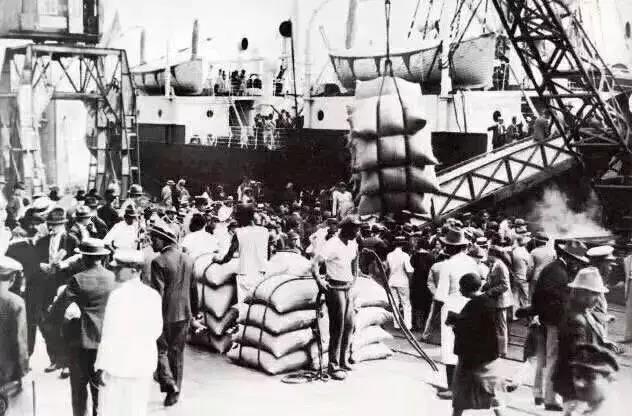
Today the old Mocha Port has long been abandoned due to sedimentation (now known as Al Makha), becoming a historic port with only white sandy beaches. Exports have shifted to the northwestern Hodeida Port, but people have long been accustomed to the Mocha name, and its reputation has resonated through the ages. The name continues to be used today.
Why is Yemeni Mocha Coffee Rarely Seen on the Market Today?
In recent years, Yemen's ongoing turmoil has severely impacted coffee cultivation, with only small quantities of Yemeni coffee emerging from gunfire and conflict each year. FrontStreet Coffee was fortunate some years ago to obtain a bag of Mokha Mattari coffee, produced in Yemen's Bani Matar region and thus named accordingly. Yemen's coffee packaging bags differ from other coarse burlap sacks; they are made from fine-pore woven fabric similar to flour packaging bags.
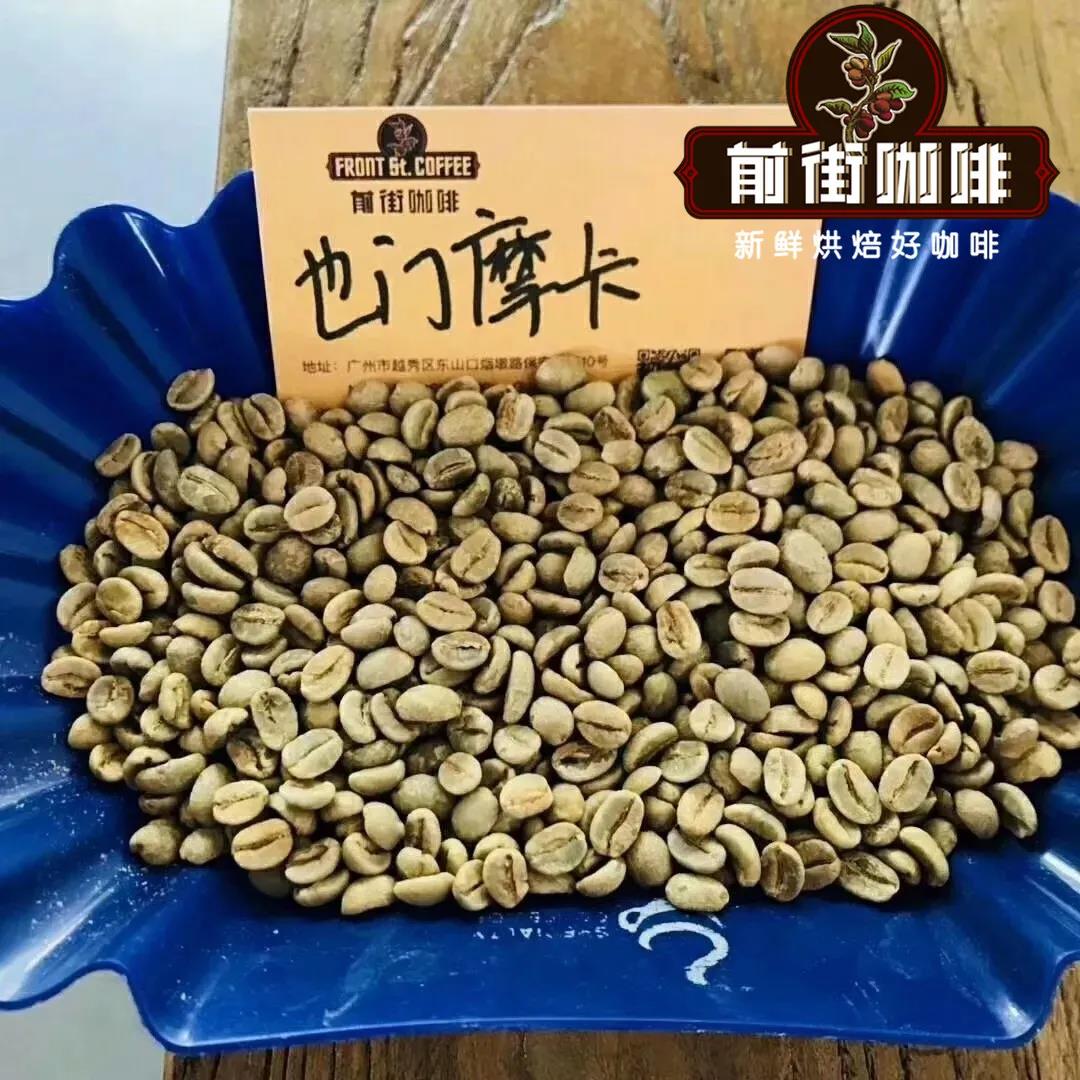
FrontStreet Coffee - Yemen Mocha Coffee Beans
Origin: Yemen, Mattari
Altitude: 1,300~1,900m
Varieties: Typica, Bourbon
Processing: Natural processing
How Does FrontStreet Coffee Roast Yemen Mocha Coffee?
Yemeni farmers' natural processing is rougher than Ethiopia's. Cherries are not picked when they turn red; instead they are left to dry naturally on the branches until they become purplish-black and fall to the ground, then collected. This differs from the refined natural processing of Yirgacheffe or Sidamo, where red cherries are picked and spread on raised African beds. It is the main reason for Yemen's particularly wild flavor. Because farmers store natural-processed beans for varying durations, almost every batch of green beans has its own distinct personality. After FrontStreet Coffee obtained Yemeni mocha beans, we noticed they had distinct cocoa fruit acidity. To showcase the body of Yemeni mocha, FrontStreet Coffee's roaster used a medium roast to highlight their inherent cocoa aroma and the coffee's rich body.

Yemeni mocha is a green bean with relatively low moisture content. Given the uneven bean sizes and low moisture, the drop temperature for these beans should not be too high, and early dehydration should be accelerated to retain moisture for first crack development and flavor. Preheat for 30 seconds, open the air damper to 3 until the beans turn light green or white, then open the damper to 4, and after first crack, open to 5 (maximum).
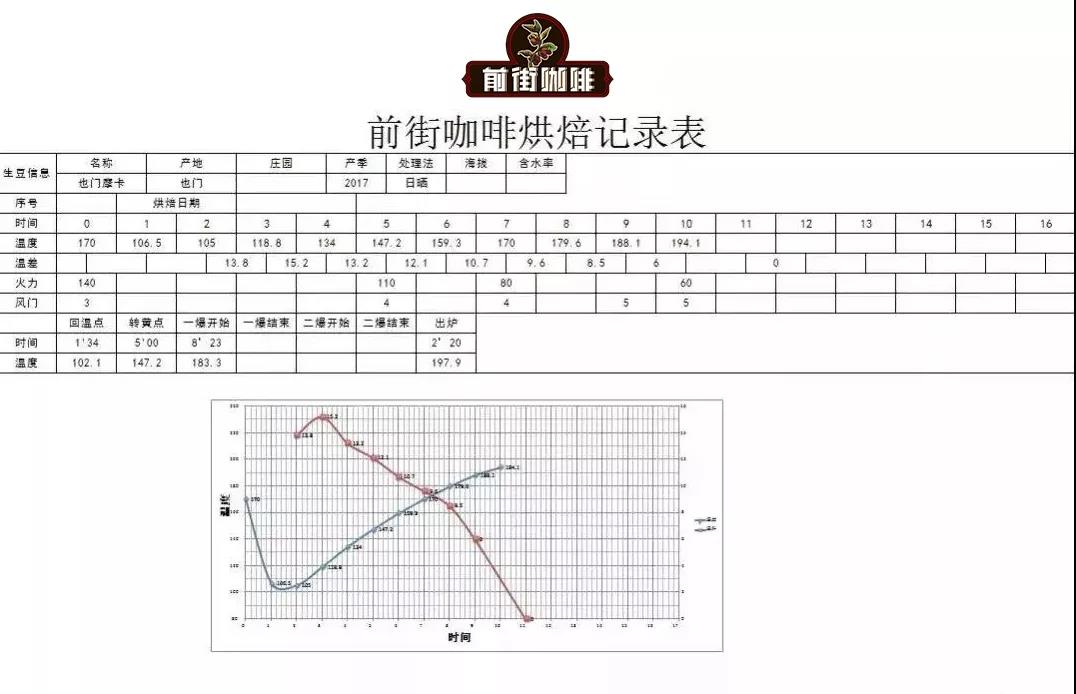
Set roaster temperature to 170°C with the air damper at 3. After 1 minute, reduce heat to 140°C, damper unchanged. Roast to 5'00'', temperature 147.2°C, when the bean surface turns yellow and the grassy smell disappears completely, marking complete dehydration; adjust heat to 110°C, damper to 4. At 8'00'', the bean surface shows ugly wrinkles and black spots, and the toasted bread aroma clearly transitions to coffee aroma, which can be defined as the prelude to first crack. At this point listen carefully for the sound of first crack. At 8'23'', first crack begins; reduce heat to 60°C and open the damper fully (adjust heat very carefully, not so low that cracking stops), dropping at 197.9°C.
How Does FrontStreet Coffee Brew Yemen Mocha Coffee?
FrontStreet Coffee uses the Kono Meimon filter cup for brewing medium-roast coffee. This cup's short rib design extends coffee extraction time, enhancing the body.
Grind: Medium-coarse (70% retention on No. 20 standard sieve)
Water Temperature: 90°C
Coffee-to-Water Ratio: 1:15
Coffee Dose: 15 grams
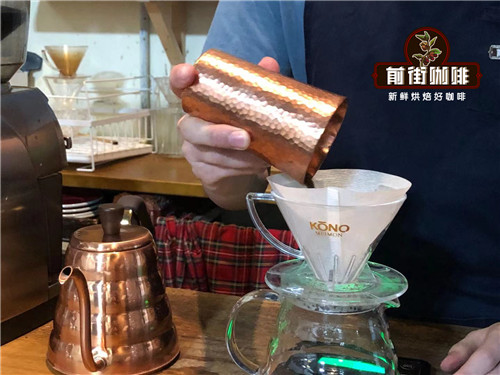
FrontStreet Coffee's staged brewing method: use 30g of water for a 30-second bloom. When pouring with a small flow to 125g, segment the pour. When the water level is about to expose the coffee bed, continue pouring to 225g and stop. Wait for the water level to drop and, just before it exposes the coffee bed, remove the filter cup. Extraction time (timed from the bloom start) is 2'06".
Yemen Mocha Brewing Flavor:
Medium complexity with layered notes, a hint of grape acidity appearing toward the changing finish, a long spice aftertaste, and a sweet, round mouthfeel with a Middle Eastern milk tea sensation that lasts for quite a while, with malt sweetness remaining at the cup bottom.

Is There a Connection Between Today's Common Espresso Mocha Coffee and Yemen Mocha Coffee?
Espresso mocha is composed of chocolate, milk and espresso combined together. The fusion of coffee and cocoa is loved by the masses, and this seems to have no connection to Mocha. However, espresso mocha can be traced back to 18th-century Italy. Although no more authoritative historical documents confirm the origin of the mocha coffee name, we can boldly speculate: in the 18th-century coffee world, the Dutch had brought coffee to Southeast Asia, the French had brought it to South America, and Mocha had lost its coffee monopoly. In addition, under Ottoman Empire rule in the mid-to-late period, Mocha coffee's market share gradually shrank.

With less Mocha coffee flowing into Europe, Mocha beans held a status in people's hearts similar to today's Geisha. People wanted to drink coffee with similar flavors. The emergence of espresso mocha was most likely an attempt to imitate the rare Mocha beans by adding unsweetened dark cocoa to espresso so the coffee would express the feeling of Yemeni mocha.
How is Modern Espresso Mocha Coffee Made?
When making espresso, FrontStreet Coffee uses a blend of natural-processed Yirgacheffe and Honduras Sherry barrel fermented "Warm Sun" espresso blend. The coffee extracted from this blend has a faint whiskey aroma, a sweet vanilla cream fragrance, and a nutty cocoa aftertaste. Modern mocha production adds both milk and sweet chocolate. FrontStreet Coffee uses sweet chocolate sauce and fresh milk with high lactose content.

First, add 30g of chocolate sauce and a double espresso, and stir well. Then heat and steam milk to about 55-60°C (because the chocolate sauce dilutes the espresso's crema layer, latte art disperses easily, so the foam can be slightly thicker than latte foam, about 1.5cm, but not as thick as cappuccino foam). After full incorporation, proceed with pattern creation.
FrontStreet Coffee Recommendation
To explore the port-filter side of coffee, the Hario V60 is a superb tool - its conical shape and 60° angle force water to the center before dripping down, extending contact with the grounds, while its single large hole makes flow depend heavily on the brewer's control. That control is exactly what shows off floral and fruit-forward beans, so a few FrontStreet coffees pair beautifully with it.
For a bright, floral cup, FrontStreet's Yirgacheffe Giddingding brings the classic Yirgacheffe character - citrus, berries and florals with a green-tea-like finish - while FrontStreet's naturally processed Ethiopia Huakui pushes tropical fruit to the fore with its strawberry, passion fruit and jackfruit aromas. And if you prefer depth over acidity, FrontStreet's Jamaica Blue Mountain No. 1 balances acidity, sweetness, bitterness and aroma, layering cream, caramel, chocolate, nut and honey notes into a smooth, rounded cup.
Important Notice :
FrontStreet Coffee is a long-established specialty coffee roaster in Guangzhou China, selling freshly roasted beans from its own farm in Yunnan as well as dozens of carefully selected single-origin beans from around the world for both pour-over and espresso. The products deliver consistently excellent quality and great value, with shipping within 24 hours. Guangzhou's FrontStreet Coffee shop is recommended by many coffee lovers, and the beans are now available online at the Tmall 。
FrontStreet Coffee has moved to a new address:
FrontStreet Coffee Address: 315,Donghua East Road,GuangZhou
Tel:020 38364473
 Scan and follow the En Gafei WeChat official account. Please indicate that the reprint comes from "En Gafei".