Costa Rica Canet Estate Coffee Bean Story - Musician Mozart Honey Process Coffee Characteristics
For professional coffee knowledge exchange and more coffee bean information, follow Coffee Workshop (WeChat official account: cafe_style).
FrontStreet Coffee has tasted a great many specialty coffees, and if you had to name one country whose coffee represents sweetness, Costa Rica's honey-processed beans would certainly come up. Costa Rica most commonly uses honey processing, but when people unfamiliar with processing hear the word "honey," many assume honey is added during processing. It is not. "Honey" refers to the mucilage of the coffee cherry, and honey processing is simply a theoretical umbrella term.
Costa Rican Coffee History

In 1729, coffee was introduced to Costa Rica from Cuba, making Costa Rica the first country in Central America to cultivate coffee and the first to grow it commercially. After gaining independence from Spain in 1821, the local government began strongly supporting the coffee industry through a series of policies. By then, over a hundred years had passed since coffee arrived, yet some 70,000 coffee trees had already been planted, a sign of how fast it developed. In 1825 the government implemented tax exemptions. In 1832 it issued a law stating that "those who cultivate coffee shall own their land," meaning that if farmers planted coffee on vacant unoccupied land they could directly own it. This encouraged many people to plant coffee, promoted the industry, and led to the present situation where most Costa Rican coffee comes from private estates. Coffee farmers hold very high status in Costa Rica. In 1897, citizens of the capital San Jose witnessed the completion of the National Theater, donated by coffee tycoons. Costa Rica has also amended its laws to stipulate that only Arabica may be cultivated domestically, while Robusta is prohibited.
Costa Rica's Growing Regions
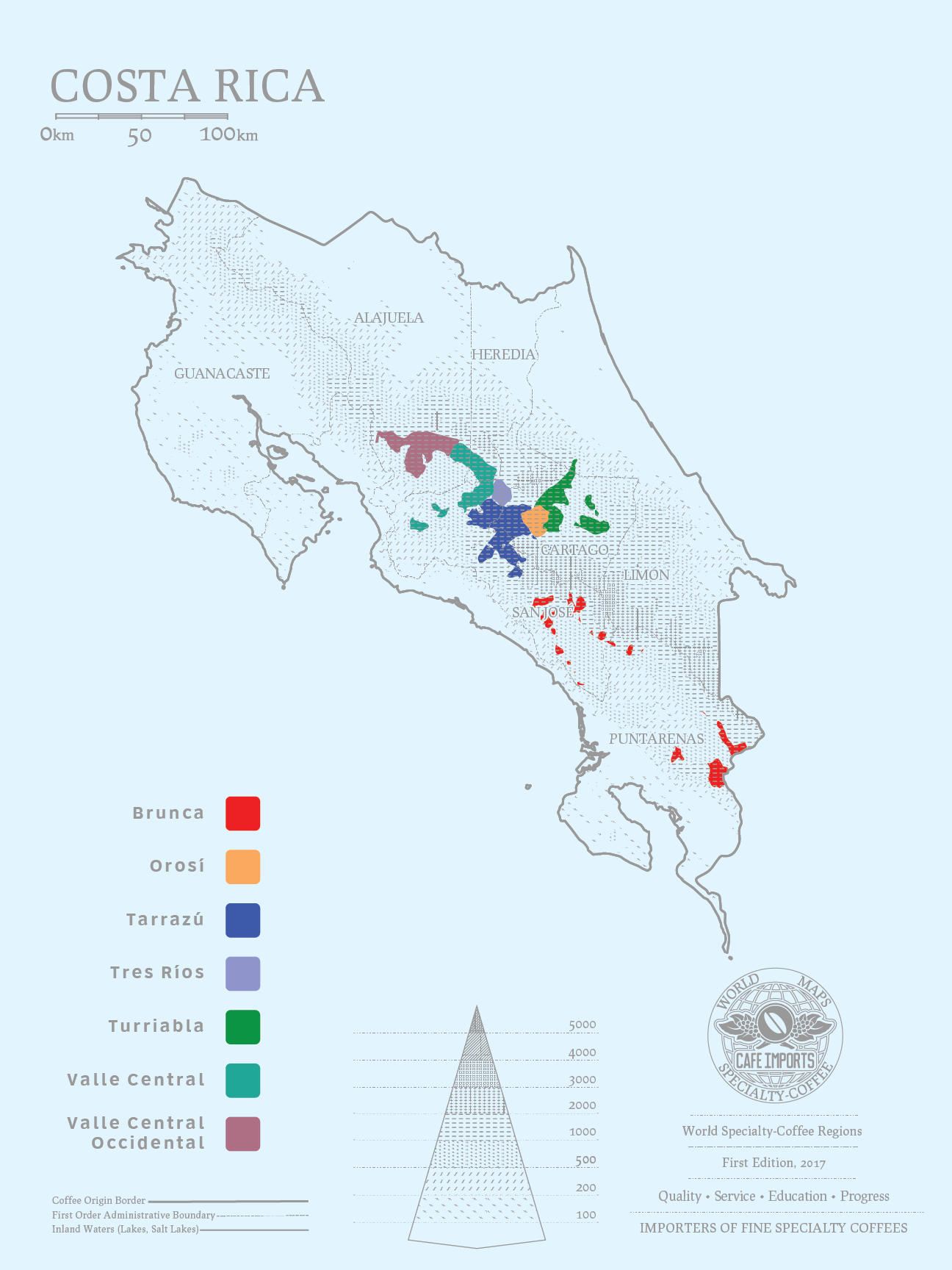
Costa Rica is located in Central America and was the first country there to cultivate introduced coffee, giving it a long history. The volcanic soil is very fertile and drains well, especially in the Central Plateau, where the fertile volcanic ash, mild suitable temperatures, and stable, abundant rainfall are all essential to growing good coffee.
The country has eight main growing regions: Western Valley (Valley Central Occidental), Central Valley (Valley Central), Tarrazu, Tres Rios, Orosi, Brunca, and Turrialba.
Tarrazu Region
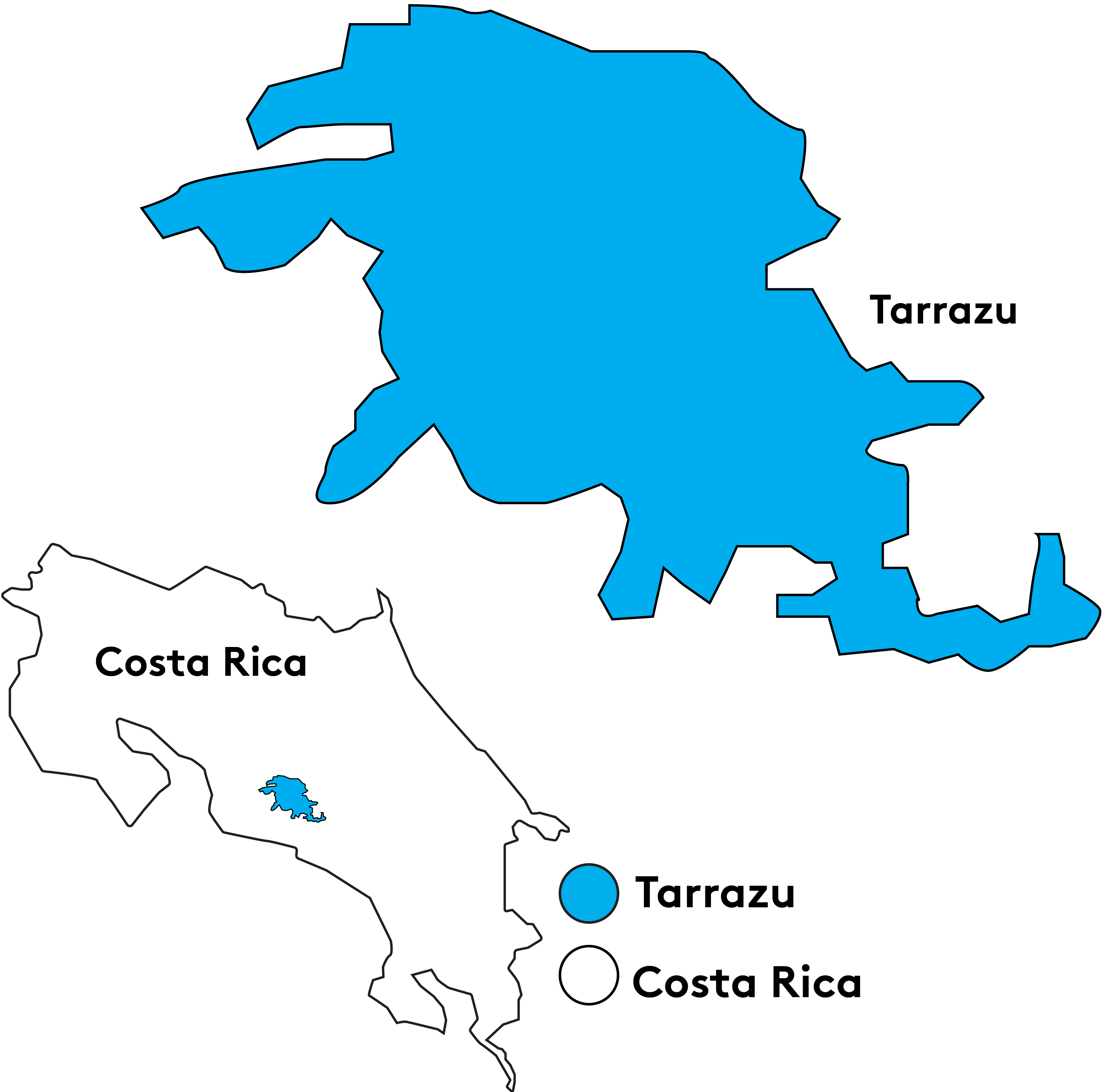
The Tarrazu region lies in a volcanic area at an altitude of about 2,000 meters, with fertile volcanic ash soil and a cool high-altitude environment, producing beans with rich flavor, bright high-quality acidity, and a pure, clean texture. In Tarrazu the rainy and dry seasons are distinct. The rainy season runs from May to November, seven months, coinciding with the growth period of the coffee trees. The dry season runs from December to April of the following year, five months. The local cherry harvest runs from November to March, also five months, which aligns perfectly with the dry season. This climate, with distinct wet and dry seasons, is ideal for cultivation and yields cherries of consistent maturity.
Canet Estate
Canet Estate (Finca Canet) is a small 5-hectare estate in the town of San Marcos in the Tarrazu region, in the highest coffee-growing area of Tarrazu, which is the most intensive fruit-growing area in Costa Rica. It is owned by the Robles brothers, Leo, Elian, and Melvin, who have worked together in cultivation and production for over 10 years and also share a small wet processing plant (Beneficio). They launched the Musician Series product line of four different beans, using different green bean processing techniques to showcase different unique characteristics.
According to FrontStreet Coffee's understanding, the Musician Series exists because the owner of Canet Estate is very passionate about classical music and names the beans after the flavors produced by different processing methods, matching each bean to the musician it feels like. As FrontStreet Coffee mentioned, Tarrazu is the highest-altitude region in Costa Rica, so Canet Estate produces SHB-grade high-altitude strictly hard beans. Such beans inherently have sweet flavors, with fruit aromas, wine-like notes, and tea-like fragrances.

Costa Rican Honey Processing
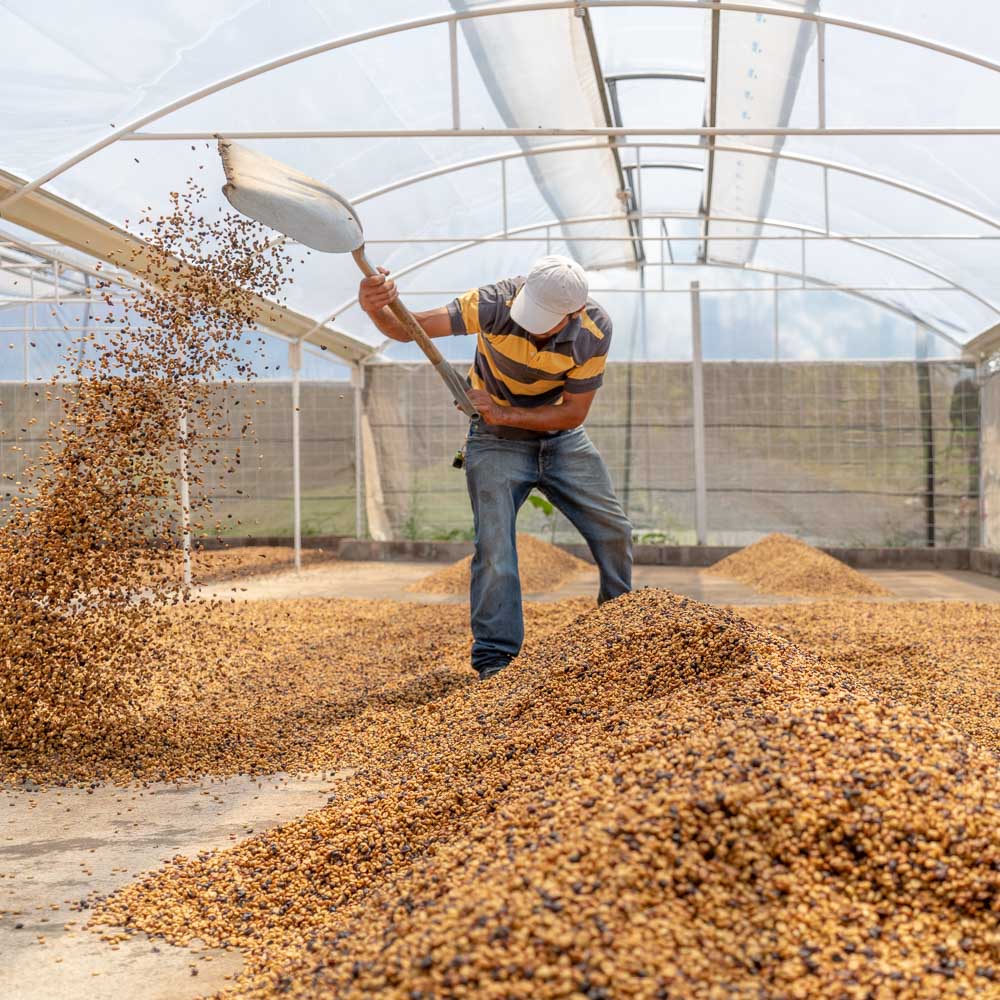
The honey processing method is called Honey Process or Miel Process, producing what is known as Honey Coffee. Plantations in Costa Rica, Panama, and Guatemala all use it, and Costa Rica's honey-processed beans are particularly well known. Honey processing means sun-drying the green bean with the mucilage, also called pectin, still attached. Once the outer pulp is removed, a viscous gel-like substance remains. Traditional washed processing rinses it away with clean water, but water is limited in some high-altitude areas, so this direct-drying method was born.
Compared with washed processing, honey processing gives higher sweetness, more sugar content, and relatively more body.
Costa Rican honey-processed beans keep the cleanliness of washed coffee. Brightness drops, but sweetness and caramel-like mouthfeel rise. According to the degree of processing, Costa Rican honey coffees are divided into yellow honey, red honey, and black honey processing.

With that in mind, FrontStreet Coffee strongly recommends the Musician Series from Canet Estate in the Tarrazu region of Costa Rica. Mozart's music is delicate, subtle, and gorgeous, with a clear style and beautiful melodies. Among the Musician Series there is one bean with the sweet-and-sour taste of delicate red berries and subtle floral notes. Its style is both the delicacy of red berries and the gorgeousness of florals, with raisin-like fermentation notes that let this melody unfold beautifully in the mouth.
[FrontStreet Coffee Costa Rica Mozart]
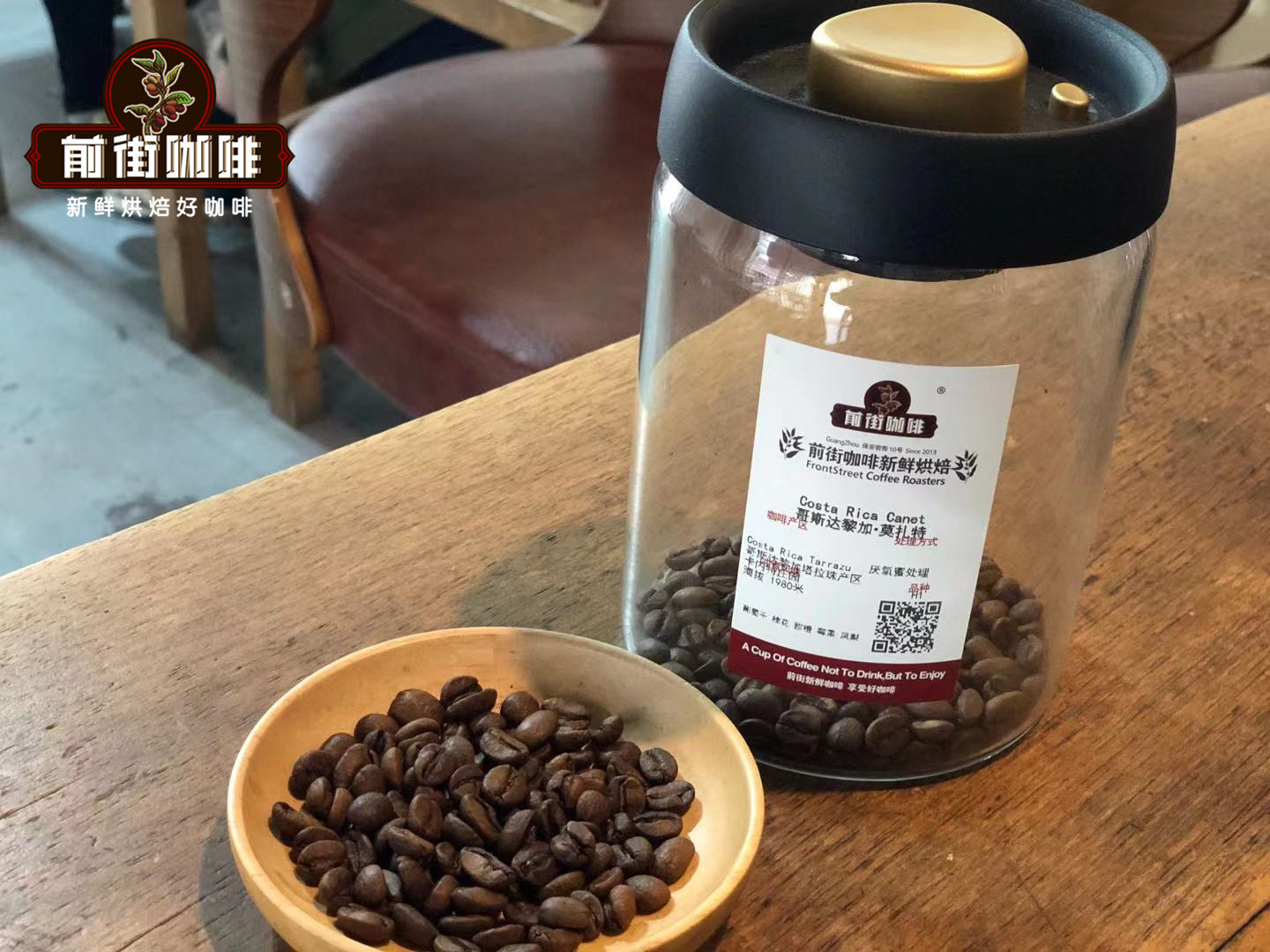
Country: Costa Rica
Region: Tarrazu
Estate: Canet Estate
Altitude: 1980m
Variety: H1
Processing Method: Raisin Honey Processing
H1
Seeing the H1 variety on the label of our FrontStreet Coffee Mozart packaging, some might wonder what H1 is.
H1's full name is Centroamericano H1, continuing research from Nicaragua's Sebaco laboratory. H1 is a hybrid of Rume Sudan and Sarchimor T-5296. Rume Sudan was discovered in the Rume valley of the Boma plateau in Sudan, hence its name.
This coffee has good quality and excellent flavor but poor disease resistance. Varieties hybridized with it, however, inherit its excellent flavor genes well. The genetically stabilized H1 has high yield capacity, high potential quality, and strong adaptability and resistance to leaf rust, though it is easily affected by American leaf spot disease.
Raisin Honey Processing
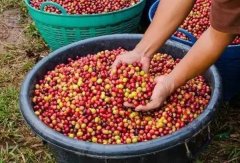
Raisin honey processing retains 100% of the pectin and uses a zero-water method, which increases the difficulty of honey processing and demands strict time control. On the day the cherries are harvested, the fruit is poured into large water tanks. Mature, full fruits sink to the bottom, while underdeveloped or overripe fruits float and must be removed. The selected cherries are placed on raised beds to dry for at least three days, then the cherry skin is removed and the pectin retained before further drying.
FrontStreet Coffee Brewing Recommendations
Dripper: V60 #01
Water Temperature: 90-91°C
Dose: 15g
Grind Size: Medium-fine grind (Chinese standard #20 sieve, 80% pass rate)
Ratio: 1:15
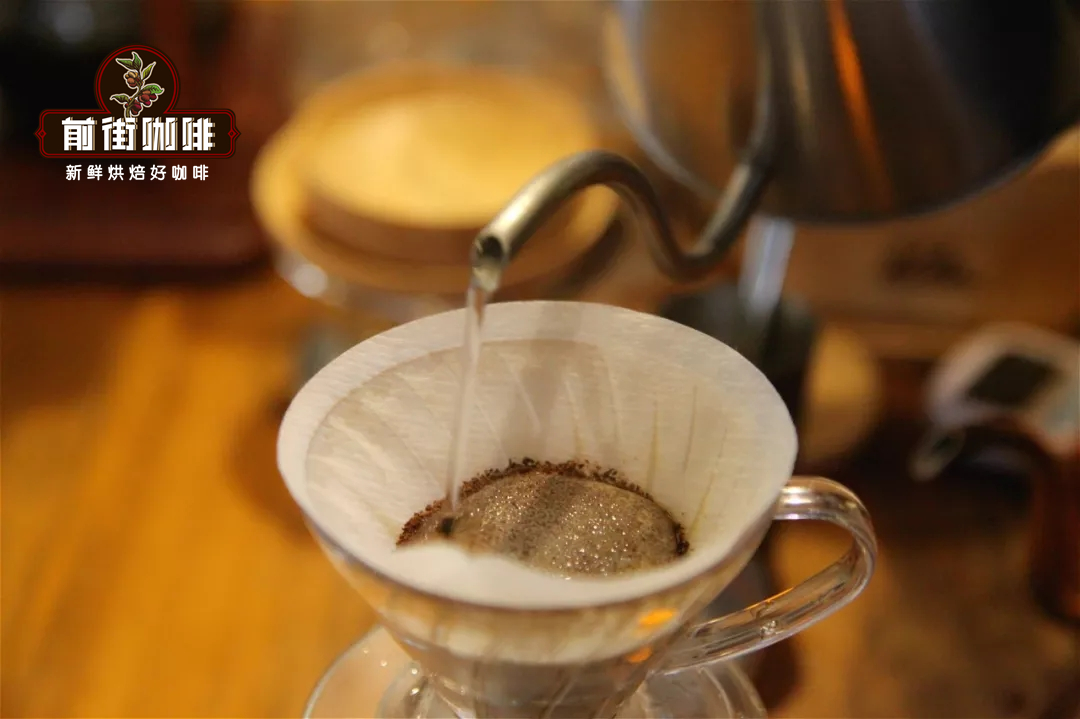
Three-stage extraction: use 30g of water for a 30-second bloom, then continue pouring in a circular motion with a small water flow to 125g for the first stage. When the water level drops and is about to expose the coffee bed, continue pouring to 225g and stop. When the water level drops and is about to expose the bed again, remove the dripper (timing starts from the bloom). Extraction time is 2 minutes.
Flavor description: the wet aroma shows osmanthus fragrance and fermented notes. On entry there are complex floral and fermented sauce-like aromas, with raisin and dried-fruit sweetness, starfruit and berry acidity, and a sugarcane aftertaste.
For more specialty coffee beans, add FrontStreet Coffee on private WeChat, ID: kaixinguoguo0925.
FrontStreet Coffee Recommendation
Honey processing has several degrees, and tasting them side by side is the best way to understand the range. FrontStreet Costa Rica Blackberry uses black honey processing, which removes almost none of the pectin and dries for longer, at least two weeks, under cover to keep the sun from drying the fruit too quickly and to ensure the sugars convert fully. Roasted medium-light, it gives a rich floral aroma when ground and drinks with grape, berry, and ripe blackberry notes.
FrontStreet Strawberry Candy is a Geisha blend pairing Panamanian Geisha with Costa Rican coffee. The Geisha supplies the classic tangerine-and-honey profile, while the Costa Rican side uses raisin honey processing, retaining 100% of the pectin and using zero water. The cherries are floated, dried on raised beds for at least three days, then depulped and dried further with constant turning for evenness. The result has both the floral-tea character of Geisha and the clean aroma of grape and dried blueberry, soft fruit acidity, and an almond finish with clear sweetness.
Beyond ordinary honey processing, some estates have introduced the innovative raisin honey method, a refinement that goes beyond the traditional yellow, red, and black styles. It predries the cherries on raised beds for at least three days before depulping and completing the honey steps, and it retains 100% of the pectin, which makes it even harder to control than black honey. FrontStreet Mozart is the bean to try: whether you brew it as pour-over, cold brew, or in a moka pot, it delivers the distinctive aromas of osmanthus, pineapple, and raisin.
Important Notice :
FrontStreet Coffee is a long-established specialty coffee roaster in Guangzhou China, selling freshly roasted beans from its own farm in Yunnan as well as dozens of carefully selected single-origin beans from around the world for both pour-over and espresso. The products deliver consistently excellent quality and great value, with shipping within 24 hours. Guangzhou's FrontStreet Coffee shop is recommended by many coffee lovers, and the beans are now available online at the Tmall 。
FrontStreet Coffee has moved to a new address:
FrontStreet Coffee Address: 315,Donghua East Road,GuangZhou
Tel:020 38364473
 Scan and follow the En Gafei WeChat official account. Please indicate that the reprint comes from "En Gafei".