Ethiopia's Pride—Yirgacheffe Coffee: Rich Varieties, Complex Flavors, and Enchanting Aromas
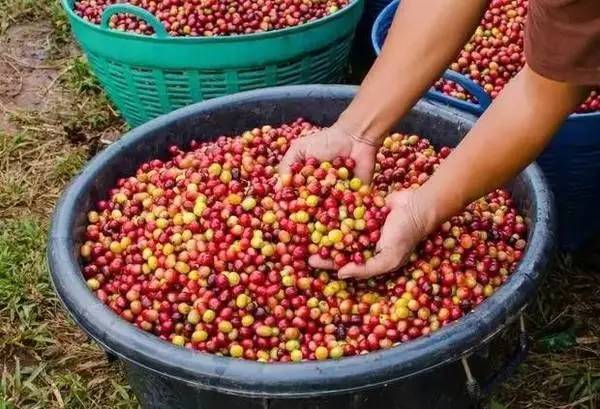
Ethiopia is a country full of wonder. Every Arabica variety we have ever tasted—and many we have not—originates there, and the country's genetic library of coffee is unlike anything else on earth.
Ethiopia has nearly 2,000 recorded coffee varieties, including 1,927 native varieties and 128 introduced foreign varieties. Purely by appearance, Ethiopian coffee is a grand exhibition: long beans, short beans, slender beans, plump beans, all of it.
Long-Bean Varieties
Long-bean varieties appear across Ethiopia's coffee-growing regions. Based on observation, the western Jimma region—including Limmu and Kaffa—carries more of them, while they are less common in Sidama and Yirgacheffe.
Small-Bean Varieties
Small-bean varieties are round in appearance and notably tiny, mostly between 14 and 15 mesh. These are the ones most drinkers meet first, in Sidamo and Yirgacheffe. They also turn up in Harrar samples and in green beans sold locally in Jimma. Compared with other regions, Sidamo, Yirgacheffe, and the surrounding Arsi and Guji areas have the densest plantings of these small-bean native varieties.
How Coffee Is Cultivated
Variety is only half the story; cultivation method also shapes how mixed any given lot of Ethiopian beans turns out to be. Divided by scale and model, Ethiopian coffee growing falls into four types:
● Forest coffee (8–10%): trees coexist with other crops in pristine forest, with no artificial management at all. Farmers simply harvest the cherries on a regular schedule.
● Semi-forest coffee (30–35%): plantings sit between the forest and the farmers' living areas. The trees are the same natural varieties as forest coffee, but farmers manage the plots and grow other cash crops alongside them.
● Garden coffee (50–55%): trees planted around farmers' homes, mostly established by the farmers themselves.
● Plantation coffee (5–6%): larger private growers with more processing facilities and production capacity.
FrontStreet Coffee's Sidamo and Yirgacheffe coffees come largely from the garden model: farmers plant trees near their homes, harvest the crop themselves, and deliver it to processing stations built near water for unified processing—or sell it to middlemen who do the same. Aside from a handful of estates large enough to plant, harvest, and process their own green coffee, beans from many different plots and varieties are handled centrally at a station and then sent to auction for official evaluation and grading. This is why so many Ethiopian coffees are named for a processing station or cooperative, and why a single lot can contain multiple varieties. Even two batches from the same station can taste noticeably different.
Coffee Profile
Country: Ethiopia
Grade: G1
Region: Yirgacheffe
Roast Level: Light roast
Processing Method: Washed
Variety: Local native varieties
Flavor: Jasmine, lemon, bergamot, honey, black tea
About the Kochere Region
Kochere lies about 25 kilometers southeast of Yirgacheffe and has grown prosperous on coffee. It is one of the three famous micro-regions of Yirgacheffe, home to roughly 100,000 people whose main income comes from coffee, and its processing equipment is notably advanced. The coffee review site Coffee Review awarded Kochere washed beans a high score of 94 points.
Ethiopia has nine main coffee-producing regions: Nekempte (Lekempti), Gimbi, Limu, Illubabor, Djimma, Harrar, Teppi/Bebeka, Sidamo, and Yirgacheffe. The best-known specialty regions among them are Nekempte, Limu, Harrar, Sidamo, and Yirgacheffe. Yirgacheffe sits within Ethiopia's Sidama administrative area, which makes it a smaller zone inside the larger Sidama producing region.
Yirgacheffe itself is a small town of about 20,000 people. Three neighboring micro-regions—Wenago, Kochere, and Gelena Abaya—produce coffee whose flavor is nearly identical to Yirgacheffe's, so they are grouped under the same regional name. In culture and geography, Yirgacheffe resembles neighboring Sidamo, but it seems to have been granted unusually favorable conditions. Top-quality FrontStreet Coffee Yirgacheffe carries floral notes, a bright citrus acidity, lemon-toned aromatics, and a silky mouthfeel.
Kochere's production model is built on smallholders delivering their harvest to cooperatives for unified processing. The local Chalalacktu village has about 100,000 residents who depend on coffee for their livelihood, and the income it generates has lifted local living standards well above many Ethiopian villages, with complete health facilities and higher-education institutions. That advanced equipment has kept Kochere's washed coffees performing at a high level, with clean sweetness and complex notes of molasses and citrus.
FrontStreet Coffee Recommendation
To taste the white-flower-and-citrus profile that made Yirgacheffe famous, the cleanest possible route is a washed lot. FrontStreet Coffee's washed Yirgacheffe daily bean is the classic starting point: white jasmine, bright citrus and lemon acidity, and a tea-like finish, at a price that has made it many drinkers' first specialty coffee. It comes from the Gudingding cooperative, which sits at the southeastern edge of Yirgacheffe in the Worka area—originally part of the Worka cooperative inside the Yirgacheffe Coffee Farmers' Cooperative Union, and later separated out as a single-zone lot as demand for traceability grew. Gudingding follows the most traditional washed method, and the cup shows the citrus and jasmine clarity the region is known for.
If you want to see what the same region does with fruitier processing, FrontStreet Coffee's sun-dried Yirgacheffe Red Cherry uses only fully ripe whole cherries. After harvest the fruit is screened once more, then spread on raised beds to dry; in the first days the cherries are turned every two to three hours to prevent uneven heating and over-fermentation. After three to five weeks, the outer fruit is machine-scraped away and the beans are moved to storage. Because the fruit dries onto the bean, Red Cherry keeps the typical Yirgacheffe character while adding sun-dried tropical notes—citrus acidity, a berry-juice quality, honey sweetness, and a creamy body.
For either bean, a V60 with water at 90–91°C and a 1:15 ratio suits the region's delicate aromatics. Start with 15g of medium-fine grounds, pour 30g of water for a 30-second bloom, then add 95g more, finishing that pour in about a minute. When the bed falls to two-thirds, pour the remaining 100g slowly, completing it in about 35 seconds, and let the brew finish draining in 2:00–2:10. Keeping the grind near fine sugar and the pour steady is what preserves the floral top notes instead of flattening them.
Important Notice :
FrontStreet Coffee is a long-established specialty coffee roaster in Guangzhou China, selling freshly roasted beans from its own farm in Yunnan as well as dozens of carefully selected single-origin beans from around the world for both pour-over and espresso. The products deliver consistently excellent quality and great value, with shipping within 24 hours. Guangzhou's FrontStreet Coffee shop is recommended by many coffee lovers, and the beans are now available online at the Tmall 。
FrontStreet Coffee has moved to a new address:
FrontStreet Coffee Address: 315,Donghua East Road,GuangZhou
Tel:020 38364473
 Scan and follow the En Gafei WeChat official account. Please indicate that the reprint comes from "En Gafei".