Introduction to Jamaica Blue Mountain Estate: Jamaica Mavis Bank Blue Mountain NO.1
Jamaica Mavis Bank Blue Mountain NO.1

Jamaica's legal Blue Mountain coffee-growing region takes its name from the bluish mist that shrouds the mountains almost year-round. The Blue Mountain range sits in eastern Jamaica, stretching 45 kilometers from north to south and 20 kilometers across, with its highest peaks reaching 2260 meters—the tallest mountain range in the Caribbean. The slopes are covered in fertile, well-draining soil, which makes the area ideal for growing coffee.

Mavis Bank lies within Jamaica's legal Blue Mountain region and is one of the government-certified green bean processing facilities on the island, located roughly 10 miles northeast of the capital, Kingston. The Munn Family has run it since 1885.
In the early days, the Munn Family cultivated coffee and processed the harvested cherries at Strawberry Hill, on the western side of the Blue Mountains. In 1920, Victor Munn built the processing plant that still operates today as Mavis Bank; his nephew Keble Munn later took over. Keble was not only an agricultural producer but also Jamaica's first certified cupper. Today, Mavis Bank is the largest coffee collection point in Jamaica. To safeguard quality, the mill buys green beans only from designated parts of the Blue Mountain region, whether from single estates or smallholder farmers. The growing and processing areas sit at elevations averaging between 900 and 1600 meters. That altitude, combined with the soft afternoon clouds and mist that shade the mountain forests, abundant sunshine, and mineral-rich soil, gives the coffee trees excellent growing conditions and stretches out the ripening period of the cherries.

At the green bean processing stage, only fully ripe red cherries are picked. The basics include hand-sorting and the removal of floaters. Farmers then deliver the remaining selected cherries to a washing station for a second round of sorting, with depulping completed before the end of the day. The cherries are placed in large water tanks to carefully screen out any over-fermented, unripe, or insect-damaged fruit before the mucilage is removed.

Once the mucilage is gone, the parchment coffee is laid out on concrete slabs to sun-dry for 5 days, then bagged and stored in warehouses for at least 10 weeks. Finally, the hulled green beans go through one last hand-sorting pass to remove defects. Mavis Bank has the most complete green bean processing equipment in Jamaica and works with 6000 farmers. Under the Munn Family's stewardship, M.B.C.F has become a globally recognized trademark of quality assurance. For No.1 grade Blue Mountain coffee, they strictly select beans at the 17/18 screen size with a defect rate below 2%.

Mavis Bank Blue Mountain NO.1
Country: Jamaica
Region: Blue Mountain
Elevation: 1200-1600 meters
Processing: Washed
Grade: No.1
Variety: Arabica
According to FrontStreet Coffee's research, Blue Mountain coffee's enduring status at the top owes a great deal to local policy. The story begins in 1932, when Jamaica introduced policies encouraging coffee production to reduce the island's dependence on sugar exports. Unlike most coffee-producing countries, which chased volume by planting large swaths of high-yielding, lower-quality varieties, the Jamaican government chose quality over quantity, accepting lower yields to guarantee excellence. As a result, Jamaica remains one of the smallest coffee-producing countries in the world. For comparison, Brazil—the world's largest coffee exporter—produces 30 million bags a year, while Blue Mountain coffee produces only about 40,000 bags annually.
The FrontStreet Coffee Blue Mountain variety is Typica, one of the oldest Arabica varieties known today, with roots in Ethiopia. According to FrontStreet Coffee's understanding, it reached the Blue Mountains because in 1717, French King Louis XV ordered coffee to be cultivated in Jamaica. By the mid-1720s, Jamaica's Governor Sir Nicholas Lawes had imported Arabica seeds from Martinique and begun promoting cultivation in the St. Andrew region.
In earlier years, FrontStreet Coffee's Blue Mountain was also processed with the washed method to preserve the most original flavor of the coffee cherry. With the rise of the Geisha variety and FrontStreet Coffee's own Ethiopian Yirgacheffe, however, Blue Mountain coffee has faced some competition. That is why Clifton began experimenting with natural processing for Blue Mountain cherries. Given the rainy, foggy climate and the environmental challenges involved, this was no small undertaking, and FrontStreet Coffee deeply admires their willingness to take it on. Naturally, FrontStreet Coffee could not afford to fall behind either. So we set out to explore the flavor differences between washed and natural Blue Mountain coffee through cupping and brewing!
First, FrontStreet Coffee selected Blue Mountain coffee from a single source: Clifton Estate.

Clifton Estate has quite an impressive pedigree. It began cultivating Blue Mountain coffee cherries in the mid-18th century, making it the oldest and highest-altitude coffee estate in the entire Blue Mountain region—and the only single-estate Blue Mountain producer there to hold Rainforest Alliance certification.
Jamaican Blue Mountain green beans must pass multiple quality inspections after processing, covering defect ratios, bean sizing, and cupping scores. The highest grade, Blue Mountain No.1, must meet the 17-18 screen specification, with defective beans not exceeding 2%, and deliver a perfect balance of acidity, sweetness, bitterness, body, and aroma. Beans this refined are exceptionally rare. To truly taste what Blue Mountain can offer, FrontStreet Coffee believes you should choose the highest grade available: Jamaican Blue Mountain No.1. FrontStreet Coffee's Blue Mountain No.1 beans come from Clifton Estate.

How to Brew Blue Mountain Drip Bag Black Coffee?
Actually, if you want to taste the refined flavors of Blue Mountain No.1 without going through the pour-over routine described above, Blue Mountain drip bags are an excellent alternative. They are convenient and quick, saving both time and effort. All you need is a kettle of hot water and a clean cup, and you can brew a rich, delicious cup of Blue Mountain black coffee anytime, anywhere. Without further ado, let FrontStreet Coffee show you how.

Step 1: Preparation
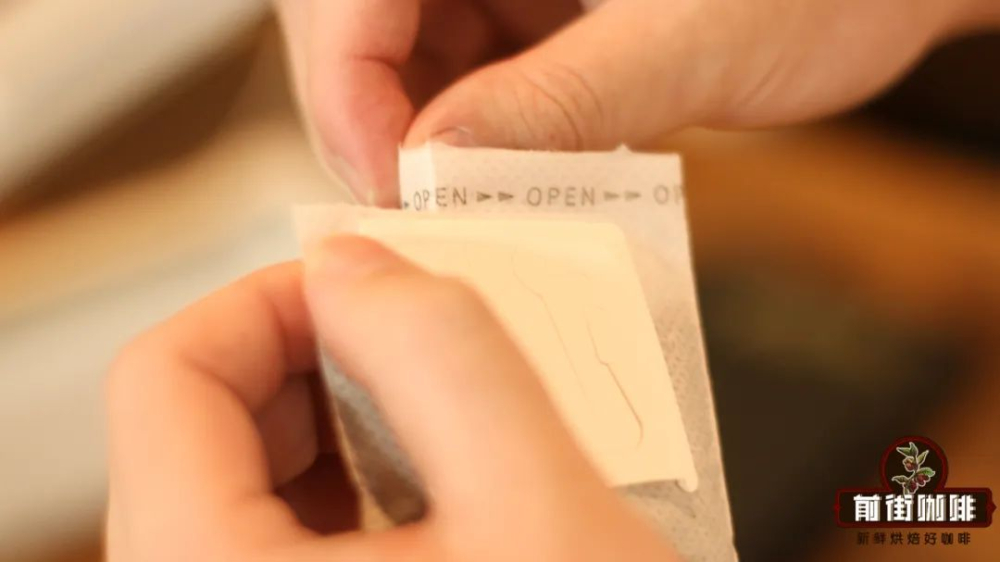
Set out your cup, open the wrapper, take out the drip bag, tear open the seal, and hang it on the rim of the cup!
Step 2: First Pour and Bloom
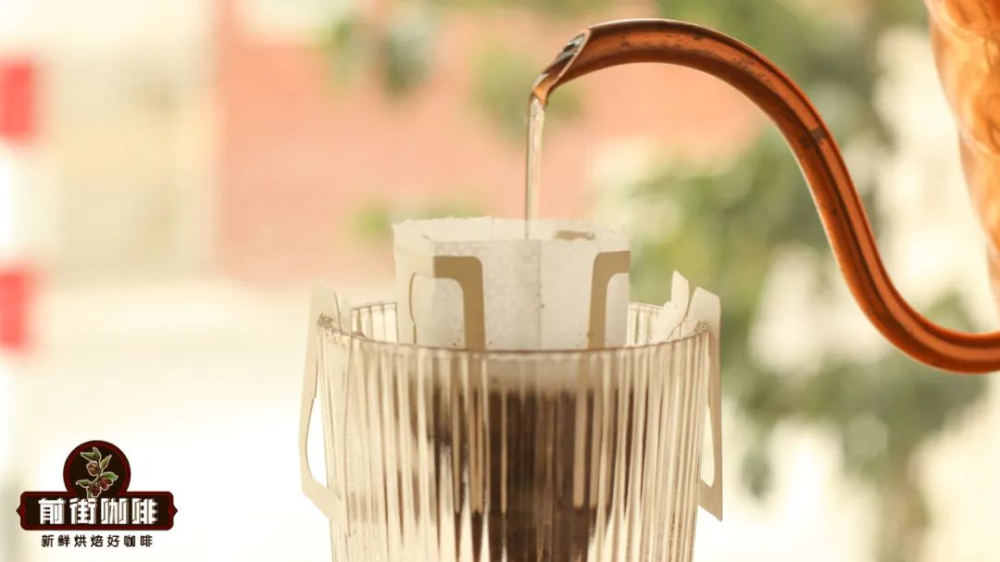
Once the water reaches the right temperature, pour into the center of the drip bag until it is about half full, then wait 10-15 seconds for the bloom. (The grounds in a drip bag release very little gas, so they don't need a long blooming time.)
Step 3: Multiple Pours
Begin the second pour, this time filling the drip bag to nine-tenths. Once the water has dripped through, pour a third time, again filling to nine-tenths. After that finishes dripping, pour a fourth time with hot water, filling to nine-tenths once more.
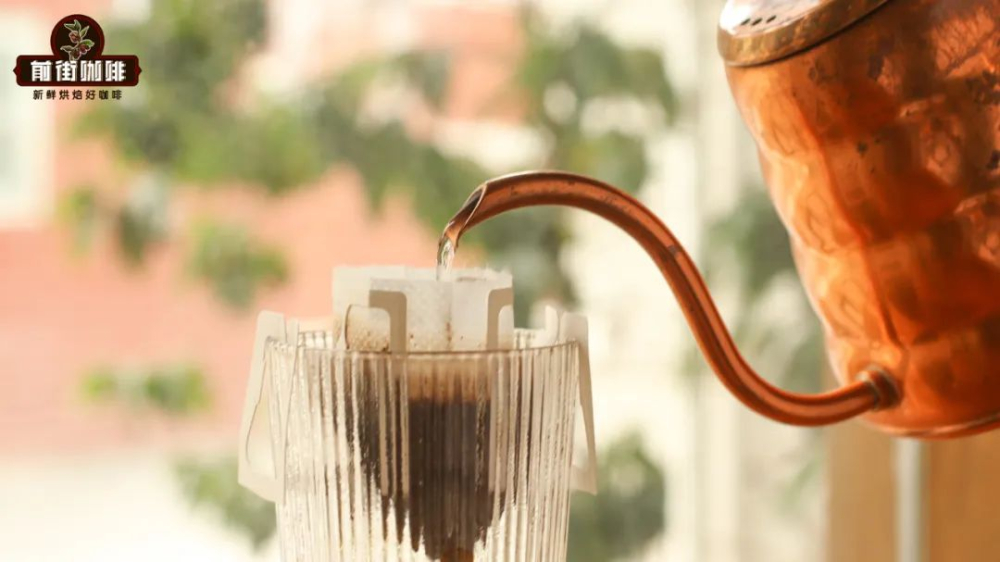
Step 4: Enjoy
When the dripping is complete, remove the drip bag and enjoy your coffee!

FrontStreet Coffee Recommendation
If this introduction has you craving the real thing, FrontStreet Coffee's Jamaica Blue Mountain No.1 is the place to start. It comes from the historic Clifton Estate, where coffee has been grown since around 1750 at an average elevation of about 4300 feet (roughly 1310 meters). Every batch ships with complete Jamaican government certification and proof of origin, and it arrives in the traditional wooden barrels that genuine Blue Mountain coffee has always traveled in—so you can trace exactly what you're drinking.
Flavor-wise, Blue Mountain No.1 is all about balance: a clean, gentle cup with chocolate sweetness, nutty notes, cream and caramel, moderate acidity with no harsh bitterness, and a long, fruit-toned finish. FrontStreet Coffee roasts it medium-dark and ships within 5 days of roasting, so the beans are still at their peak when they reach you.
To brew it as pour-over, FrontStreet Coffee suggests a Kono dripper to bring out that full, syrupy body. Use 15g of coffee rested for 4-7 days from the roast date, ground slightly coarser than you would for a light roast—about the texture of white sugar—and water at 87-88°C with a 1:15 ratio. Pour in three stages: 30g of water to bloom for 30 seconds, up to 120g, then up to 225g. If you'd rather keep it simple, the Blue Mountain drip bag above delivers the same classic cup with nothing but hot water.
Important Notice :
FrontStreet Coffee is a long-established specialty coffee roaster in Guangzhou China, selling freshly roasted beans from its own farm in Yunnan as well as dozens of carefully selected single-origin beans from around the world for both pour-over and espresso. The products deliver consistently excellent quality and great value, with shipping within 24 hours. Guangzhou's FrontStreet Coffee shop is recommended by many coffee lovers, and the beans are now available online at the Tmall 。
FrontStreet Coffee has moved to a new address:
FrontStreet Coffee Address: 315,Donghua East Road,GuangZhou
Tel:020 38364473
 Scan and follow the En Gafei WeChat official account. Please indicate that the reprint comes from "En Gafei".