SCA & Q Grader Coffee Certifications: Complete Guide to International Barista Exams and Professional Coffee Credentials
Professional Coffee Knowledge Exchange
Are Barista Certifications Worth It?
Whenever someone asks on social media whether baristas need professional training courses and formal qualifications, the comments are almost always discouraging. "It's too expensive — wouldn't the money be better spent elsewhere?" "The courses are too superficial; you can figure out just as much by spending a few thousand at cafés."
Are barista certifications useful? They certainly are. Exams are one of the fastest, most direct ways to understand your own ability. Before any certification exam, you take the relevant course and learn the material. The exam then tests how well you have mastered that knowledge and those skills, or whether you have the basic foundation needed for a given qualification. What matters most is not the certificate at the end, but what you gain along the way. Everyone starts from a different place and does things for different reasons, so whether it's worth it can only be judged from personal experience — other people's opinions are just their perspective.

If you genuinely want to take the training and earn the qualification, you can move ahead confidently when your budget allows. The certificate itself may not end up being very useful, but the knowledge and principles you pick up along the way give you a framework and a direction for learning. At every level, the material covers that level's fundamental framework. Even after the courses and exams are behind you, you can keep sharpening your expertise through other channels and go deeper into the techniques. A certificate is ultimately just a piece of paper — your real value lies in yourself.
Q Grader vs. SCA Certification
Both certifications carry high recognition in the industry today. As demand has grown, coffee training institutions of every size, price, and quality have appeared, and unfortunately some people have wasted money on poor courses.
If you need this training, choose a qualified, larger-scale institution and never be tempted by the cheap option. Both SCA certificates and Q Grader certifications are issued by the SCA (Specialty Coffee Association) and are recognized around the world, making them the most internationally respected barista credentials. The biggest difference is that SCA certificates focus more on knowledge and skills, while Q Grader certification targets sensory evaluation.
Which certification to choose depends on your needs — choose the right one, not the expensive one. If you're a beginner who wants a systematic introduction, SCA courses are enough. If you're a barista who wants to move beyond the counter to become a green coffee buyer, roaster, trainer, or competition judge, or to work in green bean trade, the Q Grader course is the better fit.
SCA Course Structure
What courses does SCA offer, and can you skip levels? The SCA certification has six courses, and each one (except the first) is divided into three levels: Foundation, Intermediate, and Professional. Foundation is worth 5 points, Intermediate 10 points, and Professional 25 points.
- Introduction to Coffee
- Barista Skills
- Brewing
- Roasting
- Sensory Skills
- Green Coffee

The Foundation barista exam is relatively simple, with course content focused on basic theory and practical knowledge. If you've already worked in a coffee shop for a while, you can skip the course and take the SCA Foundation exam directly. If you feel your coffee knowledge and hands-on skills have reached a certain level, you can also skip Foundation and go straight to the SCA Intermediate exam. Skipping Foundation to take Intermediate is allowed, but to take the Professional SCA certification you must first hold the Intermediate barista certification.
Because of the credit system, each level has its own credits, and students need to earn a total of 100 credits to obtain the diploma — which is not as simple as it looks. The upside is that you can specialize in the courses that suit your interests or needs without completing all of them.
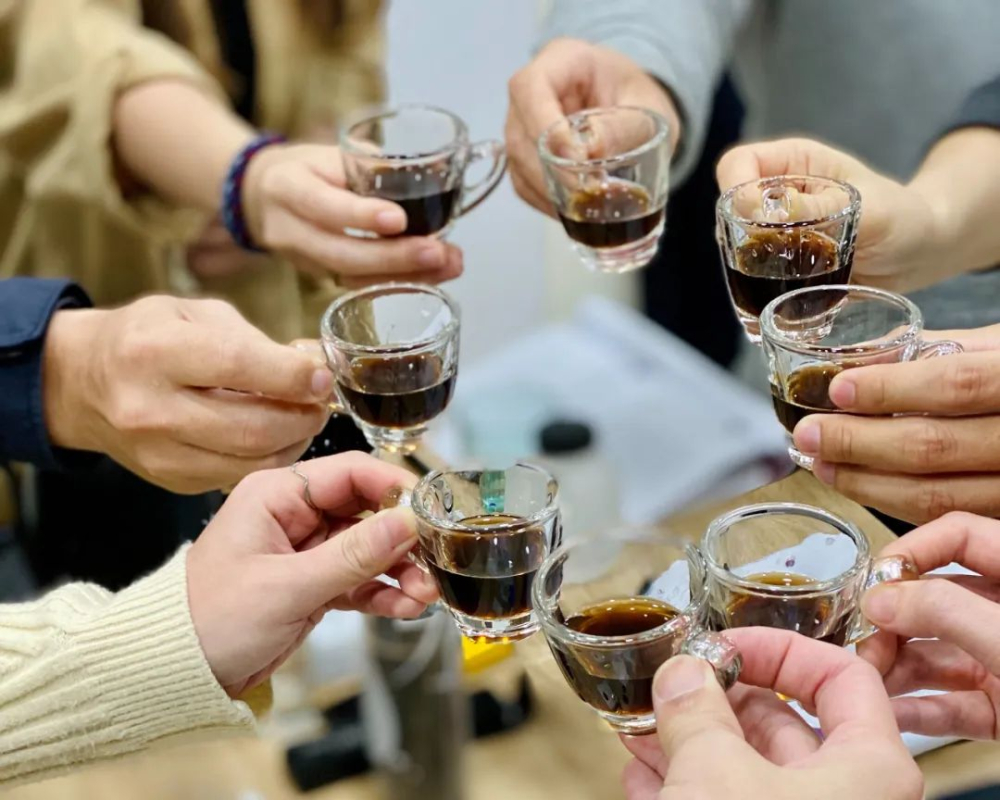
If you're completely new but want to become a barista, focus on Barista Skills, Brewing, and Sensory Skills. Which level to study depends on your own situation, since each level involves considerable expense.
Q Grader Certification Details
Does Q Grader certification have levels, and what does it test? Q Grader certification has no levels. A Q Grader is one of the certified coffee bean quality assessors from the CQI (Coffee Quality Institute), which belongs to a branch of the SCA education module. Unlike the SCA course system, CQI focuses more on green bean quality assessment and emphasizes sensory training and improvement.
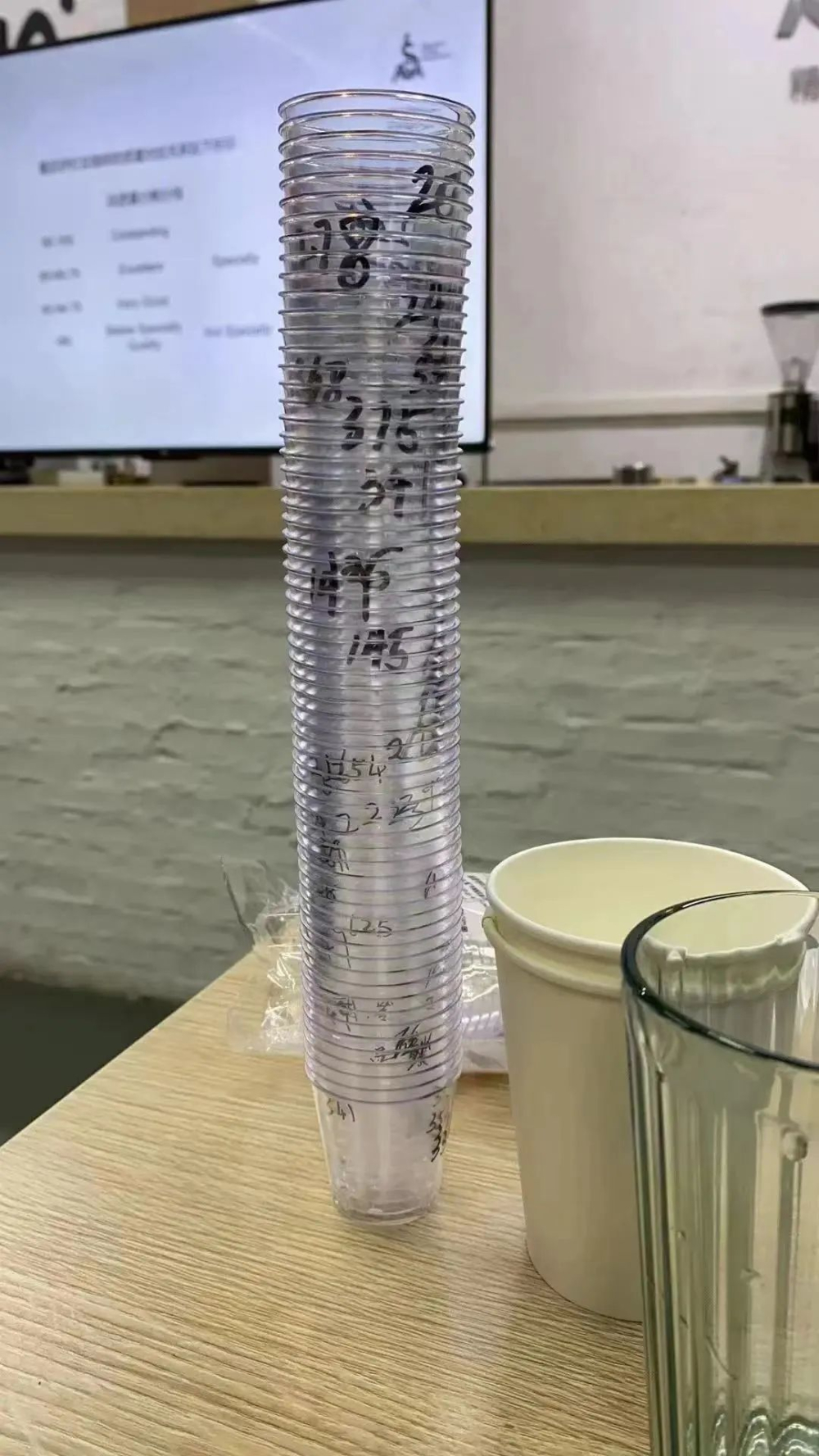
(The flavor waters tasted in one course, commonly known as "devil's water.")
Q Graders are the people who safeguard green bean quality. Using cupping methods, they evaluate, score, and grade each bean at the export stage, giving green coffee buyers a baseline understanding of a bean's flavor so they can plan roasting methods that bring out its potential.
The Q Grader certification system was designed by CQI (Coffee Quality Institute) with the goal of using a shared industry language to evaluate the quality of exported coffee beans. Because a common evaluation language and standard determine coffee quality and price, prices become more transparent and fair, avoiding situations where everyone claims to be right.
Unlike SCA courses, where you can pick and choose, candidates registered for the Q Grader course must complete 20 tests within 6 days and pass all of them to earn certification. These 20 tests are:
- Coffee General Knowledge Exam (1 test)
- Sensory Skills Tests (3 tests)
- Olfactory Skills Tests (4 tests)
- Cupping Skills Tests (4 tests)
- Triangular Cupping Skills Tests (4 tests)
- Organic Acid Matching Test (1 test)
- Arabica Green Coffee Grading Test (3 tests)
- Arabica Roasted Coffee Grading Test (1 test)
- Roast Level Identification (1 test)
If you fail a test, you can request a retake within the 6-day course period, or make it up within 18 months after the course ends.
Q Grader certificates are valid for 3 years. During that period, you need to complete one flavor calibration per year — order food-grade capsules for calibration from the designated CQI website, prepare and taste them according to the instructions, then upload your answers to the exam website to keep your Q Grader certification active.
Then, before the 3-year period expires, students must take a calibration course (the Q Grader Re-Calibration Course) to extend the certificate's validity.
Q Grader is arguably the most expensive certification course in the coffee industry today, with the largest number of exam items. For those who are lucky or skilled enough, it might cost 20,000-30,000 yuan to pass; otherwise, each retake of a subject costs several thousand more. It's a course that demands both money and effort.


If you work in green bean trade, Q Grader is essential. Because the certification course focuses on sensory training, it helps you assess quality, identify flavors, and price coffee samples more accurately. It's also well suited to roasters seeking advanced training.
Alternatively, if you want to register as a judge for coffee competitions — sensory evaluation for green beans, roasting, brewing, and so on — Q Grader certification is one of the registration requirements, though holding the certificate doesn't guarantee successful registration, since there are other review steps.
Image source: Internet
FrontStreet Coffee Recommendation
Whether you're training your palate toward a Q Grader's sensory standards or simply starting your specialty coffee journey, it helps to cup a few classic origins side by side. FrontStreet Coffee's entry-level lineup makes that easy. From Ethiopia, the washed Gedingding Cooperative is a textbook Yirgacheffe — jasmine florals, lemon acidity, and a berry note — while the sun-dried Sidamo Huakui brings the natural side of the same country with berry, florals, jackfruit, melon, and honey.
If you want to compare processing methods directly, FrontStreet Coffee's Indonesia Mandheling is wet-hulled, a method invented for the region's rainy climate, giving a thicker, smoother cup with herbal and spice notes for anyone who dislikes acidity; FrontStreet Coffee's PWN Golden Mandheling goes further, with three rounds of hand sorting and one machine sort that push the defect rate to a minimum for a cleaner, smoother cup with clearer woody and caramel tones. Round out a tasting with FrontStreet Coffee's Panama Boquete Geisha, washed and grown in the country's most representative specialty region, where you can taste the varietal's signature citrus-honey sweetness at a very approachable price.
Important Notice :
FrontStreet Coffee is a long-established specialty coffee roaster in Guangzhou China, selling freshly roasted beans from its own farm in Yunnan as well as dozens of carefully selected single-origin beans from around the world for both pour-over and espresso. The products deliver consistently excellent quality and great value, with shipping within 24 hours. Guangzhou's FrontStreet Coffee shop is recommended by many coffee lovers, and the beans are now available online at the Tmall 。
FrontStreet Coffee has moved to a new address:
FrontStreet Coffee Address: 315,Donghua East Road,GuangZhou
Tel:020 38364473
 Scan and follow the En Gafei WeChat official account. Please indicate that the reprint comes from "En Gafei".