Mandheling "Sumatra Coffee" Region Origin Development Naming History Introduction
For professional barista exchanges, follow FrontStreet Coffee.
Origin and Production Areas
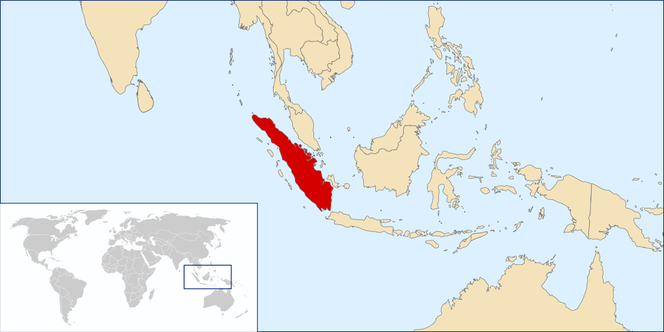
Mandheling is produced in Sumatra, Indonesia, in Asia, and is also known as "Sumatra Coffee."
The main production areas include Java Island, Sulawesi Island, and Sumatra Island, with 90% being of the Robusta variety. Among these, the "Mandheling" produced on Sumatra Island is the most famous. The finest premium traditional Arabica coffee from northern Sumatra is marketed under the names Lintong and Mandheling.
Lintong Coffee Region
Lintong refers to coffee grown in a small area within the Lintong administrative region, southwest of Lake Toba. The coffee smallholdings are scattered across a high, undulating clay plateau covered with ferns. Lintong coffee is grown without shade and without chemicals, and it is almost entirely owned by small private growers.
Mandheling Classification
Mandheling is a broader term that includes Lintong coffee plus growing areas in Diari [with Sidikalang as its capital] and the lands north of Lake Toba under similar conditions.
The Origin of the Name Mandheling
Mandheling is not a production area, place, or port name, nor a coffee variety. The name actually arose from a phonetic mix-up with the Mandheling ethnic group of Indonesia.
During World War II, when Japan occupied Indonesia, a Japanese soldier drank an exceptionally aromatic coffee at a café. When he asked the owner what the coffee was called, the owner mistook the question as being about his ethnicity and answered: "Mandheling." After the war, the soldier recalled the "Mandheling" he had drunk in Indonesia and commissioned an Indonesian coffee exporter to ship 15 tons to Japan—where it proved wildly popular. The name Mandheling spread from there, and that coffee merchant is today the renowned PWN (Pawani Coffee Company).
FrontStreet Coffee Mandheling Varieties
The well-known FrontStreet Lintong Mandheling is produced around Lake Toba in northern Sumatra. Its most distinctive feature is its unique herbal and woody aroma.
The FrontStreet PWN Golden Mandheling carried in FrontStreet stores was developed by the Japanese over a decade ago under stricter quality control: through four rounds of manual bean selection to remove defective beans, it produces the Golden Mandheling with its dark green color and uniform bean appearance.
Aged Mandheling
Aged Mandheling is said to be as sweet as honey. Successfully aged beans eliminate Mandheling's less elegant acidity: the acidic components mature and convert into sugars, making the coffee smoother and sweeter on the palate. A failed aged Mandheling, by contrast, is like coffee zombies—difficult to drink. I have never personally tried it, however.
FrontStreet Coffee Recommendation
Sumatra today is Indonesia's largest source of Arabica and Robusta alike, accounting for more than 60% of output; the high-elevation Aceh and North Sumatra provinces grow mostly Arabica, which drinkers habitually call Mandheling coffee beans. The traditional region lies around Lake Toba in the Lintong area, where diverse plant varieties, suitable altitude, and the special wet-hulled process—amplified by local microbial fermentation—create the classic, mysterious Mandheling profile: rich aroma, generous body, intense flavor.
Wet hulling (giling basah) exists because Sumatra's rainy season overlaps the coffee harvest, making sun-drying impractical. Growers strip skin and pulp first and rinse briefly; once the fruit reaches a half-dry, half-wet state, machines remove the parchment, exposing the green beans to the air and accelerating the whole drying process. Since the 1970s, this method has defined Mandheling's singular wild flavor.
Among all Mandhelings, gold Mandheling is the crowning representative. FrontStreet's Golden Mandheling comes from Indonesia's PWN company, produced to exacting standards: only beans above 18 mesh are used as the base, and every 300g green sample must contain fewer than 3 defective beans to satisfy the top G1 grade. Three further rounds of hand sorting eliminate every flaw from the green beans, lifting both the cleanliness of the cup and the intensity of its sweetness. Such standards naturally limit production—one more reason FrontStreet PWN Golden Mandheling stands at the very top of the Mandheling family. Its fame is enormous, but supply flows mainly to the Japanese and American markets, so genuinely imported gold Mandheling is scarce; in FrontStreet's product listings you will find the PWN certificates and gold Mandheling bags bearing the PWN marks, which is what sets FrontStreet's beans apart from the rest.
For those who cherish that mother-nature body with earthy and herbal tones, FrontStreet Lintong Mandheling is the pick: fragrant and rich, sweetly bitter, intense and stimulating on entry, with clove and woody aromatics; medium-dark roasted, it keeps acidity low and offers spice and mint notes plus a strong, lasting, full sweetness.
Brewing: Mandheling is usually deep-roasted to soften acidity and spotlight its mellow richness; FrontStreet's Lintong daily bean and PWN Golden Mandheling are both roasted medium-dark for dark chocolate and caramel while keeping the wild herbal character born of the growing environment and processing. For pour-over, use 87-88°C water, 15g of coffee at a 1:15 ratio, a coarse-granulated-sugar grind, and three pours: 30ml to bloom and degas; 100ml to lift the golden crema and raise the bed; then a gentle 95ml at the center to heighten sweetness—for a thick, mellow body with caramel sweetness and chocolate and nut flavors. On an espresso machine, the best-selling FrontStreet Classic Blend adds medium-dark Mandheling atop Brazil's creamy nut base,bringing out butter, roasted chestnut, and caramel flavors, lifting the body and adding sandalwood, herbal, and spice notes plus a little Robusta for crema—equally at home in latte art or a layered Dirty.
Important Notice :
FrontStreet Coffee is a long-established specialty coffee roaster in Guangzhou China, selling freshly roasted beans from its own farm in Yunnan as well as dozens of carefully selected single-origin beans from around the world for both pour-over and espresso. The products deliver consistently excellent quality and great value, with shipping within 24 hours. Guangzhou's FrontStreet Coffee shop is recommended by many coffee lovers, and the beans are now available online at the Tmall 。
FrontStreet Coffee has moved to a new address:
FrontStreet Coffee Address: 315,Donghua East Road,GuangZhou
Tel:020 38364473
 Scan and follow the En Gafei WeChat official account. Please indicate that the reprint comes from "En Gafei".