Panama Coffee: History of Four Major Growing Regions, Hacienda La Esmeralda Story, and Geisha Coffee Bean Characteristics

Panamanian Geisha Coffee: The Crown Jewel of Premium Specialty Coffee
Panamanian Geisha beans are world-renowned, and the whole country is steeped in Geisha culture, with the Geisha produced by Hacienda La Esmeralda enjoying the greatest fame of all. Panamanian Geisha coffee follows a strict grading system, and names like Blue Label Geisha and Red Label Geisha come up constantly. Today, FrontStreet Coffee explains the exceptional leader among premium specialty coffees: Panamanian coffee.
FrontStreet Coffee · Panamanian Coffee
Panama sits in Central America, bridging North and South America and bordering Costa Rica and Colombia. Its coffee journey can fairly be described as one of being born with a silver spoon.

The Panama Canal, as everyone knows, was built by the United States and for a period after its completion was controlled exclusively by America. That canal brought many American elites south in the late 20th century, partly for work and partly to seek out business opportunities, and many of Panama's famous coffee estates were founded by these newcomers. The owner of Hacienda La Esmeralda had been a banker; the owner of Hartmann Estate had been an engineer. These men applied the same principles of standardization and refinement to managing their coffee estates, whether by dividing plots according to altitude to create bean grades, or by adopting manual harvesting and refined processing. All of it contributed to making Panamanian coffee famous worldwide.

FrontStreet Coffee · Panamanian Coffee Growing Regions
Panama has four main coffee growing regions: Boquete, Volcán, Santa Clara and Candelaria. Boquete averages 1450 meters in altitude and produces the greatest quantity and the finest quality of Panamanian coffee. Volcán averages 2000 meters, and its coffee is characterized by relatively mild, balanced flavors. Santa Clara averages 1500 meters and lies close to the Panama Canal, which makes transport very convenient. Candelaria averages 1200 meters and has drawn growing attention in recent years; the industry sees real potential there for high-quality specialty coffee.

FrontStreet Coffee · Hacienda La Esmeralda Geisha Coffee Beans
Hacienda La Esmeralda sits in the Boquete region and was purchased in 1964 by the retired American banker Rudolph A. Peterson. At first it focused on dairy farming. Later his son Price, a doctor, resigned from his job to help his father run the farm. In 1987 they introduced the Caturra and Catuai varieties. In 1994 they built a wet processing plant, and in 1996 they bought the Jaramillo farm and folded it into Hacienda La Esmeralda.
The Geisha beans came from the Jaramillo farm. At first no one knew they were Geisha. The only clue was that the beans from one particular plot tasted exceptional and utterly unlike typical Panamanian coffee. After repeated cupping verification, the Peterson family decided to separate the beans from that plot and cultivate them independently. The lot took first place in the 2004 Best of Panama (BOP) green bean competition, and its excellent results drew widespread attention; expert identification later confirmed that the bean was the Geisha variety from Ethiopia. Since then the Peterson family has devoted most of its energy to building the infrastructure needed for precise lot separation and refined processing.
FrontStreet Coffee · Hacienda La Esmeralda Coffee Plot Division
Hacienda La Esmeralda's Geisha is excellent in large part because of its grading system. The estate divides its land by altitude into three main plots: Jaramillo, Cañas Verdes and El Velo. Each plot is further subdivided into smaller parcels, all marked with their specific altitude so that the origin of every Geisha lot can be traced.
High-quality Geisha comes mainly from the Jaramillo and Cañas Verdes plots. Jaramillo sees annual rainfall of 4000ml, with average daytime temperatures between 19-25°C and nighttime temperatures between 11-15°C, at an average altitude of 1600-1700m. Cañas Verdes sees annual rainfall of 3500ml, with average daytime temperatures between 16-23°C and nighttime temperatures between 10-15°C, at an average altitude of 1600-1800m.
El Velo is the most recently acquired plot, at an average altitude of 1700-1900 meters. Alongside Geisha and Catuai, it holds small amounts of other exotic varieties such as Pointed Bourbon, Pacamara, Mocha and SL28.

FrontStreet Coffee · Hacienda La Esmeralda Coffee Bean Grading System
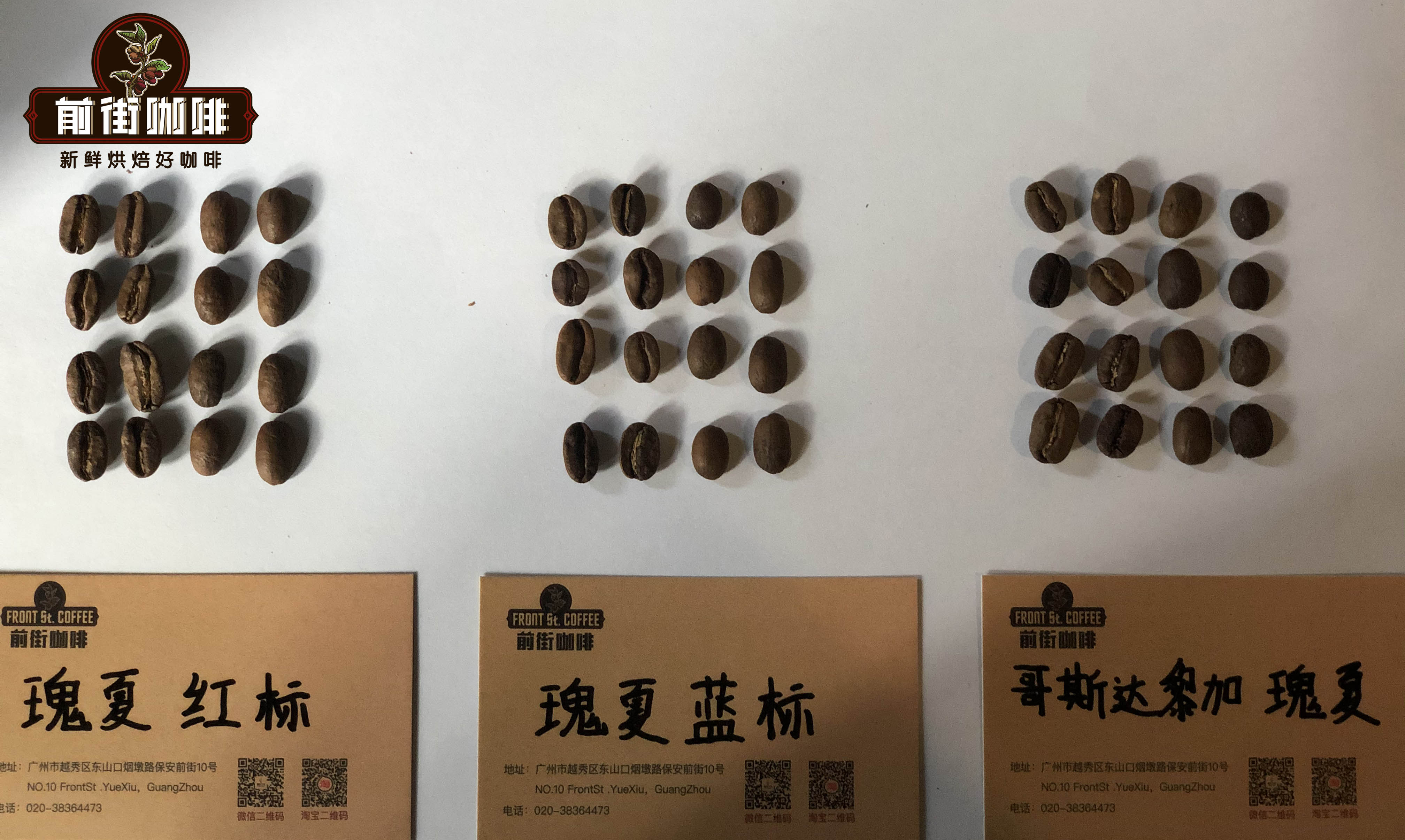
Based on cupping performance, cultivated varieties and growing plots, Hacienda La Esmeralda is divided into five brands. The Geisha variety carries three: Esmeralda Special, Private Collection and Geisha 1500. Ranked from highest to lowest: Esmeralda Special, Private Collection, Geisha 1500. The Catuai variety carries two: Diamond Mountain and Palmyra.

[FrontStreet Coffee Panamanian Hacienda La Esmeralda Red Label Geisha Coffee]
Esmeralda Special's Geisha is what everyone calls the Red Label. It selects Geisha beans grown at altitudes of 1600-1800 meters, with cupping scores above 90 points, from the Jaramillo and Cañas Verdes areas.

Only the Geisha lots from designated plots that go to the estate's own independent auction qualify as auction Red Label. Non-auction Red Labels also exist on the market today. These are Geisha beans selected from the same plots but not entered in the auction, then released commercially. The variety and the quality are the same; only the selling price differs.
This grade of Geisha is processed either naturally or washed, with flavors that stand out for bright, special floral notes and citrus aromas.

FrontStreet Coffee · Panama Hacienda La Esmeralda Red Label Geisha
Region: Panama, Boquete
Estate: Hacienda La Esmeralda, Cañas Verdes
Altitude: 1600-1800 meters
Variety: Geisha
Processing Method: Natural
[FrontStreet Coffee Panamanian Hacienda La Esmeralda Green Label Geisha Coffee]
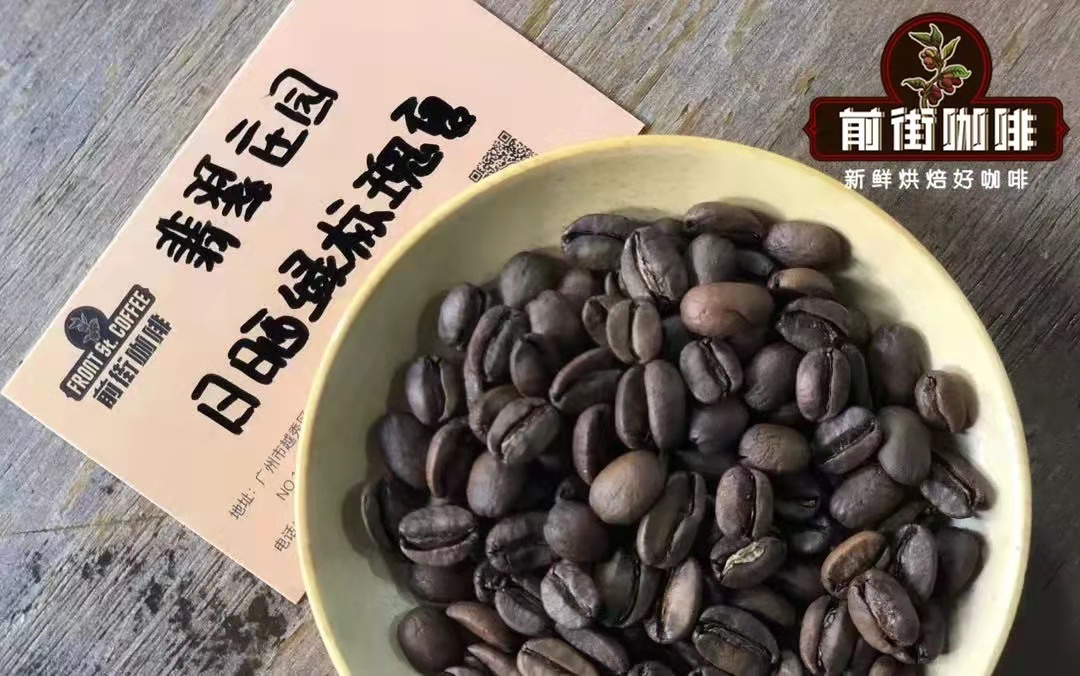
Private Collection is the Green Label Geisha. It is not a competition lot but a Geisha variety grown on non-auction plots that is nonetheless of excellent quality. It selects micro-batch mixed beans grown at altitudes of 1600-1800 meters from different plots including Jaramillo and Cañas Verdes.

Because it uses a mixed-bean model without detailed plot specification, the Green Label Geisha can sometimes taste very close to the Red Label, while the next batch may differ.
Although FrontStreet Coffee's Green Label Geisha is not as high-grade as the Red Label, it still carries the classic Geisha flavors: floral notes, fruit aromas, citrus acidity and a thick, juicy mouthfeel. The Green Label Geisha also comes in washed and natural versions.
FrontStreet Coffee · Panama Hacienda La Esmeralda Green Label Geisha
Region: Panama, Boquete
Estate: Hacienda La Esmeralda
Altitude: 1600-1800 meters
Variety: Geisha
Processing Method: Washed or Natural
[FrontStreet Coffee Panamanian Hacienda La Esmeralda Blue Label Geisha Coffee]
Geisha 1500 is the Blue Label Geisha. It selects mixed beans from three different plots, Jaramillo, Cañas Verdes and El Velo, at altitudes of 1400-1500 meters. Its flavors feature light floral notes, fruit acidity and sweetness, with a less thick mouthfeel. Originally the Blue Label Geisha was available only in washed processing, but in 2020 Hacienda La Esmeralda also introduced a naturally processed FrontStreet Coffee Blue Label Geisha.
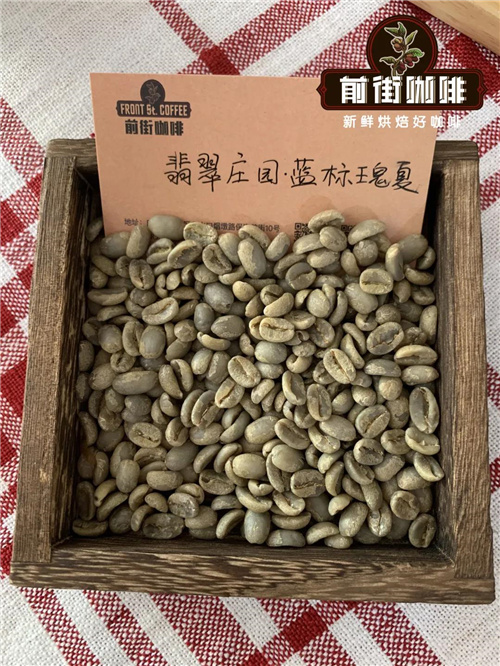
In summary, the most obvious differences among Red Label, Green Label and Blue Label Geisha are the cultivation altitude and whether mixed beans are used. Put simply: high altitude (1600-1800 meters) with clear plot information is Red Label Geisha; mixed beans from the same altitude as Red Label make up Green Label Geisha; and finally the lower altitude (1400-1500 meters) is Blue Label Geisha.

FrontStreet Coffee · Panama Hacienda La Esmeralda Blue Label Geisha
Region: Panama, Boquete
Estate: Hacienda La Esmeralda
Altitude: 1500 meters
Variety: Geisha
Processing Method: Washed or Natural
FrontStreet Coffee Brewing Recommendations
FrontStreet Coffee recommends unified brewing parameters: 90°C water, a 1:15 coffee-to-water ratio, 15g of coffee grounds, and a fine-sugar grind consistency (80% pass rate through a China standard #20 sieve).
FrontStreet Coffee considers all of these Panamanian Hacienda La Esmeralda Geisha coffees to be lightly roasted. Light roasts have a lower soluble solids yield than dark roasts, so to ensure full extraction of the Geisha flavors, a higher water temperature and a finer grind are used. Some fans have noticed that FrontStreet Coffee has always recommended a 1:15 ratio, while Hacienda La Esmeralda's Geisha is brewed at 1:16. This is because slightly increasing the ratio helps you better appreciate the layers and flavors of the Geisha.

FrontStreet Coffee uses segmented extraction, also called three-stage brewing. Use 30g of water for a 30-second bloom, then pour with a small circular stream to 125g to break the stages. When the water level drops and is about to expose the coffee bed, continue pouring to 225g and stop. Wait until the level drops and is about to expose the bed again, then remove the dripper. Extraction time is 2'00" to 2'05" (timing from the bloom).

[FrontStreet Coffee Panamanian Hacienda La Esmeralda Red Label Geisha] shows bright rose and citrus aromas with brown rice, berries, apricots, complex fruits and honey, a thick, juice-like mouthfeel, rich layers and noticeable sweetness.
[FrontStreet Coffee Panamanian Hacienda La Esmeralda Green Label Geisha] shows a strong jasmine floral aroma with high sweetness, citrus, berries, a juice-like mouthfeel, cream, green tea, orange peel and cantaloupe, richly layered overall with a finish of persistent floral and citrus notes.
[FrontStreet Coffee Panamanian Hacienda La Esmeralda Blue Label Geisha] shows floral notes with soft lemon and grapefruit acidity on entry, honey sweetness in the middle and oolong tea notes with brown sugar sweetness in the finish, on a relatively clean, bright mouthfeel.
FrontStreet Coffee · Don Pepe Estate
The pocket of land where Don Pepe Estate sits lies on the southern foothills of the Baru Volcano in Panama, above the town of Portrerillos, at an altitude of 1700-1800 meters. From the estate you can see the Atlantic Ocean. The estate itself is very small, only 5 hectares, making it a micro-estate.

Do not be fooled by the small size, because the soil and growing environment within it are outstanding. The hillsides were originally covered with primeval forest, and the tall trees provide the best possible shade-grown coffee environment. In some places the vegetation was so dense that sunlight could not penetrate and coffee growth suffered, so over the past two years they had to clear the overly thick brush to let the Geisha trees grow fully. Because the estate sits near the Baru Volcano, the 1550 eruption left behind high-quality volcanic soil. FrontStreet Coffee's view is that beyond potassium and phosphorus, volcanic soil also holds very high organic matter, which nurtures Geisha coffee with rich, layered flavor.
Don Pepe Estate was established by Amado Boutet, grandfather of the current Lamastus family heir Wilford Lamastus. When global coffee prices were low, the grandfather's family could only sell off its large coffee estates. Mr. Wilford and his brother Patrick Lamastus could not bear to see the family estate sold, so they bought Don Pepe Estate and continued to operate it. The business was difficult and the family sometimes had to take outside work for extra income, but Mr. Wilford never gave up. Persistence paid off: starting in 2015, Don Pepe Estate's beans achieved excellent results in BOP competitions as well.

FrontStreet Coffee · Don Pepe Estate Coffee Bean Processing Method
After the fruit is harvested, the estate sorts the cherries and lays them on sunbeds to dry. The cherries dry naturally, their color shifting from red to dark brown. Total drying time is 18-30 days. Once dry, they are stored until the coffee is to be shipped, at which point the dried fruit skin, pulp and parchment layers are all removed to free the beans. Unripe, overripe and fermented beans are then sorted out, preparing the lot for shipment.
FrontStreet Coffee's view is that the advantage of this natural processing lies in completely preventing impurities from contacting the soil while also improving the drying efficiency of the fruit, which brings out the coffee's original fruit flavors more fully. The work raises the overall cupping quality and the consistency after roasting.

FrontStreet Coffee Roasting Records
FrontStreet Coffee's roaster is a Yangjia 800N semi-direct flame roaster running a 300g batch size. The drum is heated to 160°C before dropping the beans, with the damper at 3 and heat at 130. The turning point comes at 1'40"; when the drum reaches 140°C, adjust the heat to 110 and the damper to 4. At this point the bean surface turns yellow and the grassy aroma disappears completely, marking the dehydration phase. When the drum reaches 166°C, reduce the heat to 80 with the damper unchanged. At 176°C, reduce to 50 with the damper unchanged.
At 6'50" the bean surface shows ugly wrinkles and black spots, and the toast aroma clearly turns to coffee aroma, which we can define as the prelude to first crack. Listen carefully for first crack from here. At 7'37" first crack begins; reduce the heat to 50 and the damper to 5 (adjust the heat very carefully, and do not cut it so much that cracking stops). Develop for 1'30" after first crack, then drop at 190°C.

FrontStreet Coffee Cupping Report
FrontStreet Coffee cups its sample coffees within 8-24 hours of roasting. The baristas typically use 200ml ceramic cupping bowls. Cupping water temperature is 94°C. Grind consistency is controlled at a 70%-75% pass rate through a standard #20 sieve (0.85mm). The ratio is 11.1g of coffee powder to 200ml of hot water, or 1:18.18, which extracts a concentration that falls precisely within the golden cup range of 1.15%-1.35%, with a steeping time of 4 minutes.

Dry aroma: Fermented wine aroma
Wet aroma: Sweet orange
Flavor: Fermented wine aroma, sweet orange, honey, berries, pineapple, cream, fruit tea, green apple
FrontStreet Coffee Brewing Sharing
Filter: V60#01
Water temperature: 91°C
Coffee-to-water ratio: 1:15
Grind: Medium-coarse (80% pass rate through a China standard #20 sieve)

Brewing method: Three-stage extraction. Use 30g of water for a 30-second bloom, then pour with a small circular stream to 125g to break the stages. When the water level drops and is about to expose the coffee bed, continue pouring to 225g and stop. Wait until the level drops and is about to expose the bed again, then remove the dripper. Extraction time is 2'02" (timing from the bloom).
Brewing flavors: The nose shows ginger flower aroma, with citrus, honey and berry flavors on entry plus a fermented wine aroma. As the temperature drops, a pineapple-like sweetness gradually emerges, with sweet orange acidity in the finish.

FrontStreet Coffee · Panama Janson Estate Natural Geisha
Region: Volcán region
Estate: Janson Estate
Altitude: 1750m
Variety: Geisha
Grade: SHG
Processing: Natural
Janson Estate
At the 2013 Panama Specialty Coffee Association's Panama Coffee Awards, a new finalist appeared: Carl Janson's Janson Estate Geisha. The estate's owner, Mr. Carl Janson, is Swiss. When he came to Panama he fell deeply in love with the Volcán area, surrounded by mountains much like his homeland. After marrying his wife Margaret, he purchased this estate in 1940. The Janson family is now in its third generation.
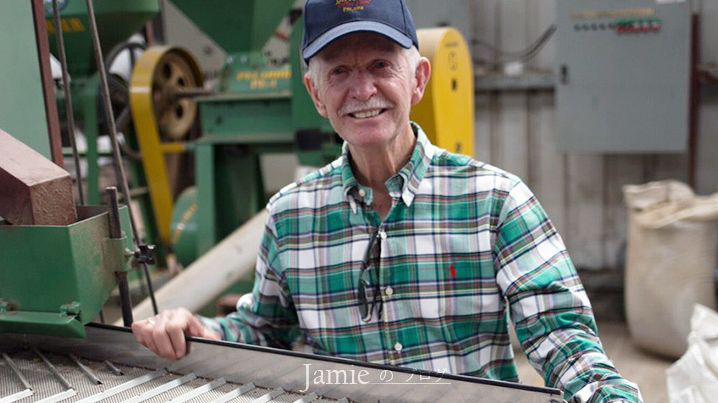
Janson Estate has an average altitude of 1700 meters, annual rainfall of about 3000mm and an average temperature of 20°C. The estate is covered with nutrient-rich volcanic soil. With that combination of high altitude, rich volcanic soil, abundant rainfall and suitable temperatures, Janson Estate gradually became the second-largest producer of Panamanian Geisha, with 50% of the estate planted to Geisha trees.
Janson Estate's operators place great importance on maintaining environmental balance, adopting 100% sustainable farming practices and using enzyme microorganisms to keep soil nutrients in balance. They run livestock farming alongside coffee cultivation and have built dedicated processing plants so that processed coffee cherries can be returned to the farm as fertilizer. Only 2000 Geisha plants are planted per hectare, ensuring ample soil between plants. Half the estate is planted with Geisha, ranking second in Panamanian Geisha production. Each batch of green beans carries a highly recognizable batch number and is 100% traceable.

Processing Method
This FrontStreet Coffee Janson Estate Geisha uses the natural processing method.
Natural processing is the oldest and most original method of handling coffee beans. Harvested cherries are laid out on patios, and some are even spread directly along roadsides in the sun (approximately 27-30 days), reducing moisture content from 60% to about 12%. Beans processed naturally have the lowest acidity, noticeable sweetness, a high body but slightly lower clarity. Beyond natural processing, Janson Estate also uses other methods, such as washing with mountain spring water.

Example of [FrontStreet Coffee Brewing Recommendations]
Filter: Hario V60
Water temperature: 90°C
Coffee amount: 15g
Coffee-to-water ratio: 1:15
Grind: Medium-fine
Brewing Method
Segmented extraction.
Use 30g of water for a 30-second bloom, then pour with a small circular stream to 125g to break the stages. When the water level drops and is about to expose the coffee bed, continue pouring to 225g and stop. Wait until the level drops and is about to expose the bed again, then remove the dripper. Extraction time is 2'00" (timing from the bloom).

Flavor Description
Dry aroma: Jasmine flowers, berries, citrus, banana, peach, mango
Wet aroma: Wild ginger flowers, cantaloupe, lemon, grapes, juice-like mouthfeel, blackcurrant
Entry: Perfect flavors of classic Geisha coffee, delicate and beautiful acidity, a light mouthfeel, with floral notes and honey intertwining into an unforgettable, wonderful finish.
FrontStreet Coffee Recommendation
With the whole Esmeralda hierarchy laid out, the practical question is where to begin. FrontStreet Coffee suggests starting with the entry point rather than the apex. The Panama Boquete Geisha is designed for newcomers who want to taste the famous Geisha character without paying auction prices: it delivers the classic Panamanian orange-blossom honey, an oolong-tea sensation and delicate fruit acidity with clearly defined layers. From there, the FrontStreet Coffee Esmeralda Green Label Geisha is the natural next step, the Private Collection series that blends lots from several plots rather than a single designated parcel, which is exactly why it offers the estate's signature high-altitude Geisha profile at a friendlier price.
At the top, the FrontStreet Coffee Esmeralda Red Label Geisha, officially Esmeralda Special, comes from designated plots and each lot is cupped above 90 points. Because Geisha is a fragile, low-yielding variety that demands careful handling, FrontStreet Coffee brews it differently from most coffees: 15g of coffee in a small Hario V60, a 1:16 ratio and 91°C water, ground to a 78% pass-through on a China standard #20 sieve, roughly fine sugar. Pour in three stages, 30g for a 30-second bloom, then to 125g, then to 225g once the bed is about to show, finishing in about 2'10" to 2'20". If you would rather drink Geisha as espresso, the Ethiopia Grana Geisha SOE is a medium-roast single origin that shows floral and fruit notes, dried-fruit sweetness and a bright lemon acidity, pulled as 20g in, 1:2, 40g out in 25 seconds. Whichever route you take, taste it slowly as it cools, because Geisha keeps changing in the cup.
Important Notice :
FrontStreet Coffee is a long-established specialty coffee roaster in Guangzhou China, selling freshly roasted beans from its own farm in Yunnan as well as dozens of carefully selected single-origin beans from around the world for both pour-over and espresso. The products deliver consistently excellent quality and great value, with shipping within 24 hours. Guangzhou's FrontStreet Coffee shop is recommended by many coffee lovers, and the beans are now available online at the Tmall 。
FrontStreet Coffee has moved to a new address:
FrontStreet Coffee Address: 315,Donghua East Road,GuangZhou
Tel:020 38364473
 Scan and follow the En Gafei WeChat official account. Please indicate that the reprint comes from "En Gafei".