Introduction to Aged Sumatra Mandheling Coffee Beans - Can Aged Coffee Be Drunk & How to Drink Aged Coffee
Mandheling coffee from the mountains of Sumatra is world-renowned for its rich texture. Set against the wine-like flavors of East African coffees, beans from Indonesia and New Guinea show a very different character: a viscous body, acidity buried deep within complex flavors, dark and intense herbal or wild mushroom notes, and a lingering sweet aftertaste that resonates in the throat. FrontStreet Coffee offers four Mandheling varieties. If you want to experience the distinctive flavors of the Indonesian region, choose the Lintong region Mandheling as your daily brew. If you prefer a clean, mellow cup with a sweet aftertaste, pick Golden Mandheling. If you are after prominent aromatics, try Tiger Mandheling. And if you want even more richness, sample the Aged Mandheling coffee beans. In this article, FrontStreet Coffee explains exactly what aged Mandheling coffee beans are.

Sumatra Coffee Beans
90% of the coffee beans grown in Indonesia are Robusta, with the remaining 10% being Arabica, produced mainly in the Lintong region around Lake Toba in Sumatra and in the Gayo Mountains of Aceh. Indonesian growing regions typically have two harvest seasons: the main harvest around September to October, and the fly harvest in May to June.
Lake Toba Lintong Region
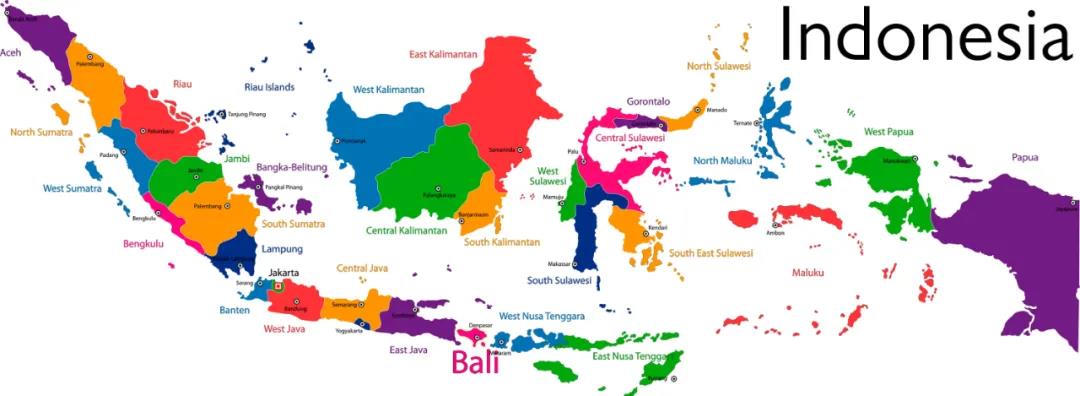
Lake Toba lies north of Medan, the capital of Sumatra, and is a high-altitude freshwater lake. The average elevation is about 900 meters. The lake is diamond-shaped, 100 kilometers long and 30 kilometers wide, covering an area of 1,130 square kilometers, with the surrounding land at an average elevation of 1,100-1,600 meters, making it the world's largest volcanic lake. What is commonly called Mandheling consists of Typica or its varieties grown in the mountainous areas around Lake Toba, and Lintong is the most famous Mandheling-producing area in the Lake Toba region. Lintong Mandheling is essentially the regular version of Mandheling.
Aceh Gayo Mountain Region
The Gayo Mountain region is located in Aceh Province, in the northern part of Sumatra. Coffee here is grown on the slopes surrounding the town of Takegon and Lake Tawar, at an average growing altitude of 1,110 to 1,600 meters. It is cultivated by small tenant farmers under shade trees, using the wet-hulled processing method to express unique flavors and a deep, lively richness. Aceh, at the northernmost tip of Sumatra, is a fascinating and complex place. Because of long-term political instability, it is not a region ordinary travelers tend to visit.
The Wet-Hulled Processing Method
Because the local weather is predominantly rainy and typhoon-prone, the long stretch of good weather needed for sun-drying is simply unavailable, and the local economy is not strong enough to afford the more expensive washed method. For these reasons, a uniquely local technique developed: the wet-hulled method. In wet-hulling, the beans are sun-dried with the parchment for 2-3 days during the regular washed process until they reach 20-24% moisture content, and then the parchment is hulled off. The extremely fast pace of wet-hulling also produces a higher defect rate in Mandheling beans, something Golden Mandheling effectively avoids.
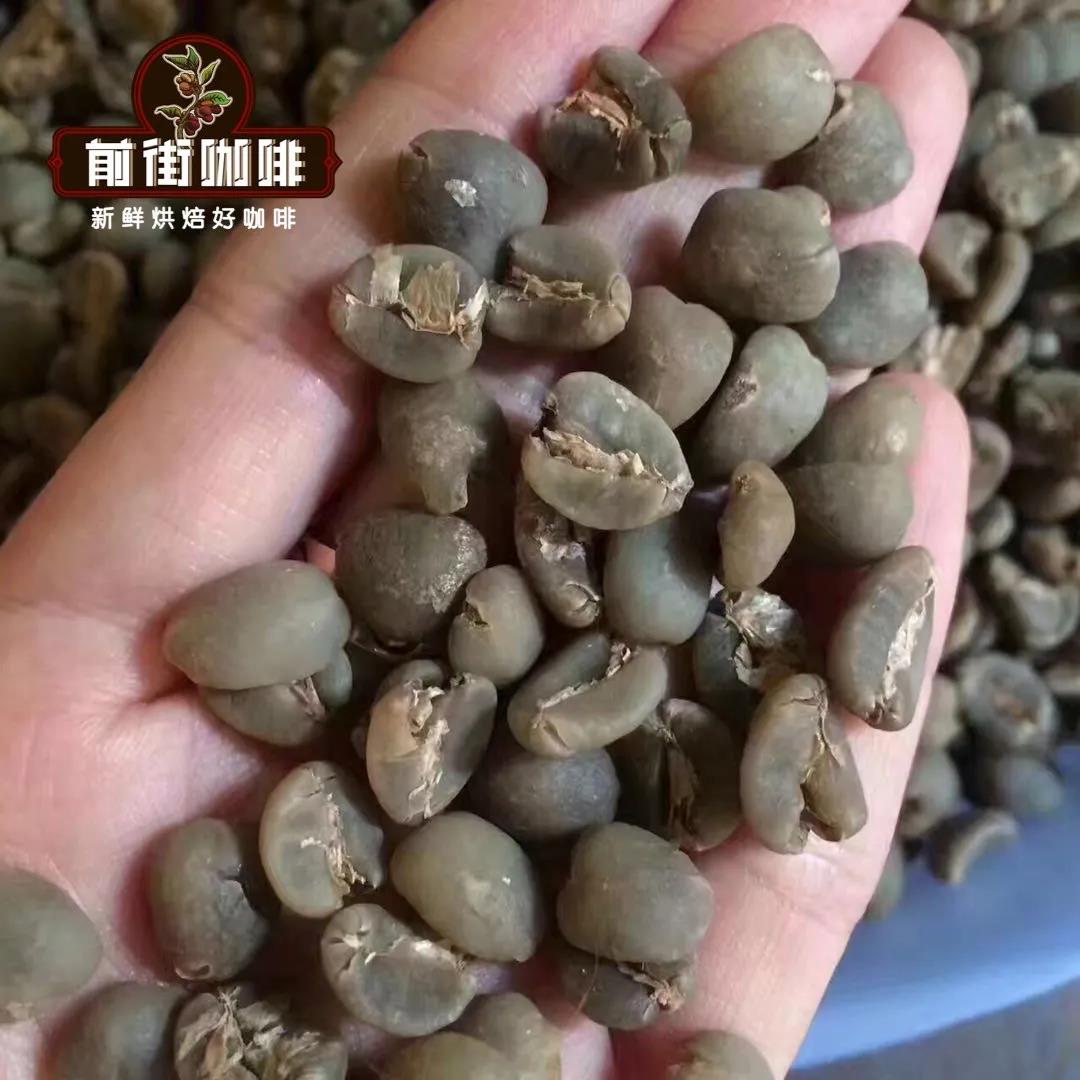
Because the semi-hard, semi-soft moist green beans bruise easily when the mucilage and parchment layer is removed, the beans crack open like goat hooves and are commonly known as goat hoof beans. These are not defective beans but rather a distinctive characteristic of Mandheling. FrontStreet Coffee's Golden Mandheling is specified at 19 screen or larger, with fewer than 3 defective beans in a 300g green bean sample, putting it in the highest G1 grade, with a dark green color and a uniform flat bean shape. After cupping many wet-hulled coffees, FrontStreet Coffee has found that they share acidic and high-body characteristics.
What Is Aged Sumatra Coffee?
Ageing is a specially processed type of bean, and aged Mandheling actually has a long history in Indonesia. In the early days, shipping was not as developed, and transporting coffee from Indonesia to other countries took considerable time. Over that journey the originally moisture-rich fresh coffee beans gradually dried, and exposure to sea winds added a rather special flavor.
With modern shipping dramatically cutting transport times, this special-flavored coffee has become a deliberately processed bean. Aged Sumatra coffee does not simply mean letting green beans sit for a long time until they age, which is not acceptable at all. Green beans left too long will still spoil, turning from fresh green to white and then to yellow, becoming tasteless, and even attracting insects. Like aged wine, green beans must undergo proper processing and long-term storage before they can be called true aged coffee.
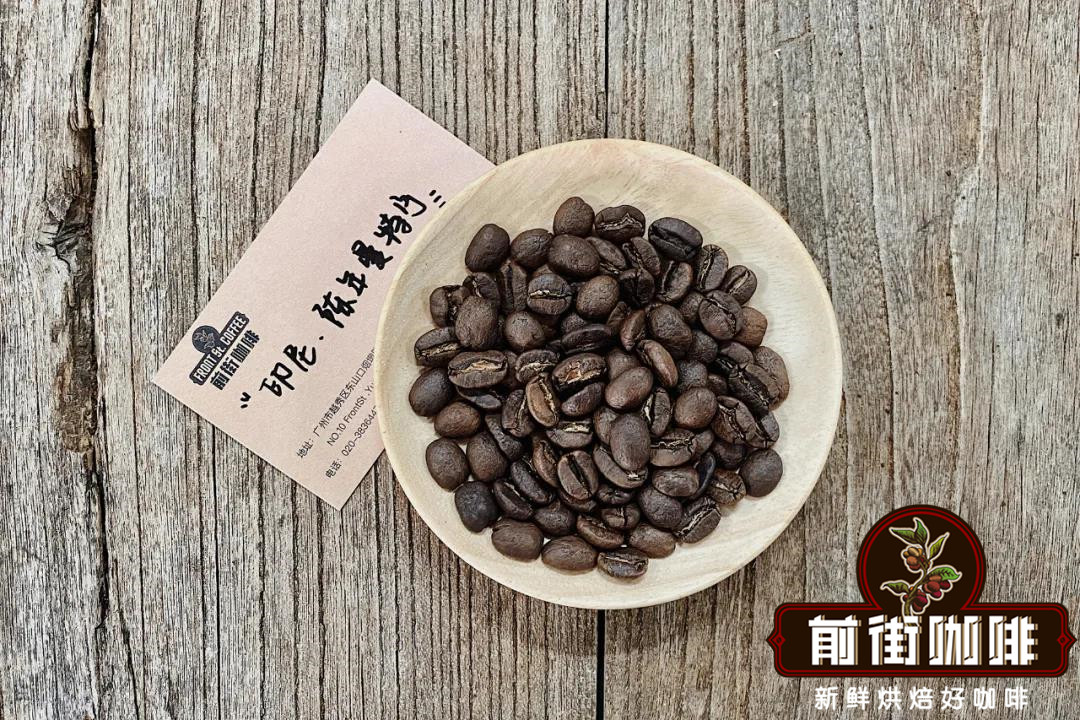
FrontStreet Coffee's Aged Mandheling
Region: Sumatra
Altitude: 1500 meters
Varieties: Catuai, Typica
Processing: Wet-hulled
How Are Coffee Beans Aged?
In recent years the ageing process has become quite mature. Coffee beans first undergo wet-hulled processing, in which the beans are sun-dried with the parchment for 2-3 days during the regular washed process until they reach 20-24% moisture content, then the parchment is hulled off and the green beans are dried down to 12-13% moisture content. They are then sealed in warehouses. The warehouse environment must be cool and ventilated, and the beans must be turned regularly to prevent mold and spoilage, then stored for 2-3 years. During this period the coffee's acidity gradually diminishes and converts to sugars, while the color deepens, mostly to yellowish-brown or dark brown, which is highly recognizable. Through cupping, FrontStreet Coffee finds that aged Mandheling lacks the wildness of traditional Mandheling but gains more richness and delicacy, with a mature, steady character and lower acidity.

FrontStreet Coffee's Roasting Recommendations for Aged Mandheling
FrontStreet Coffee suggests paying close attention when roasting, because Mandheling green beans are dense and aged beans have low moisture content, so heat adjustments at each stage must be especially careful to avoid scorching the oils on the bean surface. Since aged Mandheling has low, soft acidity, FrontStreet Coffee recommends roasting to medium-dark to increase its purity and smooth mouthfeel.

FrontStreet Coffee's roaster used a Yangjia 800N with a batch size of 480g. Heat to 200°C before dropping the beans, with the damper set to 3. After 1 minute, adjust the heat to 160°C, keeping the damper unchanged. Roast until 5'35'', when the temperature reaches 146°C and the bean surface turns yellow, the grassy aroma completely disappears, and dehydration is complete; adjust the heat to 140°C and the damper to 4. At 8'10'', ugly wrinkles and black spots appear on the bean surface and the toast aroma clearly transitions to coffee aroma, which can be defined as the prelude to first crack. At this point, listen carefully for the sound of first crack. At 9'30'' first crack begins; reduce the heat to 80°C, set the damper to 5, and drop at 197.5°C.
FrontStreet Coffee's Cupping Report for Aged Mandheling
FrontStreet Coffee cups within 8-24 hours after roasting the sample beans. Our baristas typically use 200ml ceramic cupping bowls marked with 150ml and 200ml measurement lines, following SCAA standards. The water TDS is around 150ppm; too low a TDS can easily cause over-extraction, while too high a TDS affects mouthfeel and causes under-extraction. The cupping water temperature is 94°C. Grind size is controlled to a 70-75% pass-through rate on a #20 standard sieve (0.85mm). The ratio is 11 grams of coffee grounds to 200ml of hot water, that is, 1:18.18, so the extraction concentration falls within the 1.15%-1.35% golden cup range. Steeping time is 4 minutes.

Dry Aroma: Herbal
Wet Aroma: Chocolate
Flavor: Aged Pu-erh tea, herbal, caramel, chocolate, low acidity
FrontStreet Coffee's Brewing Recommendations for Aged Coffee
Dripper: Kono
Recommended Water Temperature: 87-88°C
Grind Size: Fuji Royal grinder 4.5 (coarse sugar size)
Coffee-to-Water Ratio: 1:15
Dose: 15 grams

FrontStreet Coffee's Brewing Technique
Use 30g of water for a 30-second bloom. Pour in a small circular stream up to 125g, then pause. When the water level drops and is about to expose the coffee bed, continue pouring to 225g and stop. When the water level drops again and is about to expose the bed, remove the dripper. Timing starts from the bloom, and extraction time is 2'00''.
Brewing Flavor
Aromas of pine, malt, and caramel emerge immediately. The mouthfeel lacks the wildness of traditional Mandheling but gains more richness and delicacy, with a mature, steady character and low acidity. The cup reveals aged Pu-erh tea, caramel, herbs, and chocolate, with abundant sweetness.
FrontStreet Coffee Recommendation
Aged Mandheling is the richest expression of the wet-hulled character, and if you want to taste wet-hulled specialty coffee at its finest, FrontStreet Coffee's PWN Golden Mandheling is the place to start. PWN buys only high-quality Mandheling green beans and screens them rigorously: beans of 18 screen or larger, fewer than 3 defective beans per 300g green bean sample to meet the highest G1 standard, followed by three rounds of hand sorting that completely remove defects. That work raises the cup's cleanliness and the intensity of its sweetness, and it is why PWN Golden Mandheling has become the benchmark of Mandheling coffee. Alongside it, FrontStreet Coffee's Lintong Mandheling is the everyday choice for anyone who loves that heavy, earthy, herbal wet-hulled profile: fragrant and full-bodied, sweet with a touch of bitterness, with clove and woody aromatics, low acidity from a medium-dark roast, and a spicy, mint-like edge over a strong, lingering, substantial sweetness.
To get the most out of PWN Golden Mandheling, FrontStreet Coffee recommends hand-pouring it: 87-88°C water, 15g of coffee, a 1:15 ratio, a coarse-sugar grind, and a three-stage pour. The three stages express both the thick body and the caramel sweetness. The first stage is a 30ml bloom that wets all the grounds and lets them degas, preparing them for better extraction. The second stage adds 100ml to bring out the golden foam and lift the coffee bed. The final stage is a gentle 95ml pour down the center to lift sweetness, giving an overall cup of solid body, caramel sweetness, and chocolate and nut flavors.
If you want to take that Mandheling richness onto the espresso machine, FrontStreet Coffee's Classic Blend is the most repurchased option. It layers medium-dark Mandheling onto the creamy, nutty character of Brazilian coffee, so butter, roasted chestnut, and caramel notes stand out clearly. The Mandheling not only lifts the body of the whole cup but also contributes sandalwood, herbal, and spice notes, while a small amount of Robusta boosts the richness of the crema, making latte art or a layered Dirty effortless.
Important Notice :
FrontStreet Coffee is a long-established specialty coffee roaster in Guangzhou China, selling freshly roasted beans from its own farm in Yunnan as well as dozens of carefully selected single-origin beans from around the world for both pour-over and espresso. The products deliver consistently excellent quality and great value, with shipping within 24 hours. Guangzhou's FrontStreet Coffee shop is recommended by many coffee lovers, and the beans are now available online at the Tmall 。
FrontStreet Coffee has moved to a new address:
FrontStreet Coffee Address: 315,Donghua East Road,GuangZhou
Tel:020 38364473
 Scan and follow the En Gafei WeChat official account. Please indicate that the reprint comes from "En Gafei".
Characteristics and Flavor Profile of Mandheling Coffee | The Origin Story of the Mandheling Name | What Variety are Mandheling Coffee Beans