Are Arabica Coffee Beans Suitable for Making Espresso, Americano, Latte, and Cold Brew?
For many coffee lovers, coffee has long been woven into daily life, an ordinary and important part of the day. But how much do you actually know about it? In this article, FrontStreet Coffee looks at Arabica coffee, the type most of us drink.
Why Do Coffee Shops Use Arabica?
Arabica and Robusta are the two most common varieties on the market, and they differ sharply. Arabica is a small-bean variety, while Robusta is a medium-bean variety. Compared with Robusta's 22 chromosomes, Arabica has 44 chromosomes, or 22 pairs. That doubled count not only gives Arabica a finer aroma but also brings rich, distinctive sweet-and-sour flavors. Put simply, Arabica tastes better than Robusta.
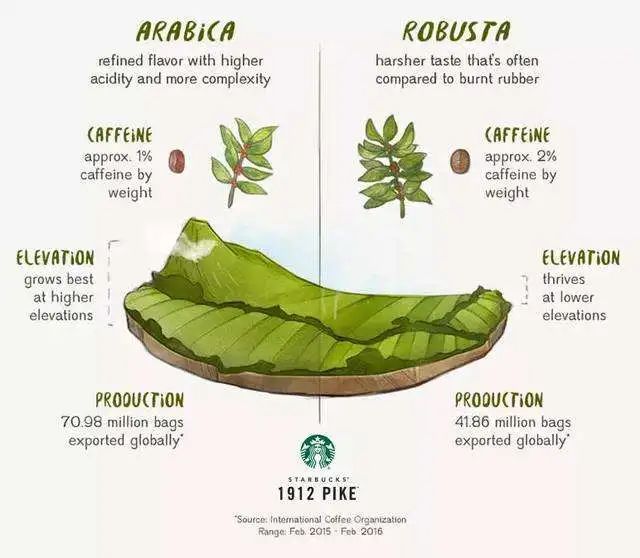
To express a wide range of flavors, Arabica needs to grow at high altitude, between 800 and 2,200 meters, in frost-free conditions. The greater altitude creates a large day-night temperature swing, which slows the ripening of the cherries and allows flavor compounds to accumulate more fully, producing a richer aroma. The microclimates of each growing region give Arabica diverse conditions and shape its unique flavor profiles. At the same time, higher ground makes coffee more vulnerable to pests and weather. Generally, coffee planted higher yields less fruit and ripens more slowly. High-quality Arabica therefore demands more hands-on management and harvesting, which drives up the cost of production.
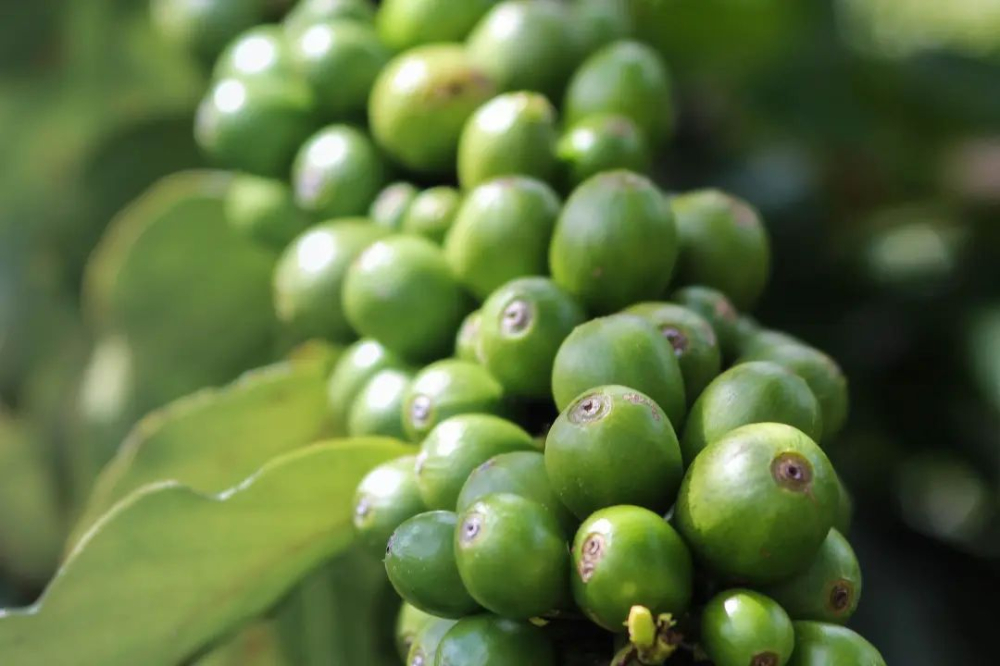
The bitterness we taste in coffee comes mainly from chlorogenic acid. Robusta contains more caffeine, amino acids, and chlorogenic acid. As a result, Robusta naturally lacks the elegant, lifted aroma that is unique to Arabica, offering instead a mellow, deeper bitterness. Arabica's caffeine content is low, roughly 0.9% to 1.2%, and its fat content is 60% higher than Robusta's. Compared with the bold-tasting Robusta, Arabica has less caffeine and twice the sugar, which makes it smooth and sweet with layered, aromatic acidity. That is why Arabica has become the first choice for coffee drinkers.
As specialty coffee culture spreads, people have come to expect more from the taste, mouthfeel, and quality of their coffee. Only high-quality Arabica beans meet what today's specialty market wants. Many of the pour-over single-origin coffees on FrontStreet Coffee's bean menu are Arabica, which shows that, next to Robusta, people prefer Arabica's pure flavors.
What Are the Characteristics of the Arabica Variety?
Arabica coffee originates from the Ethiopian plateau in Africa. At first it was used mainly as medicine. Later, people developed the habit of roasting and drinking it. In the 16th century, Arabs spread it around the world through trade, and it gradually became the popular beverage we know today. Many of the specialty coffees we know are Arabica, such as Jamaican Blue Mountain, Panamanian Geisha, and Ethiopian Yirgacheffe.
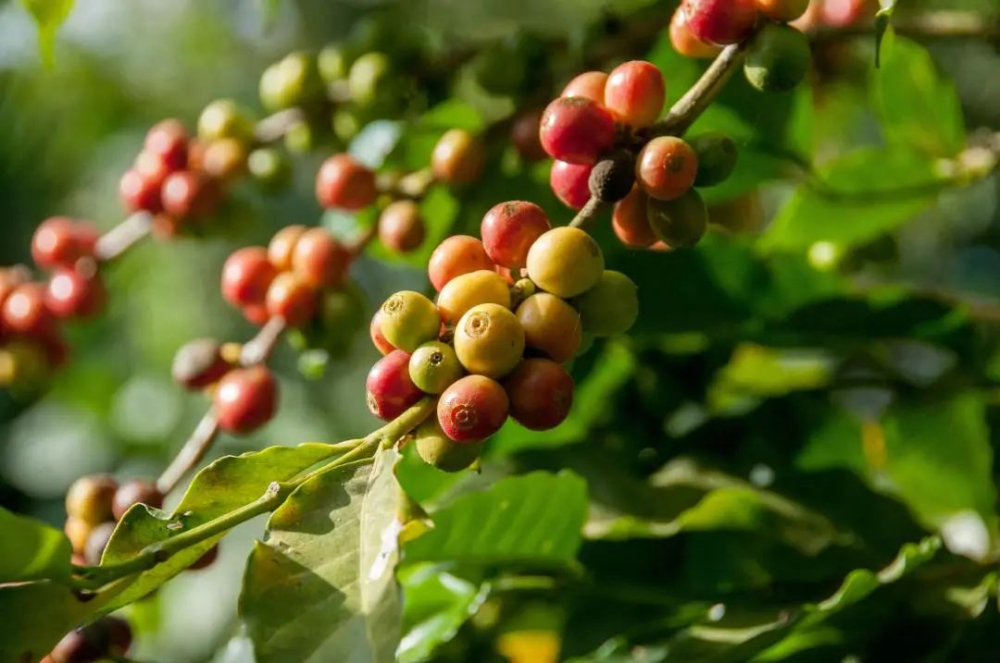
Anyone who drinks coffee regularly knows that coffee is a tropical plant that needs warm conditions. Coffee trees grow mainly between 25 degrees south latitude and 25 degrees north latitude, centered on the equator. This band is called the Coffee Belt. Brazil and Colombia in Central and South America, Ethiopia and Kenya in Africa, and Sumatra in Indonesia and Yunnan in China are all high-quality coffee regions inside the Coffee Belt.
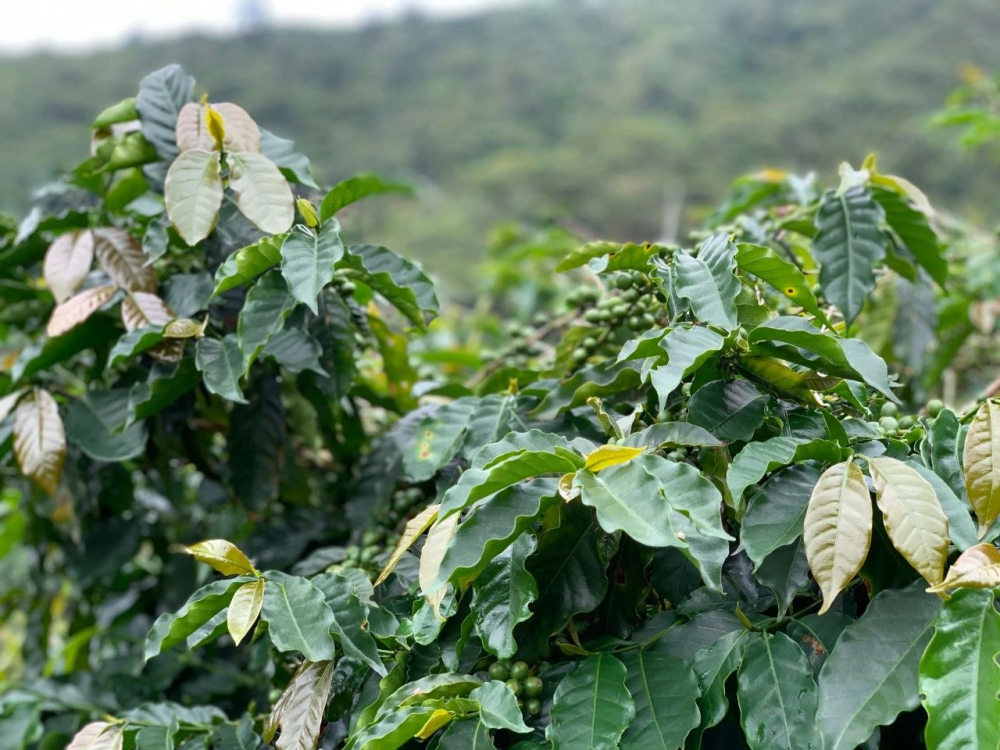
Arabica is a fairly large shrub with elliptical, dark green leaves. Its fruit is also elliptical and generally holds two slightly flattened beans. The beans are rounded, with a long oval face, a narrow curved S-shaped crease down the middle, and a fairly flat arc on the back. Two Arabica coffee trees grow beside FrontStreet Coffee's Dongshankou store, so if you drop by for a cup, take a look.
Arabica Coffee Bean Recommendations
On FrontStreet Coffee's bean shelf there is a value-focused daily bean series, carefully built from 7 excellent classic coffee origins and covering a wide range of representative regions, varieties, and natural processing methods. Daily beans, as the name suggests, are approachable enough to drink every day, with both price and flavor kept friendly. FrontStreet Coffee chose several "representative faces" so drinkers can learn the basic flavors of the major origins. These include Ethiopian washed Yirgacheffe, Guatemalan washed Huehuetenango, Colombian washed Huilan, Brazilian natural pulped Cerrado, Costa Rican washed Tarrazu, Indonesian wet-hulled Mandheling, and Chinese Yunnan washed Baoshan.
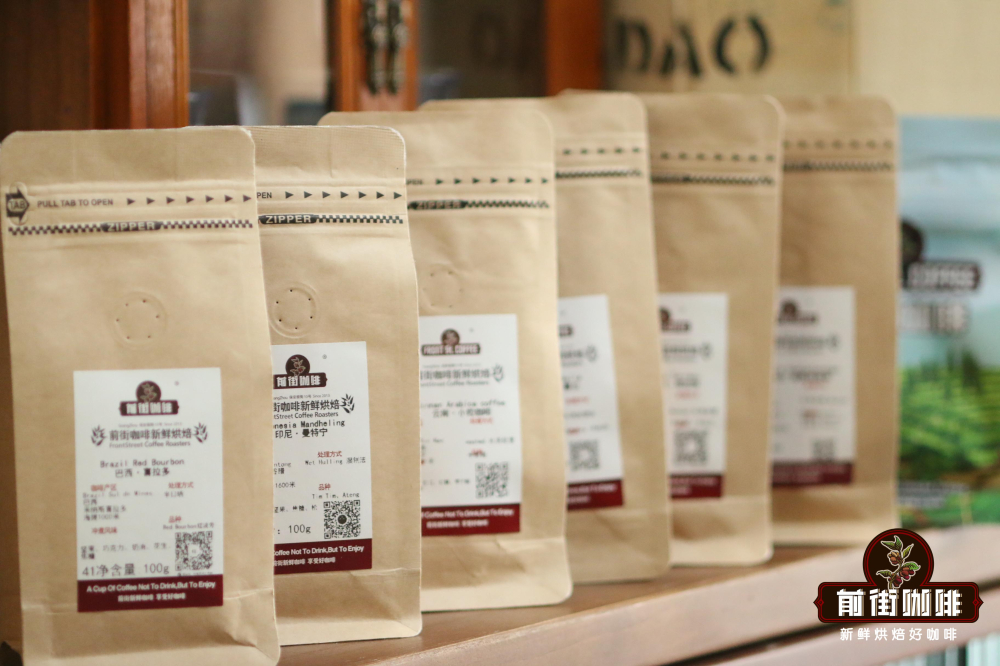
Every daily bean works well for pour-over, cold brew, French press, and other methods. If you want to taste coffee's purest aroma, FrontStreet Coffee suggests drinking it black. Whatever method you use, FrontStreet Coffee believes freshness matters greatly. Once the roast date is more than two months past, the aroma has likely faded, and even superb technique can hardly bring the cup back. So that everyone can drink coffee at its best, FrontStreet Coffee ships only beans roasted within 5 days, ready to brew the moment they arrive.
If you want to make rich, mellow espresso from Arabica, FrontStreet Coffee recommends espresso-specific blended beans. Espresso is extracted with a fine grind, high water temperature, and high pressure, so the concentrated coffee gathers many flavors at once and its compounds hit the palate at a much higher intensity. Using a lightly roasted single-origin bean for extraction can taste too aggressive and bury the coffee's aroma. As an agricultural product, coffee changes with climate and soil, and even from one place, every batch of beans tastes a little different. Blends use the principle of balancing strengths and weaknesses so that each batch delivers a stable, well-rounded aroma and taste.
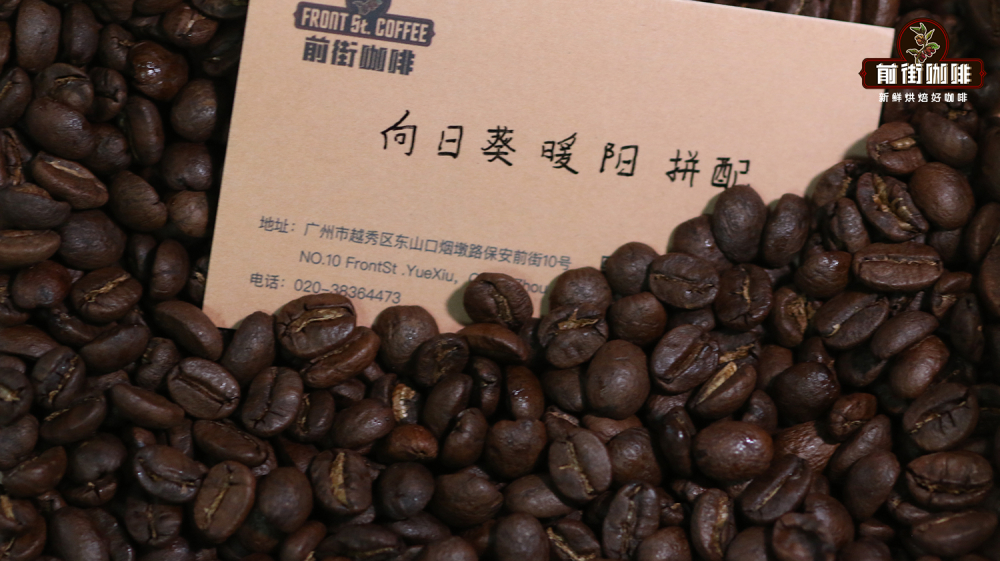
FrontStreet Coffee recommends its own "Sunflower Warmth Blend Coffee Beans," which combines Ethiopian natural red cherry coffee beans (30%) with Honduran sherry barrel-aged coffee beans (70%). Pulled as espresso, it has a very rich dark chocolate flavor with strong caramel notes, and the aroma released after swallowing lingers in the memory. Whether diluted with water into an Americano or lifted with milk into a latte, it delivers a full aroma and taste.
FrontStreet Coffee Recommendation
Because this article covers everything from espresso and Americano to latte and cold brew, the recommendation here focuses on beans that adapt to several methods. FrontStreet Coffee's Strawberry Candy Gesha blend is the most versatile of the group: it brings together Panama Gesha and a Costa Rican honey-processed coffee, so the cup keeps the delicate rose and orange side of Gesha while adding the grape, blueberry, and strawberry-fudge sweetness of the honey process. It works as pour-over, as espresso, and as a lively cold brew with a faint wine-like fruit character after a little resting.
For a brighter, fruit-forward cup that shines in cold brew as much as in a hand pour, FrontStreet Coffee's Ethiopia Natural Huakui leans on the natural process, so the beans soak up sweetness from the fruit. Expect magnolia, creamy strawberry, dried mango, guava, and black tea. If you prefer a crisp, juice-like cold brew, FrontStreet Coffee's Kenya Tomato is a washed Kenyan bean from the Thika region, grown at 1,550-1,750 meters from the classic SL28 and SL34 varieties, with a 72-hour double washed fermentation and a light roast; it cups with cherry tomato, snow pear, black plum, and dark plum notes and plenty of juicy brightness.
Important Notice :
FrontStreet Coffee is a long-established specialty coffee roaster in Guangzhou China, selling freshly roasted beans from its own farm in Yunnan as well as dozens of carefully selected single-origin beans from around the world for both pour-over and espresso. The products deliver consistently excellent quality and great value, with shipping within 24 hours. Guangzhou's FrontStreet Coffee shop is recommended by many coffee lovers, and the beans are now available online at the Tmall 。
FrontStreet Coffee has moved to a new address:
FrontStreet Coffee Address: 315,Donghua East Road,GuangZhou
Tel:020 38364473
 Scan and follow the En Gafei WeChat official account. Please indicate that the reprint comes from "En Gafei".