Geisha Coffee Bean Origin Estate Flavor Auction Records Introduction
The Discovery of Geisha
The Geisha variety was first collected in 1931 from the Geisha forest in Ethiopia and sent to the Coffee Research Institute in Kenya. In 1936 it moved on to Uganda and Tanzania. Costa Rica received it in 1953, and Panama began growing Geisha in the 1970s, when Mr. Francisco Serracin of the Don Pachi Estate obtained seed from CATIE in Costa Rica.
The variety's rise, however, was no accident. Daniel Peterson ran repeated cupping sessions across different harvest batches, logging the flavor of each one, and noticed that a single batch tasted unlike anything else. The only way to isolate the difference was to compare batch by batch.
Once the batch was identified, he traced back through its harvest dates and collection areas within the estate, reviewed the batch data in full, and pinned down the exact spot where the cherries had been picked. From there he examined the trees one by one—their appearance, leaves, and fruit—and that is how Geisha as we know it came to light. It was never as simple as the legends suggest; it took several times more effort and persistence than usual for this variety to emerge.
Hacienda La Esmeralda's Astonishing Auction Records
The estate's reputation rests on an unshakable string of competition victories. Award-winning lots always see their prices climb steeply—champions can command many times the market rate—but Hacienda La Esmeralda's record is unprecedented. As of 2013 it had taken fifteen different coffee competition championships. Most striking was the natural-processed Geisha lot that won the 2013 Best of Panama natural process category and sold for $350.25 per pound. At the time, non-auction premium Panamanian coffee was going for roughly $6 per pound—meaning the winning lot fetched more than 58 times the price of other premium coffees.
The Geisha Variety
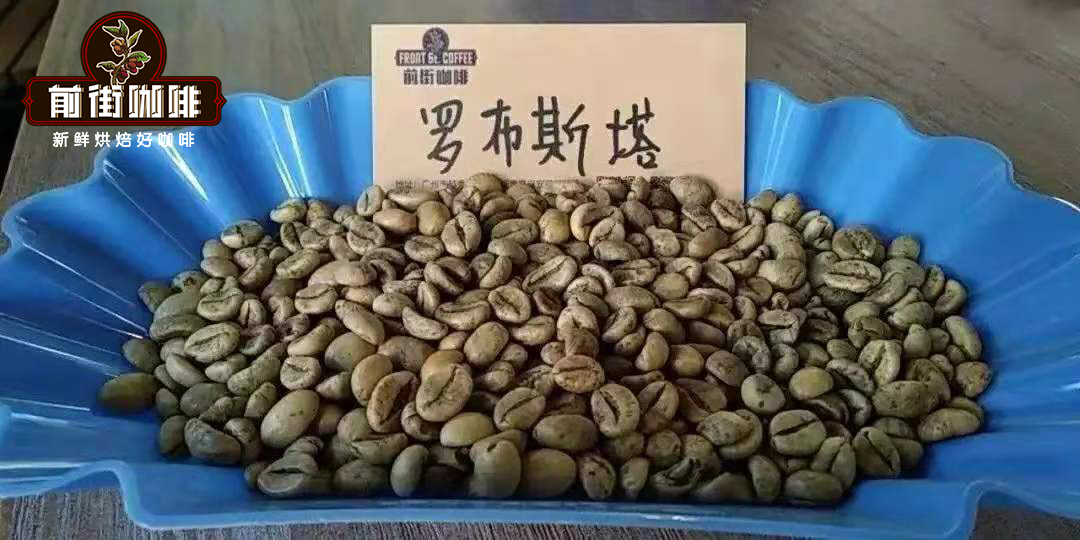
Geisha green beans are a beautiful blue-green with a jade-like, almost warm luster. Their dry fragrance suggests fresh grass, peach, and berries, along with a unique milky sweetness reminiscent of oolong tea that most coffee simply does not have. Aroma and flavor always invite some associative thinking, but that light tea note is something you can perceive clearly.
To showcase the variety's character, it is typically roasted to the verge of second crack—roasts at or just into second crack best bring out what the bean has to offer. Roast too light and off-flavors appear; roast too dark and the florals and fruit acidity are damaged. Naturally, this is always adjusted for the specific lot and the roaster's understanding of the bean.
Flavor Profile
Florals, tropical fruit, and intense sweetness—roasted well, a cup of Geisha feels like sipping the fragrance of a bouquet of fresh flowers. The variety is an ancient Ethiopian heirloom that arrived in Costa Rica as a sample at the country's coffee experimental station and was distributed to a handful of small farms for trial planting.
For decades hardly anyone paid Geisha any attention—until Hacienda La Esmeralda in Panama separated it from its other varieties and won the national coffee championship with it.
Its fruit and floral character bears a remarkable resemblance to Yirgacheffe coffee from the other side of the African continent. Naturally, small farms everywhere now want Geisha of their own, but results are inconsistent: weather, soil, and altitude mean this "star" variety tastes different wherever it is planted. In the Acotenegro region, though, the classic Geisha signature holds—elongated beans, distinct behavior during roasting, and an elegant, clean cup.
Hacienda La Esmeralda Geisha: Classification by Altitude
Auction Geisha (ESMERALDA SPECIAL) (Red Label), specially selected from altitudes above 1550 meters.
Boquete Geisha (Green Label), specially selected from 1500 meters.
(ESMERALDA 1,500) (Blue Label), specially selected Geisha from around 1500 meters altitude.
Red Label Geisha goes to global auction bidding every May; Green Label skips the auction but remains high quality at a slightly lower price, and Red Label buyers receive priority purchasing rights for Green Label.
Hacienda La Esmeralda's Four Major Brands
1. [Esmeralda Special] - Auctioned independently by Hacienda La Esmeralda itself, entirely Geisha, classified by production zone with each zone subdivided into small lots. Only Geisha lots the estate enters into its own auctions may carry the Esmeralda Special name.
2. [Geisha-Boquete] - Also Geisha varieties but not competition lots: excellent-quality, non-auction batches from various production zones blended together.
3. [Diamond Mountain] - The estate's traditional varieties, grown in the Cañas Verdes and Jaramillo regions at roughly 1400-1700 meters. The cup is complex, with distinct chocolate, vanilla, and sweet citrus notes; the varieties are the standard Central American mix of Typica, Bourbon, and Catuai.
4. [Palmira] - Located on the outskirts of Boquete town at roughly 1000-1250 meters. This is the estate's only low-altitude coffee, almost entirely Catuai. Not premium grade, but the acidity is gentle, with clear nutty sweetness and chocolate flavors.
Panama · Hacienda La Esmeralda Geisha Coffee Beans
Panama Geisha (Hacienda La Esmeralda)
[Origin]: Panama
[Region]: On the slopes of Baru Volcano, the highest peak in western Panama
[Estate]: Hacienda La Esmeralda
[Grade]: SHB
[Growing Altitude]: 1450M
[Processing Method]: Fine washed processing
[Special Certification]: Rainforest Alliance Certified
[Roast Level]: Light roast city-
[Flavor Description]: Oolong tea, peach, and honey aromas—fresh and comfortable, bright and balanced, with exceptionally layered fragrance. The whole bouquet is wrapped in caramel sweetness; entry shows noticeable fruit acidity on the tongue that softens and rounds out in the mouth. The fruit sweetness and aftertaste are strong, like drinking a glass of fresh fruit tea—refreshing and deeply satisfying. As the cup cools, the acidity grows more delicate. The flavor lingers impressively.
Panama Hacienda La Esmeralda Blue Label Geisha, washed process, fresh roasted, 100g
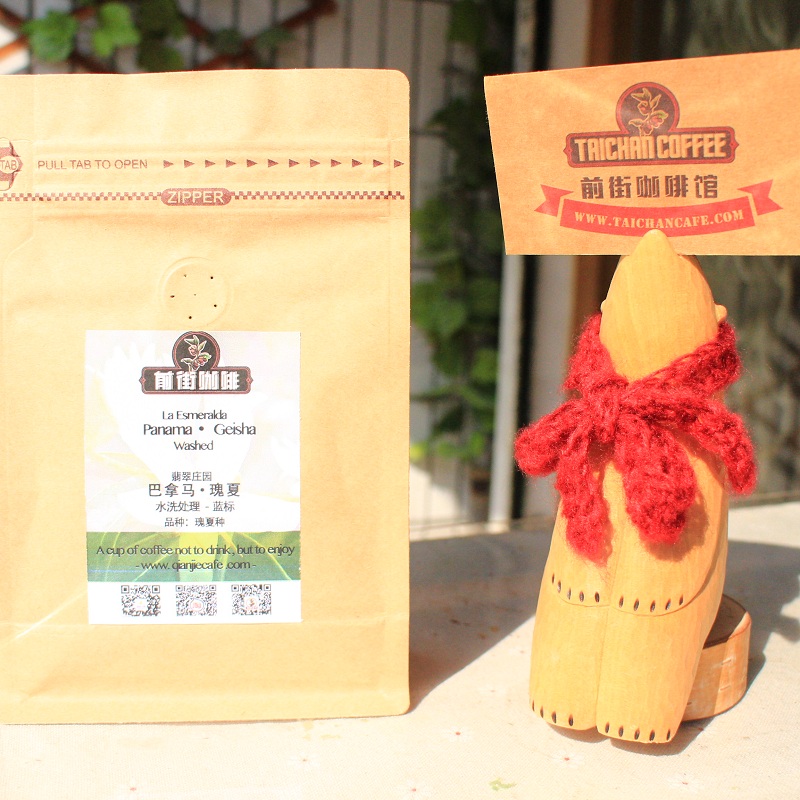
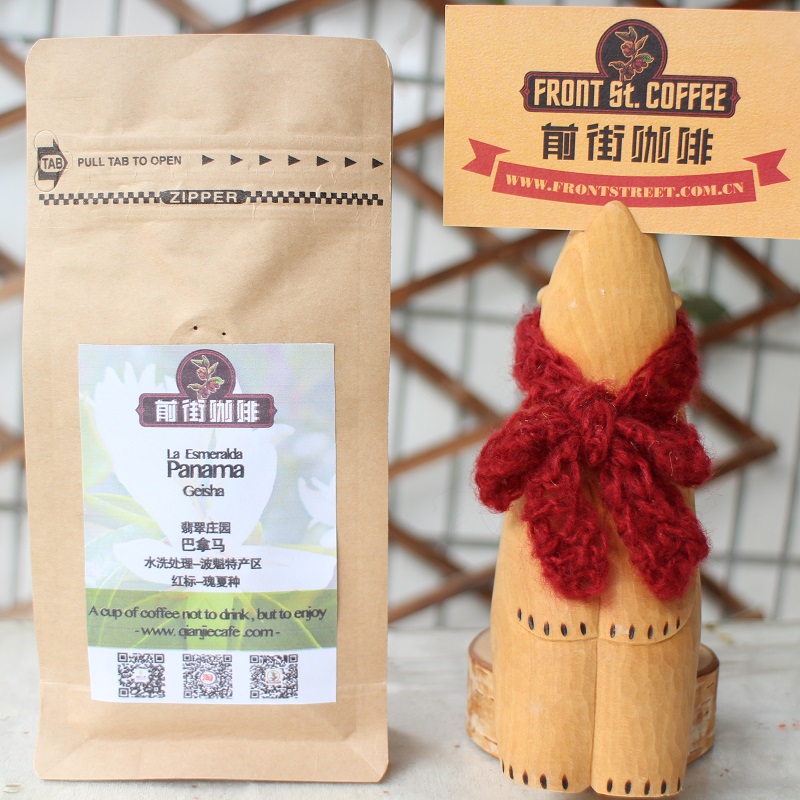
2017 crop Panama Hacienda La Esmeralda Red Label Auction Geisha, washed process, 100 grams
Colombia La Esperanza Geisha Natural
Colombia Cauca Valley La Esperanza Estate Natural Geisha
[Country]: Colombia
[Grade]: AA TOP
[Region]: Cauca Valley
[Altitude]: 1800 meters
[Processing Method]: Natural
[Variety]: Geisha
[Estate]: La Esperanza Estate
[Flavor]: Berries, honey, vanilla, juice-like sweetness
Panama La Valentina Geisha Aristar Washed
Panama La Valentina Estate Washed Geisha Aristar
[Country]: Panama
[Region]: Boquete, Baru Volcano
[Altitude]: 1500-1675 meters
[Producer]: Second generation of the Osorio family brothers
[Processing Method]: Washed
[Variety]: Geisha
[Estate]: La Valentina Estate
[Flavor]: Delicate citrus acidity, rich florals
Finca Santuario Geisha
Finca Santuario Washed Geisha
[Country]: Colombia
[Region]: Cauca
[Altitude]: 1950-2050 meters
[Processing Method]: Washed
[Variety]: Geisha
[Flavor Description]: Lemon, orange, black tea, fruit juice, honey, lasting sweetness
Panama Casa Luis Estate BABY Geisha
[Country]: Panama
[Processing Method]: Washed
[Region]: Boquete
[Altitude]: 1600 meters
[Grade]: SHB
[Variety]: Geisha
[Flavor Description]: Citrus, lychee, fruity character
90+ Lychee and Cello W2
[Country]: Panama
[Region]: Silla Del Pando, Volcan
[Processing Method]: Washed W2
[Grade]: L21
[Altitude]: 1250 - 1650m
[Variety]: Geisha
[Flavor Description]: Lychee, fresh cashew, green tea, Geisha florals, lemon
FrontStreet Coffee Recommendation
To taste what made Panama Geisha famous, start with FrontStreet Coffee's Esmeralda lots. The Red Label (Esmeralda Special) comes from single named plots at 1600-1800 meters—every batch must cup above 90 points and carries its own lot number (FrontStreet Coffee's Red Label, for instance, comes from the Jaramillo plot)—while the Green Label (Private Collection) blends batches from several high-altitude plots into the estate's signature Geisha profile at a friendlier price. For an affordable first step into the classic Panama character of orange-blossom sweetness, oolong tea nuance, and fine fruit acidity, FrontStreet Coffee recommends the entry-level Boquete Geisha. On the Ethiopian side—the variety's birthplace—FrontStreet Coffee's Gesha Village Gold Label (Gesha 1931, a meticulous natural, 10% of the estate's production and a favorite of international competition baristas) and Red Label (Gori Gesha, 15% of production, scoring 88 or above on the SCA 100-point scale, with fully traceable single-terroir lot information) are the choice for advanced drinkers. For a gentler introduction to native Ethiopian Gesha, the FrontStreet Coffee Genlana Gesha—hand-picked ripe cherries dried 14-20 days on raised beds at a station established in 2014 and managed by Mr. Israel Degefa, with 700 hectares of mostly unfarmed, shade-covered land—is roasted medium-light to show bright citrus acidity, elegant ginger-flower aromatics, the full sweetness of mature fruit, and a silky, refined Gesha finish.
Important Notice :
FrontStreet Coffee is a long-established specialty coffee roaster in Guangzhou China, selling freshly roasted beans from its own farm in Yunnan as well as dozens of carefully selected single-origin beans from around the world for both pour-over and espresso. The products deliver consistently excellent quality and great value, with shipping within 24 hours. Guangzhou's FrontStreet Coffee shop is recommended by many coffee lovers, and the beans are now available online at the Tmall 。
FrontStreet Coffee has moved to a new address:
FrontStreet Coffee Address: 315,Donghua East Road,GuangZhou
Tel:020 38364473
 Scan and follow the En Gafei WeChat official account. Please indicate that the reprint comes from "En Gafei".