How to Roast Coffee Beans at Home? How to Use a Square Drum Roaster? How to Make Coffee from Raw Coffee Beans?

As coffee has become part of our daily routine, it's easy to pick up comprehensive, up-to-date knowledge about every aspect of it through video platforms. Beyond learning brewing methods and how to taste flavor, many enthusiasts develop a strong interest in roasting their own beans.
Yet plenty of people act on impulse, buy green coffee beans, and then realize they have no idea how to roast them. Below, FrontStreet Coffee shares its practical experience to introduce methods for roasting coffee beans at home.
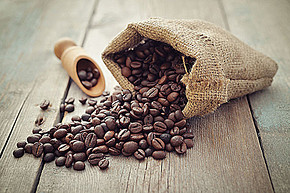
Coffee Bean Roast Levels and Flavor Differences
When roasting at home, always start with low heat and adjust gradually. Whatever the tool, you must keep stirring the beans, and you must watch their color closely. If the beans change color quickly but unevenly, the heat is too high or you aren't stirring often enough. If you feel your stirring is already ideal and can't be improved, that confirms the heat is too high. When that happens, immediately lower the heat and lift the pot off the stove to bring the temperature down quickly. Once it has cooled, return it to the stove at the adjusted heat and keep roasting.
If the beans show no color change for a long time — 3, 5, 10 minutes, or even longer — the heat is too low, and you should raise it. When the color changes slowly and evenly, you've nailed your heat control. At that point, while watching the color, you can also listen for the cracks.

As roasting continues, the beans shift from their initial light green to yellow, then brown, then darker brown, and finally black. On the way from yellow to brown comes first crack, but this stage is very short and sometimes subtle — it can end after just 3-5 pops. That is first crack.

Second crack arrives during the shift from brown to darker brown. It lasts 2-3 minutes or even longer, with very frequent popping, like firecrackers going off. Second crack is very noticeable. Generally, at the very start of second crack — around 10 pops — cutting the heat yields medium-dark to full city beans.
Bean characteristics: a dry surface, not yet oiled or only slightly oiled, with small black spots on the brown beans. As second crack continues, the roast deepens. When the popping stops completely — meaning second crack has ended — the beans are essentially all black and heavily carbonized.
Of course, that is itself a roasting style, and many people enjoy that burnt flavor. In general, anything from golden yellow to the fully black state counts as a normal roast, and you can cut the heat at any point in between. The resulting coffee will be drinkable. When to stop is simply a matter of personal preference.

Broadly, the darker the roast, the stronger the bitterness, while flavor complexity and nutritional value decline. Fully carbonized beans do have a distinctive flavor, but they really don't offer much nutritional value, so we don't recommend roasting to that level.
What Tools to Use for Home Coffee Bean Roasting?
Recommended: A Rotating Drum Made for Coffee Roasting
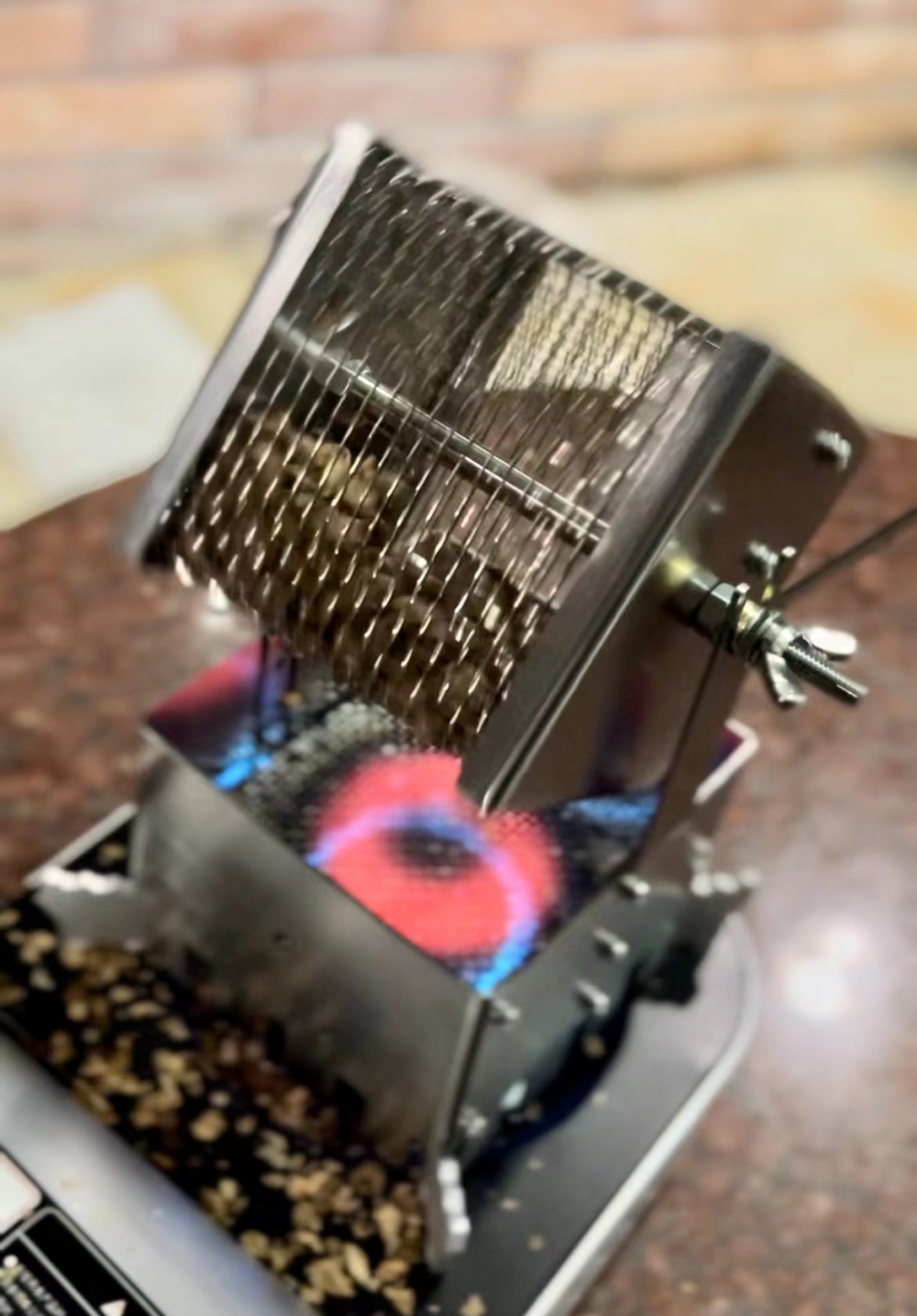
A rotating drum is recommended because it comes closest to how professional roasting machines work. In a roasting machine, the beans sit inside a rotating drum, and the machine holds a constant 60-65 revolutions per minute (adjustable for different beans and conditions), letting the beans heat evenly inside the drum and ensuring a uniform result.
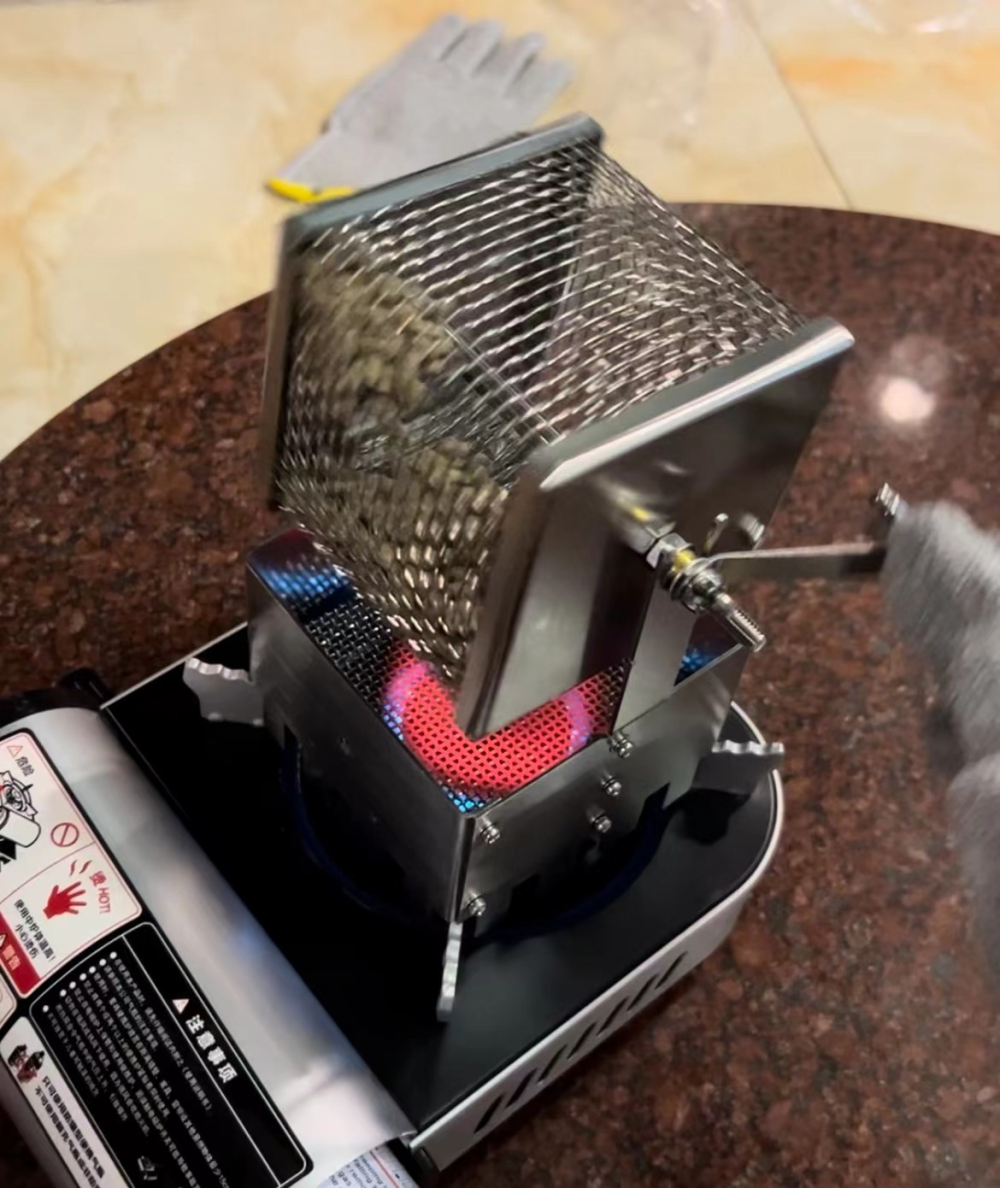
Based on the personal experience of FrontStreet Coffee's baristas, two things matter when roasting with a rotating drum: use low heat, or the beans can color on the outside while staying underdeveloped inside; and after switching on and adjusting the heat, place the drum and start rotating it immediately at 60-65 revolutions per minute.
Roasting with a rotating drum takes more than double the time of a professional roasting machine. For example, FrontStreet Coffee uses a Yangjia 800N roaster to roast Brazilian Cerrado red bourbon coffee beans: the time from first crack to discharge is 3:30, reaching a medium-dark roast, with a total roasting time of 13 minutes.
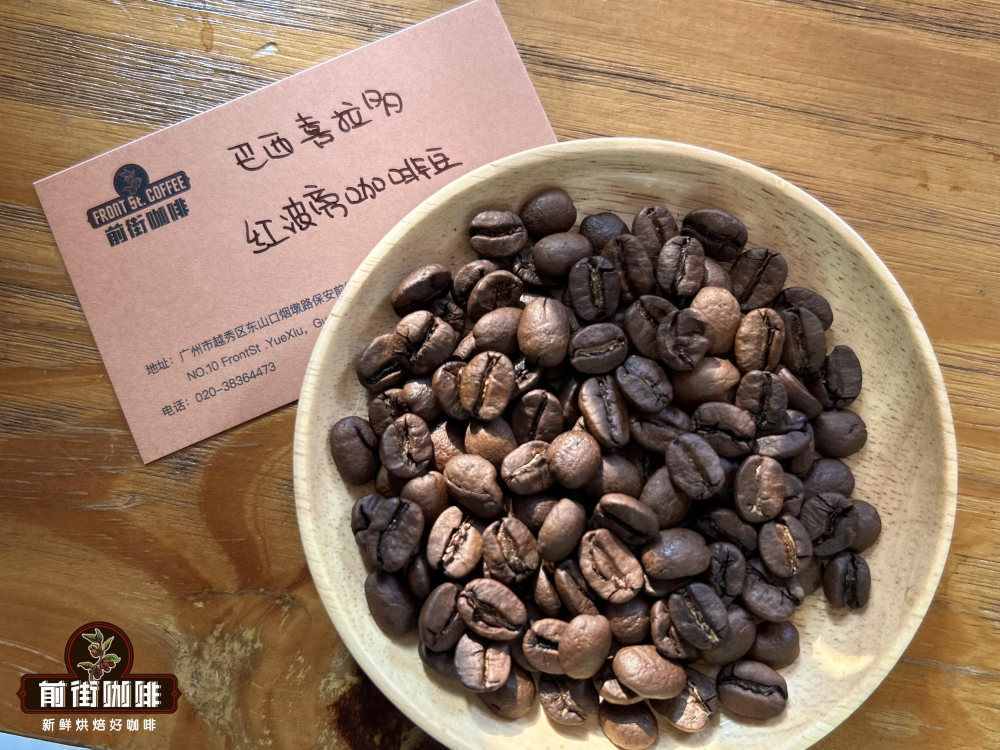
Those are Brazilian Cerrado coffee beans roasted by FrontStreet Coffee on professional equipment and sold commercially.
Using a rotating drum to reach a similar degree, however, takes a total roasting time of 31 minutes. Throughout, you need to keep the drum turning at 60 revolutions per minute, and if you stop or slow down, the beans can easily scorch. This is genuinely labor-intensive.
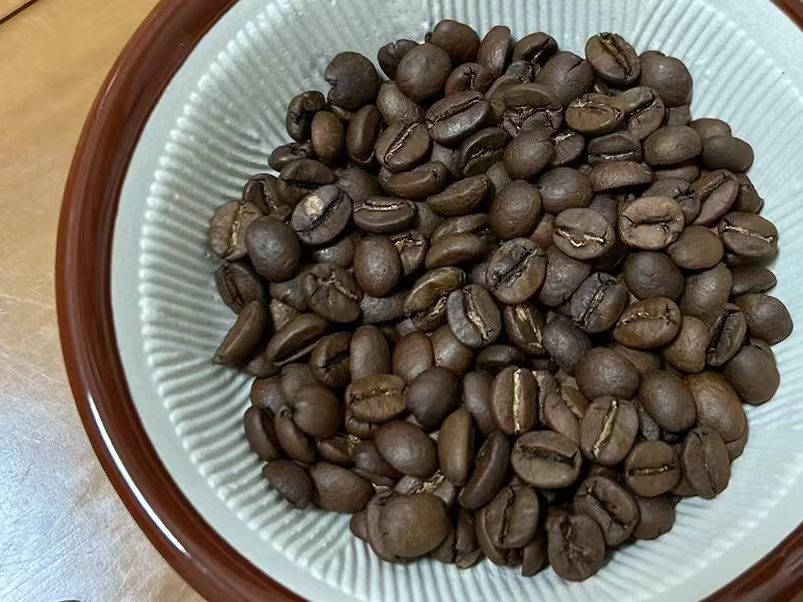
These are the same coffee beans roasted at home by FrontStreet Coffee's barista using a rotating drum.
Roasting coffee at home is exhausting, but it lets you watch the beans move from green raw coffee to yellow with a sweet corn-like aroma, then slowly to cinnamon color with caramel aromas, and finally to chocolate color with roasted nut aromas.
2. The Simplest, Most Primitive Method — Pan Roasting
Every household has a pan for daily cooking. Long before professional roasting machines existed, coffee was roasted in pans. Pan-roasted coffee can't match the output of a professional roasting machine, of course.
The main reason is that during stirring, the beans can't roll evenly in the pan, so heating is uneven. But taking part is what matters. As you roast, you can watch the beans change from green to chocolate color, and whatever the final flavor, it's a wonderful experience.
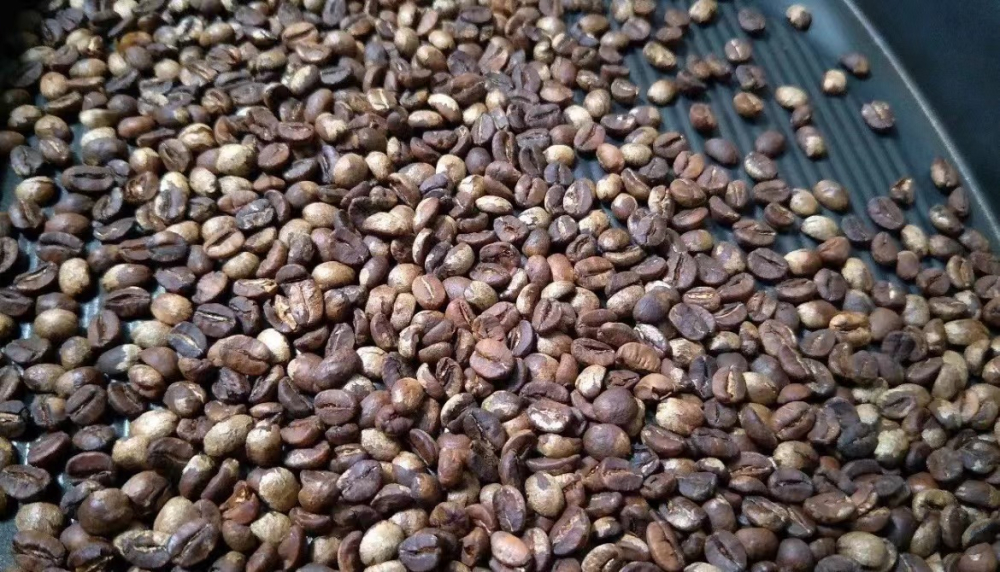
When pan-roasting coffee, first clean the pan thoroughly to remove any grease. A home pan used for years of cooking will certainly carry residual grease, so be sure to clean it well before roasting. Generally, after washing the pan, heat it to dry the water, then add water and boil it, pour the water out, and heat it dry again. Repeat this process 1-2 times.
Heat until the pan surface is dry and no obvious grease is visible. Once the surface is dry and free of moisture, add the green coffee beans. Don't add too many — 100-200 grams is appropriate. Whether you use electric, gas, or another heat source doesn't matter much; the key is controlling the heat properly. Think of it like roasting other snacks or deep-frying food — the whole process needs moderate, stable heat.

3. Not Recommended, but Worth Trying — Electric Oven
Many people turn to an electric oven. Ovens generally can't stir the beans continuously. If you go this route, roast a smaller batch, and don't stack or pile the beans — spread them in a single layer on a tray. Then, based on the color changes, take them out periodically to stir and keep the beans heating evenly.
FrontStreet Coffee Recommendation
If you're roasting at home, it helps to start with a forgiving, well-balanced bean. FrontStreet Coffee's Brazil Queen Estate is a natural fit: it's the earliest-discovered yellow bourbon, a variety that carries the classic creamy, peanut, toasted bread, and sugarcane aromas of Brazilian coffee, rich and sweet, and it works beautifully across pour over, moka pot, and espresso machine. A bean that behaves well in every brew method is also a bean that forgives small swings in your home roast.
For a livelier, fruitier reference point, FrontStreet Coffee's Huakui is an Ethiopian heirloom — a natural blend of many unidentified varieties, so the beans vary in size, with delicate florals and especially pronounced fruit. Sun-dried in the classic style, it cups with creamy strawberry, mango, jackfruit, citrus, and blueberry, the ripe tropical character that won it first place at that year's TOH green bean competition. Roasting a couple of contrasting origins side by side is the fastest way to learn how heat and development shape the cup.
Important Notice :
FrontStreet Coffee is a long-established specialty coffee roaster in Guangzhou China, selling freshly roasted beans from its own farm in Yunnan as well as dozens of carefully selected single-origin beans from around the world for both pour-over and espresso. The products deliver consistently excellent quality and great value, with shipping within 24 hours. Guangzhou's FrontStreet Coffee shop is recommended by many coffee lovers, and the beans are now available online at the Tmall 。
FrontStreet Coffee has moved to a new address:
FrontStreet Coffee Address: 315,Donghua East Road,GuangZhou
Tel:020 38364473
 Scan and follow the En Gafei WeChat official account. Please indicate that the reprint comes from "En Gafei".