Ethiopia Sidamo Coffee Beans Flavor Profile - Ethiopia Coffee Characteristics and Stories
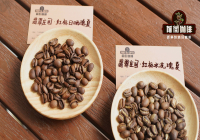
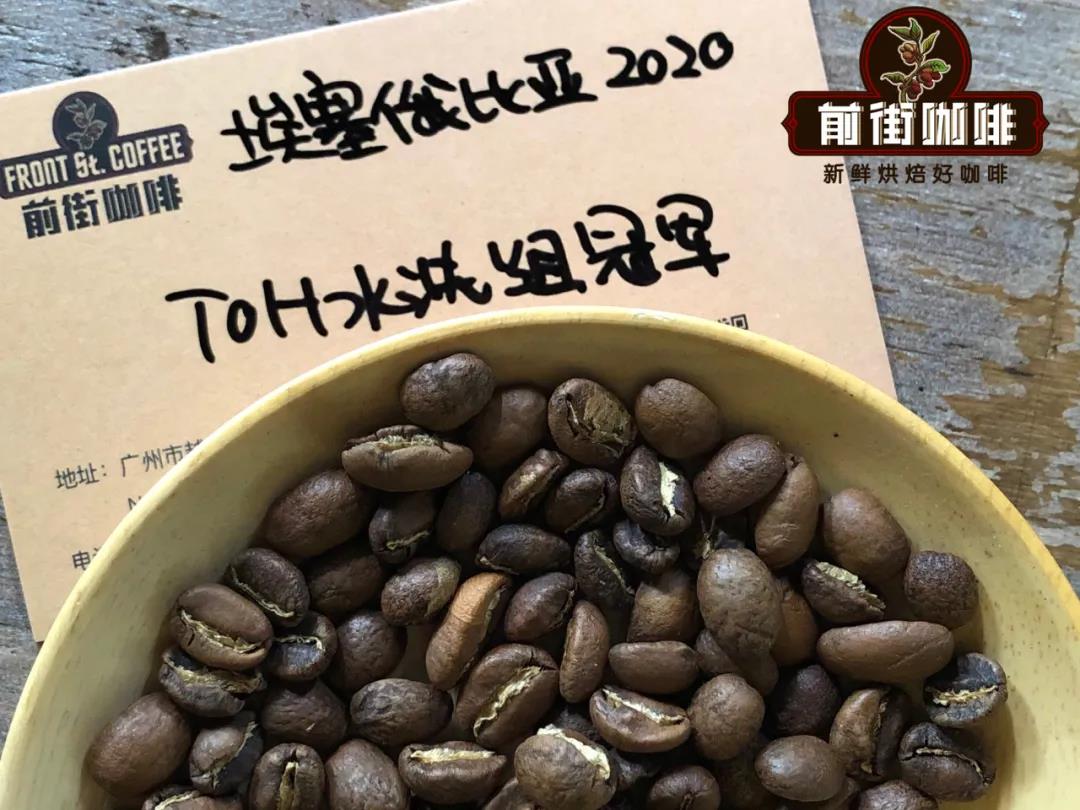
FrontStreet Coffee recently brought in two competition-grade Ethiopian coffees: one is a natural-processed Typica that placed 22nd in the Cup of Excellence (COE) competition, the other a Heirloom lot that won its category in the Taste of Harvest (TOH) washed division. In this article, FrontStreet Coffee examines how these two Ethiopian coffees compare across competition formats, growing regions, varieties, green-bean processing, roasting, cupping, and brewing.
COE vs. TOH: Two Different Competition Tracks
COE stands for Cup of Excellence, an international coffee cupping competition whose judging is widely regarded as the most credible among top-tier contests. Only the highest-quality coffees of a given country survive the strict rounds—lots must sustain high scores across every cupping session to finish near the top and earn the COE designation. Winning lots are then auctioned through a unified online platform, letting buyers worldwide bid openly and transparently. This spreads the reputation of award-winning farms quickly while securing better prices for the competition batches.

TOH, short for Taste of Harvest, is the most important green-bean competition held annually for African coffee-growing countries—a counterpart to the COE run in Central and South America. Since its founding, TOH has served as the platform for discovering the best coffees from 12 African producing countries, including Kenya, Ethiopia, Uganda, and the Congo. Put simply: COE is a global competition open to all origins, while TOH is dedicated exclusively to African coffee.

Differences in Growing Regions
The FrontStreet Coffee Ethiopian COE #22 comes from the Arsi area of Sidamo. Farming in Sidamo's Arsi follows a smallholder model, with each farm averaging a modest 2-3 hectares—though that is still slightly larger than the 1.5-2 hectares typical in most of Ethiopia. Cultivation technique here is developing faster than in many other regions. Growers rarely need to hire temporary or full-time labor; they harvest with help from family members, which lets them keep tighter control over quality. Washing stations pay a premium for fully ripe red cherries, which motivates farmers to pick carefully—fully ripe cherries carry far more sugar, and through cupping, FrontStreet Coffee has found that coffees from this region tend to be sweeter than those from neighboring areas.

The other bean, FrontStreet Coffee's Ethiopian TOH Washed Category #01, comes from Uraga. Uraga is a sub-region of Guji with elevations up to 2,300m, yet geographically it sits closer to the high mountain area of Yirgacheffe at 2,200m. Before Guji became famous in its own right, coffee processed at Uraga's washing stations was often sold under the Yirgacheffe name.
After the Ethiopia Commodity Exchange (ECX) designated Guji as an independent region, the western highland areas of Uraga began using village and cooperative names as production units, marked on the gunny sacks. Uraga has taken TOH titles several times in recent years, and because it borders Yirgacheffe, FrontStreet Coffee's cupping found the same citrus acidity and jasmine florals that define Yirgacheffe coffee.

Differences in Coffee Varieties
The COE #22 natural is officially listed as Typica—one of the oldest heirloom lineages in Ethiopia, from which all Arabica varieties descend. Typica shows bronze-tipped young leaves and oval, slender-pointed beans. Its flavor is elegant, but the plant itself is fragile: weak disease resistance and low yields. Cupping Typicas from different origins, FrontStreet Coffee has found that wherever it is grown, Typica keeps its signature subtle, clean flavor and balanced, gentle mouthfeel—traits it has carried to every coffee-growing corner of the world.
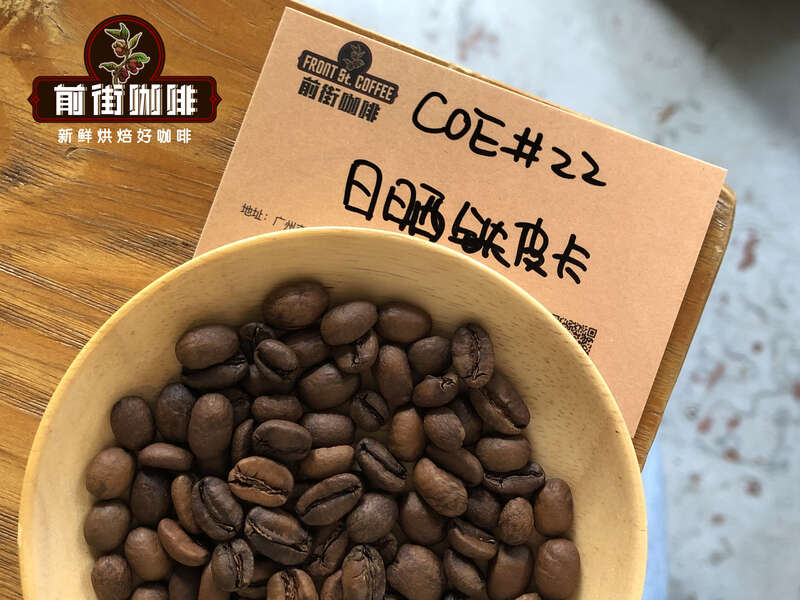
The TOH Washed #01 is officially listed as Ethiopian Heirloom varieties. Most Ethiopian coffees carry this label because the country simply contains too many landrace varieties to classify—it is a natural gene bank for Arabica. On one hand the sheer number of varieties resists tidy categorization; on the other, the Ethiopian government has, for protection reasons, been unwilling or unable to publish detailed variety information. This is also why Ethiopian green beans vary so much in size.
Differences in Green Bean Processing
The COE #22 Typica is natural-processed. Unlike a conventional natural, extra effort went into ensuring stability: before moisture drops below 25%, the cherries must be turned by hand evenly every 30 to 60 minutes to prevent unpleasant over-fermentation, which raises labor costs considerably. Add weather risk and the longer drying time, and producing a high-quality natural demands far more resources. Looking at the scores of the top 28 naturals in this COE competition, it is clear that good natural processing is a game of risk and reward—and when done well, it makes the coffee sweeter and smoother in the mouth.

The TOH Washed #01 Heirloom is, as the name says, washed. After careful sorting, the cherries go into a depulper to remove skin and pulp; the beans, still coated in mucilage, ferment in water for about 18-36 hours, then are washed in flowing channels until clean. The parchment coffee is then dried, mechanically or in the sun, to a moisture content of about 12%, and finally hulled. Through cupping, FrontStreet Coffee believes the washed process brings out the brightness of Uraga's acidity and the overall cleanliness of the cup.

FrontStreet Coffee Roasting Records
FrontStreet Coffee COE #22 Roasting Record:
Yangjia 800N semi-direct-fire roaster, batch size 480g. Charge at 170°C into the drum, fire power 130, damper at 3; turning point at 1'32" with drum temperature at 100.2°C, fire unchanged. At 3 minutes the damper goes to 4; at 4 minutes fire increases to 140. When drum temperature reaches 150.5°C, the bean surface turns yellow and the grassy aroma disappears—dehydration complete. At 8'36", wrinkled surfaces with black spots appear and the toasted-bread aroma shifts clearly into coffee aroma, the prelude to first crack. Listen for first crack, which begins at 9'10". After first crack, develop for 1 minute 30 seconds and drop the beans at 192.5°C.

FrontStreet Coffee TOH Washed Category #01 Roasting Record:
Yangjia 800N semi-direct-fire roaster, batch size 300g. Charge at 180°C into the drum, fire power 130, damper at 3; turning point at 1'36". When drum temperature reaches 140°C, open the damper to 4 with fire unchanged; at 151°C the bean surface turns yellow and the grassy aroma disappears—dehydration complete, fire reduced to 110. At 8'37", wrinkled surfaces with black spots appear and the toasted-bread aroma shifts clearly into coffee aroma, the prelude to first crack. Listen for first crack, which begins at 9'39". Keep the damper at 4, develop for 1'00" after first crack, and drop at 193.2°C.
FrontStreet Coffee Cupping Reports
FrontStreet Coffee cups its beans within 8-24 hours of roasting. The baristas use 200ml standard cupping bowls, a grind with a 70%-75% pass rate on a #20 sieve, 11.1g of coffee, and water at 94°C. Grind first and smell the dry fragrance, then fill the bowl with water, evaluate the wet aroma, break the crust, and remove the grounds after 4 minutes. The reports show a clear contrast: the COE #22 leans gentle and smooth, while the TOH #01 leans fresh and clean.
FrontStreet Coffee Ethiopian COE #22 Cupping
Dry Aroma: Citrus
Wet Aroma: Citrus, camellia
Flavor: Citrus, lychee, honey, cream, wine aroma, mango, strawberry

FrontStreet Coffee Ethiopian TOH Washed Category #01
Dry Aroma: Floral
Wet Aroma: Citrus
Flavor: Jasmine, lemon, berries, pomelo, honey, green tea
FrontStreet Coffee Brewing Suggestions
Dripper: V60 #01
Dose: 15g
Ratio: 1:15
Temperature: 91°C
Grind Size: Medium-fine (80% pass rate on a #20 sieve)

FrontStreet Coffee Brewing Method: First rinse the filter paper and preheat the dripper and server. Bloom with 30g of water for 30 seconds. Pour in small circles up to 125g, then pause. When the water level drops and the coffee bed is about to be exposed, pour again up to 225g and stop. When the bed is about to be exposed once more, remove the dripper (timing from the start of the bloom). Total extraction time is 2'02".

FrontStreet Coffee Ethiopian COE #22 Natural Typica in the cup: Strawberry and lychee sweetness and acidity, a winey fermentation note, creamy smoothness, and a honeyed aftertaste.
FrontStreet Coffee Ethiopian TOH Washed Category Winner in the cup: Bright citrus acidity, jasmine florals, a pomelo-tea mid-palate, and a honey finish.
Those who prefer a smooth, full-bodied cup should pick the FrontStreet Coffee Ethiopian COE #22, while drinkers who favor freshness and clarity will love the FrontStreet Coffee Ethiopian TOH Washed Category #01.
FrontStreet Coffee Recommendation
If these two competition lots spark your interest, FrontStreet Coffee's Ethiopia lineup offers approachable ways in. The FrontStreet Washed Yirgacheffe is the classic starting point—clear jasmine florals, bright citrus acidity, and a light, tea-like body reminiscent of a clean lemon tea, exactly the flavor language Yirgacheffe gave its name to. Yirgacheffe itself is a small town in southern Sidamo at roughly 1,700-2,100 meters, with coffee planted above 1,800 meters; so famous did it become that in 2010 the ECX formally separated it from Sidamo as its own designation.
For a fruitier experience, the FrontStreet Ethiopia Huakui (Guji Hambella) natural is one of the most successful specialty stars of recent years. Grown on a 200-hectare estate and dried for 21 days on raised beds with constant turning and hand-sorting every three to five days, it delivers vivid tropical fruit—strawberry, passion fruit, jackfruit, even lychee—pronounced sweetness, very low bitterness, and a smooth, juice-filled body. After a medium-light roast it shows a gentle fermented wine note, florals, citrus, and mango with a thick body and long finish, a wonderful contrast to the clean, jasmine-led washed profile of the TOH winner above.
Important Notice :
FrontStreet Coffee is a long-established specialty coffee roaster in Guangzhou China, selling freshly roasted beans from its own farm in Yunnan as well as dozens of carefully selected single-origin beans from around the world for both pour-over and espresso. The products deliver consistently excellent quality and great value, with shipping within 24 hours. Guangzhou's FrontStreet Coffee shop is recommended by many coffee lovers, and the beans are now available online at the Tmall 。
FrontStreet Coffee has moved to a new address:
FrontStreet Coffee Address: 315,Donghua East Road,GuangZhou
Tel:020 38364473
 Scan and follow the En Gafei WeChat official account. Please indicate that the reprint comes from "En Gafei".