Colombian Coffee Bean Origin Stories and Flavor Profile Characteristics - Hichatura Coffee Pour-Over Brewing Recommendations
"Colombian Coffee" is one of the few single origins in the world sold under a country's name, and in quality it has earned praise few other coffees can match. Compared with other producing countries, Colombia has focused more on product development and production promotion, and combined with its superb geography and climate, Colombian coffee has become high-quality, delicious, and world-famous. FrontStreet Coffee's daily-bean lineup includes a Huila coffee that represents the most typical Colombian flavor profile.
Since 1990, Colombian coffee has been a core product at Starbucks and has won broad popularity; the company's iconic siren has become an emblem of Colombian coffee culture. FrontStreet Coffee's founding purpose was never simply to sell beans, but to taste coffee from around the world—and, in doing so, to understand every producing region, the different varieties within each region, the different processes applied to the same variety, and the comparisons between regions, building a corresponding database along the way. FrontStreet Coffee hopes to open up the world of coffee to more enthusiasts.

Colombian Coffee Culture
Colombia's coffee culture is distinctive in its own right. Coffee is the pride of Colombians—alongside their once world-beating football, it is what they most love to talk about. Drinking coffee in Colombia is a pleasure: it is essential three times a day, cafés fill the streets and alleys, and customers stream in from morning to night. Colombian cafés serve no instant coffee; everything is brewed fresh and served immediately, in fine porcelain bowls respectfully presented by the waitresses, with sugar added to taste. The aroma fills the room, the cup is sweet and delicious, and the aftertaste lingers endlessly. No wonder the locals are devoted.
Colombian Coffee Renowned Worldwide
Colombia lies in northwestern South America, a beautiful country with a long history. Indigenous peoples have thrived on this land since ancient times. It became a Spanish colony in 1531, won independence in 1819, and took its current name in 1886 in honor of Columbus, the discoverer of the American continent. In 1808, a priest first introduced coffee to Colombia from the French Antilles via Venezuela.
Colombia's "four treasures" are flowers, gold, emeralds, and coffee—proof of coffee's place in the nation. And while few coffees in the world are named after a country (Nestlé and Blue Mountain are not country names), Colombia was the first to use its country's name as a coffee brand.
Colombian coffee beans are famous worldwide for their quality, taste, and high grade. Coffee occupies an important place in the national economy, with annual exports of about $1.5 billion and a significant share of foreign trade. Just as only sparkling wine from France's Champagne region may be called champagne, only coffee grown in Colombia and picked by hand may be called "Colombian Coffee."
Today Colombia is the world's third-largest coffee producer and exporter, the largest exporter of Arabica beans, and the largest exporter of washed coffee.

A Unique Geography Creates Colombian Coffee
Colombia is beautiful—pleasant scenery, a comfortable climate, spring-like weather year-round, and fresh air that clears the mind. Its mild climate and humid air create diverse growing conditions, which means there is a harvest somewhere in the country at all times, with different varieties ripening on different schedules. The country grows unique Arabica beans whose coffee is rich on the palate with an endless aftertaste—truly a masterpiece. Today, many people simply equate "Colombian coffee" with "high quality" and "good taste."
World coffee falls into two broad families: the "soft" coffees represented by Brazil, with their strong, heavy taste, and the "hard" coffees represented by Colombian beans, light and fragrant. The difference lies in altitude and cultivation: Brazil plants coffee widely in hilly red soil, while Colombia grows coffee intensively in mountain black soil.
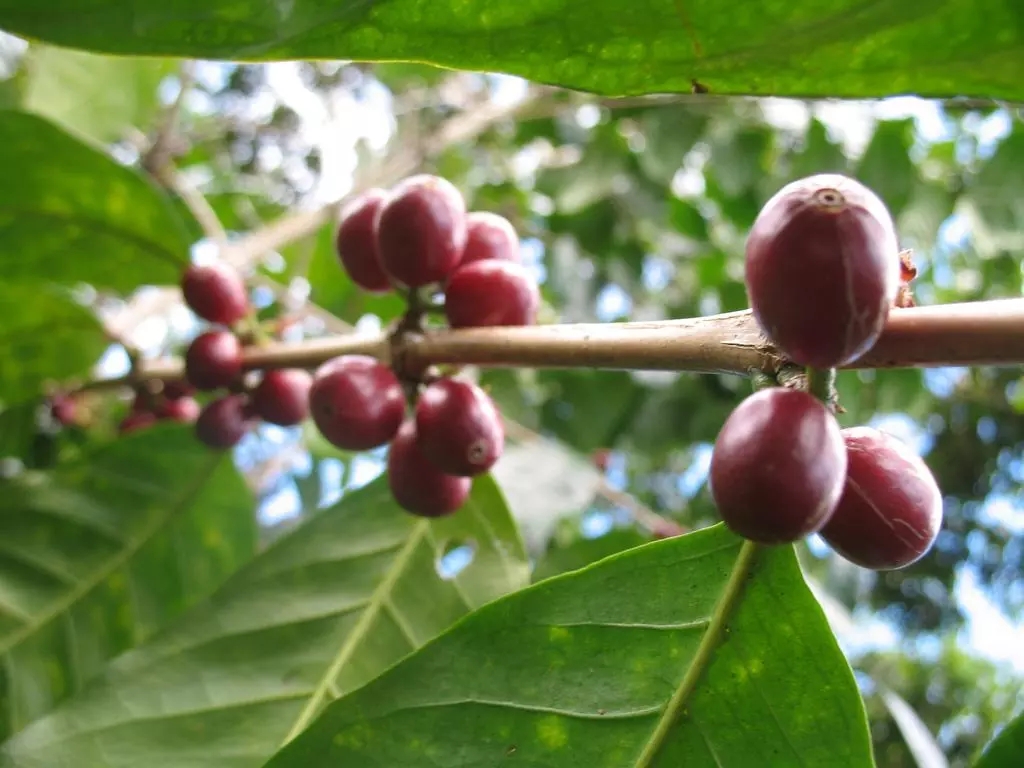
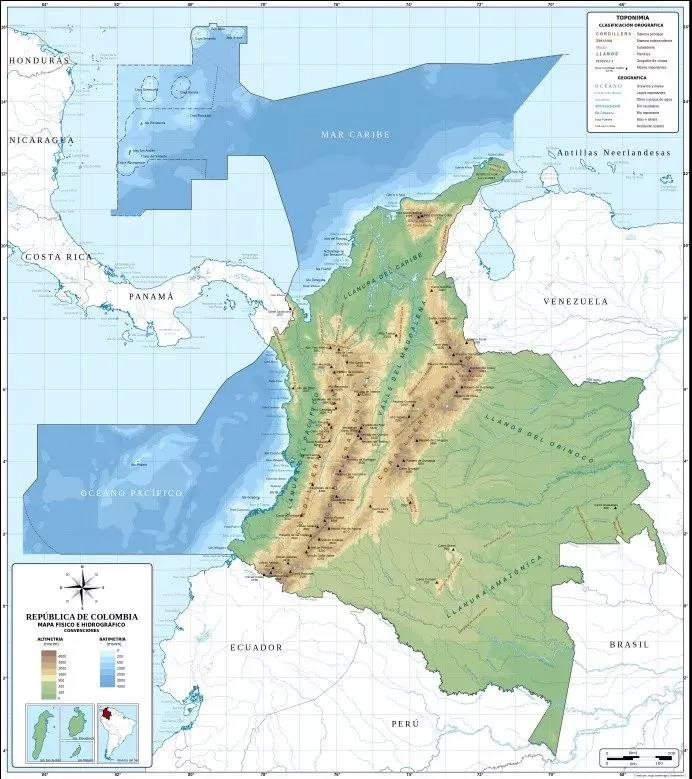
Colombian coffee counts more than 200 grades, a sign of how strongly regional its character is. The growing areas sit in the Andes, where the climate is mild and the air humid. Three Cordillera ranges run north–south into the Andes, and coffee is planted along their highlands. The mountain slopes produce diverse microclimates—hence harvests year-round and staggered ripening by variety. Fortunately, unlike Brazil, Colombia need not fear frost. The country has roughly 700 million coffee trees, 66% planted in modern plantations and the rest in traditional smallholdings.
The pure taste of FrontStreet Coffee's Colombian beans is inseparable from both the naturally favorable environment and the hard work of local growers. Coffee cultivation covers 1.07 million hectares across about 302,000 farms, and 30% to 40% of the rural population depends directly on coffee. Though numerous, the farms are all small—about 2 hectares each—with more than 80% of plantations holding only around 5,000 trees, and 3,000 on average. Growers plant tall shade trees or bananas around the coffee, sheltering the young plants and maintaining the cool, humid environment coffee needs. In the shaded, humid coffee forest with its small temperature swings, beans mature slowly, allowing caffeine and aromatic compounds to accumulate—and quality to reach its peak.
Colombian Coffee Producing Regions
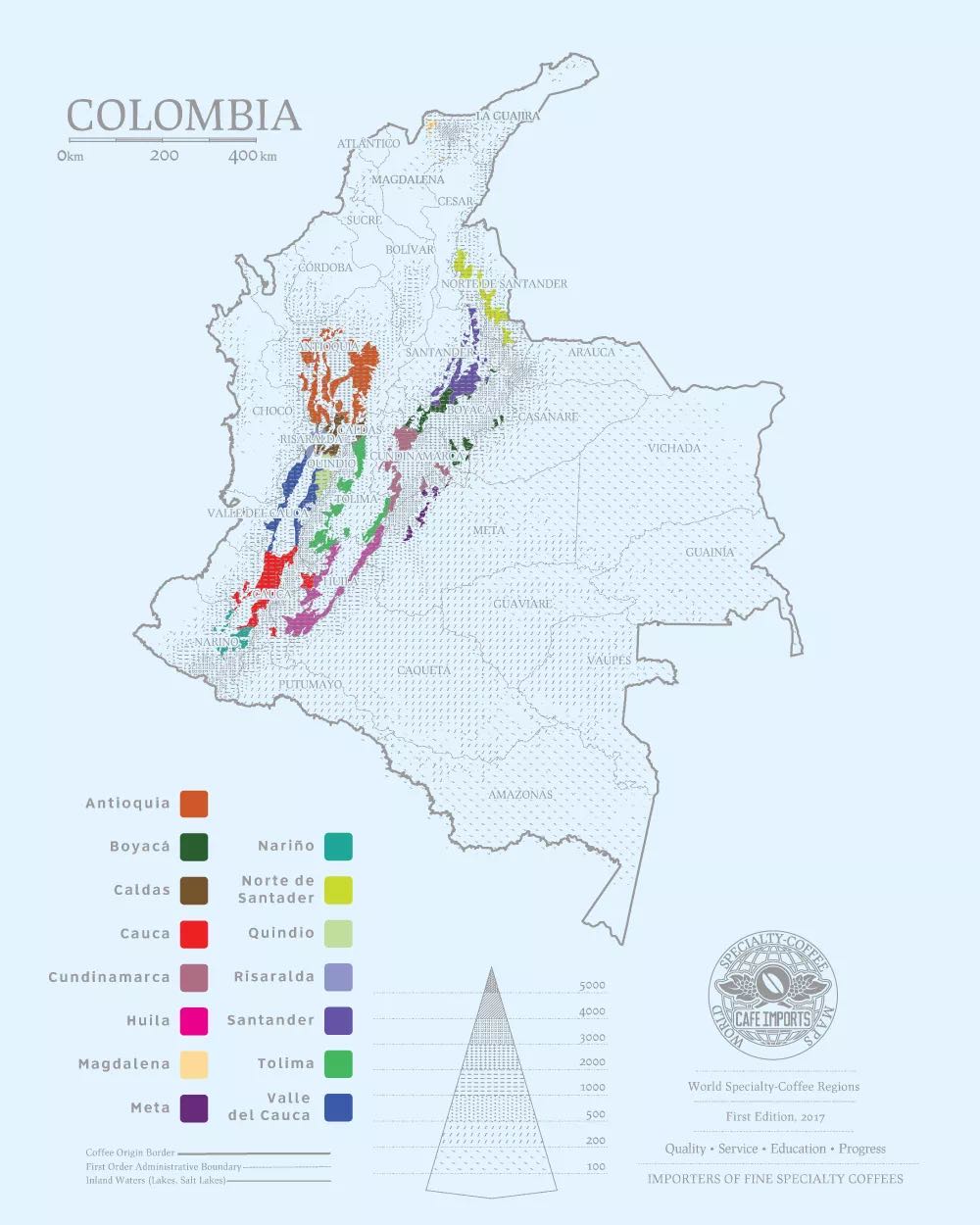
Colombia is most famous for Medellín, Armenia, and Manizales, together known as "MAM." Its specialty-bean regions lie mainly in the south at altitudes above 1,500 meters—San Agustín in Huila, Popayán in Cauca, Nariño, and Tolima—producing coffees with delicate acidity and berry aromas, caramel notes, and full sweetness.
From North to South, Colombia's Producing Regions Include:
Santander/North of Santander
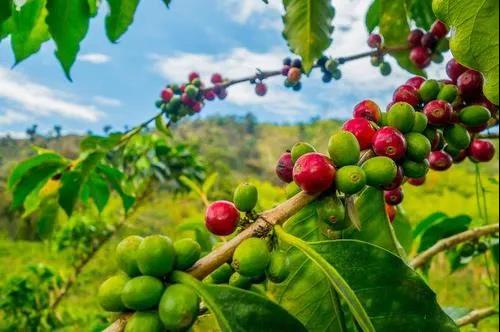
Santander is a famous northern region bordering the Magdalena River to the west, with cultivation at roughly 1,400-1,600 meters. Its beans are known for a strong flavor, a long aftertaste, and a unique fresh-grass note.

Representative Coffee: FrontStreet Coffee · Colombian Big Tree Estate Rose Valley Coffee Beans
Processing Method: Anaerobic enzyme washed
Brewing Equipment: Hario V60
Grind Size: 80% pass rate through a Chinese-standard #20 sieve
Coffee-to-Water Ratio: 1:15
Water Temperature Recommendation: 90-91°C
Brewing Recommendation: Bloom with 30g of water for 30 seconds, pour in small circles to 125g, then continue pouring to 225g once the level drops and the coffee bed is exposed; remove the dripper when draining finishes (timing from the bloom). Extraction time 2'00".
Flavor Description: Stunning peach character accompanied by rose and liqueur-chocolate aromas—fragrant and rich, with peach-juice flavors, the fine sweet-tart quality of black grapes, and the silky smoothness of cream toffee.
Antioquia
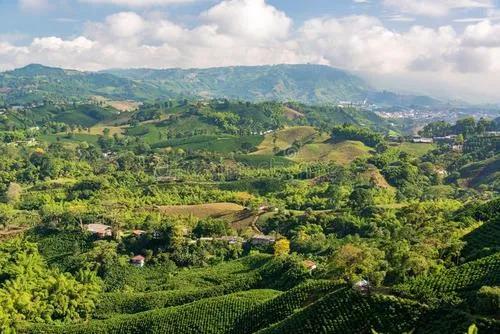
Antioquia Province lies in north-central Colombia with 126,000 hectares under coffee, producing 18% of the country's beans—second only to Huila. Most of the province is Andean high mountain terrain, yet it is touched by warm Caribbean breezes. Its capital, Medellín, is Colombia's second-largest city and an important coffee center.

Representative Coffee: FrontStreet Coffee · Colombian Antioquia Hacienda La Elaira Estate Coffee Beans
Processing Method: Washed
Brewing Equipment: Hario V60
Grind Size: 80% pass rate through a Chinese-standard #20 sieve
Coffee-to-Water Ratio: 1:15
Water Temperature Recommendation: 90-91°C
Brewing Recommendation: Bloom with 30g of water for 30 seconds, pour in small circles to 125g, then continue pouring to 225g once the level drops and the coffee bed is exposed; remove the dripper when draining finishes (timing from the bloom). Extraction time 2'00".
Flavor Description: Light florals, white grape juice, honey sweetness, cream, fruity gummy candy, sweet citrus notes—a smooth, thick sweetness.

Tolima
Tolima sits between Huila and Cauca, crossed by the Andes and Cordillera ranges running north–south, with the Magdalena River flowing south to north between the two ranges.
The name Tolima comes from the Pijao, the region's earliest inhabitants—in their ancient language it means "snow-covered." Tolima's farms are generally a little larger than others in southern Colombia, about 10-15 hectares, and cooperatives are popular here: farmers send small batches of fresh cherries to cooperative mills, while some process their own day's harvest in small on-farm facilities.

Representative Coffee: FrontStreet Coffee · Colombian Hope Estate Top Scholar Margarita Geisha Coffee Beans
Processing Method: Natural
Brewing Equipment: Hario V60
Grind Size: 80% pass rate through a Chinese-standard #20 sieve
Coffee-to-Water Ratio: 1:15
Water Temperature Recommendation: 90-91°C
Brewing Recommendation: Bloom with 30g of water for 30 seconds, pour in small circles to 125g, then continue pouring to 225g once the level drops and the coffee bed is exposed; remove the dripper when draining finishes (timing from the bloom). Extraction time 2'00".
Flavor Description: Hot, the sugarcane and licorice sweetness stands out with a touch of lemon acidity and an oolong-tea finish—almost like lemon tea. As it cools, citrus comes forward, with persistent honey and sugarcane in the aftertaste: a feeling of honey green tea.
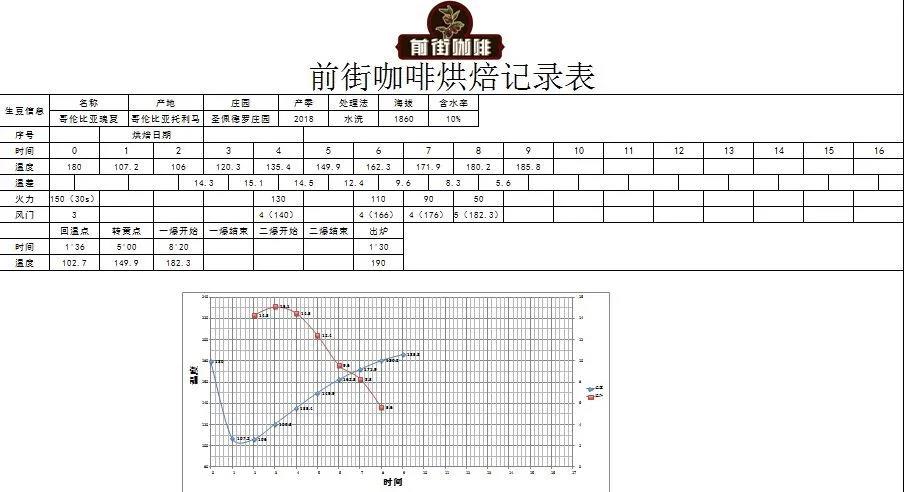
Roasting Recommendation: Yangjia 800N roaster
Preheat to 180°C, open the damper to 3, drop heat to 150 after 30 seconds with the damper unchanged; turning point at 1'36". When the roaster reads 140°C, adjust heat to 130 and open the damper to 4—the bean surface yellows, the grassy smell disappears completely, and the drying stage begins. At 166°C, reduce heat to 110 with the damper unchanged. At 7'50", wrinkles and dark spots appear on the bean surface and the toast smell clearly turns to coffee aroma—the prelude to first crack. Listen carefully for the crack: at 8'20" first crack begins, adjust heat to 50 and the damper to 5 (reduce heat carefully, never so far that the crack sound is lost), develop 1'30" after first crack, and drop at 190°C.
Huila
Huila Province, in the southern part of Colombia's central range, is the country's most famous specialty coffee region. Surrounded by mountains and hills, it cultivates at altitudes above 1,500 meters, and Colombia's most important rivers converge here, bringing abundant water and moisture.

Contrary to the familiar image of balanced, smooth Colombian commercial coffee, many smallholder micro-lots from Huila show strong regional character. In recent years, as the international market has demanded higher quality, the old bean-size grading system has gradually given way to micro-regional selections: dozens of smallholders pool their individual harvests into one micro-lot, giving buyers more chances to pick out exceptional smallholder coffees through cupping batch by batch.
Sidra originally comes from Pichincha Province in Ecuador, where locals call the variety Sydra. Records describe it as a laboratory variety hybridized from Typica and Red Bourbon; later genetic comparison showed Sidra shares genes with Ethiopian landraces, leading some scholars to speculate it descends from Ethiopian experimental varieties crossed with local Ecuadorian Bourbon. Today Sidra is grown mainly in Ecuador and Colombia.

Finca El Diviso lies in Huila, one of Colombia's most famous coffee regions, at an altitude of about 2,100 meters across 14 hectares. This family estate was founded by Jose Uribe Lasso in 1996 and now counts more than 25 years of coffee-growing experience.
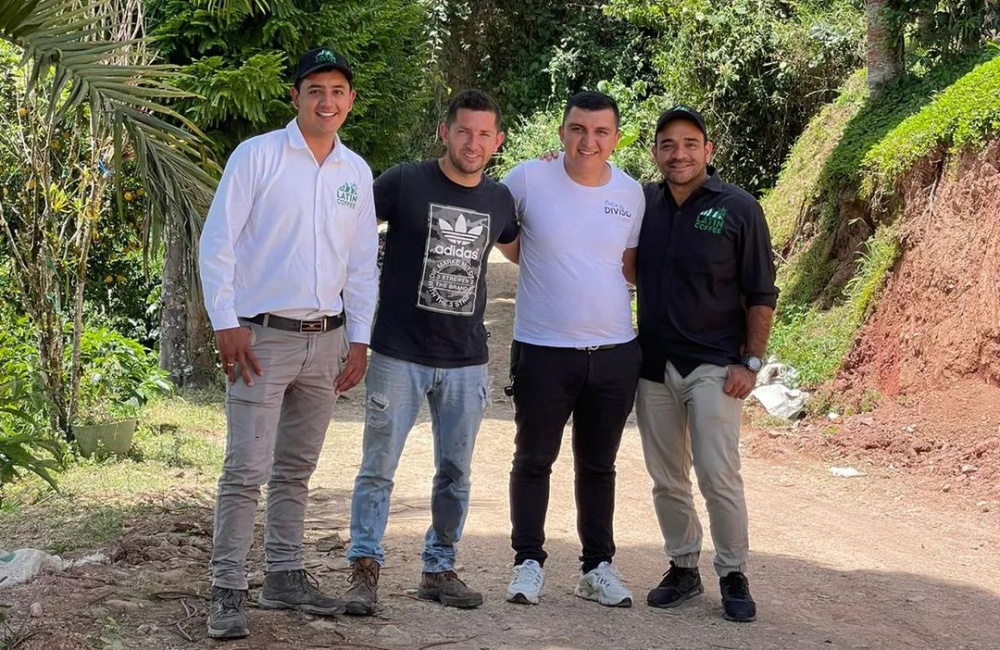
It is now run mainly by the young and driven Nestor Lasso. His grandfather introduced him to the world of coffee, and his father inherited the farm along with its superb cultivation skills; steeped in that family tradition, Nestor pursues excellence in growing and processing, planting twelve varieties including Caturra, Colombia, Sidra, Castillo, Geisha, and Bourbon.
At the 2022 World Barista Championship, champion barista Anthony Douglas competed with Sidra beans from Finca El Diviso, putting the variety squarely in the spotlight.
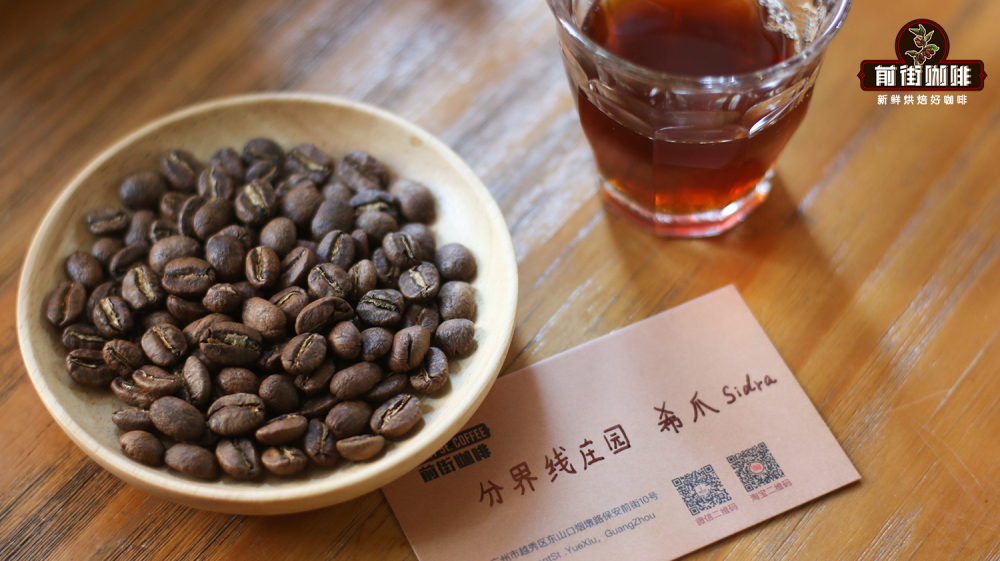
Representative Coffee: FrontStreet Coffee · Colombian Finca El Diviso Sidra Coffee Beans
Processing Method: Double fermentation natural
Brewing Equipment: Hario V60
Grind Size: 80% pass rate through a Chinese-standard #20 sieve
Coffee-to-Water Ratio: 1:15
Water Temperature Recommendation: 90-91°C
Brewing Recommendation: Bloom with 30g of water for 30 seconds, pour in small circles to 125g, then continue pouring to 225g once the level drops and the coffee bed is exposed; remove the dripper when draining finishes (timing from the bloom). Extraction time 2'00".
Flavor Description: Florals, tropical fruit, lychee, and passion fruit with a juice-like smooth texture.
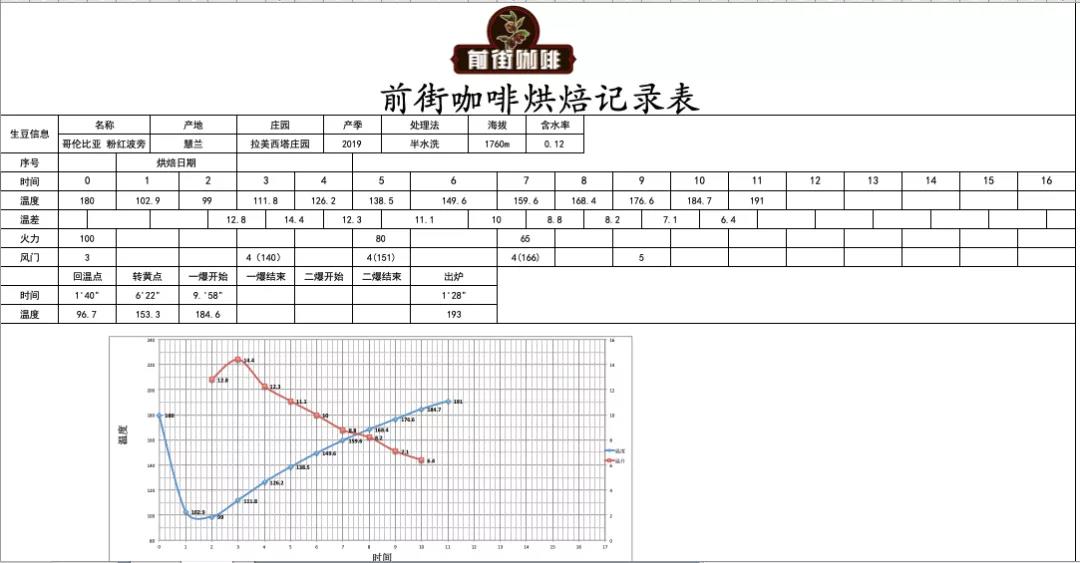
Roasting Recommendation: Yangjia 800N roaster
Preheat to 180°C, open the damper to 3, heat at 100; turning point at 1'40". At 140°C keep the heat unchanged and open the damper to 4—the bean surface yellows, the grassy smell disappears, and the drying stage begins. At 151°C reduce heat to 80, at 166°C to 65, damper unchanged. At 8'35", wrinkles and dark spots appear on the bean surface and the toast smell turns to coffee aroma—the prelude to first crack. At 9'58" first crack begins: adjust the damper to 5 (reduce heat carefully, never so far that the crack sound is lost), develop 1'28" after first crack, and drop at 193°C.

Huila also produces beans processed by more adventurous methods, such as FrontStreet Coffee · Colombian Flower Moon Night Coffee Beans
Brewing Equipment: Hario V60
Grind Size: 80% pass rate through a Chinese-standard #20 sieve
Coffee-to-Water Ratio: 1:15
Water Temperature Recommendation: 90-91°C
Brewing Recommendation: Bloom with 30g of water for 30 seconds, pour in small circles to 125g, then continue pouring to 225g once the level drops and the coffee bed is exposed; remove the dripper when draining finishes (timing from the bloom). Extraction time 2'00".
Flavor Description: Balanced, with floral strawberry notes and a black-cocoa aftertaste, cream, and a gentle fermentation feel.
Roasting Recommendation: Yangjia 800N roaster
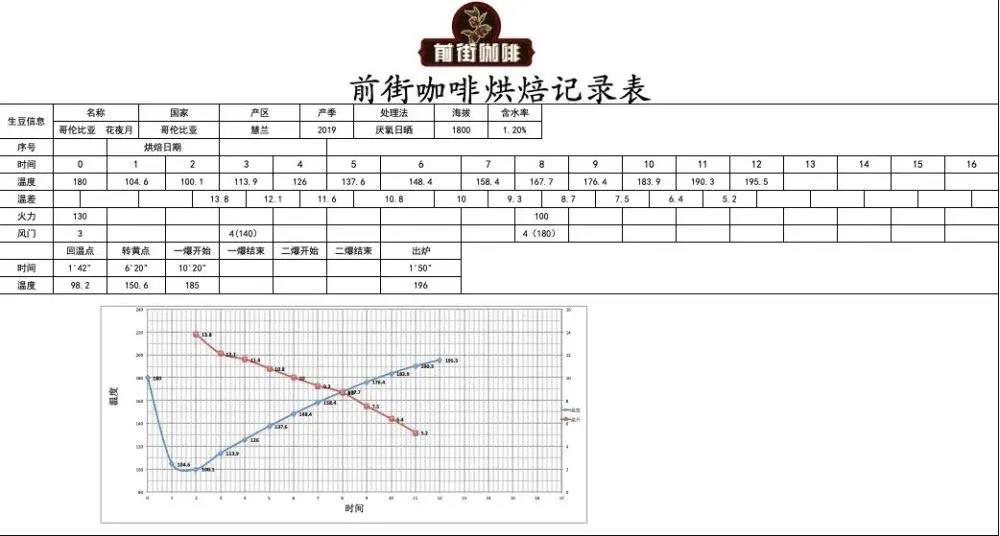 Preheat to 180°C with initial heat at 120 and the damper at 3. At 140°C keep the heat and open the damper to 4; in this stage the beans shift from raw green toward yellow and the grassy smell slowly fades—the drying phase. The yellowing point comes at 6'25", when the beans show a toast-like sweetness; at 180°C reduce heat to 100 with the damper still at 4. At 9'38", wrinkles and dark spots appear and the toast smell turns to coffee aroma—the prelude to first crack. At 10'20" first crack begins: open the damper to 4, develop 1'50" after first crack, and drop at 196°C. Because FrontStreet Coffee's Colombian Flower Moon Night is anaerobic natural processed, the drying stage should be extended to 9-9.5 minutes so the beans roast fully and avoid under-development.
Cauca
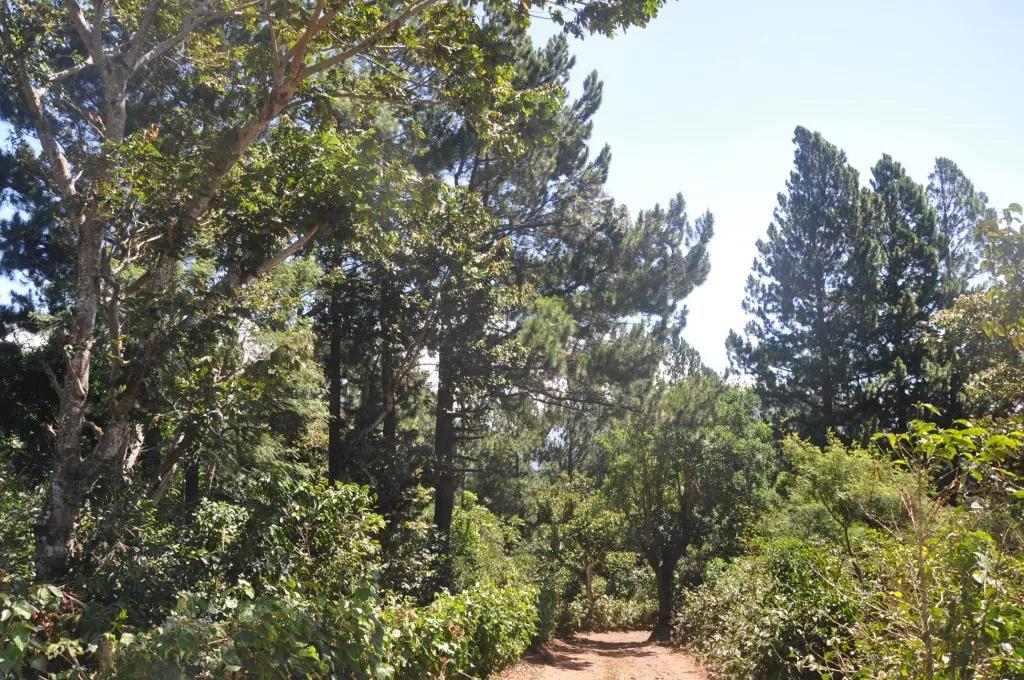
Cauca Province is a certified Colombian coffee origin with an average altitude of 1,758m, reaching up to 2,100m. The region's topography, precipitation, temperature, and volcanic soil give coffee ideal growing conditions. It is 80% mountainous, with parallel ranges in the east and center belonging to the Andes, including the two main volcanoes Sotará and Petacas. Like other southwestern regions, its rainfall follows a single-peaked pattern: a dry season from August to September each year is followed by the rains, which trigger a concentrated flowering and, the following year, a concentrated harvest.
The biggest climatic difference from other regions is the wide temperature swing: daily average of 11°C with daytime averages of 18°C. That day-night contrast is a key factor in quality—cool nights and higher altitudes slow the coffee's growth rhythm, letting the seeds and beans absorb the cherries' nutrients more fully, and giving Cauca coffee its celebrated acidity and sweetness.

Representative Coffee: FrontStreet Coffee · Colombian Cauca Sakura Coffee Beans
Processing Method: Washed
Brewing Equipment: Hario V60
Grind Size: 80% pass rate through a Chinese-standard #20 sieve
Coffee-to-Water Ratio: 1:15
Water Temperature Recommendation: 90-91°C
Brewing Recommendation: Bloom with 30g of water for 30 seconds, pour in small circles to 125g, then continue pouring to 225g once the level drops and the coffee bed is exposed; remove the dripper when draining finishes (timing from the bloom). Extraction time 2'00".
Flavor Description: Chamomile and spice aromas greet you, with fresh lime in the mouth and clean fruit acidity reverberating on the palate.
Nariño
Nariño Province sits in the country's southwest, bordering the Pacific to the west and Ecuador to the south. The Andes run through the province, with coffee grown in high-altitude cloud belts of 1,600-2,300 meters on fertile volcanic soil—the beans are smaller but full, with a vibrant green color.

The vast majority of Nariño's annual production is bought by large American bean merchants. The province's magnificent mountains and beautiful scenery are crossed by many rivers flowing south. As one of Colombia's high-mountain coffee areas, it nurtures many specialty coffee smallholders: total annual production is about 150,000 bags, of which only about 6,000 bags are selected beans.
Fabian Zarama is a coffee farmer from Nariño whose farm lies near La Florida. In recent years Nariño has drawn strong attention from the specialty community—altitudes reach 2,000 meters, a special microclimate keeps temperatures between 16-25°C, and the local Mount Galeras is one of the world's most active volcanoes. That fertile volcanic soil lets Nariño produce exceptional coffee, generally high in quality and quite distinctive in flavor.

Zarama follows a standardized cultivation regimen—fixed fertilization, cleaning, and plant care—to harvest high-quality coffee year after year. This special batch is a single variety, Caturra, planted at 1,900 meters and washed with clean spring water: the cherries are depulped and fermented for 18 hours, then dried for 15 days.
In blind tasting, Zarama's Caturra stands out with a full body, rich and complex fruit flavors, and a nutty undertone—very special.

Representative Coffee: FrontStreet Coffee · Fabian Zarama Caturra Coffee Beans
Processing Method: Washed
Brewing Equipment: Hario V60
Grind Size: 80% pass rate through a Chinese-standard #20 sieve
Coffee-to-Water Ratio: 1:15
Water Temperature Recommendation: 90-91°C
Brewing Recommendation: Bloom with 30g of water for 30 seconds, pour in small circles to 125g, then continue pouring to 225g once the level drops and the coffee bed is exposed; remove the dripper when draining finishes (timing from the bloom). Extraction time 2'00".
Flavor Description: Cream candy, cola, and cherry with refreshing acidity and a rich texture.
Harvest Seasons (Different by Region)
Colombia's coffee belt follows the Andes from south to north, dividing roughly into northern, central, and southern producing regions. The central region has a main and a secondary (fly) harvest, while the north and south each have a single season. Thanks to the north–south differences in geography and climate, the northern and southern harvests fall at opposite times of year, and the central region's main and fly crops shift depending on whether a district leans north or south—so beans arrive year-round. Here we mainly distinguish the winter harvest and the summer harvest.
Coffee Processing
The vast majority of Colombian coffee is washed. Unlike other South and Central American countries, most growers process at home: each smallholder family owns a small dedicated pulper (an Ecomill or Eco-Pulper). Harvested cherries go in, which removes not only skin and pulp but most of the mucilage with very little water. The parchment beans, still carrying a little mucilage, then rest overnight in a small pool or container—a cement tank (sometimes tiled) or a stainless-steel bucket—to ferment and loosen what remains, before a final rinse the next morning completes the wash. Processing at home gives growers complete control over quality.

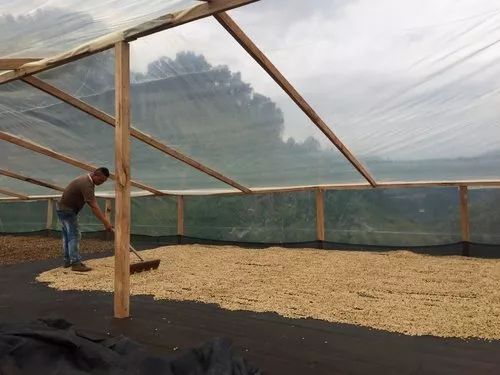
Weather decides the drying. In fine weather, natural sun-drying is the first choice; where conditions allow, a shaded greenhouse with wooden racks (a "green house") is used; otherwise beans are spread on open cement patios. In persistent rain, mechanical dryers take over, with intake temperatures controlled to around 50°C.
In recent years Colombia has also developed an eco-friendly washing method that reuses water, cutting consumption from 40L to 0.6-2L per kilogram of green coffee. It is very green, but it affects bean quality—which may be why Colombian green beans so easily fade to white.
FrontStreet Coffee Recommendation
Colombian coffee wears many hats—it works in espresso blends, as pour-over single origin, in bright fruit-accented profiles or deep, mellow ones, and in aromatic styles besides. Whatever you crave, Colombia has a bean for it.
FrontStreet Colombia Huila (washed): the classic gateway to Colombia's flavors. Huila is the country's most famous specialty region—hilly land above 1,500 meters where Colombia's great rivers converge. Roasted medium-dark, this washed lot highlights the sweet bitterness of dark chocolate and nuts with moderate crema and a mellow body—equally at home in a pour-over, French press, moka pot, or espresso machine for Americanos and lattes alike.
FrontStreet Colombia Finca El Diviso Sidra: for something more adventurous, this double-fermentation natural from Finca El Diviso in Huila (about 2,100 meters, founded in 1996 by Jose Uribe Lasso, now run by Nestor Lasso) shows exactly why anaerobic processing has taken the coffee world by storm: after sealed, oxygen-free fermentation the coffee develops extra layers of tropical fruit. Roasted medium-light, it pours out passion fruit, grape, apricot, and dried-fruit aromas—brilliant as pour-over, cold brew, drip bag, or even moka pot.
Important Notice :
FrontStreet Coffee is a long-established specialty coffee roaster in Guangzhou China, selling freshly roasted beans from its own farm in Yunnan as well as dozens of carefully selected single-origin beans from around the world for both pour-over and espresso. The products deliver consistently excellent quality and great value, with shipping within 24 hours. Guangzhou's FrontStreet Coffee shop is recommended by many coffee lovers, and the beans are now available online at the Tmall 。
FrontStreet Coffee has moved to a new address:
FrontStreet Coffee Address: 315,Donghua East Road,GuangZhou
Tel:020 38364473
 Scan and follow the En Gafei WeChat official account. Please indicate that the reprint comes from "En Gafei".