1/3 of Businesses on Changchun's Mudan Street Coffee Row Have Closed or Relocated
News Review
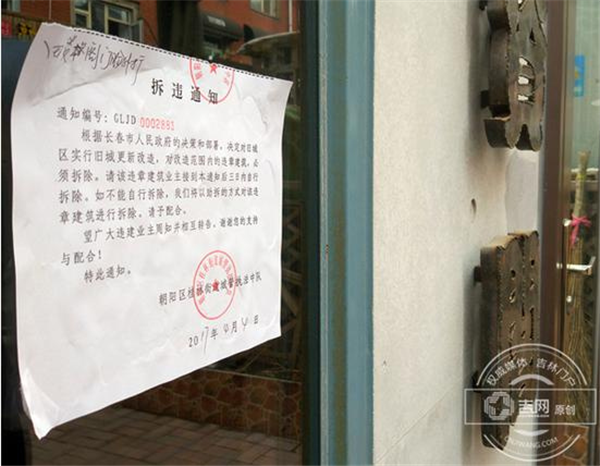
On April 4th, the quiet of Mudan Street in Changchun's Chaoyang District was broken by a demolition notice, and with it came a worry that the neighborhood's cultural character would disappear.
On April 8th and 10th, officials from the Guili Street Subdistrict Office, the Planning Bureau and the Design Department in Changchun's Chaoyang District sat down with business owners. The illegal structures would have to come down, they explained, but the demolition was never meant to erase the area's cultural character. It was meant to make Mudan Street better.
On May 7th, the demolition of illegal structures on Changchun's Mudan Street Coffee Street began, and most of the distinctive storefront facades came down with them.
Three months and two days have passed since that notice was issued. What does Mudan Street look like now, in the height of summer? Does the bustling, romantic mood of the past still linger? Reporters from Jilin Network and Jike APP returned to Mudan Street Coffee Street to find out.
Rather than describe the scene at length, the Jilin Network and Jike APP reporters want readers to see the change first. Here it is, in photographs.
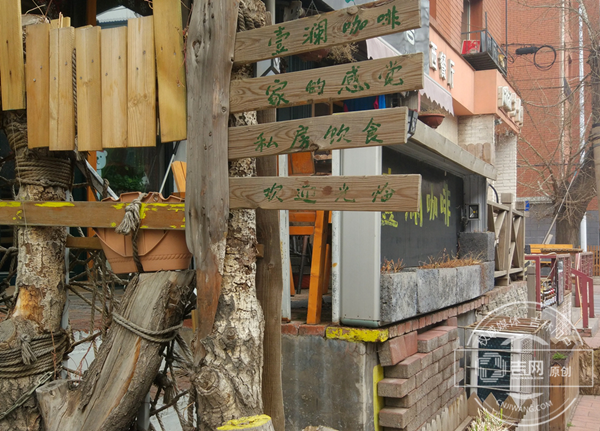
Photographed on April 8, 2017
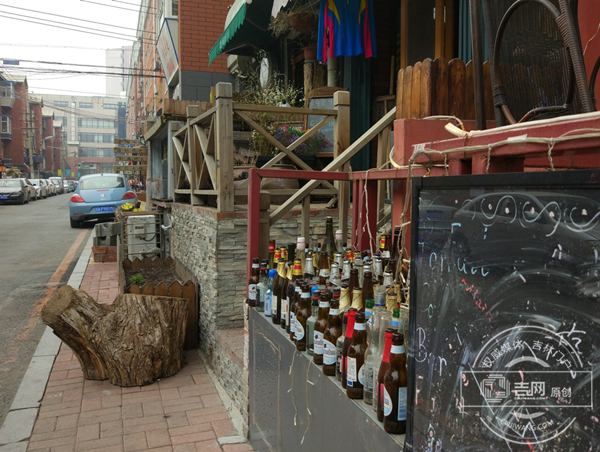
Photographed on April 8, 2017
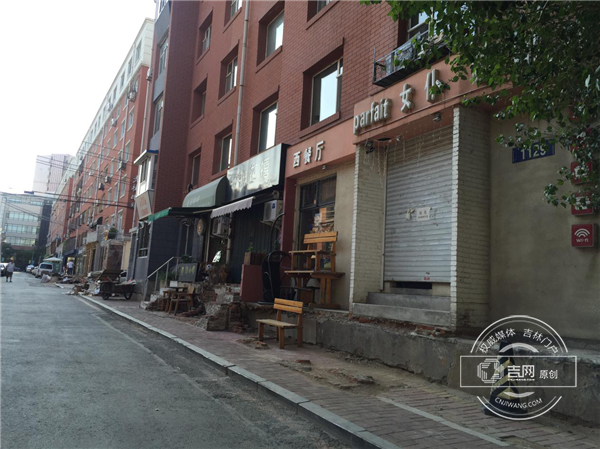
Photographed on July 5, 2017
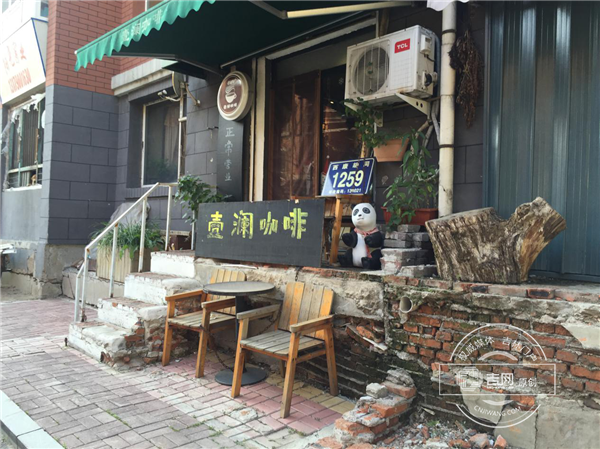
Photographed on July 5, 2017
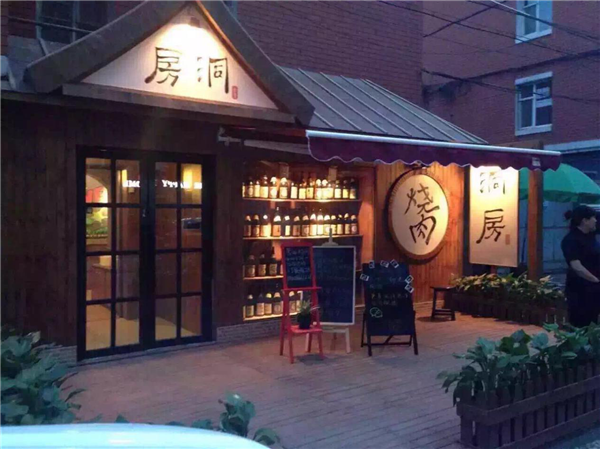
Photo provided by business owner
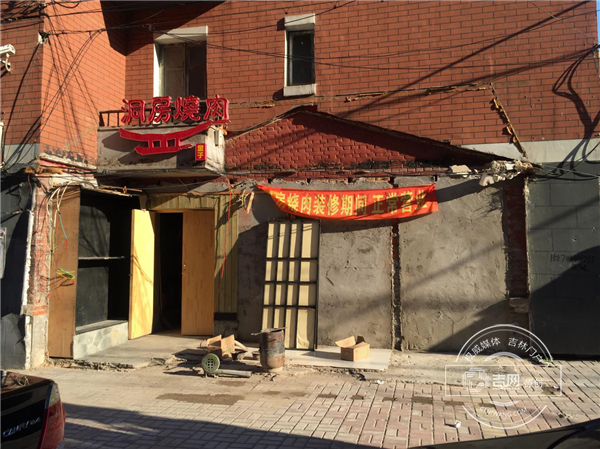
Photographed on July 5, 2017
On Site
All Illegal Structures on Coffee Street Have Been Demolished
When the Jilin Network and Jike APP reporters reached Mudan Street Coffee Street, demolition along the whole street had finished and the construction crews had already gone.
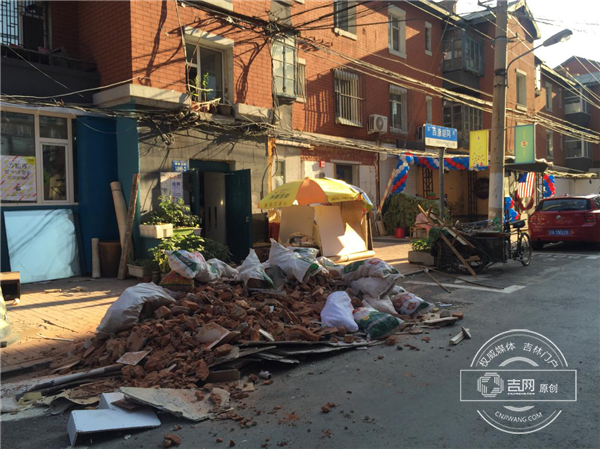
At the site, abandoned bricks and construction debris were still piled up by the roadside in places.
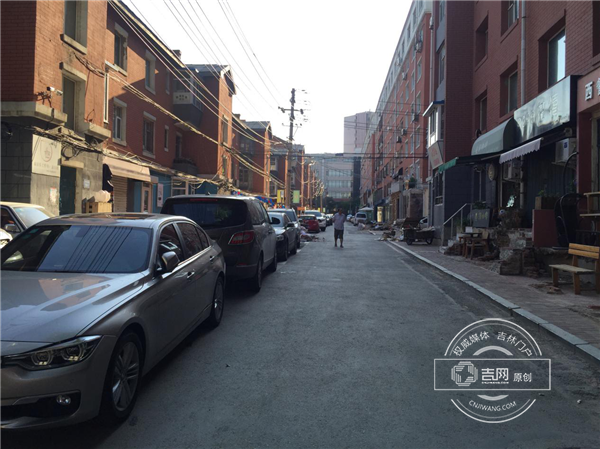
Standing at the intersection and looking down the street, every building facade is uniformly flat from top to bottom, and cars sit neatly along the curb.
Now and then, a resident or a passerby walks past.
Visit
"One-third of businesses have transferred or moved away"
"It's bleak! The whole street feels bleak," said a staff member at a restaurant bar that is being renovated.
When the staff member realized who he was speaking to, he put down his hammer and dusted off his hands.
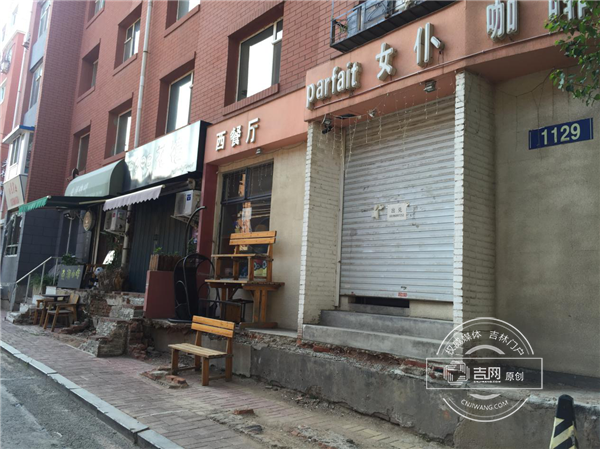
"It's been three months since we got the demolition notice," he said. "What came down was our storefront facade, 1.5 meters wide and 14 meters long. We took it down ourselves. We knew it was illegal, and we knew the demolition was justified, so we supported it. We answer the policies and the calls, but we have our own unspoken hardships. Look, there are about 70 businesses along these two streets, and about one-third of them have either transferred out or moved away." He went on: "By my rough calculation, our total losses over these three months have been quite substantial, reaching several hundred thousand yuan."
Reluctance to Leave
"We're about to move away, leaving the Guili business district where we've lived for 4 years!"
Leaving the restaurant bar under renovation, the Jilin Network and Jike APP reporters crossed the street to visit Dongfang Grilled Meat.
The storefront facade was gone, though a faint trace of it could still be seen on the building.
They pushed the door open. No answer.
"Is anyone there?" The reporter called out several times before two staff members emerged from inside.
Once the reporters explained why they had come, the staff began to talk. "It's mealtime now, and there are almost no customers. It's fine, let me tell you - we're about to move away!"
Her gaze drifted to the mark on the building, and her tone became noticeably subdued. "We've lived and worked here for 4 years, and now that we're suddenly leaving, we're truly reluctant to part with it. Look, these are photos I saved on my phone from before, but now they're gone."
"Why do you have to move away?" asked the Jilin Network and Jike APP reporter.
"Because business is bad. Our monthly income used to reach over 100,000 yuan, but now we can only earn about 30,000 yuan. Our revenue has decreased by two-thirds," she said. "We plan to leave the Guili business district and go to another commercial area. We've already chosen the location for our new store."
The reporter asked again: "Isn't it good that the government designs storefront facades for businesses and creates a distinctive commercial district?"
"Staff from the subdistrict office said they would come to discuss design ideas with us, but we refused to talk because we're preparing to leave. This place is no longer the coffee street it once was - the atmosphere has completely changed," she said.
Expectations
The newly renovated Guili Cultural District will once again radiate its former charm
The staff member at the restaurant bar under renovation said, "We've been waiting since April, and we hope this street can recover and not remain so lifeless."
"This time last year, this street should have been at its busiest. Every household was busy preparing for the Happiness Market, where each store would show off its most distinctive features and invite various craftsmen and artists, attracting a great many customers," said the Dongfang Grilled Meat staff member with a smile. "The scenes from the past are still vivid in my mind, but now they're gone forever."
"I don't know whether the Happiness Market will continue this year, but we're no longer participating," she said.
Another business owner said, "We're still here because we want to see this street get better. We hope the cultural district the government is creating won't disappoint us, and we hope this street will once again radiate its former charm."
Residents
After the demolition, parking is orderly and the street is quieter
At the roadside, the Jilin Network and Jike APP reporters interviewed several residents living nearby.
Auntie Zhao, 64, said, "Since these illegal structures were demolished, both sides of the street look much tidier, and the cars are parked in an orderly manner."
Auntie Zhao continued, "Most importantly, it's much quieter at night now. My husband couldn't sleep because of the noise before, but it's much better now."
"As for the culture everyone talks about, I don't understand it well. I think it's fine for young people to like art and express their personalities within bounds, as long as they don't disturb other people's rest," Auntie Zhao said.
Relevant Departments
Designing different signs according to each business's style
The Jilin Network and Jike APP reporters learned about the progress of the cultural and creative district renovation from the Guili Street Subdistrict Office in Changchun's Chaoyang District. The renovation involves 105 businesses affected by the demolition. So far, 7 businesses have restored their storefront facades on their own after the demolition. The design company has completed designs for more than 60 businesses, including wall painting, steps, railings, signs and awnings, with signs designed differently to match each business's individual style.
The reporters learned from the district's urban management committee that, apart from the sign designs, all other drawings have been submitted to the district government. The plan is to issue a tender announcement in mid-July, with construction to begin 26 days after the announcement is issued.
Reporter's Notes
What is culture?
How should culture be inherited and protected?
Walking out of Mudan Street Coffee Street, it was already evening. The weather stayed hot, and the afterglow of the sun fell across every building along the street.
Standing across from the street and looking inward, several old buildings stood quietly in the sunlight.
Perhaps, just as they said, this place was bustling last summer. Set against the present, it is hard not to feel a little sad, and hard not to wonder about the idea of culture.
According to Baidu, culture is, generally speaking, a social phenomenon, a product of people's long-term creative formation; it is at the same time a historical phenomenon, representing the accumulation of social history.
Walking back, I couldn't help but think about the past, the present and the future of Mudan Street Coffee Street.
Perhaps the future will be beautiful, with infinite possibilities and hope here, so long as we wait patiently and believe. A well-developed cultural and creative district will give these businesses a different future.
FrontStreet Coffee Recommendation
A coffee street survives on the cups that come out of its doors, and that is as true of a home counter as it is of a storefront. FrontStreet roasts its espresso blends with exactly that in mind. The FrontStreet Classic Blend is built on a traditional Mamba formula of Mandheling and Brazil and designed for espresso machines and moka pots alike: even a beginner working with a modest home machine can pull a dense, fine crema, and it is the base for the latte, cappuccino and Dirty that every cafe lives on. It tastes mellow and rounded, which makes it easy for newcomers and veterans alike, and it works just as well at home as it does in a shop.
For owners watching both quality and cost, the FrontStreet Black Cocoa Blend is 100% Arabica, with generous crema, a full body and a price that stays friendly - an easy choice for a new shop. And for a menu that wants to stand apart, the FrontStreet Strawberry Candy Blend layers the native flavours of Arabica from different origins into a bright strawberry-gummy sweetness. It suits anyone who loves fruit-forward coffee and dislikes bitterness, and it is a versatile bean that covers several brewing methods in a single bag.
Important Notice :
FrontStreet Coffee is a long-established specialty coffee roaster in Guangzhou China, selling freshly roasted beans from its own farm in Yunnan as well as dozens of carefully selected single-origin beans from around the world for both pour-over and espresso. The products deliver consistently excellent quality and great value, with shipping within 24 hours. Guangzhou's FrontStreet Coffee shop is recommended by many coffee lovers, and the beans are now available online at the Tmall 。
FrontStreet Coffee has moved to a new address:
FrontStreet Coffee Address: 315,Donghua East Road,GuangZhou
Tel:020 38364473
 Scan and follow the En Gafei WeChat official account. Please indicate that the reprint comes from "En Gafei".