Sidamo Hambella Flower Queen Coffee Beans: Flavor Profile and Pour-Over Brewing Guide

2025 New Harvest FrontStreet Coffee Hua Kui Coffee Beans
What exactly is Hua Kui coffee? Anyone deep in coffee knows the name, but drinkers who are newer to it may not. Mention Yirgacheffe, though, and most people immediately place it in Ethiopia. Hua Kui is Ethiopian coffee too, and a highly sought-after specialty lot. At FrontStreet Coffee, washed Yirgacheffe and Hua Kui 5.0 are both very popular.
FrontStreet Coffee's daily-drinker Yirgacheffe needs little introduction as a representative of Ethiopian coffee. Ethiopia is the birthplace of coffee, and many varieties were carried out from there in the first place. The florals and fruity acidity of Yirgacheffe linger long on the palate. Not everyone enjoys that bright acidity, though. As the genetic home of coffee, Ethiopia names most of its coffee after growing regions, and Yirgacheffe and Sidamo are two famous specialty regions. If Yirgacheffe's lemon acidity is not quite to your taste, FrontStreet Coffee suggests trying a cup of Sidamo instead.

Sidamo coffee carries a richer juice sensation than Yirgacheffe, with less acidity up front and a citrus aftertaste instead. Flavors differ markedly from region to region across Ethiopia, and to let more drinkers taste them, FrontStreet Coffee has acquired over a dozen single-origin coffees from Ethiopia alone.
Let's Get to Know the Sidamo Coffee Region
Sidamo's flavors are highly diverse, because different soil compositions, regional microclimates, and countless native varieties create obvious differences from one town area to the next. Sidamo lies in southern Ethiopia, stretching east to the Arsi and Bale administrative regions and west to Gamogofa. Its coffee grows between 1400m and 2000m. Agriculture dominates here, and the coffee planting areas sit mainly around the East African Rift Valley. Sidamo has developed rapidly in recent years and is an important coffee export hub, with Guji and West Arsi among its most famous growing areas.

Guji Region
Guji was formerly part of Sidamo before the Ethiopia Commodity Exchange (ECX) established it as an independent region in 2010. It lies southeast of Yirgacheffe, a landscape of towering mountains, valleys, and plains. The geology here is nutrient-rich black soil, a Vertisol, with soil depth reaching nearly two meters and an average altitude above 1800 meters. The wide day-night temperature swing created by the geography supplies every terroir condition needed for high-quality specialty coffee.

What Is Hua Kui Coffee?
Good climate and environment produce excellent beans, but what truly made Guji famous is Hua Kui.
Hua Kui's original name is Hambella; the name Hua Kui was given by domestic green bean merchants. The bean comes from Hambella, in Guji, Ethiopia's largest coffee-producing region, administratively part of Oromia. Hambella faces Kochere in Yirgacheffe across the mountains to the west, the two separated by high ground 3200 meters tall and about 30 kilometers wide. To the southeast, east, and north it borders the Guji sub-regions Shakiso, Uraga, and Kercha, making it Ethiopia's highest-altitude coffee sub-region.
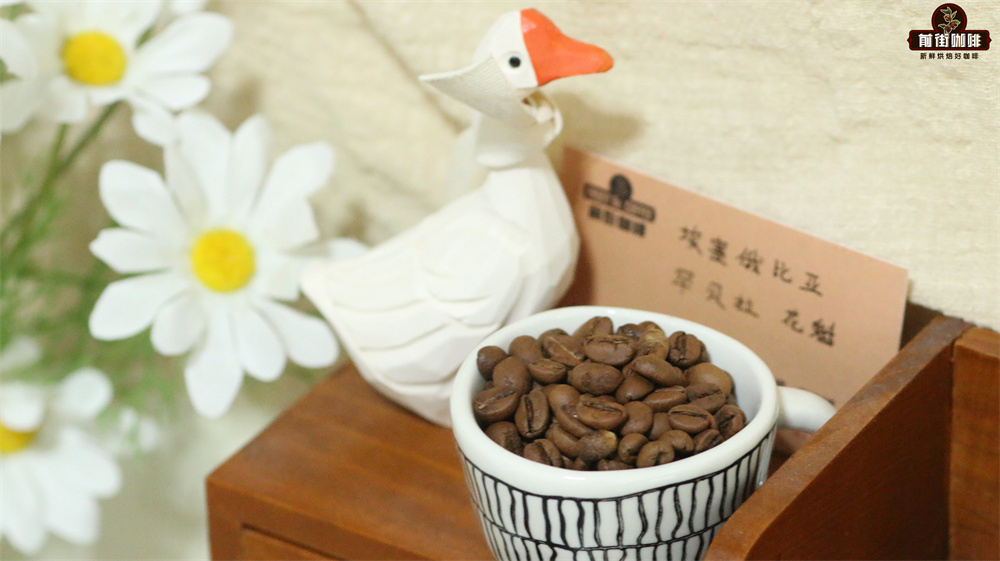
Hambella today holds about 20 processing plants of various scales. In 2017, Ethiopia's DW green bean company entered the TOH (The Taste Of Harvest) competition run by the African Fine Coffee Association. A natural processed batch from the Buku Abel processing plant won the TOH Ethiopia championship with its rich strawberry and cream aroma. That year the batch was imported by the Beijing green bean trader Hongshun, and Li Jianfei used the same bean to take runner-up at the 2017 World Brewers Cup China region. Standing out among a field of Geisha entries, the Ethiopian bean earned the name Hua Kui: Geisha means geisha in Japanese, and Hua Kui means the leader among geishas, signaling the bean's outstanding quality.
DW later added processing plants in the core Hambella area of Dimtu, namely Buku Abel, Buku Saysay, Haro Soresa, and Tirtiro Goye, with annual coffee production of about 1100 tons. Strictly speaking, among all these estates and stations, only the natural processed coffee from the Buku Abel plant can be called Hua Kui.

Coffee is an agricultural product, and climate and environment change what each year delivers, so the lots are numbered to mark the differences: Hua Kui 2.0, Hua Kui 3.0, Hua Kui 3.1, Hua Kui 4.0, Hua Kui 5.0, and Hua Kui 6.0.
Sidamo Coffee Processing Methods
Washed Yirgacheffe uses washing, as the name suggests, but Ethiopia's original processing method was actually natural, with washed arriving later. Most coffee from Sidamo uses natural processing, and FrontStreet Coffee believes natural processing gives Sidamo beans their rich fruit aroma and smooth texture.
During harvest, farmers in Sidamo pick only ripe red fruit, placing the cherries one by one into baskets, so the harvested fruit is uniform in size and ripeness with no other material mixed in. Defective beans and immature or overripe fruit are then hand sorted out. The red cherries are spread evenly on raised wooden frames or full drying racks for sun drying, which avoids the risk of beans picking up off-flavors from the ground.

Through drying, the beans are turned constantly to ensure even exposure and uniform moisture loss, and every three to five days farmers manually remove defective and moldy beans. Once the fruit skins dry hard, a hulling machine strips them away. After the green coffee is obtained, farmers do one final selection in pursuit of perfect flavor.
FrontStreet Coffee's Brewing Recommendations
How should beans this good be brewed to draw out their flavor? FrontStreet Coffee holds that freshness is a critical factor, since fresh beans let you appreciate the full range of the coffee. Every bean shipped from FrontStreet Coffee is roasted within 5 days, because the roastery knows how much freshness affects flavor. The house philosophy is "Freshly Roasted Good Coffee," ensuring every order arrives at its best. The resting period is about 4 to 7 days, so by the time customers receive their coffee it is at peak flavor.

Some customers need the beans ground, which is fine, but FrontStreet Coffee must add a reminder: ground coffee needs no resting period, because the pressure of carbon dioxide building up in the packaging during transit also helps round out the flavor, so it can be brewed the moment it arrives. Ground coffee does need to be brewed promptly, though, since it oxidizes relatively quickly once exposed to air, meaning the flavor dissipates faster and the cup suffers. FrontStreet Coffee therefore recommends whole beans, ground fresh before brewing, for the best flavor.
FrontStreet Coffee's Hua Kui Brewing Parameters
To fully extract Hua Kui's layers, FrontStreet Coffee uses a higher water temperature and a finer grind, and to avoid over-extraction from the heat it pairs them with a fast-flowing dripper such as the V60. The V60's 60 degree cone concentrates the grounds, and the conical angle makes the water converge toward the center as you pour, ensuring enough contact time between water and coffee. The ribs inside the cone spiral clockwise from bottom to top, creating space between filter and dripper for good flow. Combined with the large hole at the base, the flow rate is faster than on many other drippers.
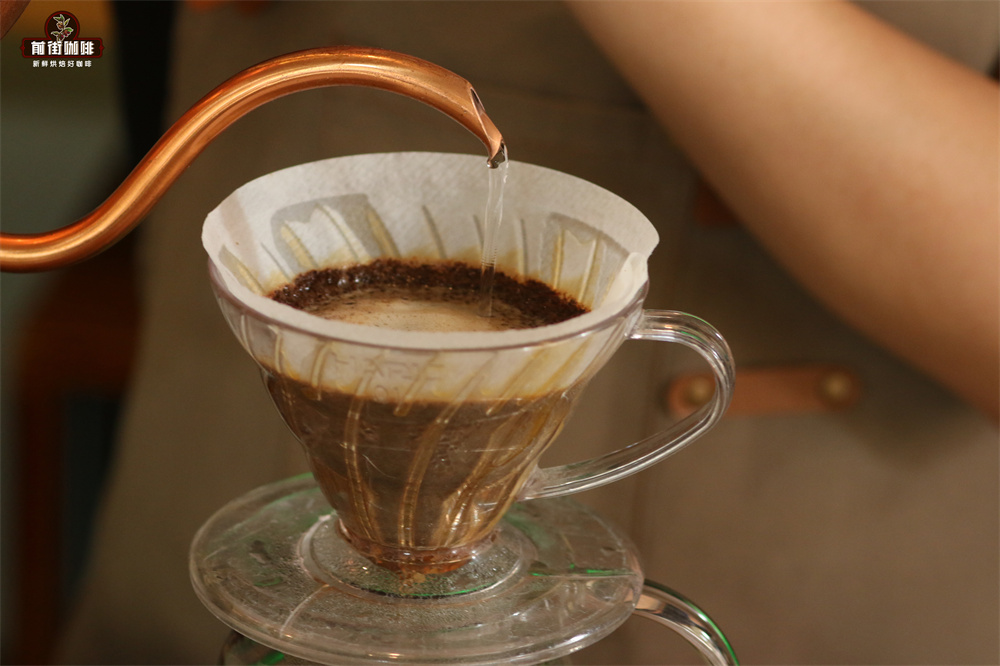
FrontStreet Coffee's specific parameters are: V60 dripper, water temperature 90 degrees Celsius, water-to-coffee ratio 1:15, coffee amount 15g, grind size at an 80 percent pass rate through a China #20 standard sieve.
Extract in segments, blooming with twice the water as coffee, meaning 30g of water for 30 seconds. The bloom is necessary so the grounds release internal carbon dioxide, which makes later extraction more stable. Pour in a small circle, segment at 125g, then continue to 225g and stop. Remove the dripper once all the water has dripped through, timing from the start of the pour at 2 minutes. Then pick up the whole carafe, shake it evenly, and pour into cups for tasting.

[2025 New Harvest FrontStreet Coffee Natural Sidamo Coffee Flavor]
Floral notes, berries, citrus, the sweet and sour notes of plum, mango juice, and honey, with a black tea-like sweet aftertaste.
As noted earlier, flavors vary significantly across Ethiopia's regions, and to let more drinkers taste them, FrontStreet Coffee has acquired over a dozen single-origin coffees from Ethiopia alone. If you want to explore other producing countries, FrontStreet Coffee can satisfy that too, with dozens of single-origin coffees from different regions. Welcome to taste.
FrontStreet Coffee Recommendation
To compare Hua Kui's natural fruit against a washed Ethiopian cup, start with FrontStreet Washed Yirgacheffe, the house daily-drinker. It is known for white jasmine, bright citrus and lemon acidity, and a tea-like body, and its friendly price has made it the first specialty coffee for a great many drinkers. Yirgacheffe is a small town in southern Ethiopia inside the Sidama zone, at about 1700 to 2100 meters, with the trees planted above 1800 meters, placing it among the highest growing regions on earth. The name has become shorthand for the recognizable white florals and lemon-citrus acidity of Ethiopian specialty coffee, and in 2010 it grew so strong that the Ethiopian Commodity Exchange separated it from Sidama.
For a washed lot with a specific village identity, FrontStreet Washed Guodingding Cooperative comes from the Worka area at the southeastern edge of Yirgacheffe. It began as part of the Worka cooperative under the YCFCU union, and as demand for traceable green coffee grew, coffee hunters around the world singled it out as a micro-region of its own. It follows the most traditional washed process, and drinkers often call it the last unspoiled corner of Yirgacheffe. FrontStreet Guodingding carries none of the classic bitter profile: it brings clean, bright citrus and lemon acidity and jasmine perfume.
If it is the natural, fruit-driven style that won you over, FrontStreet Natural Red Cherry applies a fully ripe cherry natural process to the same Yirgacheffe origin, picking only fully mature fruit with no defects. The cherries pass a first round of sorting at the mill, then dry directly on raised beds, turned every 2 to 3 hours during the first days so uneven heat does not push them into over-fermentation. After three to five weeks of drying, workers strip the outer pulp by machine according to weather and temperature and move the coffee into storage. Because the fruit dries against the bean, the cup keeps the classic Yirgacheffe profile and gains tropical fruit: citrus acidity, berry juice, honey sweetness, and a creamy smoothness.
Important Notice :
FrontStreet Coffee is a long-established specialty coffee roaster in Guangzhou China, selling freshly roasted beans from its own farm in Yunnan as well as dozens of carefully selected single-origin beans from around the world for both pour-over and espresso. The products deliver consistently excellent quality and great value, with shipping within 24 hours. Guangzhou's FrontStreet Coffee shop is recommended by many coffee lovers, and the beans are now available online at the Tmall 。
FrontStreet Coffee has moved to a new address:
FrontStreet Coffee Address: 315,Donghua East Road,GuangZhou
Tel:020 38364473
 Scan and follow the En Gafei WeChat official account. Please indicate that the reprint comes from "En Gafei".