What are the Quality, Flavor, and Variety Types of Yunnan Coffee? Is Yunnan Small-Grain Black Coffee Bitter or Acidic?

With domestic products rising across China, the coffee boom in Yunnan has surged too. More people are walking into cafés and asking: "Do you have any good Yunnan coffee beans? Do you have Yunnan small-bean coffee?" And as tastes grow more refined, drinkers are even starting to ask about Yunnan's coffee varieties. Here's FrontStreet Coffee's introduction to Yunnan coffee.
Ideal Growing Conditions
Great flavor starts with a suitable growing environment. Beyond altitude, climate is decisive — which is why so many famous coffee regions cluster in the "coffee belt" between the Tropics of Cancer and Capricorn.
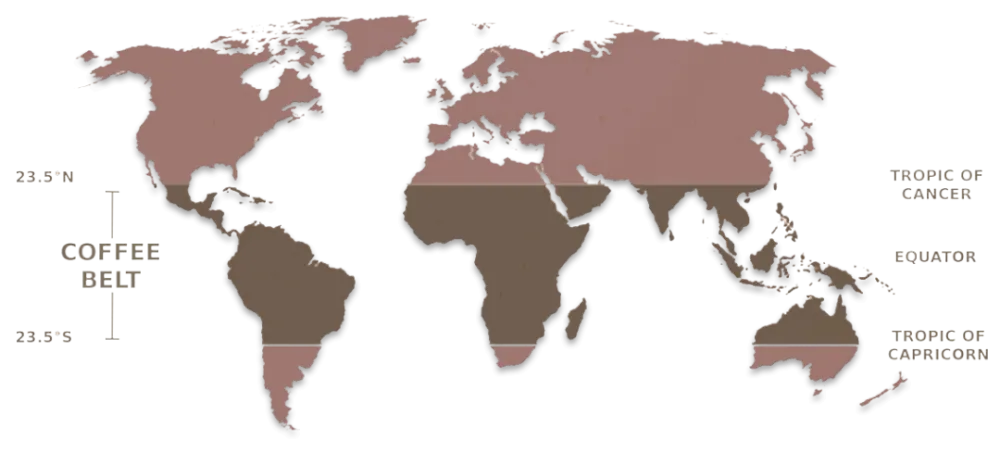
Within China, Yunnan and Taiwan both qualify: both lie in the coffee belt at suitable altitudes. But while tea is China's native plant, coffee is an import. The earliest documented record of coffee cultivation in China dates to 1877, when Ding Richang, governor of Fujian, drafted the "Regulations for Pacifying Indigenous Peoples and Opening Mountains," encouraging indigenous residents of the Ryukyu Islands to plant a range of cash crops — coffee among them — in place of hunting.
Yunnan's Coffee Cultivation History
The first place to grow coffee in mainland China was Yunnan. Records including the "Binchuan County Gazetteer" and "History of Catholicism in Yunnan" note that in 1904 (the 30th year of the Guangxu reign), French Catholic missionary Tian Deneng, dispatched by the Dali diocese, arrived in Binchuan Prefecture, built a church in Zhukula Village, and planted the first coffee tree — for his own consumption.

Since then, Yunnan's coffee cultivation has moved through three waves:
First Wave: 1950s-1960s
Beginning in the 1950s and 1960s, when most people had never even tasted coffee, Yunnan's beans were exported to the Soviet Union to repay national loans. Yunnan's state farms cultivated coffee and the national foreign trade department handled purchasing. The major farms of the era included Baoshan Lujiang Farm, Xincheng Youth Farm, Dehong Zhefang Farm, Ruili Farm, Wanding Farm, Wenshan Babu Farm, and Tianbao Farm. Varieties were locally bred Typica and Bourbon.
Once the loan-repayment program ended, the trade department stopped actively buying. Meanwhile, coffee disease spread through the plantations, killing trees at scale; massive cutting was required to contain it, and planted area shrank to under 3,000 mu almost overnight.
Second Wave: 1980s
The second wave came in the 1980s with reform and opening-up. In 1988, Nestlé threw strong support behind Yunnan's coffee industry and actively promoted the Catimor variety. Since Catimor yields three times as much as Typica and resists disease well, farmers — who knew little about coffee flavor and cared mainly about purchase prices and harvest volume — switched en masse. Catimor displaced Typica as the mainstay of Yunnan coffee, at one point accounting for 90% of the province's production.
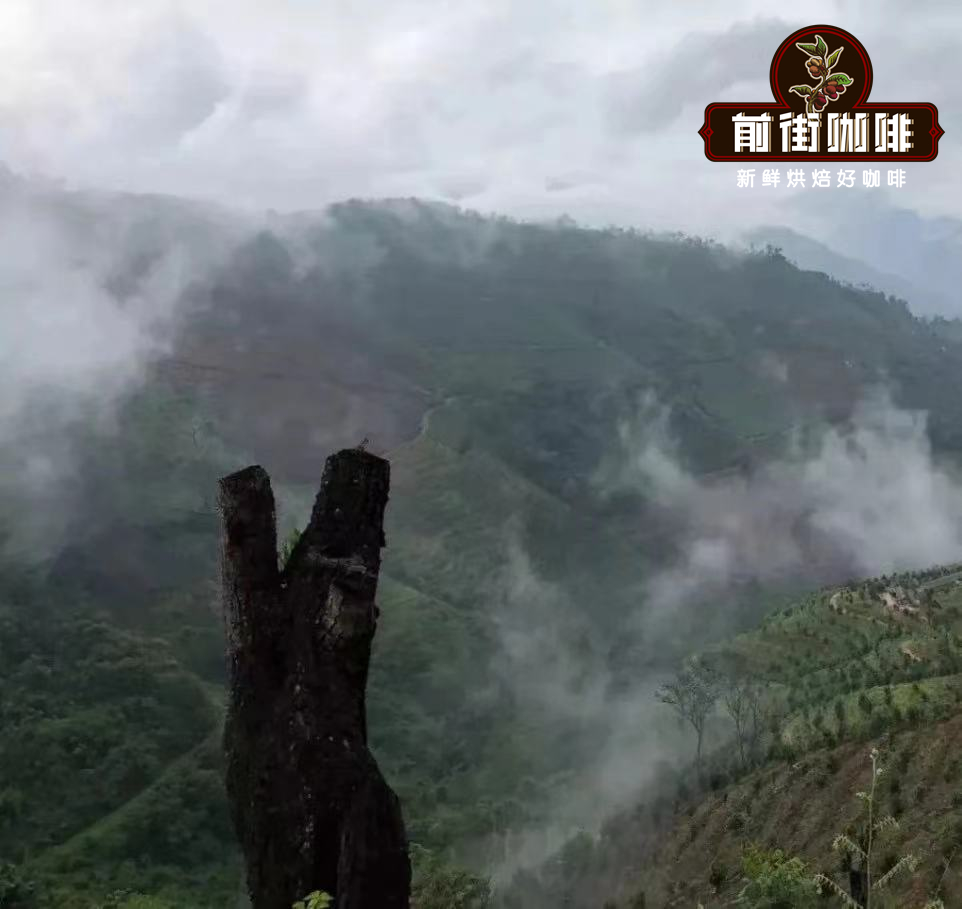
Third Wave: Post-2000
After 2000, China's booming economy drew the attention of global coffee brands and brought the specialty coffee concept to China. As enthusiasm for specialty coffee grew, selection and cultivation work on Yunnan coffee advanced in earnest — and that journey continues today.
Yunnan Small-Bean Coffee and Catimor
"Yunnan small-bean coffee" takes its name from Typica: because Typica beans are small, they were dubbed "small-bean." As noted above, Catimor's yield and hardiness led many growers to replace Typica with it, and Catimor still occupies most of Yunnan's planting area — so most "Yunnan small-bean coffee" sold today is actually Catimor.
Catimor was developed in 1959 by Portugal's Coffee Leaf Rust Research Center (CIFC), a hybrid of the Timor variety and Caturra. Inheriting Robusta genes from Timor, Catimor resists coffee berry disease and coffee leaf rust, plus some coffee pests.

Taiwanese specialty coffee authority Han Huaizong famously described Catimor's cup as having a "devilish aftertaste" — thanks to those Robusta genes, it can carry an earthy, fishy edge. Still, as cultivation and processing techniques improve, Yunnan Catimor's flavor keeps getting better.
FrontStreet Coffee's Yunnan Estate
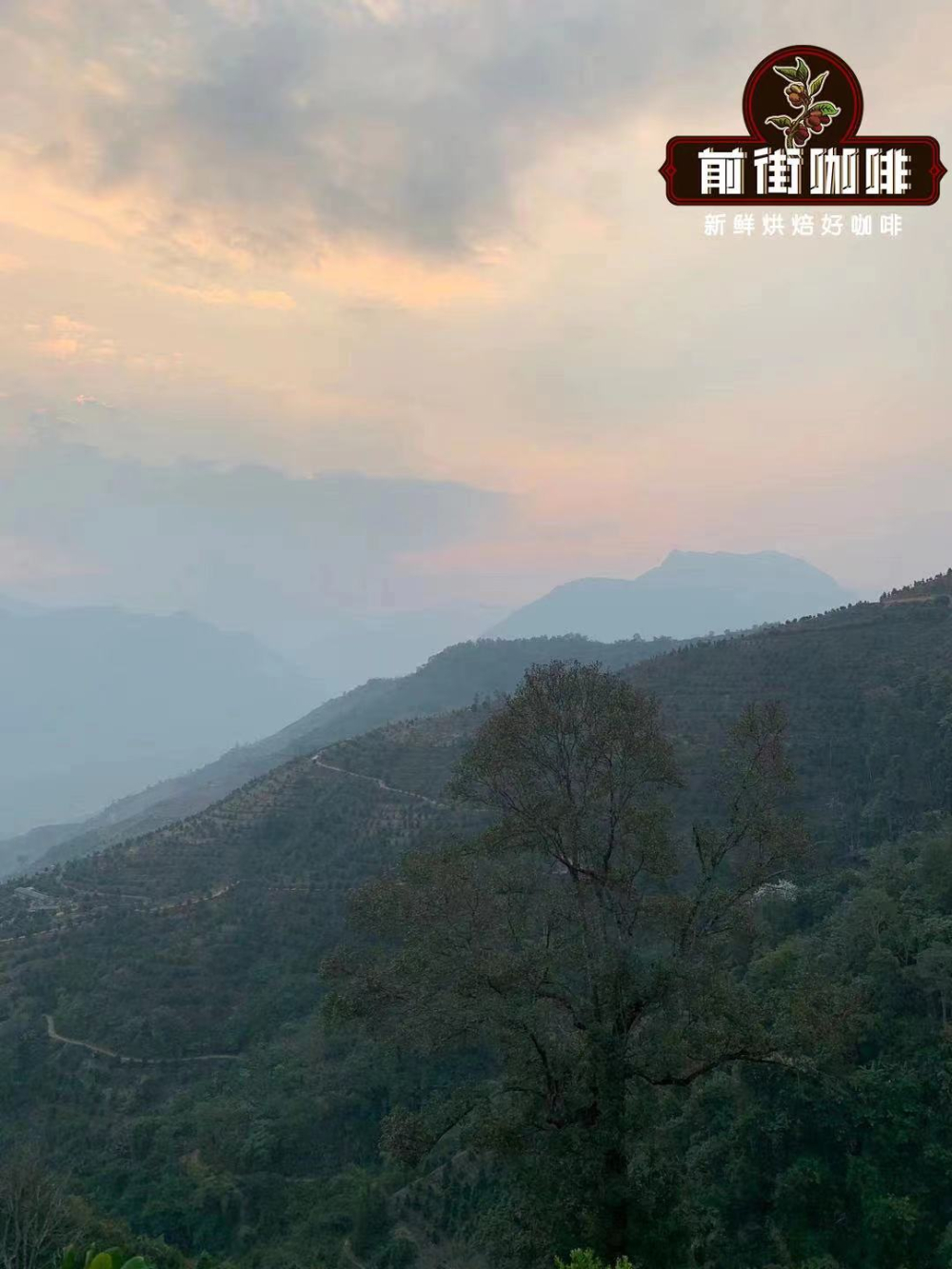
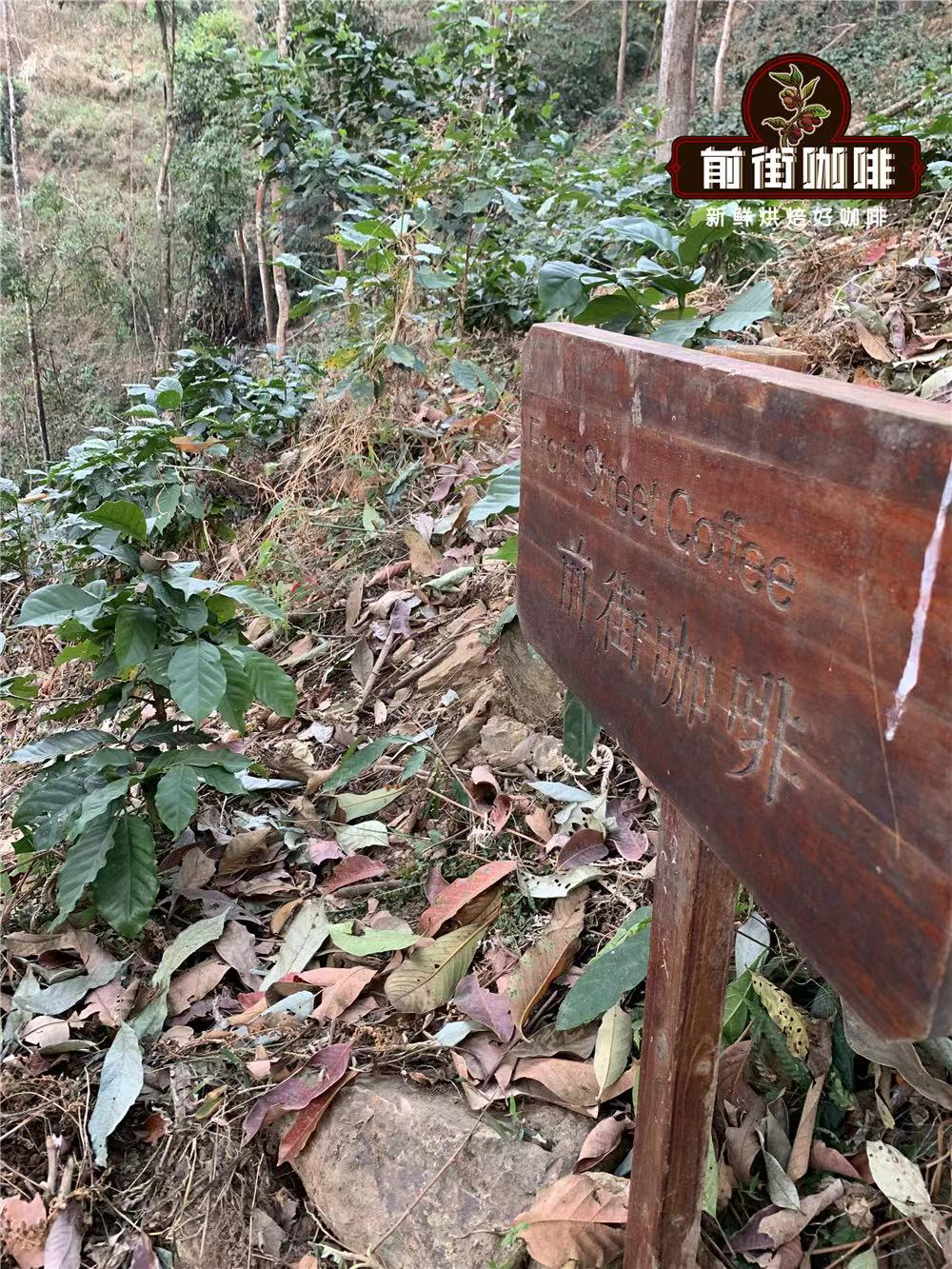
To chase the true taste of Yunnan terroir, FrontStreet Coffee established its own estate in Lincang. The Lincang coffee region sits in southwestern Yunnan, with the Tropic of Cancer crossing its southern edge, bordering Pu'er, Dali, and Baoshan, and Myanmar to the southwest. The area sits above 1,000 meters with annual temperatures around 17°C, distinct dry and wet seasons, and abundant sunshine — excellent conditions for growing Typica.
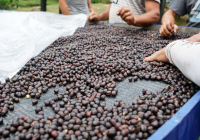
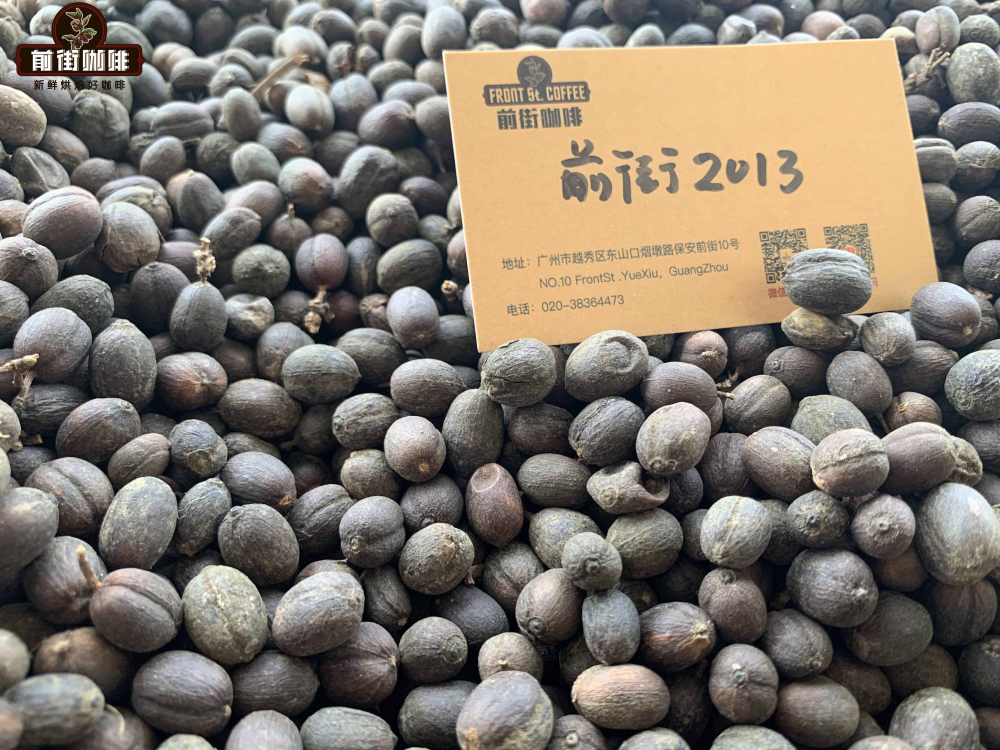
Our estate's Typica is natural-processed: fully ripe cherries are spread evenly on raised beds and turned regularly to prevent uneven drying and unpleasant fermentation. Drying as whole cherries lets more of the fruit's sugars migrate into the bean, giving the coffee rich aroma and stronger sweetness.
When roasting these natural Typica beans, we chose a medium roast to highlight their aroma and sweetness while emphasizing the character of Yunnan small-bean coffee.
Brewing Parameters
Dripper: Hario V60
Water temperature: 87°C
Dose: 15 grams
Coffee-to-water ratio: 1:15
Grind size: 75% pass-through on the Chinese standard #20 sieve
Because our beans ship within 5 days of roasting and rest another 4 to 7 days in transit, they arrive fresh with plenty of carbon dioxide still trapped inside. For a stable extraction, we suggest a 30-second bloom.
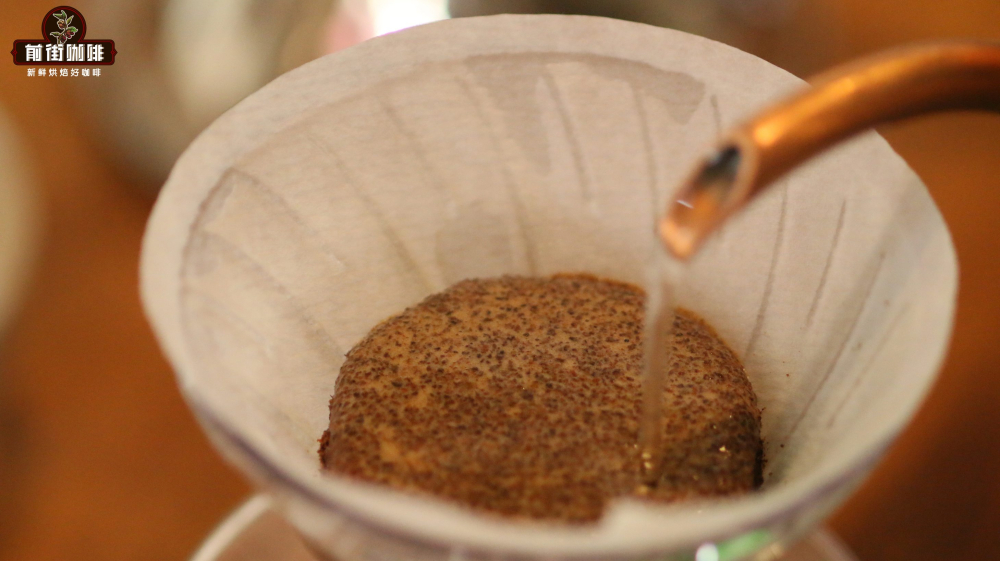
Pour 30 grams of hot water for the 30-second bloom, then pour in a fine stream from the center, spiraling slowly out to 125 grams. Once the water level nearly exposes the coffee bed, continue spiraling to 225 grams. Total extraction time is approximately 2 minutes.
Tasting Notes
FrontStreet Coffee's estate natural Typica has a heavy body with prominent sweet-and-sour structure: citrus and berry tones with a hint of fermented wine aroma, caramel sweetness, a creamy aftertaste, and a black-tea mouthfeel.
FrontStreet Coffee Recommendation
"Yunnan small-bean" is really another name for Arabica — the smallest-fruited of the three native coffee species — and Yunnan's Typica story traces back to 1904, when missionary Tian Deneng brought Typica seed from Vietnam into Zhukula Village in Binchuan County. Yunnan sits squarely on the coffee belt, with most growing areas above 1,000m, fertile soils, strong sunshine, ample rain, and wide day-night temperature swings (ideal growing temperatures run 16-21°C). Production is concentrated in the province's southwest across four regions: Baoshan, Dehong, Pu'er, and Lincang — our two daily-list beans come from Baoshan and Lincang.
For an entry-level Chinese Arabica, start with FrontStreet Coffee's Baoshan small-bean: washed and medium roasted, it shows soft nut and chocolate sweetness with a touch of plum acidity, rendering Baoshan's unique huigan (returning sweetness) — born of the Lujiang dam area's dry-hot valley climate with big day-night swings — beautifully. For clearer, more defined Yunnan flavor, step up to our 2013 estate natural Typica: only fully ripe red cherries, traditional natural drying, medium roast, with dark berry tones, caramel sweetness, chocolate, a hint of dried apricot, and a black-tea finish.
And if you'd like Yunnan flavor as espresso, the barista-favorite Black Cocoa Blend pairs Yunnan small-bean with Brazil Cerrado beans: Brazil supplies mixed-nut aroma and a balanced body while Yunnan contributes chocolate and citrus, giving an Americano with balanced sweet-sour-bitter notes of nuts and brown sugar, and a latte with silky almond and cream — very forgiving for beginners.
Important Notice :
FrontStreet Coffee is a long-established specialty coffee roaster in Guangzhou China, selling freshly roasted beans from its own farm in Yunnan as well as dozens of carefully selected single-origin beans from around the world for both pour-over and espresso. The products deliver consistently excellent quality and great value, with shipping within 24 hours. Guangzhou's FrontStreet Coffee shop is recommended by many coffee lovers, and the beans are now available online at the Tmall 。
FrontStreet Coffee has moved to a new address:
FrontStreet Coffee Address: 315,Donghua East Road,GuangZhou
Tel:020 38364473
 Scan and follow the En Gafei WeChat official account. Please indicate that the reprint comes from "En Gafei".