How Much Does Jamaican Coffee Cost per Pound in China? Blue Mountain Coffee Price Characteristics

FrontStreet Coffee recently overheard some coffee enthusiasts discussing Blue Mountain coffee beans, from seasoned drinkers teaching newcomers how to distinguish the genuine article to conversations about how Blue Mountain is priced.

Listening to them, FrontStreet Coffee felt that some of their understanding was still stuck in the era of 20 years ago. For instance, claims like "The Japanese have monopolized Blue Mountain coffee, so there is no genuine Blue Mountain in China" were even backed up with figures: Jamaica sells 688 tons of Blue Mountain coffee to Japan, 75 tons to the United States, and 59 tons to the United Kingdom, so the rest of the world can only obtain 10% of Blue Mountain's production.
Another customer remarked, "Blue Mountain coffee is extremely expensive. If it is No. 1 beans (first grade), the price per cup is never less than 300 yuan. Even though some domestic coffee shops selling authentic Blue Mountain at around 200 yuan per cup are indeed serving coffee produced in Jamaica, it can at best be No. 3 beans (third grade). You cannot drink No. 1 beans in China. Japanese Blue Mountain No. 1 beans sell for no less than 3500 yuan per pound (454 grams)." Hearing such statements, you can tell this is indeed a seasoned coffee drinker, but unfortunately one who has not kept up with the times.
What Constitutes Authentic Blue Mountain Coffee?
Blue Mountain coffee was once hailed as the Hermes of the coffee world. Authentic Blue Mountain lets you taste rich, dense, and lasting chocolate and roasted hazelnut aromas, while possessing a perfect balance of acidity, sweetness, bitterness, fragrance, and body. FrontStreet Coffee believes that Blue Mountain's high reputation is inseparable from the careful management and strict grading carried out by Jamaican growers.
The Blue Mountain range is surrounded by the waters of the Caribbean Sea, giving it a unique island-style tropical rainforest microclimate. During the rainy season, rainfall is concentrated and drains well. Volcanic ash from active volcanoes has enriched the soil with nutrients, so the coffee trees need no excessive irrigation or fertilization. With abundant year-round sunshine, enveloping mist, and cool, comfortable high-altitude growing areas, the land is highly suitable for many crops. Locals typically plant coffee trees alongside banana trees on the slopes of the Blue Mountains.

The CIB has designated an area of approximately 6,000 hectares in the Blue Mountain range, strictly stipulating that only Typica coffee produced within this region may be called "Blue Mountain Coffee." Coffee from other areas is called High Mountain Coffee. According to the area defined by the CIB, the forest zone growing Blue Mountain coffee ranges from about 910 to 1700 meters in altitude, mainly distributed across St. Thomas, St. Mary, St. Andrew, and Portland. This total area accounts for one-third of the entire Blue Mountain growing region.
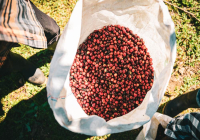
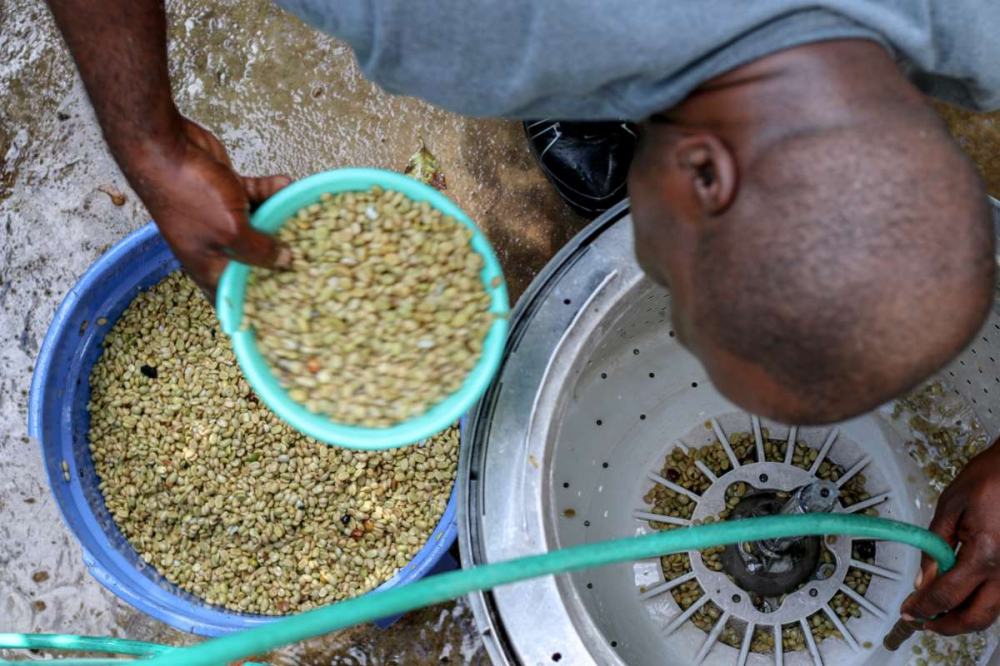
The Blue Mountain variety belongs to Typica. When grown at higher altitudes, the Typica flavor expression becomes more prominent. In addition, Typica has poor disease resistance and is very susceptible to disease. Coupled with a low fruit yield per plant, it demands more human care. Furthermore, the high-altitude areas of the Blue Mountains have uneven terrain, making management and harvesting very difficult. This places high demands on the skill of the pickers, which further affects production. In recent years, less than 15% of the coffee beans produced in Jamaica can be labeled Blue Mountain coffee, roughly 900 tons. After harvesting, the coffee cherries are immediately transported to processing plants for washing, depulping, and drying.

Is Blue Mountain Coffee Available in China?
FrontStreet Coffee will next discuss the current reality of Blue Mountain coffee. What that seasoned coffee drinker said earlier is correct: the Japanese do occupy a large share of the Blue Mountain quota, and that remains true today. However, those figures date from 1992. If you check the official Jamaican coffee website today, China has become the fourth-largest purchaser of Blue Mountain coffee, behind the top three of Japan, the United States, and the United Kingdom.
China formally established Blue Mountain import channels in 2011. Here we should mention one time marker: 2008. That year coincided with the economic crisis, and Japan's priority purchasing rights expired. To be safe, the Jamaican government extended an olive branch to China. In 2010, the Hangzhou Coffee and Western Restaurant Industry Association was invited to visit Jamaica and signed a cooperation agreement for Blue Mountain coffee as the general agent for Eastern China; the owner of the Weibo account "Lou Boyin" was the association's president at the time.
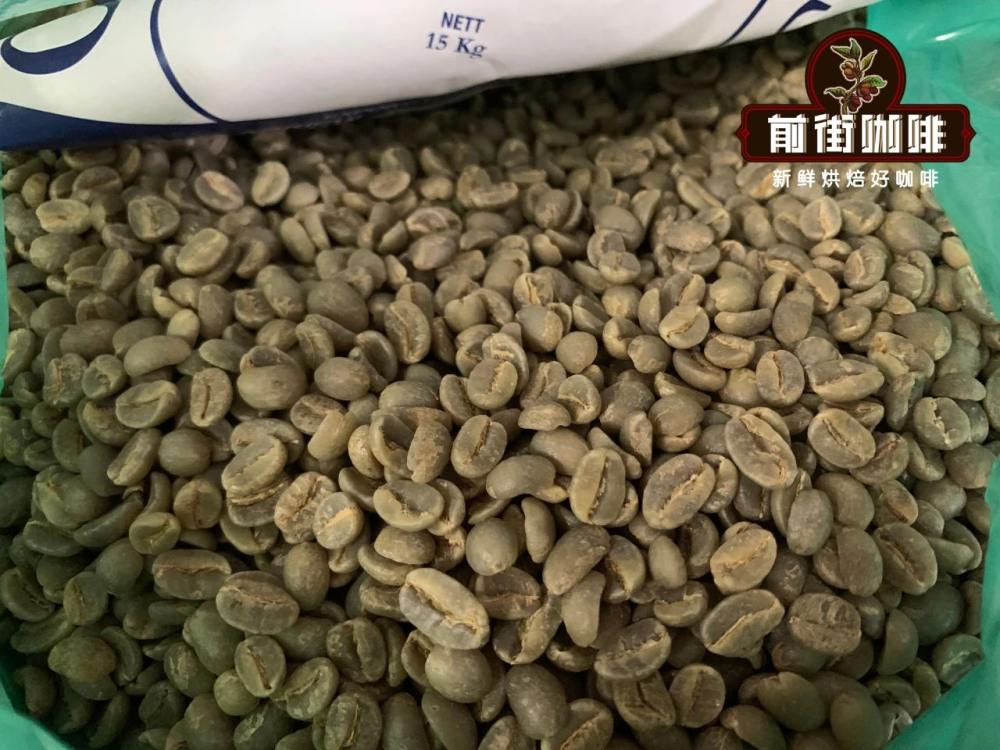
So since 2011, mainland China has had independent import batches of Blue Mountain coffee beans. Blue Mountain coffee beans are indeed very expensive, but not to the extent everyone imagines. FrontStreet Coffee also purchases whole barrels of Blue Mountain coffee beans, partnering with Clifton Farm (Estate), which has supplied China continuously. The farm's owners, the Sharp family, are leading coffee professionals in the Blue Mountain region. FrontStreet Coffee's roasted Blue Mountain coffee beans are priced at 158 yuan/100g, and the in-store tasting price is 60 yuan per cup. This price has confused many customers, who believe Blue Mountain could not possibly be this affordable.
How to Identify Genuine vs. Fake Blue Mountain Coffee?
Of course, because the price is lower than competitors', some friends suspect that FrontStreet Coffee's Blue Mountain beans are not genuine. In response, FrontStreet Coffee can not only show everyone the original Blue Mountain barrels but also holds the Blue Mountain coffee sales certificate issued by Clifton Farm.
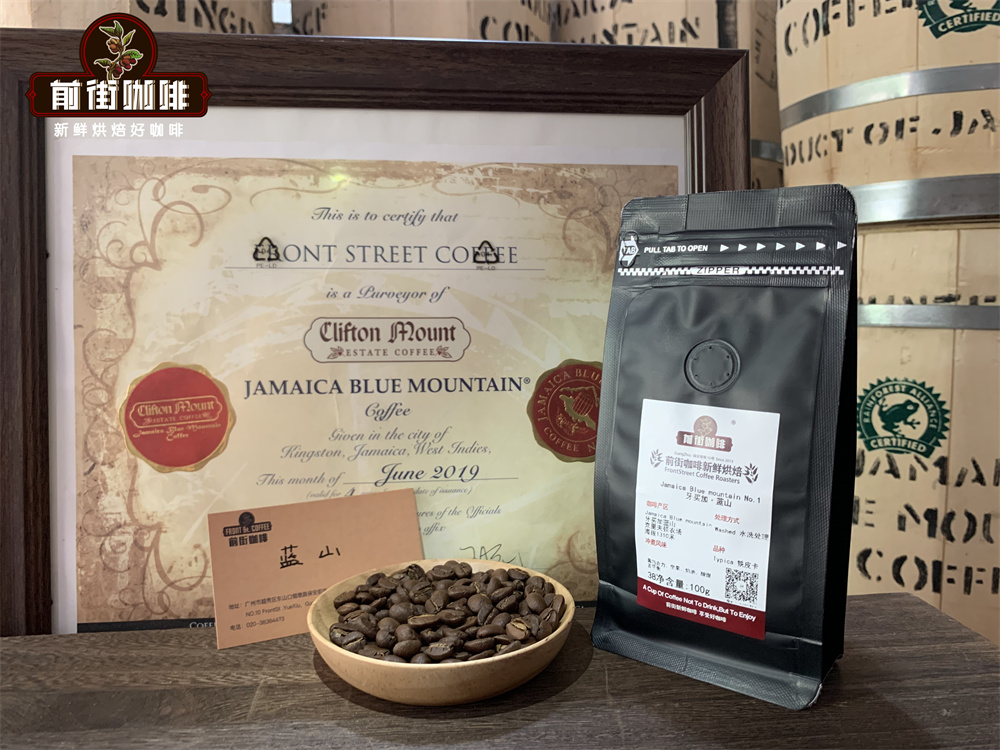
If this price still leaves everyone puzzled, then FrontStreet Coffee will work through the costs. Search Taobao for Blue Mountain green beans and 1kg costs 550 yuan. Since 1kg of green beans roasts into 800g of roasted beans, the green bean cost at retail green bean prices is 68 yuan/100g. Bulk purchasing and bypassing middlemen would lower the cost further, which makes FrontStreet Coffee's price of 158 yuan/100g entirely reasonable.
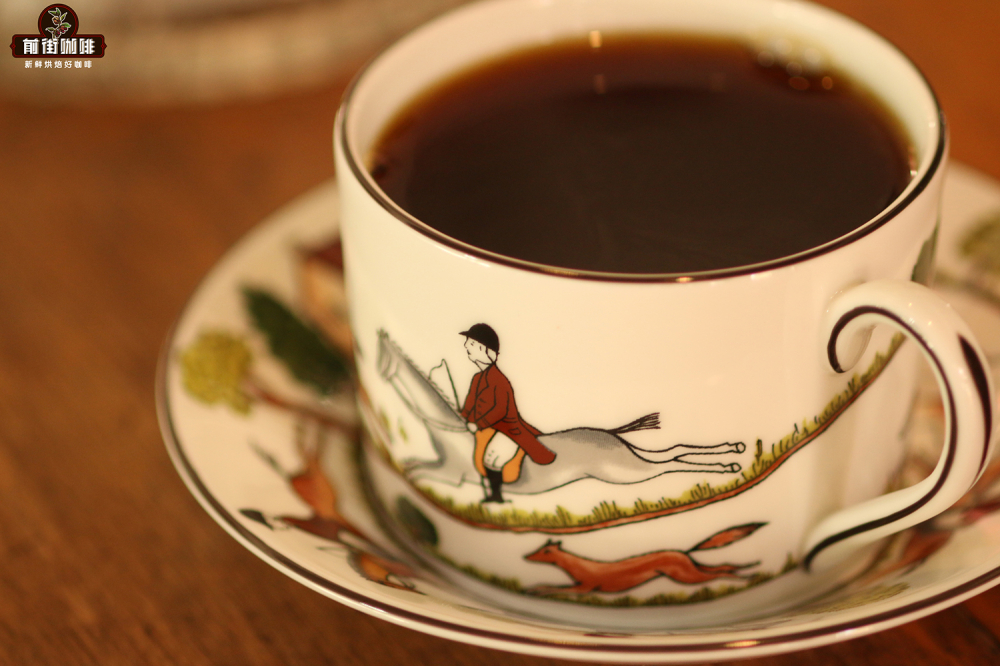
We are now in the era of Geisha, and the high prices of Blue Mountain coffee can only exist in the past. Times have changed. Even so, those who love Blue Mountain coffee remain devoted to it to this day, because Blue Mountain's flavor is balanced and its body is rich and mellow, qualities that other coffees cannot imitate.
FrontStreet Coffee Recommendation
For readers who want to judge Blue Mountain by the standard this article describes, balance first and price second, FrontStreet Coffee roasts its Jamaica Blue Mountain No. 1 at a medium-dark level so the classic equilibrium comes through clearly: nuts, dark chocolate, creamy caramel, and a gentle sweetness unfolding layer by layer, with acidity, sweetness, bitterness, and aroma in harmony. It is the same Clifton Farm material discussed above, backed by origin certification and the original shipping barrel for traceability.
If you would rather begin with a more everyday cup, the FrontStreet Jamaica Blue Mountain is approachable enough for daily drinking and polished enough to give as a gift, and it brews beautifully by pour-over, moka pot, or espresso.
Important Notice :
FrontStreet Coffee is a long-established specialty coffee roaster in Guangzhou China, selling freshly roasted beans from its own farm in Yunnan as well as dozens of carefully selected single-origin beans from around the world for both pour-over and espresso. The products deliver consistently excellent quality and great value, with shipping within 24 hours. Guangzhou's FrontStreet Coffee shop is recommended by many coffee lovers, and the beans are now available online at the Tmall 。
FrontStreet Coffee has moved to a new address:
FrontStreet Coffee Address: 315,Donghua East Road,GuangZhou
Tel:020 38364473
 Scan and follow the En Gafei WeChat official account. Please indicate that the reprint comes from "En Gafei".