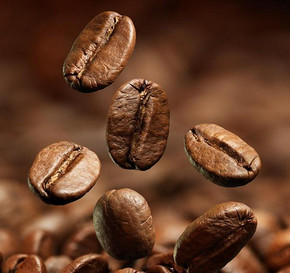
Geisha Coffee Single Cup Price: Premium Estate Geisha Coffee Bean Flavor Characteristics

Geisha coffee is one of the most expensive coffees in the world, and the price tag is enough to make plenty of drinkers think twice. At FrontStreet Coffee, we believe it earns every cent, because the flavor really is extraordinary. Our own range covers many of them: Colombia's Hanami Geisha, Costa Rica's Mirasou Geisha blend, Ethiopia's Geisha Village Red Label and Gold Label, and Panama's Hacienda La Esmeralda Red Label and Green Label Geisha, along with Boquete Geisha and others.

A single small cup of Geisha can sell for as much as 18 US dollars, the equivalent of over 120 RMB.
In 1996, when international coffee prices were at their lowest, seven estates in the Boquete and Volcan regions caught sight of the coming specialty coffee era and banded together to form the Panamanian Association of Special Coffees of Panama (SCAP).
SCAP held the first Best of Panama (BOP) auction in 2004. That inaugural auction offered just 11 lots, at an average price of $2.89 per pound. By 2012 the figure had climbed to $24.83 per pound, giving specialty coffee a powerful push forward. The renowned Hacienda La Esmeralda, Don Pachi Estate, Carmen Estate and Elida Estate were all founding members.

And so the Geisha variety stepped into the spotlight. Elegant as its flavors are, they depend on very specific growing conditions. Geisha is demanding: it wants high altitude, cloud cover or shade trees, and fertile soil. Grown high up, the variety develops clearly defined floral aromas and a refined, elegant fruit acidity, one of the reasons it became a global obsession.
Geisha beans come from only certain regions of Ethiopia and Panama, and the supplier here is the well-known specialty coffee company 90+. In the words of Thomas Perez, CEO of Alpha Dominik: "This coffee comes from Ethiopia, and the grower is the 90+ company. Geisha is a rare variety, produced only in certain parts of Ethiopia and Panama. It is scarce and difficult to cultivate, with very low yields. Labor costs on 90+ farms are very high, and they follow their own cultivation philosophy, only harvesting beans that are fully ripe. A single plant may be picked two or three times, and each pass takes only fully ripe cherries. All of that makes labor expensive, which is one reason the beans cost so much."

Geisha is grown in many places now, yet coffee from elsewhere never quite matches Panama's. Coffee is an agricultural product shaped by climate and environment, and Panama's microclimates are what created the most distinctive Geisha flavors. Geisha has abundant sweetness, an exceptionally clean mouthfeel, and layered aromas running from berries and citrus to mango, papaya and peach. A pronounced bergamot-like aftertaste is another hallmark in the cup. To this day, Geisha remains the champion among coffee varieties.
FrontStreet Coffee's Geisha Flavors and Prices
FrontStreet Coffee's roasted Geisha comes with strong guarantees on both brand and quality. Every order ships within 5 days of roasting, so the beans you receive are 100% freshly roasted. FrontStreet Coffee currently offers 3 Panama Geisha coffees.
One is Panama Hacienda La Esmeralda Red Label Natural Geisha, with notes of rose, strawberry juice, citrus, honey and black tea. It is priced at 350 RMB/100g; a 15g pour-over served in store costs 75 RMB.

Another is Panama Hacienda La Esmeralda Green Label Washed Geisha, with notes of jasmine, ginger flower, citrus, honey and Tieguanyin. It is priced at 168 RMB/100g; a 15g pour-over served in store costs 60 RMB.

Panama Boquete Geisha is very affordable at 98 RMB per 100g.

The Esmeralda Red Label most of us can buy day to day usually comes from the same harvest, even the same plots, as the auction coffee, yet the price gap is considerable. Esmeralda Red Label Geisha roasted beans on the market today typically run between 300 and 500 RMB per 100g, with washed cheaper than natural. Natural costs more mainly because the Geisha lot that won the 2004 BOP championship was natural-processed, giving a juicy mouthfeel, refined berry sweetness and acidity, alluring red floral aromas and an inviting black tea aftertaste that won over coffee professionals everywhere.
Panama Hacienda La Esmeralda Estate (Boquete)
Hacienda La Esmeralda sits on a corner of Baru Volcano, which is why the beans from this area were mostly sold under the Baru Mountain name before the estate became famous. The countryside around Boquete is beautiful, dotted with leisure hotels, villas and holiday estates, even buildings along the important Rio Caldera River. Hacienda La Esmeralda lies in Jaramillo on the right bank of that river, and the estate later planted coffee higher up in Canas Verdes on the left bank. We have Rudolph Peterson's decision to buy the property to thank for all of it.

Hacienda La Esmeralda actually comprises 4 farms: Cades Verdes, El Velo, Jaramillo and Palmira, and all of the coffee is sent to a central facility for post-processing. The first farm the Peterson family bought was Palmira.
Red Label Geisha
The Esmeralda Special Series (Red Label) is the highest-quality Geisha Hacienda La Esmeralda sells, grown on specific plots at altitudes of 1600-1800 meters. Every lot must score above 90 points in cupping. Esmeralda Special, Hacienda La Esmeralda's own independent auction, is composed entirely of Geisha and organized by production area, with each area split into small lots for auction. Only Geisha lots that Hacienda La Esmeralda puts into that independent auction may carry the Esmeralda Special name. Since 2013, Esmeralda Special has released nine lots.
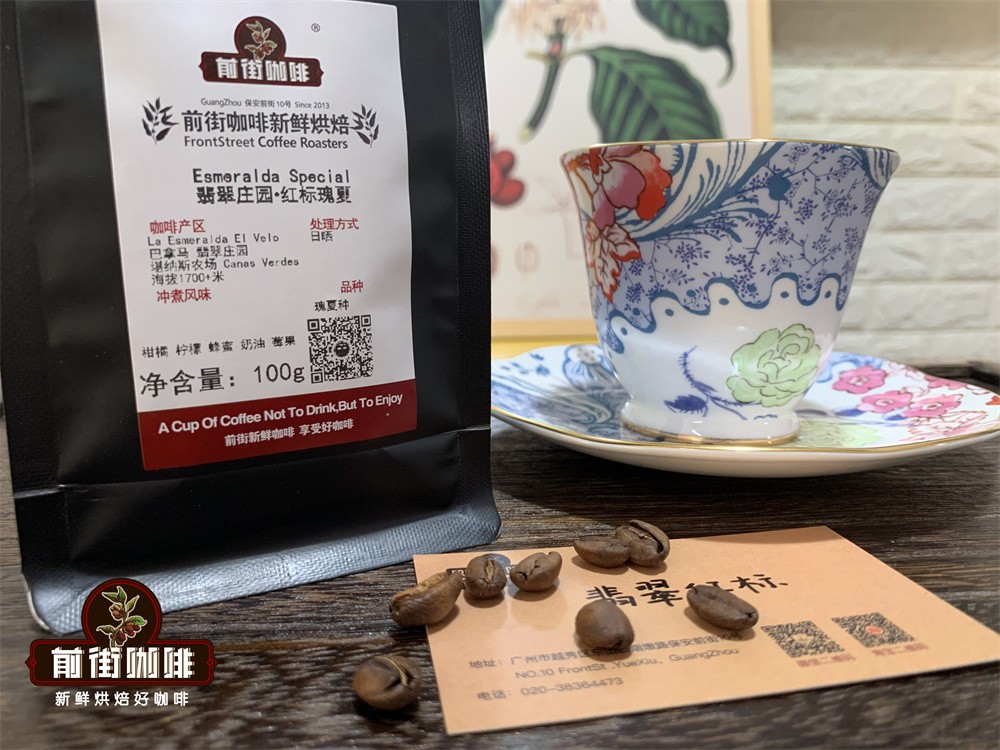
FrontStreet Coffee's Hacienda La Esmeralda Red Label Natural Geisha tastes of ripe strawberry, rose, black tea and grapefruit in a sweet-and-sour floral and fruit tea, with berry sweetness and a lingering sweet finish.
Green Label Geisha
The Private Collection Series (Green Label) highlights the signature flavors of Hacienda La Esmeralda's high-altitude Geisha rather than focusing on individual plots, as Red Label does. It is a blend of lots from several specific plots. (Think of Green Label as Red Label without the plot separation.)

FrontStreet Coffee's Hacienda La Esmeralda Green Label is washed, giving a cleaner, fresher mouthfeel than the Red Label natural Geisha.
As for Hacienda La Esmeralda Blue Label Geisha, FrontStreet Coffee understands that the estate announced in the 2021 harvest season that it would no longer release a Blue Label series. The Blue Label has since disappeared from the product description on the estate's official website, leaving only Red Label and Green Label among the Geisha offerings.

Beyond the famous Hacienda La Esmeralda, the Boquete region is also home to renowned estates such as Elida Estate and Kotowa Duncan Estate, all producing high-quality specialty coffee. So that more people can taste Geisha, FrontStreet Coffee has added Panama Washed Boquete Geisha to its everyday lineup.
FrontStreet Coffee's Roasting Recommendations
To present classic Geisha flavors, more of the floral aromas and acidity should be preserved, so FrontStreet Coffee roasts all of its Geisha lightly, adjusting the curve to suit each processing method and flavor profile. This roast level does not significantly soften the hardness of beans grown at high altitude, so brewing needs a higher extraction rate to reveal fuller layers of flavor. That means higher water temperatures and a slightly finer grind to draw out more aromatic compounds.
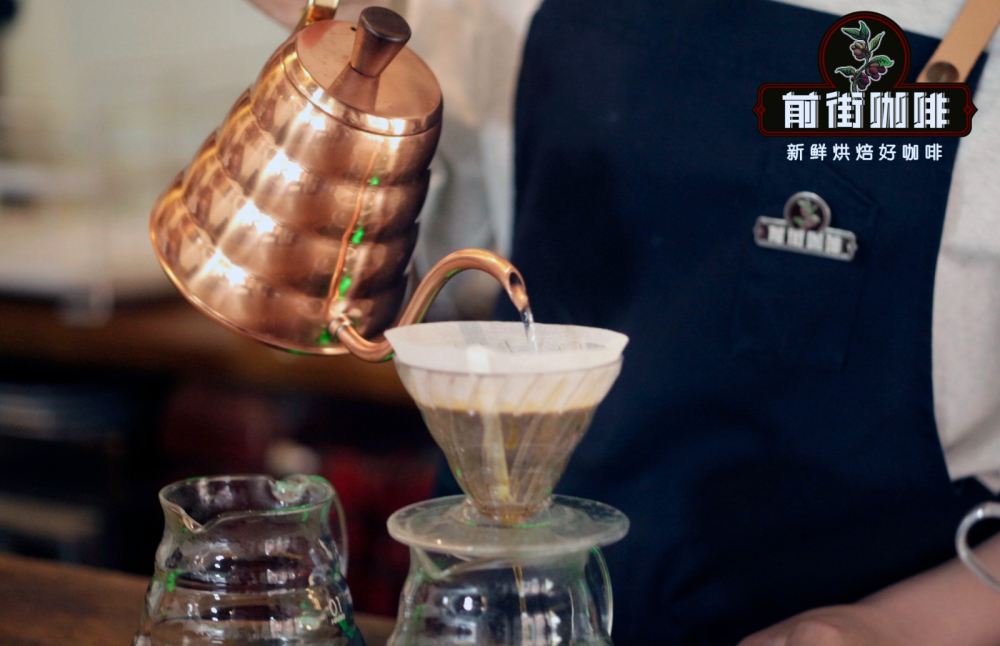
To raise the extraction rate without tipping into over-extraction, and to highlight the sweet-and-sour layers, FrontStreet Coffee's baristas use the V60 dripper. Its body has guide ribs running top to bottom and a large central hole that speeds water flow, while the spiral exhaust grooves lengthen the water's path and increase contact time between grounds and hot water. Each stream converges along the grooves toward the center point, concentrating pressure on the coffee bed for a more layered cup.

FrontStreet Coffee's Geisha Brewing Parameters
Light-roasted coffee is far less soluble than dark-roasted coffee, so to fully extract Geisha's flavors FrontStreet Coffee recommends the following brewing parameters.
Dripper: Hario V60. Water temperature: 91°C. Coffee amount: 15g. Brew ratio: 1:15. Grind size: Chinese standard #20 sieve, 80% pass rate.
[Esmeralda Red Label Geisha flavor characteristics]: Bright rose and citrus aromas, brown rice, berries, apricot, complex fruit, honey, with a rich, juicy mouthfeel, layered flavor and noticeable sweetness.
[Esmeralda Green Label Geisha flavor characteristics]: Intense jasmine aromas, high sweetness, citrus, berries, a juicy mouthfeel, cream, green tea, orange peel and cantaloupe, richly layered overall, with a lasting floral and citrus finish.
[Panama Washed Boquete Geisha flavor characteristics]: Clear acidity with distinct citrus, lemon and bergamot notes, a creamy, smooth swallow, and green tea and honey sweetness in the finish.

FrontStreet Coffee's Brewing Recommendations
On brewing, FrontStreet Coffee has always held that freshness does more for flavor than anything else. That is why all beans ship within 5 days of roasting. The roasting philosophy is simple, "freshly roasted good coffee," so every customer gets the freshest possible beans. Coffee needs roughly a 4-7 day rest, so by the time it arrives it is at peak flavor.
For those who want pre-ground coffee, a kind reminder from FrontStreet Coffee: pre-ground coffee needs no resting period, because the carbon dioxide pressure inside the packaging during shipping helps round out the flavor, so it can be brewed as soon as it arrives. It should, however, be brewed promptly, since ground coffee oxidizes quickly once exposed to air, so flavor fades fast and the cup suffers. FrontStreet Coffee therefore recommends buying whole beans and grinding fresh for each brew to get the most from the coffee.
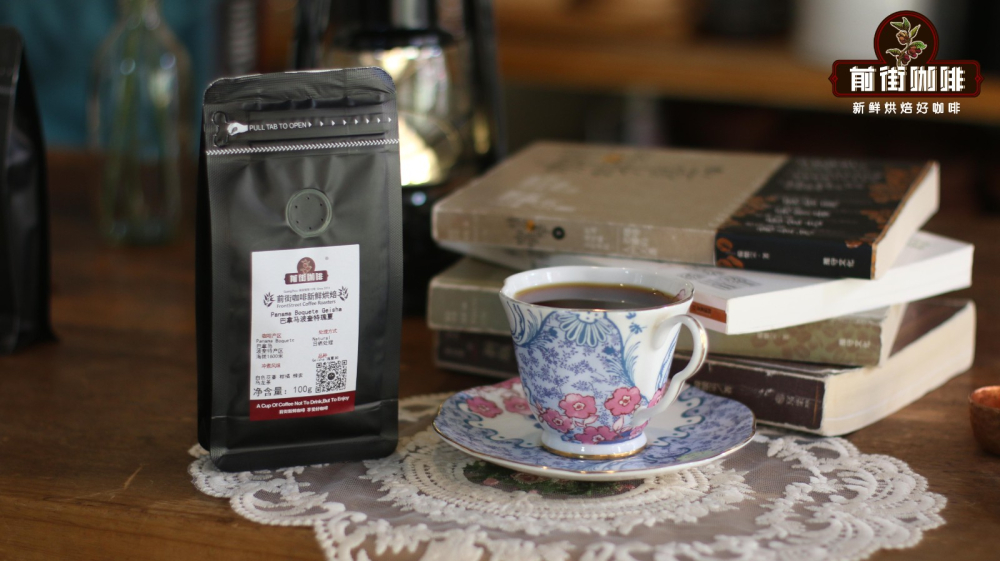
Excellent as Geisha tastes, it is not the only coffee worth drinking. If you want to try it but find it too expensive, FrontStreet Coffee suggests Panama Washed Flower Butterfly Geisha blend. It contains 70% Geisha and delivers the essential Geisha flavors at very high value. Of course, there are many varieties, and plenty of non-Geisha coffees are excellent too: Ethiopian coffee with fresh floral and fruit aromas, Brazilian coffee with nutty, creamy flavors that are neither bitter nor sour, Colombian coffee with nutty notes and gentle fruit acidity. FrontStreet Coffee carries over fifty single-origin coffees from various regions, each with its own character, enough to satisfy any coffee lover.
FrontStreet Coffee Recommendation
If the auction prices above have you daydreaming but not quite reaching for your wallet, the good news is that FrontStreet Coffee's Geisha lineup is built to be climbed step by step. The entry point is FrontStreet Coffee Boquete Geisha from Panama, a washed estate-level coffee that shows the classic orange-blossom honey sweetness, an oolong tea body and a fine, layered fruit acidity. A step up, FrontStreet Coffee Esmeralda Green Label Geisha (originally Private Collection) blends lots from several plots to express the estate's signature high-altitude Geisha character at a friendlier price, while FrontStreet Coffee Esmeralda Red Label Geisha, sold under the Esmeralda Special name, comes from a single plot at 1600-1800 meters and must cup above 90 points.
Ethiopian Geisha is a different expression, brighter and more fruit-forward. FrontStreet Coffee Genlana Gesha comes from a processing station at the Yirgacheffe border established in 2014 and covering around 700 hectares; the cherries are hand-picked, dried on raised beds for 14-20 days depending on the weather, and lightly roasted to give citrus acidity, an elegant ginger-flower aroma and a refined Geisha finish. For something rarer, FrontStreet Coffee Geisha Village Gold Label belongs to the Gesha 1931 variety and accounts for 10% of the village's output, while Geisha Village Red Label is Gori Gesha, 15% of production and scoring 88 or above on the SCA scale. If you prefer a broader, more affordable blend, FrontStreet Coffee Strawberry Candy pairs Costa Rica honey-processed coffee with Panama Geisha, and can be brewed as pour-over, moka pot, espresso or cold brew.
For brewing, Geisha is a harder, denser bean, so FrontStreet Coffee suggests a grind around a Chinese standard #20 sieve with a 78% pass rate, close to fine caster sugar, and water at 91°C. A typical recipe is 15g of coffee in a small Hario V60 at a 1:16 ratio, poured in three stages: 30g of water for a 30-second bloom, then a slow circular pour to 125g, waiting until the bed has drained partway, and a final slow circular pour to 225g, for a total extraction of about 2 minutes 10 seconds to 2 minutes 20 seconds. This same Geisha base also works beautifully as a cold brew, steeped cool and filtered for a clean, floral glass.
Important Notice :
FrontStreet Coffee is a long-established specialty coffee roaster in Guangzhou China, selling freshly roasted beans from its own farm in Yunnan as well as dozens of carefully selected single-origin beans from around the world for both pour-over and espresso. The products deliver consistently excellent quality and great value, with shipping within 24 hours. Guangzhou's FrontStreet Coffee shop is recommended by many coffee lovers, and the beans are now available online at the Tmall 。
FrontStreet Coffee has moved to a new address:
FrontStreet Coffee Address: 315,Donghua East Road,GuangZhou
Tel:020 38364473
 Scan and follow the En Gafei WeChat official account. Please indicate that the reprint comes from "En Gafei".