Pour Over Flavor Profile and Taste Description of Single Origin Coffee Beans from Honduras Santa Barbara Region
For professional coffee knowledge exchange and more coffee bean information, please follow Coffee Workshop (WeChat public account: cafe_style)
Introduction
Coffee cultivation began in Honduras in 1804. Today, the country has 280,000 hectares of coffee farms, all run by smallholders whose plots are mostly smaller than 3.5 hectares; these small farmers account for 60% of Honduras's coffee production. In 2011, Honduras's output surpassed that of Guatemala, and by 2012 it had become the world's second-largest exporter of washed Arabica beans, behind only Brazil. It currently ranks seventh globally in total production volume. Ninety-two percent of Honduran coffee farmers are small-scale individual growers, and coffee-related workers make up 12.5% of the country's total population of 8 million, which makes coffee an extraordinarily important crop for Honduras. On the farms, farmers pick red coffee cherries, process them through washing and fermentation, and grade them according to market demands to satisfy consumers' different taste preferences. Honduras produces three million bags of coffee annually, supplying high-quality coffee with distinctive flavor profiles in both large quantity and excellent quality. It has become the largest coffee-producing country in Central America and one of the world's top ten coffee-exporting nations. The Honduran coffee industry supports the livelihoods of hundreds of thousands of families and provides one million jobs, making it a vital agricultural sector for the national economy.
Honduras's major producing regions are distributed across the western and southern parts of the country, with six main regions: Copan, Opalaca, Montecillos, Comayagua, Agalta, and El Paraico. The average cultivation altitude ranges from 1,300 to 1,500 meters above sea level. The coffee is 100% Arabica, with 69% classified as HG grade, 12% as SHG grade, and 19% as CS grade. The main varieties planted include Typica, Bourbon, Caturra, Villa Sarchi, and Lempira. Honduran coffee has consistently maintained high quality, and its prices are the most competitive among Central American countries. The beans are small, round, and light blue-green, showing a mild fruit acidity with full body and a slightly sweet taste, which makes them suitable for both blends and single-origin brews. They take well to medium and dark roasting and are mainly exported to the United States, Germany, and Japan.
Honduras is now the largest coffee-producing country in Central America, with output climbing steadily in recent years. In 2012, thanks to favorable international coffee prices, that year's harvest exceeded 5 million bags, up from 2010, with significantly increased volume and continuously improving quality. The largest coffee-producing region in Honduras is the Santa Barbara area, located in western Honduras, northwest of Lake Yojoa. Over the past few years, this region has developed into one of the country's most famous coffee-growing areas. It is also home to the renowned agronomist Mr. Angel Arturo Paz, who owns a post-harvest facility - the San Vicente Processing Plant - in the town of Peña Blanca, Santa Barbara province, north of Lake Yojoa in the western part of the country. He has been a consistent winner in Honduras's Cup of Excellence (COE) competition.
The San Vicente Processing Plant buys coffee cherries from smallholder farmers in surrounding villages such as El Cielito, Las Flores, and El Cedral (each of these places has at least 35 families and one school). Although the small quantities usually make it difficult to separate these farmers' lots individually, the coffee from these areas has consistently impressed with its high sweetness and fruity character.
San Vicente is a family-owned mill that is well known locally. Through projects that help farmers improve cultivation techniques and upgrade production equipment, it is dedicated to building close relationships with producers and rigorously quality-controls every lot through cupping. This Rainforest Alliance-certified SHG lot from the San Vicente Processing Plant is produced by combining coffee from smallholder farms in the surrounding areas for joint production and marketing. Because each farmer's average planting area is only 1-2 hectares, the green coffee they produce cannot be sold as separate lots, so it must be combined for batch marketing - something like a production cooperative or a coffee growers' marketing group.
Honduras
Population: 8,250,000
Although it is not described by HCAFE as a coffee-growing region in its own right, many coffee roasters label their coffees as coming from Honduras's Santa Barbara region. Several coffee-growing areas cross into Santa Barbara (a government department of the country). Some might argue it deserves its own description, but it seems more appropriate to list the growing regions according to official principles. There are also excellent Pacas-variety lots from the Santa Barbara region that, when in good condition, possess a unique, fruity flavor profile that is absolutely worth seeking out.
Honduras Santa Barbara Region Estates
COPAN
The Copan region is located around the city of Copan in western Honduras, best known for its local Mayan ruins. This area borders Guatemala, and regions like this remind us to value the actual origin of a coffee rather than just the producing country. In fact, dividing by country is somewhat arbitrary, because consumers find it difficult (unfortunately) to tell whether beans come from Honduras or Guatemala. The Copan region lies north of the Santa Barbara coffee region.
Altitude: 1,000-1,500m
Harvest: November - March
Varieties: Bourbon, Caturra, Catuai
OPALACA
The Opalaca region lies to the south of Santa Barbara, and also covers Intibuca and Lempira. It takes its name from the Opalaca mountain range that runs through the region.
Altitude: 1,100-1,500m
Harvest: November - February
Varieties: Bourbon, Catuai, Typica
Honduras Santa Barbara Region, La Fortuna Town (La Fortuna, Quimistan) - Santa Barbara, La Fortuna Estate is diligently cultivated and run by Oscar Orlando Melgar.
Cupping Notes
Juicy, bright acidity, floral, nutty, apple, milk chocolate, tropical fruits, very rich and layered flavors, long aftertaste
Product Name: Honduras San Vicente Processing Plant SHG
(Honduras San Vicente Rain Forest SHG)
Region: Santa Barbara Province, Pena Blanca Town
Processing Plant: San Vicente Processing Plant (Beneficio San Vicente)
Varieties: Pacas, Catuai, Bourbon
Grade: SHG
Altitude: 1300 to 1500 meters
Certification: Fair Trade
Flavor: Brown sugar, almond, toasted bread, chocolate, balanced, sweet tones.
FrontStreet Coffee Honduras Coffee Roasting Recommendation
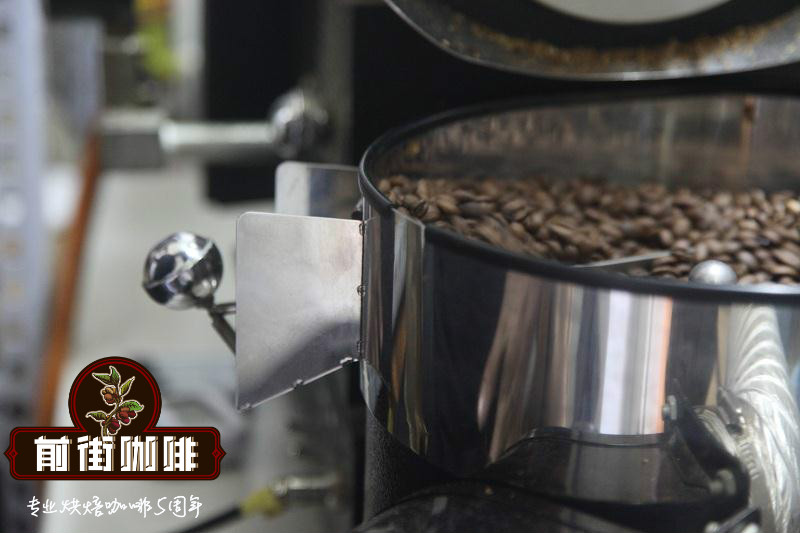
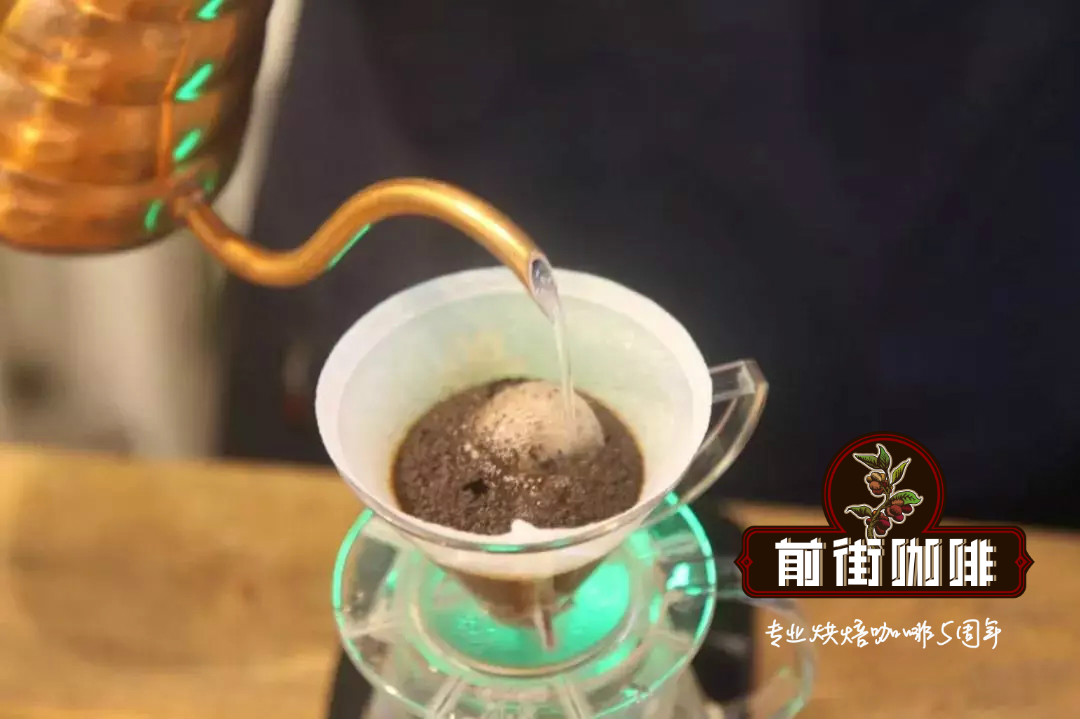
Because most Honduran coffee flavors lean toward chocolate and nuts, FrontStreet Coffee recommends a medium-dark roast to extend the caramelization reaction and bring out its chocolate, nutty, and full-bodied character. For brewing, FrontStreet Coffee suggests using a KONO dripper with a medium grind size, water at around 88°C, a coffee-to-water ratio of 1:13-1:14, and a total extraction time of one minute fifty seconds.
Important Notice :
FrontStreet Coffee is a long-established specialty coffee roaster in Guangzhou China, selling freshly roasted beans from its own farm in Yunnan as well as dozens of carefully selected single-origin beans from around the world for both pour-over and espresso. The products deliver consistently excellent quality and great value, with shipping within 24 hours. Guangzhou's FrontStreet Coffee shop is recommended by many coffee lovers, and the beans are now available online at the Tmall 。
FrontStreet Coffee has moved to a new address:
FrontStreet Coffee Address: 315,Donghua East Road,GuangZhou
Tel:020 38364473
 Scan and follow the En Gafei WeChat official account. Please indicate that the reprint comes from "En Gafei".