Differences in Flavor Characteristics Between Natural and Washed Single-Origin Coffee Beans from Yirgacheffe Kochere Region

When it comes to coffee, FrontStreet Coffee holds that beyond variety, origin, and cultivation, one more process shapes the cup: how the green bean is processed. Different methods draw out different flavours. As FrontStreet Coffee noted in the article "How Green Bean Processing Methods Affect Coffee Flavor," both natural and washed processing leave a lasting mark on flavour, which makes the choice of method enormously important. Washed coffees generally taste "cleaner" and express their own character more clearly—beyond rich fruit, they reveal more of the bean itself, and they tend to have more pronounced acidity. Natural processing can enhance body and release a wider range of flavours, giving natural beans a strong, distinct character.
FrontStreet Coffee's two Yirgacheffe coffees—FrontStreet Natural Red Cherry and FrontStreet Washed Kochere—show just how much processing matters. FrontStreet Coffee selected the Red Cherry Natural and the Kochere Washed to observe the differences that processing brings. Let's begin with the background of the regions these beans come from.
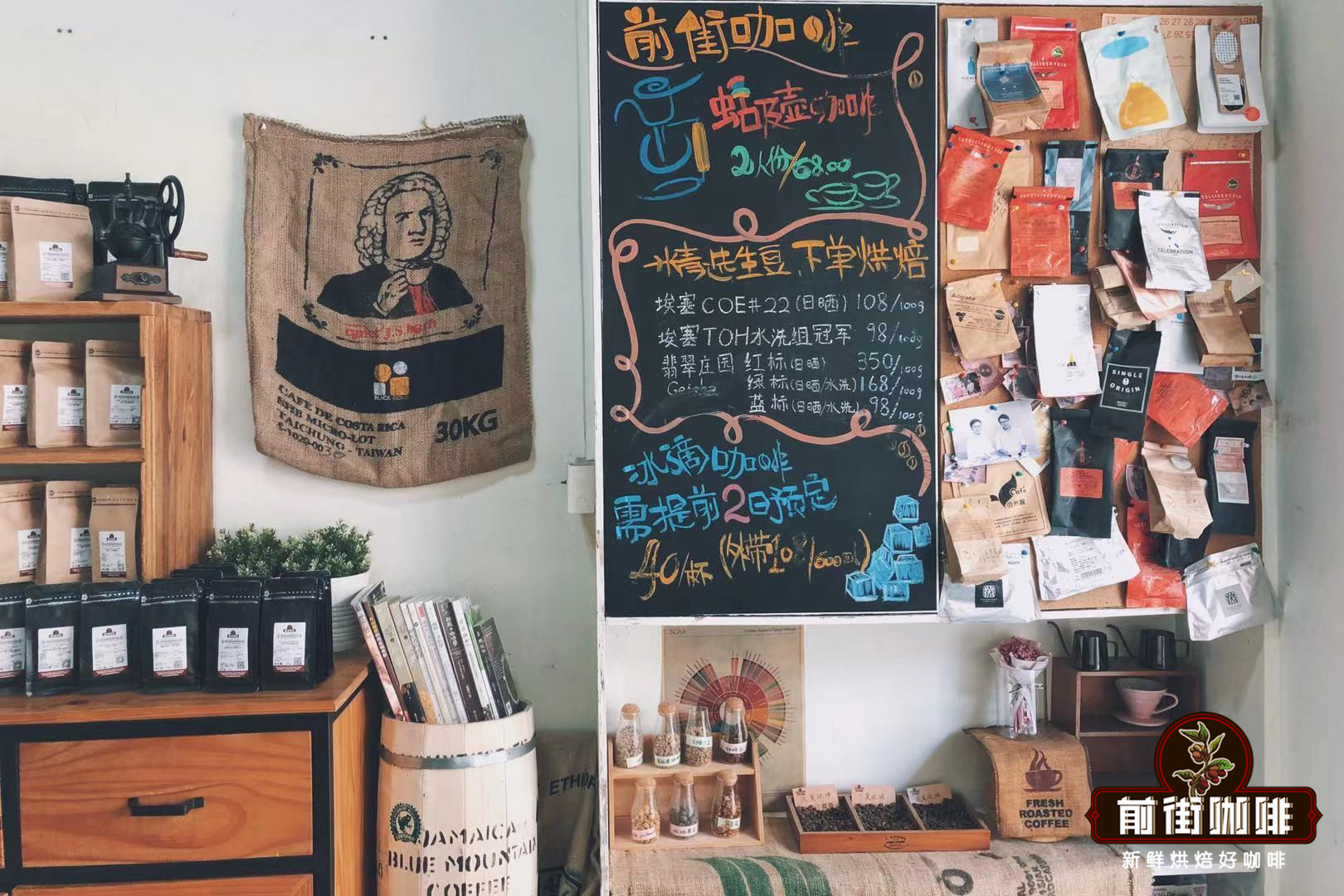
Kochere Production Area
Kochere is a small production area 25 kilometers southeast of Yirgacheffe, Ethiopia—a prosperous region known for coffee and one of the three famous micro-regions of Yirgacheffe. The local population is about 100,000, with coffee as the main source of income. The area has very advanced processing and equipment. The respected review site Coffee Review gave Kochere washed beans a high rating of 94 points.
The most famous origin in southern Ethiopia is the Yirgacheffe production area, which has the highest altitude. Over 90% of the coffee is grown by local smallholders on small plots where they also grow vegetables and grains. This particular bean comes from the Kochere district in the southernmost part of the Yirgacheffe region, the area with the best conditions and highest production volume among its four sub-regions. Small farmers in Kochere deliver their harvested red cherries to processing stations, where workers remove unripe cherries and lay the rest on drying racks to sun-dry. The whole process follows strict G1 production standards.

The main harvest season in Ethiopia runs through November and December. Most farmers do not use modern methods; they tend their coffee trees by hand without harmful pesticides or herbicides, so almost all Ethiopian coffee is organically grown by default, certified or not. That combination of original growing methods and precise processing has made coffee from this region world-famous. Because the area has relatively advanced green bean washing equipment, it has always maintained high standards in washed processing, praised for its clean sweetness with complex notes of honey and citrus. The main local production model has small farmers deliver each harvest's red cherries directly to nearby cooperative washing stations for unified processing. Other famous production areas adjacent to Kochere include Wenago, Gelena, Abaya, and Gedeb.
Kochere is one of the 77 Woredas (Ethiopian administrative divisions) in Ethiopia's SNNPR region. In coffee terms, Kochere is part of Gediyo in Yirgacheffe and one of Yirgacheffe's most important production areas. Kochere can be divided further into several micro-regions, and coffee from them is sometimes named more specifically by source town (such as Chelelektu or Teklu Dembel), processing station (such as the Teklu Dembel station or this batch's Alimu station), or micro-region (such as Banko Gutiti). This aligns with the current emphasis on traceability. Batches with stronger traceability have more specific sources, higher year-to-year flavour stability and reproducibility, and consequently higher prices.

This batch of FrontStreet Yirgacheffe Kochere differs from general lots in belonging to the highest specification, G1 grade. Its origin character is strong, with a clean, fresh lemon aroma and delicate, elegant jasmine notes, alongside rich aromas and flavours of cantaloupe, citrus, ginger, and spice tea. Yirgacheffe itself is a small town of about 20,000. The three adjacent small production areas—Wenago, Kochere, and Gelena Abaya—are classified under the Yirgacheffe region because their coffee flavours are virtually identical to Yirgacheffe's. Culturally and geographically, Yirgacheffe resembles neighbouring Sidamo, but it seems especially favoured with unique natural conditions. Top-quality FrontStreet Yirgacheffe coffee, with its florals, bright citrus fruit acidity, lemon-toned aroma, and silky smooth mouthfeel, always captures enthusiasts' attention. Amid the growth of the specialty coffee industry, coffee from this region has always been a focus for international buyers.

Kochere's production model mainly has local small farmers deliver their batches to cooperatives for unified processing. The local Chalalacktu village has about 100,000 people who depend on coffee for their livelihood, with related activities forming their main economic source. Thanks to coffee income, the local standard of living is significantly better than in many Ethiopian villages, with full health facilities, higher education institutions, and other infrastructure. Advanced processing equipment allows Kochere's coffee to maintain high standards in washed processing, with clean sweetness featuring complex notes of molasses and citrus.
FrontStreet Yirgacheffe Kochere G1
Country: Ethiopia
Region: Yirgacheffe
Variety: Local Landrace
Altitude: 1650-1800 meters
Processing Method: Washed
Flavor Profile: Rich fruit flavors, fresh jasmine floral notes, berries, lemon acidity, pineapple, apple, smooth and clean mouthfeel, long aftertaste.
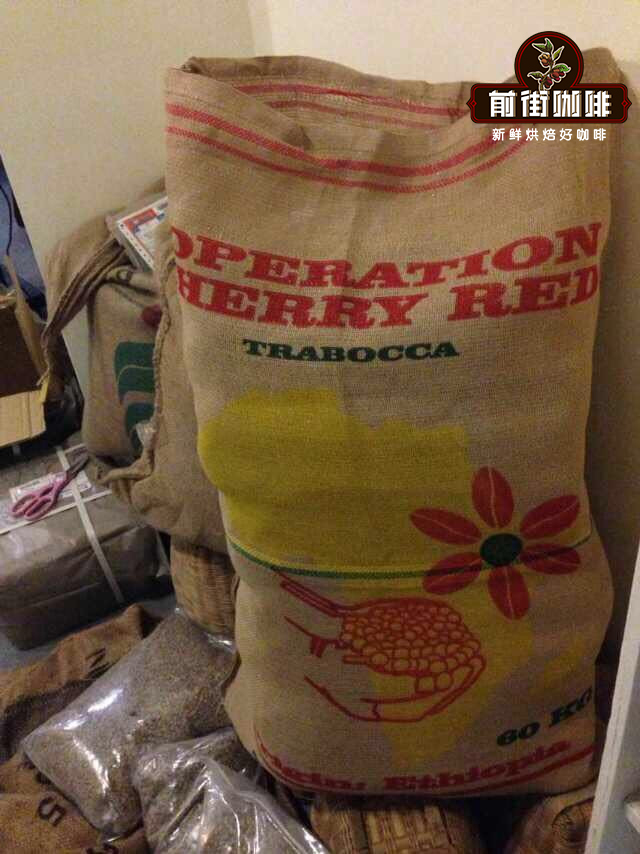
Red Cherry Project
The "Red Cherry Project" (ORC) is a programme aimed at improving the quality of small-scale farms. In 2007, Trabocca, the largest green bean importer in the Netherlands, launched it in pursuit of high-quality Ethiopian beans. The project requires that harvest involve not only picking fully red fruit but also doing so entirely by hand. That is merely the most basic requirement—the project is far more complex. Its main purpose is to encourage farmers and bring surprises to roasters. Before the harvest season, Trabocca invites all Ethiopian farms to produce small batches of about 1500-3000 kg (25-50 bags). Women select only 100% fully mature red cherries, which makes a significant difference to the brewed flavour. Careful, keen-eyed, hardworking Ethiopian women are therefore important drivers of the Red Cherry Project.

The Red Cherry Project also encourages farms to invest more effort in selection. These coffees command relatively higher prices. The project covers washed, natural, semi-washed, semi-natural, and experimental coffees. Main production areas include Yirgacheffe, Sidamo, Bonga Forest, Lekempti, Kembata, Illubabor, Harar, and Limu, with the Golocha origin near Harar added in 2011. All have unique flavours that fully showcase Ethiopian coffee. After receiving the coffee, Trabocca selects further. Farms that pass cupping quality tests in both the Ethiopian and Dutch offices receive high bonuses. Trabocca invests all profits earned in recent years back into cooperating farms. Trabocca stresses that this is a non-profit project, run by only 4 people including the owner and a secretary, with other administrative matters supported by the parent company to reduce overhead, so that all profits return to cooperating farms.
First, there are high cupping requirements. In cupping labs in Addis Ababa, Ethiopia, and Amsterdam, the Netherlands, Trabocca screens further after receiving coffee from origins. Beans are evaluated through two cupping sessions, in Ethiopia and the Netherlands, to determine whether they meet the standard. Those that do are organised by Trabocca for auction to global buyers. Generally, coffee auctioned through this platform can fetch more than 4 times the average international coffee spot price, with the highest reaching up to 20 times.
Second, production quantities are required to be small but high in quality. To ensure enough energy to care for these top-tier Ethiopian beans, Trabocca requires participating farms to produce small batches, typically between 1500kg-3000kg.
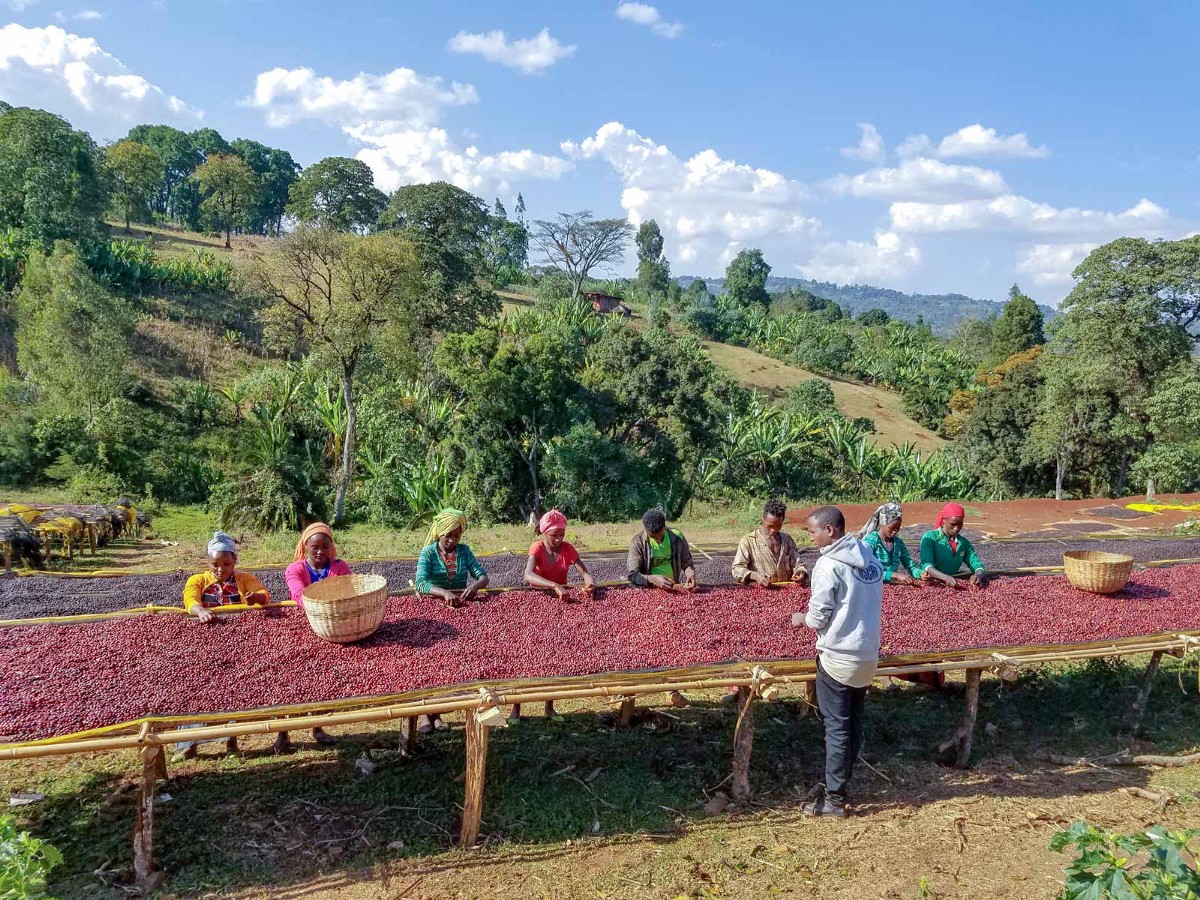
Finally, Trabocca invests substantially in the project. It has donated new natural drying racks, shade nets, generators, and other equipment locally, and provides financial loan support, new hardware, and production-processing knowledge and technology to help farmers raise their level. Through real-time monitoring and safe transport, it also ensures "Red Cherry Project" beans receive the best care at every stage.
Specifically, the Red Cherry Project encourages farmers to be more diligent at every step of harvesting and processing by raising purchase prices for high-quality green beans. That produces beans of better quality and superior taste that gain stronger recognition in the end market, which in turn balances the relatively high purchase prices.

FrontStreet Yirgacheffe Red Cherry Natural G1
Country: Ethiopia
Region: Yirgacheffe
Processing Station: Arletlan
Altitude: 2300m
Variety: Local Landrace
Processing Method: Natural Processing
Flavor: Berries, lemon, strawberry, fermented wine aroma
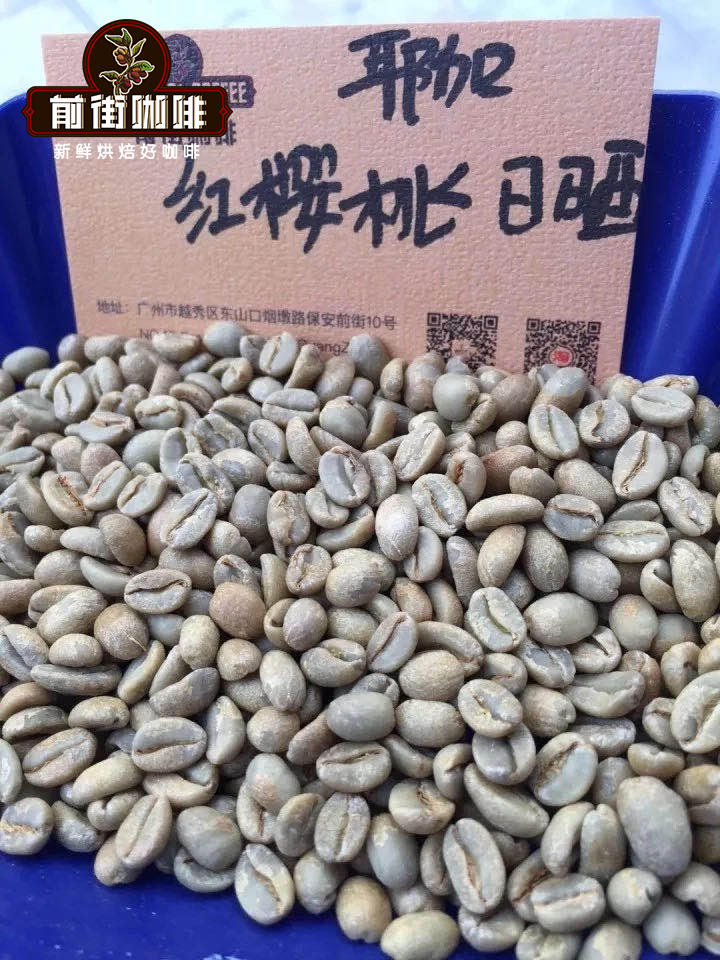
Green Bean Comparison
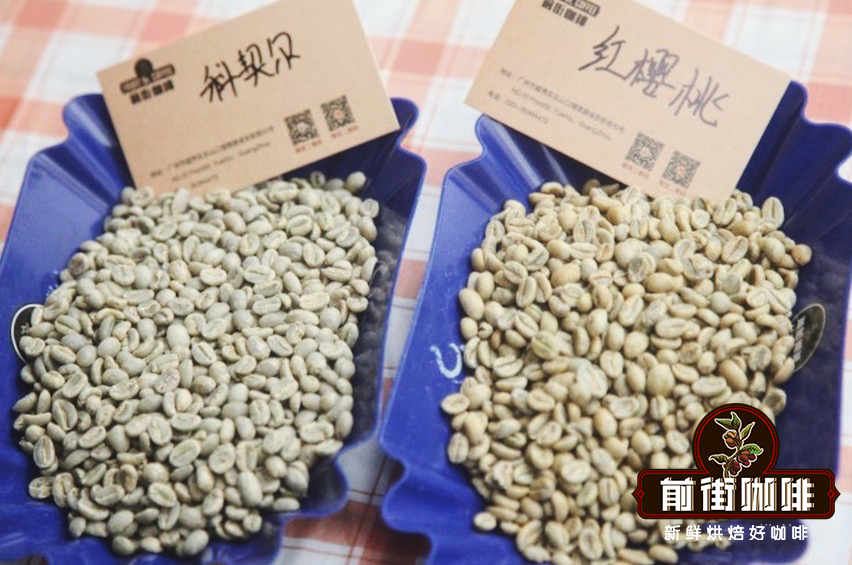
FrontStreet Red Cherry belongs to G1 grade. In the green state it shows a yellow-green colour typical of natural coffee, with uniform, plump beans and few defects.
FrontStreet Kochere's washed processing typically removes the silver skin during processing, giving the beans a special lustre that looks greener and more translucent. The dry-processed FrontStreet Red Cherry, by contrast, has only the husk removed, leaving the silver skin fully intact.
Silver Skin/Chaff: Inside the parchment lies an even thinner film wrapping the bean. Because of its lustrous, silvery colour, people habitually call it "silver skin."
Roasted Bean Comparison
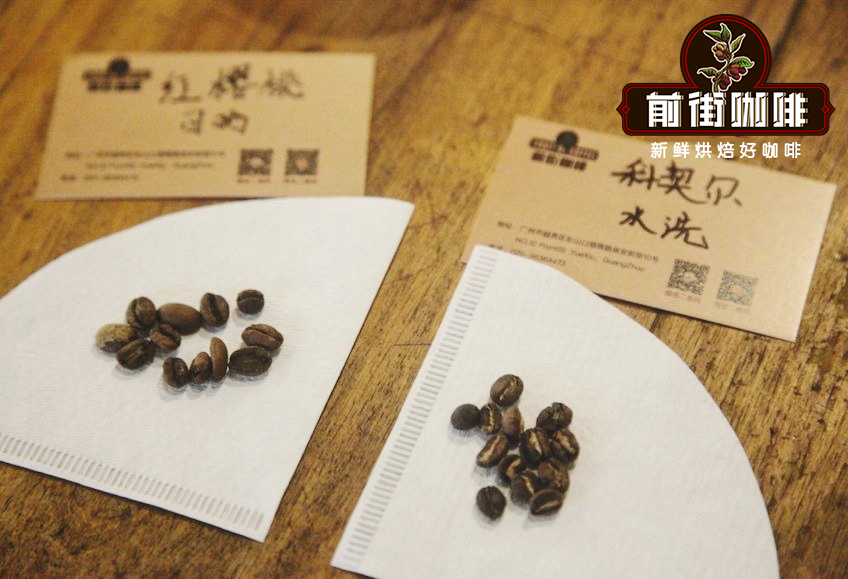
After roasting, FrontStreet Natural Red Cherry shows less silver skin. The relatively greater amount at the green stage comes off more thoroughly during roasting. FrontStreet Washed Kochere, however, shows more silver skin—washed beans hold more of it internally, and much of it remains after roasting. Of course, this is directly related to roast degree: the darker the roast, the more cleanly the silver skin comes off.
Roasting Comparison
Roasting Machine: Yangjia 800N (Roasting capacity 5500g)
FrontStreet Red Cherry
FrontStreet Coffee Roaster Operation: Preheat the roaster to 200°C, load beans, damper set to 3, heat at 150. Keep the damper unchanged. Return to temperature at 1'35". When drum temperature reaches 140°C, adjust heat to 180 and damper to 4. At this point the bean surface turns yellow, the grassy aroma disappears completely, and the batch enters the dehydration phase. When drum temperature reaches 170°C, adjust heat to 150°C, damper unchanged.
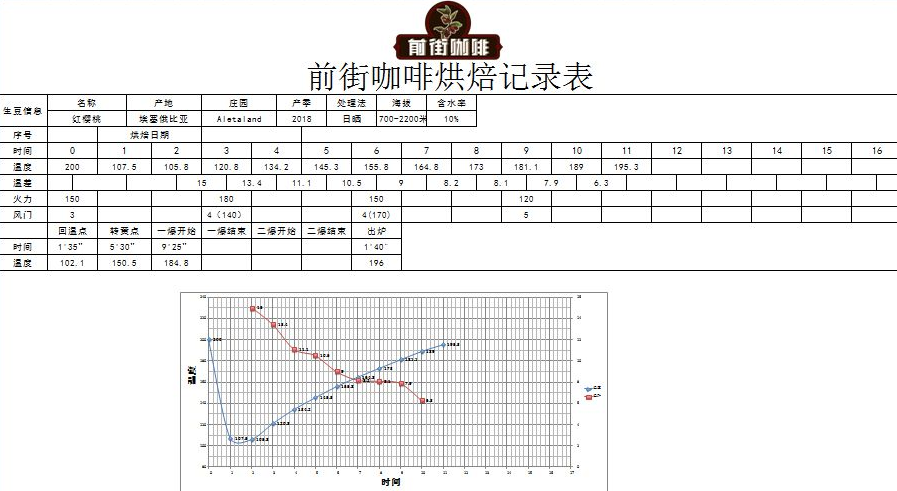
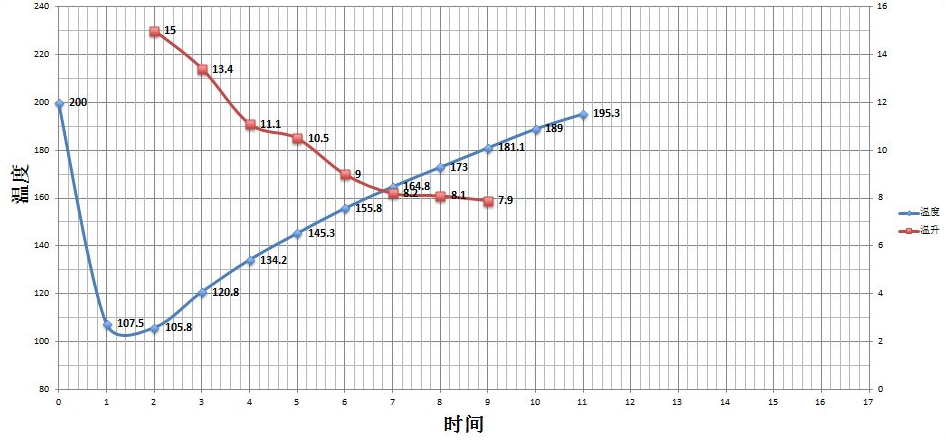
At 9'01", ugly wrinkles and black spots appear on the bean surface and the toast aroma clearly turns to coffee aroma—the prelude to first crack. Listen carefully for the sound of first crack. At 9'25", first crack begins. Reduce heat to 120°C and adjust damper to 5. Develop for 1'40" after first crack, then discharge at 196°C.
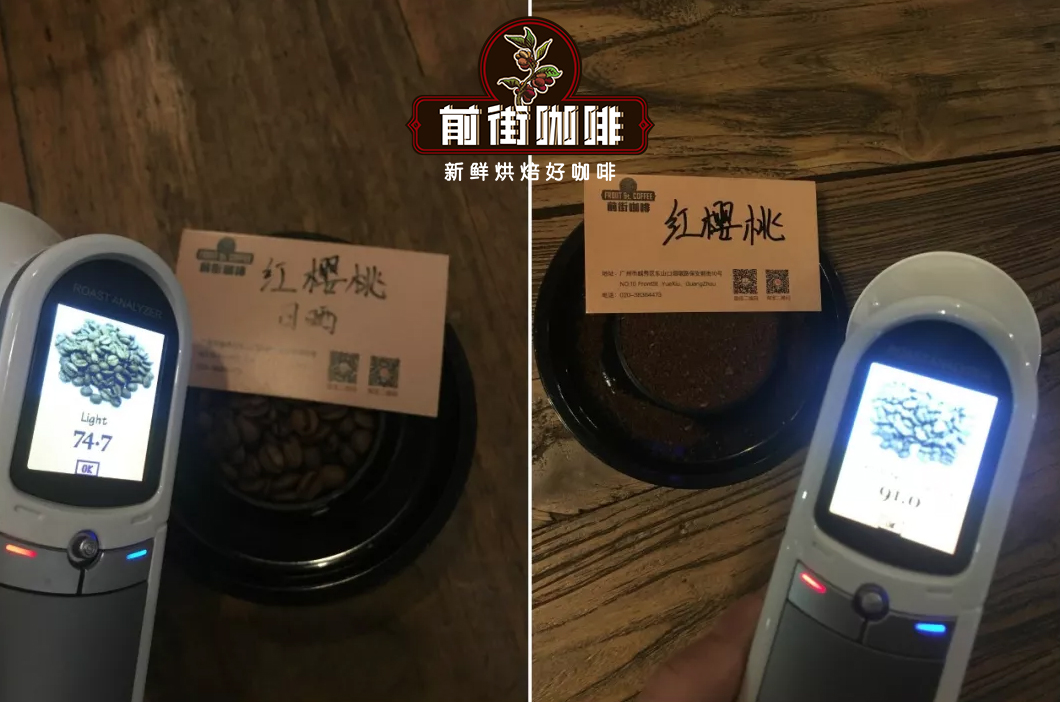
Agtron bean colour value is 74.7 (left image), Agtron pink value is 91 (right image), Roast Delta value is 3.16.
FrontStreet Kochere
FrontStreet Coffee Roaster Operation: Preheat the roaster to 200°C, load beans, damper set to 3, heat at 160. Keep the damper unchanged. Return to temperature at 1'32". When drum temperature reaches 151°C, adjust damper to 3.5. When drum temperature reaches 140°C, adjust heat to 180, damper unchanged. At this point the bean surface turns yellow, the grassy aroma disappears completely, and the batch enters the dehydration phase.
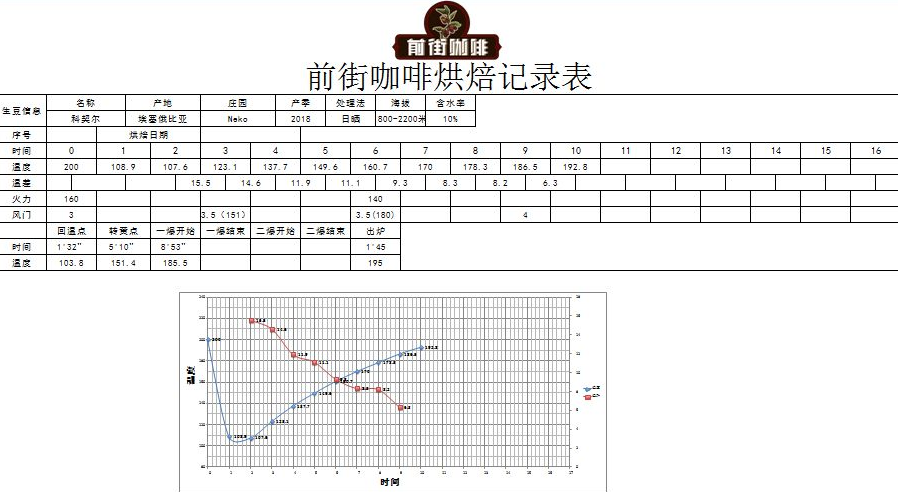
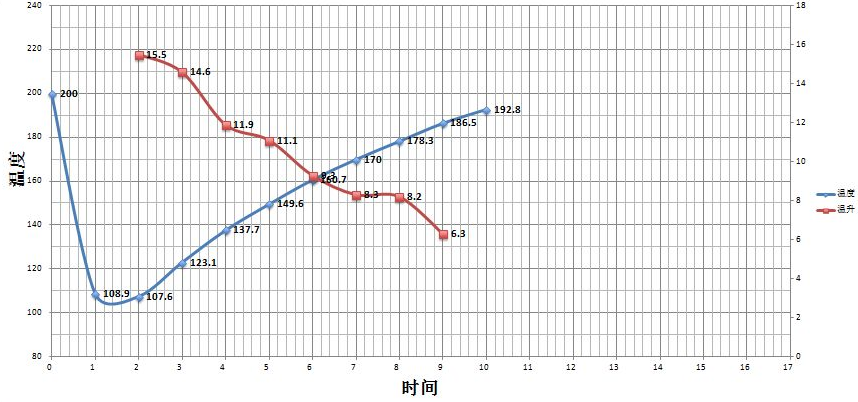
At 8'35", ugly wrinkles and black spots appear on the bean surface and the toast aroma clearly turns to coffee aroma—the prelude to first crack. Listen carefully for the sound of first crack. At 8'53", first crack begins. Keep heat at 180 unchanged and adjust damper to 4. Develop for 1'45" after first crack, then discharge at 195°C.
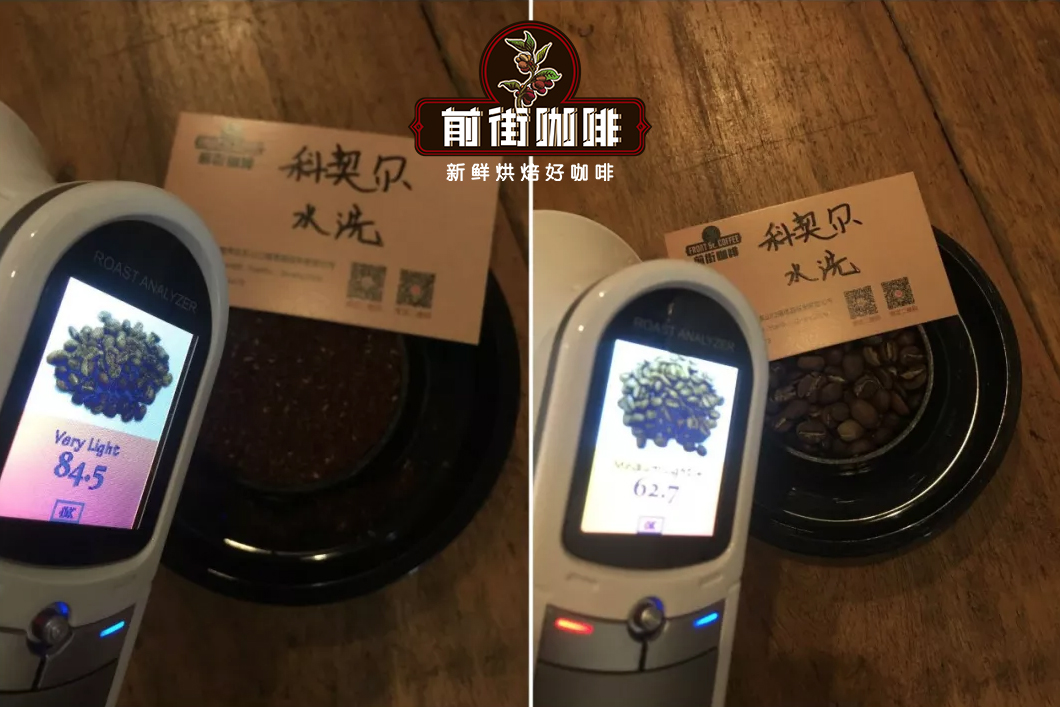
Agtron pink value is 84.5 (left image), Agtron bean colour value is 62.7 (right image), Roast Delta value is 21.8.
Cupping Comparison
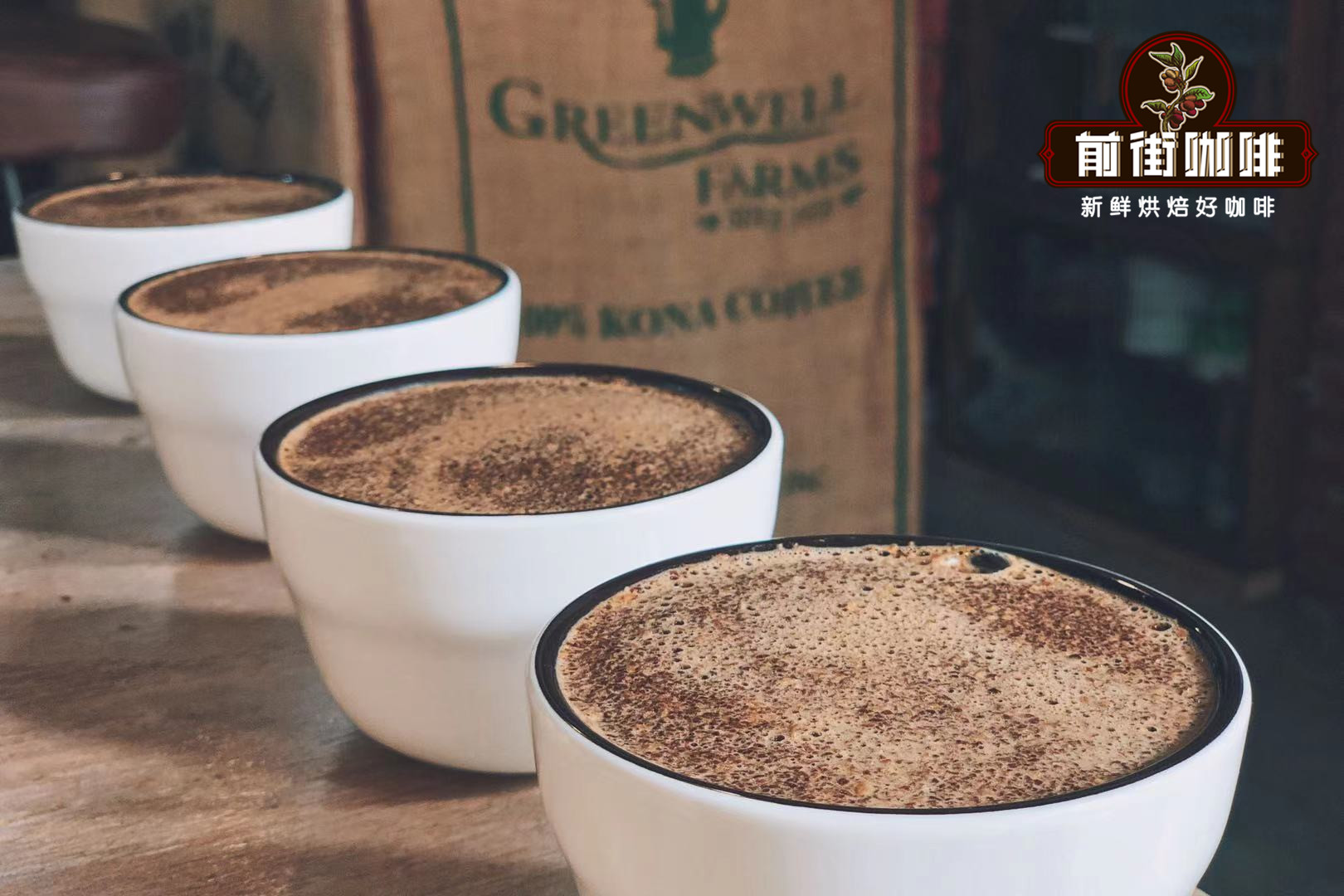
FrontStreet Coffee's partners held separate cupping sessions for FrontStreet Natural Red Cherry and FrontStreet Washed Kochere. The flavour summaries follow.
FrontStreet Red Cherry Cupping: Fermented notes, citrus, lemon, licorice, grapes, oolong tea, berries, floral notes, caramel.
FrontStreet Kochere Cupping: Lemon acidity, green tea sensation, citrus, jasmine flowers, orange, nuts, floral notes.
Smart Brewer Comparison
Brewing Parameters: 15g coffee / BG-5R grinder / 1:15 ratio / 90°C water
Brewing Method: Pour water directly to 225g, wait 3'45", then filter into the sharing pot. Remove after the coffee bed is exposed. End time: 4 minutes.
FrontStreet Red Cherry: Lemon, licorice, citrus, berries, sweet orange. Overall sweetness is relatively high, with caramel and cream in the aftertaste and a black tea aroma in the finish.
FrontStreet Kochere: Lemon, floral notes, orange, cane sugar. Overall clean and refreshing, with honey in the aftertaste and an oolong tea finish.

In brewing flavour, FrontStreet Red Cherry has a relatively richer body and higher sweetness than Kochere. FrontStreet Kochere, in turn, is clean and refreshing with livelier acidity and slightly lower sweetness, though rich in fruit.
Conclusion
FrontStreet Red Cherry shows a yellow-green colour in its green beans, typical of natural coffee, with uniform, plump beans and few defects. FrontStreet Kochere's washed processing typically removes the silver skin, giving the beans a special lustre that looks greener and more translucent. The dry-processed Red Cherry only removes the husk, leaving the silver skin fully intact.
Yirgacheffe's coffee grading system is not determined by bean size but by the proportion of defective beans in the total green beans. Typically, washed G2 and natural G3 Yirgacheffe are common. G1 is the highest grade—only Yirgacheffe with the lowest defect rate and most excellent quality, after manual selection, can be rated Grade 1.
FrontStreet Coffee Recommendation
If this comparison prompts you to try both sides of the processing divide yourself, FrontStreet Coffee's two Yirgacheffe lots make it easy. For the clean, translucent washed style, start with FrontStreet Coffee's washed Yirgacheffe daily bean, built on white jasmine, bright citrus and lemon acidity, and a gentle tea-like body; for a purer washed expression, the FrontStreet Coffee washed Gedingding Cooperative is drawn from the Woka area at the southeastern edge of Yirgacheffe and follows the most traditional washed method, delivering fresh citrus and lemon acidity with jasmine fragrance and none of the traditional bitterness.
On the natural side, FrontStreet Coffee's Red Cherry is a whole-cherry natural lot—only fully ripe, sound fruit is picked, dried on raised beds for three to five weeks with turning every few hours early on, then hulled on the farm and stored. It keeps the classic Yirgacheffe profile while adding the tropical fruit that natural processing brings: citrus acidity, berry juiciness, honey sweetness, and a creamy smoothness.
To compare them fairly, brew both the same way and let the processing speak. FrontStreet Coffee uses a V60 at 90-91°C, 15g of coffee at a 1:15 ratio, and a grind of roughly 80% pass-through on the #20 sieve (caster-sugar texture). Pour 30g for a 30-second bloom, add 95g so the scale reads about 125g and finish that pour by about a minute; when the bed falls to two-thirds, add the remaining 100g to reach about 225g by roughly 1:35, with the drawdown finishing in 2:00-2:10.
Important Notice :
FrontStreet Coffee is a long-established specialty coffee roaster in Guangzhou China, selling freshly roasted beans from its own farm in Yunnan as well as dozens of carefully selected single-origin beans from around the world for both pour-over and espresso. The products deliver consistently excellent quality and great value, with shipping within 24 hours. Guangzhou's FrontStreet Coffee shop is recommended by many coffee lovers, and the beans are now available online at the Tmall 。
FrontStreet Coffee has moved to a new address:
FrontStreet Coffee Address: 315,Donghua East Road,GuangZhou
Tel:020 38364473
 Scan and follow the En Gafei WeChat official account. Please indicate that the reprint comes from "En Gafei".