
【Coffee Tasting】Developed Senses are the Best Respect for Coffee (Part Two) | Coffee Workshop
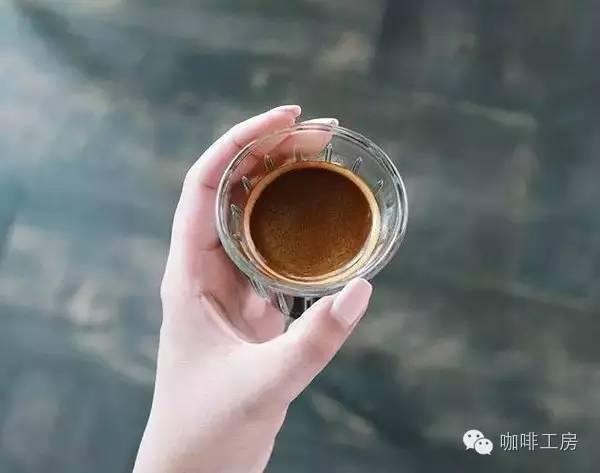
One of our regular customers, "Xiao Pang," started coming to our shop last year. He has excellent sensory abilities and always shares the flavors and aromas he experiences with us. He also points out our shortcomings, and sometimes brings delicious treats for us to try. The team at FrontStreet Coffee really likes him.
A few days ago, Xiao Pang came to the shop and ordered a cup of Panama Butterfly. This coffee contains 70% Geisha, with rich dry aroma and a sweet aftertaste. However, Xiao Pang said the aroma was insufficient but the sweetness was good, which made me wonder if there was a problem with my brewing. I shared some with another regular customer, who said the aroma was strong. Just when I was confused, Xiao Pang mentioned that he had been suffering from a cold recently with a stuffy nose. No wonder he hadn't come to our morning cupping session. We cup every morning, and interested friends are welcome to join FrontStreet Coffee for our cupping sessions.
The Connection Between Flavor and Senses
This connects to our previous discussion about sensory perception. When we talk about flavor, we tend to experience it as a sensation in the mouth. As a result, when describing taste, we often unconsciously confuse taste with flavor. In reality, flavor is a combination of taste and smell.
Understanding True Taste
So what is true taste? True taste is the sensation in your tongue and mouth when you pinch your nose and temporarily cut off your sense of smell. In fact, most of the flavor we experience from food comes from smell and sight. Without smell and sight, you wouldn't even be able to distinguish whether you're drinking coffee or tea.
The Five Basic Tastes
The five basic tastes are sour, sweet, bitter, salty, and umami. However, the balance of taste isn't just about the balance of these five flavors — it also requires the participation of mouthfeel. The mouth experiences tactile sensations through the chorda tympani nerve (thickness, astringency/smoothness, softness/hardness), sensations from the glossopharyngeal nerve (throat feel), and sensations from the trigeminal nerve (pain, temperature perception).
Coffee Tasting Best Practices
Our tongues retain residues from previously consumed foods, so when tasting coffee, we need to rinse our mouths with water to restore the tongue to a clean slate. The tongue is very delicate — too hot or too cold temperatures can damage your taste buds, and pain can override your sense of taste, making you temporarily unable to perceive flavors. Like our sense of smell, our sense of taste also adapts. If you continuously taste bitter flavors, your perception of bitterness will gradually decrease. Unlike smell, though, we can use rinsing or soda crackers to clear previous flavors.
Training Your Palate
Here are methods for training your taste perception. The organs that perceive taste are mainly distributed on the tongue, with some taste buds also found on the palate and throat. Choose white sugar, salt, lemon juice, and bitter melon, taste and chew them in sequence, and feel which parts of your mouth are most sensitive to each taste. Then conduct comprehensive comparison tests. Use samples with very similar taste experiences — such as fine sugar, rock sugar, brown sugar, or yellow lemons and green lemons — to practice distinguishing taste persistence and similar flavors.
The Art of Coffee Balance
The flavor of a cup of coffee can be seen simply as the interaction between aroma and structure, while its taste can be considered the effect of taste and mouthfeel. When aroma and mouthfeel can harmoniously combine and enhance each other, we can say this coffee is balanced. To appreciate the beauty of balance in taste experience, bright acidity is needed to build the framework, using the clarity of acidity to cut through the richness of sweetness, and using the stimulation from acid to reduce the heaviness brought by a full-bodied liquid with fat content. This is also why more people prefer washed beans.
The Mindset of Coffee Appreciation
Appreciating a cup of coffee doesn't require the taster to have natural talents in smell or taste. This is like doing anything else — approach it with a loving attitude and practice seriously. Don't reject any aroma, don't reject any type of flavor, and try to abandon subjective preferences. Over time, practice makes perfect.
FrontStreet Coffee Recommendation
If you want to practice your senses on something rewarding, a Panama Geisha is a fine place to do it — and the very coffee in this story, Panama Butterfly (Flor de Mariposa), is a perfect example. It's a blend of three varieties — Geisha, Caturra, and Catuai — with 40% superior Geisha heritage, grown in the Barú Volcano area of Boquete at 1,600 meters. Because Geisha was historically mixed in among the Caturra and Catuai trees and the estate later applied fine washed processing, the coffee carries distinct Geisha character at a remarkably approachable price.
Brewed, Butterfly shows jasmine florals, citrus, tea aroma, and honey on the dry nose; berries, florals, buttery aroma, vanilla, and citrus on the wet nose; and a juicy sweetness with a delicate, non-aggressive acidity, bergamot, spices, cherry, and a refined, persistent finish. It's exactly the kind of layered cup that rewards paying attention — and the kind that shows you quickly how much of "flavor" is really smell. For an even clearer Geisha reference, FrontStreet Panama Boquete Geisha is a single-estate entry with orange-blossom honey, oolong tea, and delicate fruit acidity.
One practical tip from our tasting sessions: keep your palate clean and the brew consistent. Rinse with water between cups, avoid extremes of temperature, and drink coffee at a moderate warmth where the aromatics are still rising. Do that, and a delicate Geisha will tell you far more about itself than it would if you drank it cold or with a stuffy nose.
Important Notice :
FrontStreet Coffee is a long-established specialty coffee roaster in Guangzhou China, selling freshly roasted beans from its own farm in Yunnan as well as dozens of carefully selected single-origin beans from around the world for both pour-over and espresso. The products deliver consistently excellent quality and great value, with shipping within 24 hours. Guangzhou's FrontStreet Coffee shop is recommended by many coffee lovers, and the beans are now available online at the Tmall 。
FrontStreet Coffee has moved to a new address:
FrontStreet Coffee Address: 315,Donghua East Road,GuangZhou
Tel:020 38364473
 Scan and follow the En Gafei WeChat official account. Please indicate that the reprint comes from "En Gafei".
![[Coffee Roasting] Roaster Flame and Airflow Control (Part 2) | Coffee Workshop](https://en.gafei.com/uploads/allimg/170614/11-1F614155G0514-lp.jpg)