Kenya Coffee Bean Flavor Description and Taste Characteristics | Kenya Coffee Growing Varieties and Origin Information
For more premium coffee knowledge, please follow the official WeChat account: FrontStreet Coffee
Africa has always been one of the world's finest coffee-producing regions, globally renowned for its floral, fruity acidity. Coffee is woven into African life. Whether deep in the remote reaches of the East African Rift Valley, across the Masai Mara grasslands where Maasai nomads roam, or in cities and villages, the aroma of coffee hangs in the air. Following that scent, people pause, savor, and use a cup of coffee to carve out endless African moments.
Of course, the most familiar to many is Ethiopian coffee, especially washed Yirgacheffe with its jasmine fragrance and lemon acidity that leaves an unforgettable aftertaste. Kenya, however, is no slouch. Kenyan coffee's cherry tomato-like full body and fruit acidity fill the whole palate, and it is renowned worldwide for its rich aroma and balanced acidity, beloved by many coffee connoisseurs.

Kenyan Coffee Producing Country
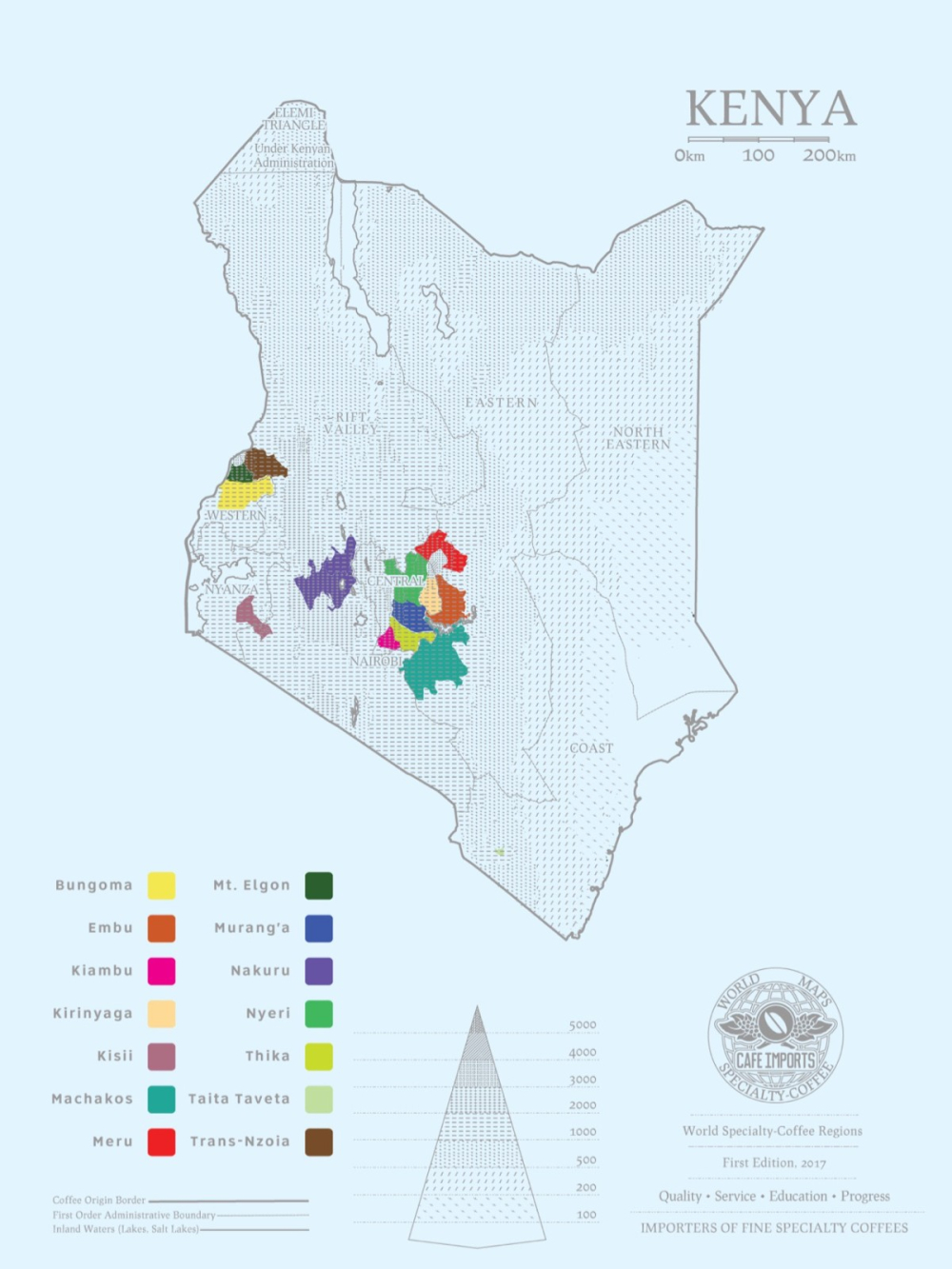
As African beans, Kenyan coffees clearly taste quite different from Ethiopian coffee, and that comes down to Kenya's growing environment and climate. Located in East Africa, Kenya sits right on the equator, with the Indian Ocean to the east, Ethiopia to the north, and Tanzania to the south. It is a major coffee-producing country in East Africa and one of the most important, irreplaceable origins.
Kenya lies in the tropics with two rainy seasons each year, allowing two harvests: 60% concentrated from October to December, and the remaining 40% from June to August. Coffee is grown mainly in volcanic soil at altitudes of 1600-2100 meters, from around the capital Nairobi to the Kenyan highlands. That altitude is ideal for flavor development: lower mountain temperatures slow growth, letting the aromatic components of the beans develop fully, resulting in more prominent fruit acidity and a harder texture. This crescent-shaped, fertile coffee region is the main source of Kenya's premium beans.
Kenyan Coffee History
Every coffee-producing country has its own history and legends about coffee. So what does Kenya's coffee history look like? In 1878, the British introduced coffee to Africa. In the 19th century, coffee plantations were established in Kenya, where Ethiopian coffee beverages were then imported via South Yemen. It was not until the early 20th century, however, that Bourbon coffee trees were introduced to Kenya by the St. Austin Mission.
After Kenya gained independence in 1964, the coffee industry kept developing on that foundation, and today it is a world-renowned high-quality coffee-producing country. Notably, it established an auction system that successfully freed itself from the flaw of other producing countries exploiting smallholders (the so-called "Fair Trade Coffee" originated from this).

Kenyan Coffee Varieties
We know there are many coffee varieties - Arabica, Bourbon, Caturra, Catuai, and so on. In Kenya, the common varieties are SL28, SL34, French Mission Bourbon, and Ruiru 11. FrontStreet Coffee's Kenyan coffee uses SL28 and SL34 as well. So what exactly are these varieties?
As early as the 1930s, the Kenyan government commissioned the newly established Scott Labs to select varieties suited to the country. After individually numbering and screening 42 preliminary varieties, they ultimately selected SL-28 and SL-34. The former descends from Bourbon, while SL-34 descends from Typica - the two are not from the same series. The original goal in developing SL28 was to mass-produce beans combining high quality with disease and pest resistance. In some producing regions, the breeding goal was primarily high yield and disease resistance, without considering quality.

Thanks to its Bourbon genetics, although SL28's later yield did not meet expectations, its copper-colored leaves and broad bean shape offer wonderful sweetness, balance, and complex, varied flavors, along with significant citrus and plum characteristics. SL34 has flavors similar to SL28 - besides its complex, varied acidity and wonderful sweet finish, its mouthfeel is softer and cleaner than SL28. SL34 carries French Mission, Bourbon, and more Typica lineage. Its bean appearance is similar to SL28, and it adapts better to rainforest growth.
These two varieties, SL28 and SL34, currently account for 90% of Kenya's production, becoming the generally recognized representative varieties of Kenyan coffee. Today, South America is also actively introducing SL28 as a planting variety.
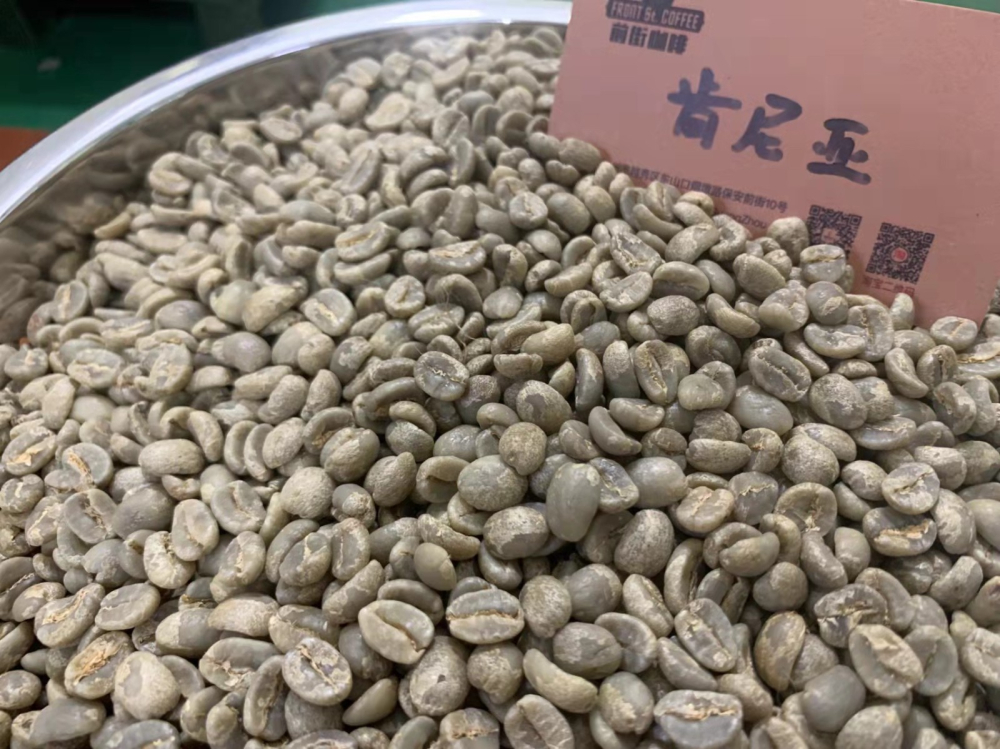
Ruiru 11: In 1985, during a global leaf rust outbreak, Kenya developed this hybrid variety that prioritized yield over quality. Its flavor quality, however, is far inferior to SL28 and SL34, and it has not gained traction in the specialty coffee industry. Even so, many premium coffee importers still mix this hybrid bean into blends to reduce costs.
Kenyan Coffee Classification
There are many ways to classify coffee beans, and different producing countries use different systems. Some classify by size, some by altitude, some by defect rate. So how are Kenyan beans classified?
Kenyan beans have used a strict classification system since the 1930s, based mainly on the size, shape, and hardness of the beans, ranked from high to low as AA or AA+, AB, PB, C, E, TT, T. This works both as a selection criterion and as a reference for flavor. The common grades in the mass market today are AA, AB, and PB. Kenyan AA is renowned worldwide for its rich aroma and balanced acidity, beloved by many coffee connoisseurs.

E (Elephant Bean): Here "E" stands for "Elephant," but this is not the elephant bean variety among coffee types. It is a defect caused by abnormal development in which two seeds intertwine to form what appears to be a single bean. Normally one fruit contains two seeds facing each other, giving one flat side - these are flat beans, female beans, or twin beans. E-grade occurs when two seeds fuse during growth into an oversized bean. E-grade particles are about 18 mesh (one mesh equals 1/64 inch) or larger, and they are rare.
AA: This grade's size falls between 17-18 mesh (approximately 6.7-7.1mm) and is the most commonly heard Kenyan classification. In specialty coffee, this grade is usually called AA TOP and is the type many coffee shops promote. AA doesn't necessarily mean the best, though - it refers only to bean size and should not be confused with flavor.

AB: Most coffee beans fall into this classification. It is called AB mainly because A filter holes are 6.80mm while B are 6.20mm, and the two sizes (A-grade and B-grade) are sold mixed together, hence AB. The size is about 15-16 mesh (approximately 6.0-6.4mm).
C: Particle size falls between 14-15 mesh (approximately 5.6-6.0mm), smaller than B-grade.
PB: Called Peaberry in English, mostly referred to as small round beans, but also called male beans or single-lobe beans. Compared with ordinary flat beans, these are quite rare, accounting for about 10% of all coffee beans. This mainly happens because only one seed develops fully inside the fruit, resulting in small, round beans. Some people particularly love PB's flavor, so PB beans are selected and sold separately.
TT: These are lightweight beans filtered from AA and AB beans through air separators. They are usually lightweight, fail to meet hardness standards, and include broken and defective beans.
Kenyan Processing Methods
FrontStreet Coffee's Kenyan coffee uses the washed processing method [Washed Kenyan Coffee Beans - Asali]
This bean comes from the Asali processing plant in Kenya's Thika region. The Thika region sits in central Kenya and contains the highest-altitude coffee-growing areas in the region. Thika itself is a sub-region at the foot of the Aberdare mountain range, with red volcanic soil rich in organic matter. The processing method is the K72 washed method, which gives the coffee brighter, cleaner, yet full flavors.

Kenyan 72-Hour Fermentation Washed Processing Method
Originating in Kenya, this method uses a cyclic repeat of fermentation followed by washing. Processing begins on harvest day, with the highest quality cherries selected for pulping and fermentation over 24 hours. After 24 hours, they are washed with clean river water. Then they undergo another 24-hour fermentation in clean river water, followed by washing. After repeating this cycle 3 times to reach 72 hours, it is called the Kenyan 72-hour fermentation washed method, abbreviated as K72.
After that processing, aren't you eager to taste a cup of Kenyan coffee? Of course, if you want a delicious cup, FrontStreet Coffee has some brewing suggestions.
FrontStreet Coffee believes freshness is a very important factor in drinking delicious coffee. Fresh beans let you experience coffee's rich flavors to the fullest. Coffee beans shipped by FrontStreet Coffee are all roasted within 5 days, because FrontStreet Coffee deeply understands how much freshness affects flavor. FrontStreet Coffee's roasting philosophy is "Freshly Roasted Good Coffee," ensuring every customer who places an order receives the freshest coffee on arrival. The coffee resting period is about 4-7 days, so when customers receive their coffee, it is at peak flavor.
Some customers need FrontStreet Coffee to grind their beans, which is fine too. FrontStreet Coffee must remind you: when beans are ground in advance, there is no need for a resting period, because the pressure from carbon dioxide buildup in the package during transport also helps mellow the flavor, so you can brew a cup immediately upon receiving the ground coffee. Ground coffee, however, needs to be brewed promptly, because it oxidizes faster when exposed to air, so the flavor dissipates more quickly and the coffee won't taste as good. FrontStreet Coffee therefore recommends buying whole beans and grinding fresh before brewing to better experience the flavor.
FrontStreet Coffee's Kenyan Coffee Brewing Parameters:
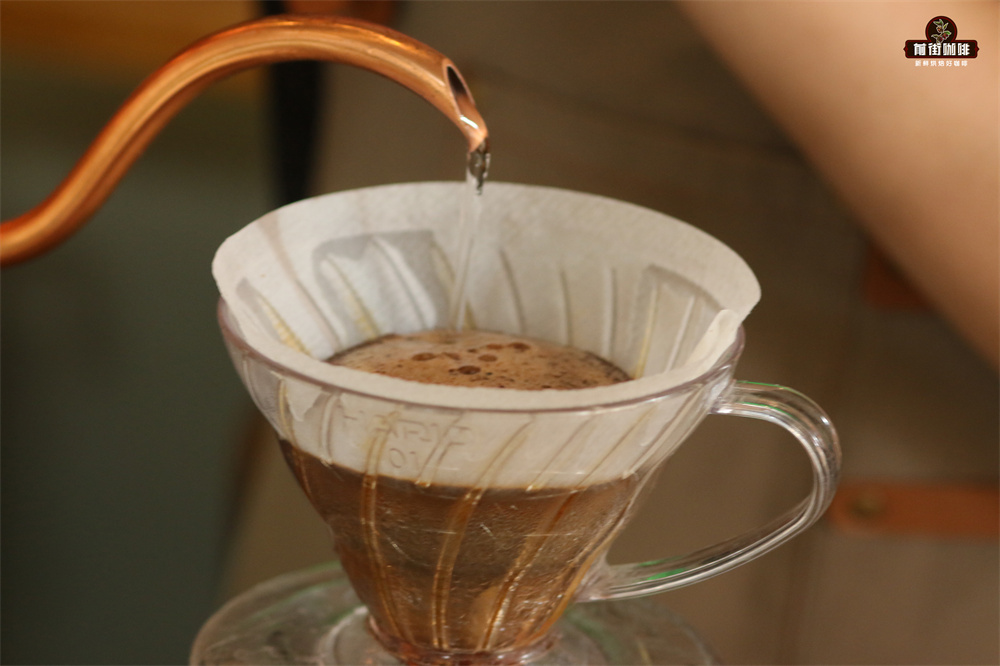
FrontStreet Coffee chose: V60 dripper, water temperature 90°C, water-to-coffee ratio 1:15, coffee amount 15g, grind size (China No.20 standard sieve 80% pass rate)
Using segmented extraction, bloom with twice the coffee weight in water, that is, 30g of water for 30 seconds. Blooming is necessary so the grounds release internal carbon dioxide, making the subsequent extraction more stable. With a small stream, pour in circles to 125g, then continue pouring to 225g and stop. Once the water finishes dripping from the dripper, remove it. Start timing from the first pour - extraction time is 2'00". Then pick up the whole cup, shake it well, and pour into cups for tasting.
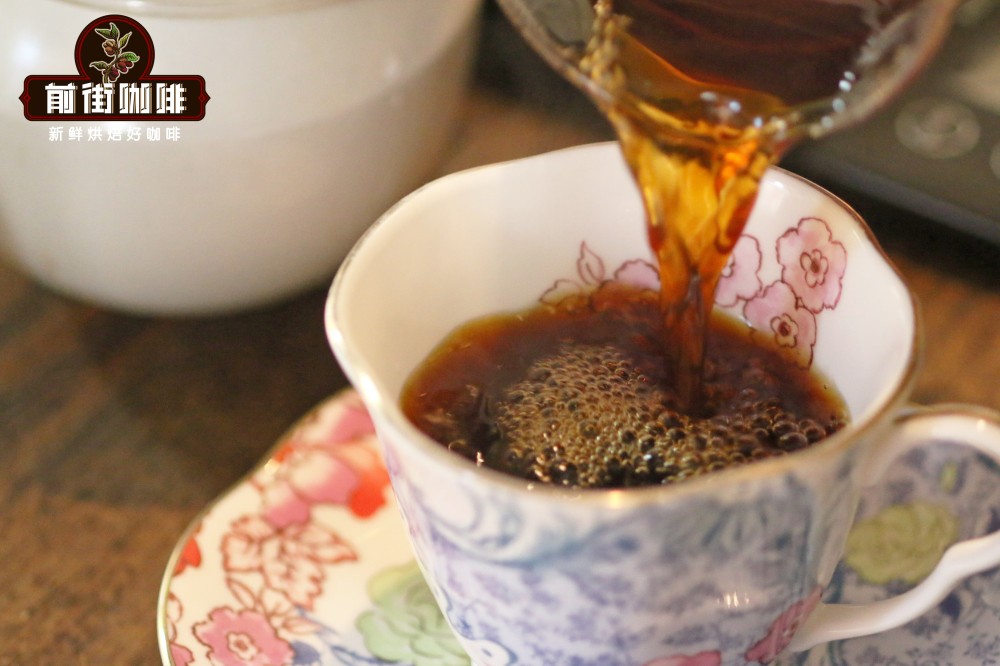
[FrontStreet Coffee's Washed Kenya Small Tomato] smells of light jackfruit, floral notes, and pine fragrance. The entry reveals plum, lemon, citrus, and cherry tomato acidity, with a caramel aftertaste and a juicy sensation.
If you're used to drinking Ethiopian washed Yirgacheffe and then try a cup of Kenyan coffee, you'll definitely feel they are coffees of completely different levels - one fresh and bright, the other rich in fruit acidity and aroma, offering entirely different experiences. Of course, FrontStreet Coffee also has over fifty different single-origin coffee beans from various regions, ready to give you a full sensory experience.
FrontStreet Coffee Recommendation
If you love Kenya's bright fruit acidity, FrontStreet Coffee's Washed Kenya Small Tomato is the natural pick: grown in the Thika region from SL28 and SL34, it uses the K72 washed processing, and the cup shows plum, lemon, citrus, and cherry tomato acidity with a caramel aftertaste and a juicy body.
For a floral alternative with the same refreshing character, try FrontStreet Coffee's washed Yirgacheffe: jasmine florals, bright citrus and lemon acidity, and a light, tea-like body that brews beautifully as a pour-over at 90-91°C with 15g of coffee and a 1:15 ratio, using a fine-sugar grind size at roughly 80% pass-through on a 20# sieve.
Important Notice :
FrontStreet Coffee is a long-established specialty coffee roaster in Guangzhou China, selling freshly roasted beans from its own farm in Yunnan as well as dozens of carefully selected single-origin beans from around the world for both pour-over and espresso. The products deliver consistently excellent quality and great value, with shipping within 24 hours. Guangzhou's FrontStreet Coffee shop is recommended by many coffee lovers, and the beans are now available online at the Tmall 。
FrontStreet Coffee has moved to a new address:
FrontStreet Coffee Address: 315,Donghua East Road,GuangZhou
Tel:020 38364473
 Scan and follow the En Gafei WeChat official account. Please indicate that the reprint comes from "En Gafei".