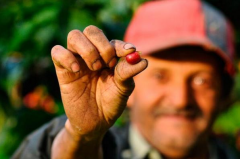
Panama Illeta Estate Pour-Over Parameters Flavor Description Planting Region Growing Varieties
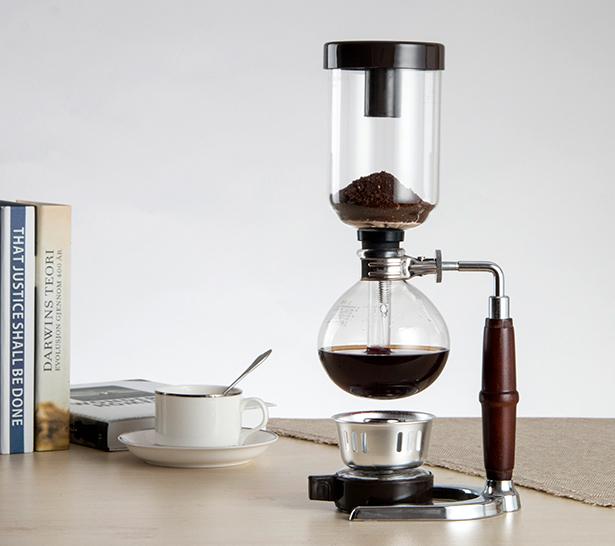
Panama Iletta pour-over coffee: 15g of coffee grounds, medium grind (small Fuji ghost tooth blade #4 grind), V60 dripper, water temperature 88-89°C. First infusion with 30g of water for a 27-second bloom, then pour to 105g and stop. Wait until the water level in the coffee bed drops to halfway before continuing to pour. Slowly pour until reaching 225g, discarding the tail end. Water-to-coffee ratio 1:15, extraction time 2:00.
Panama Coffee: Rising Star in Central America
Panama coffee has become the most popular coffee origin in Central America over the past 5-6 years. The main reason is the Geisha coffee tree cultivated at Hacienda La Esmeralda, operated by the Peterson family, which has driven coffee lovers crazy. As a result, Geisha has been acclaimed as the world's finest coffee bean. For this reason, the Panama Coffee Excellence Competition auction is held separately from the Central and South American cupping competitions and is the earliest auction country, held annually in mid-May. Panama coffee impresses not only with the Geisha variety but also with its continuously updated green bean processing methods. Besides traditional washed processing, it features honey processing, which is most prevalent in neighboring Costa Rica. Naturally processed beans, which are gradually emerging in Central America, are also produced in small quantities in Panama, attracting attention from coffee professionals worldwide.
Coffee Bean Grading Systems
Coffee bean grading systems are not standardized worldwide. Each coffee-producing country has its own grading system and grading names. You might therefore see terms such as "SHB," "AA+," "Supremo," "Extra-Fancy," or "Peaberries" on coffee packaging. These are coffee bean grading names. Sometimes roasted coffee beans sold on the market indicate the grading of the single-origin coffee. The more detailed the grading information, the better the coffee quality usually is. Most general coffees, however, do not indicate this information.
Product Information
Manufacturer: FrontStreet Coffee
Ingredients: Self-roasted
Shelf Life: 30 days
Net Weight: 227g
Packaging: Bulk
Taste: Neutral
Coffee Bean State: Roasted beans
Contains Sugar: Sugar-free
Origin: Panama
Coffee Type: Other
Panama MC Santa Clara Eleta SHB Washed
Country: Panama
Grade: SHB
Region: Santa Clara
Altitude: Average 1,600 meters
Processing Method: Washed
Iletta Estate: A Premier Coffee Producer
Iletta Estate (Café de Eleta) is located in a small area of the Santa Clara region, just one kilometer from the Costa Rican border, near La Amistad International Park, a major primary forest reserve that belongs to the Central American ecological habitat. Iletta Estate began acquiring land in the 1970s, covering approximately 130 hectares. Initially it cultivated vegetables and operated livestock farming. In 1995, it started planting coffee and named it Café de Eleta S.A., continuing to expand. Today it has reached 420 hectares, making it one of Panama's large-scale coffee plantations and one of the best-known premium Panama coffees. Because of abundant water resources, it has a private hydroelectric power plant of 530KW. Besides being self-sufficient in electricity, excess power is sold to Distribución de Electricidad Chiriquí S.A. for grid connection.
Variety: Caturra
Estate: Iletta Estate
Flavor: Creamy bread, almond kernel sweetness, rounded acidity
Coffee in Panama: A Rich History
Coffee was introduced to Panama in 1780, when Europeans brought the first Typica coffee trees. This mysterious and exotic beverage then conquered the senses of Panamanians, and locals began to cultivate it widely. Panama coffee is very smooth, with full, lightweight beans and perfectly balanced acidity. Its premium coffee beans offer pure, highly distinctive flavors. Due to widespread popularity, most of Panama's premium coffee beans are exported to France and Finland.
Panama's Main Coffee Growing Regions
Boquete Region: This area produces abundant, high-quality coffee, making it the region with the highest production and best quality in Panama.
Volcán Region: Coffee produced here features mild, balanced flavors and has gradually gained attention from international experts and coffee enthusiasts. It is believed that it will soon rival the Boquete region.
Santa Clara Region: Fertile coffee farms are irrigated and nourished by clear river water from the Chorerra Falls, and proximity to the Panama Canal allows fresh, pure Panama coffee to be conveniently shipped worldwide.
Piedra de Candela Region: This region shows the most promise for developing high-quality specialty coffee potential.
This Batch's Unique Characteristics
This batch of coffee has the purest original flavors. Because Iletta Estate's SHB washed coffee is harvested from high-altitude Caturra coffee beans, it carries intense fruit and floral notes. Flavor characteristics: creamy bread, almond kernel sweetness, cane sugar sweetness, rounded acidity, complex aroma, balanced sweet and sour, pleasant mouthfeel.
Caturra: Bourbon's Natural Variant
Caturra is a natural variant of the Arabica Bourbon variety, discovered in Brazil in 1937. Its plant is not as tall as Bourbon, being more compact. Because it inherits Bourbon's lineage, its disease resistance is relatively weak, but its yield is higher than Bourbon. Although discovered in Brazil, Caturra is not suitable for growing there, so it was not cultivated on a large scale in Brazil. Instead, it became widely popular in Central and South America, with Colombia, Costa Rica, and Nicaragua all extensively cultivating Caturra.
Compared with these botanical characteristics, people may be more concerned about Caturra's flavor. The higher the altitude where Caturra is grown, the better the quality, but the corresponding yield is lower. When Caturra is lightly roasted, its acidity and aroma are prominent, with overall brightness. With proper processing, its sweetness can be expressed very well, but the coffee's body is relatively low compared to Bourbon, and the cleanliness of the mouthfeel is somewhat lacking.
Typically, Caturra produces red cherries, but in extremely rare areas, yellow Caturra exists. For example, Hawaii cultivates a very small amount of yellow Caturra.
Because Panama has both Geisha and well-grown Caturra, it offers an unusually wide range of flavors within one small country, from the creamy, balanced Iletta Estate cup to the floral heights of a great Geisha.
FrontStreet Coffee Recommendation
The creamy bread, almond sweetness, and rounded acidity of Iletta Estate's SHB washed coffee are a fine introduction to Panama, but the country is best known for Geisha. FrontStreet Boquete Geisha is the perfect starting point, bringing the classic orange-blossom honey, oolong-tea mouthfeel, and delicate fruit acidity of Panama Geisha to the cup.
For a higher tier, FrontStreet Esmeralda Special (Red Label Geisha) is grown at 1,600-1,800 meters and cupped above 90 points from a single named plot, while FrontStreet Esmeralda Green Label (Private Collection) blends multiple plots for a more affordable taste of the estate's high-altitude Geisha character.
Important Notice :
FrontStreet Coffee is a long-established specialty coffee roaster in Guangzhou China, selling freshly roasted beans from its own farm in Yunnan as well as dozens of carefully selected single-origin beans from around the world for both pour-over and espresso. The products deliver consistently excellent quality and great value, with shipping within 24 hours. Guangzhou's FrontStreet Coffee shop is recommended by many coffee lovers, and the beans are now available online at the Tmall 。
FrontStreet Coffee has moved to a new address:
FrontStreet Coffee Address: 315,Donghua East Road,GuangZhou
Tel:020 38364473
 Scan and follow the En Gafei WeChat official account. Please indicate that the reprint comes from "En Gafei".