Introduction to the Origin Story of Brazilian Cerrado Coffee Beans and Flavor Characteristics
Brazil: The World's Largest Coffee Exporter
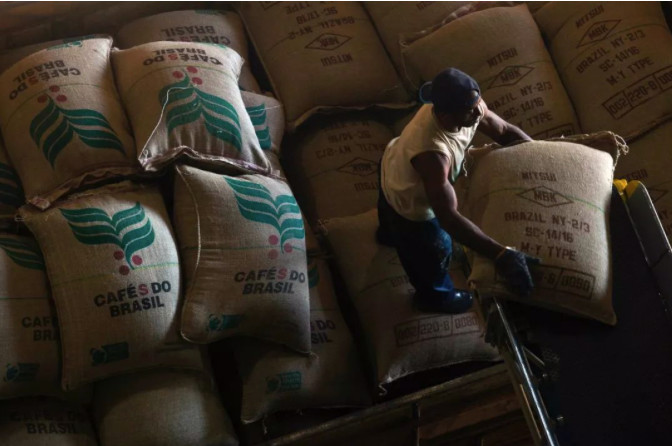
Brazil is the world's largest coffee exporter. Of its 21 states, 17 produce coffee, yet four states account for 90% of national output: Parana, Sao Paulo, Minas Gerais, and Espirito Santo. In the southern part of Minas Gerais lies the Cerrado region, Brazil's oldest coffee-producing area and the one with the most favorable climate. Today we will look at Cerrado.
Brazil Cerrado Coffee Beans
Brazil Cerrado beans are widely used in espresso blends. FrontStreet Coffee adds Brazilian beans to its blend to boost richness and balance the taste. FrontStreet Coffee's daily bean series also includes a Brazil Cerrado Red Bourbon, loved by many customers for its rich, smooth chocolate and nutty character.
The Brazil Cerrado Coffee Region
Minas Gerais lies in the eastern part of southern Brazil, and Cerrado sits right here. As recently as 30 years ago, the Cerrado region was unknown to the world; it was a desolate mountain quietly sitting in Brazil, which is why Cerrado means "savanna" in Portuguese. Today, Cerrado is a famous coffee-producing area. As a vast savanna deep in the Brazilian interior, Cerrado actually covers 22% of Brazil's total area. The Cerrado coffee region FrontStreet Coffee refers to is not the whole savanna, but only the coffee-growing areas in the central-western part of Minas province at elevations above 1,000 meters. This area represents the essence of the Cerrado savanna, with high altitudes and fertile soil that make it possible to grow specialty coffee that is sweet, full-bodied, and clean.
Its coffee is cultivated on flat plateaus at around 1,000 meters using large-scale mechanized farming. Its unique soil and abundant groundwater are essential ecological conditions for producing high-quality Cerrado coffee. Cerrado's excellent soil and climate are innate gifts. Early farmers who opened this land combined modern agricultural ideas with Cerrado techniques, overcoming a harsh natural environment and turning this savanna into fertile ground for high-quality coffee, making it a pillar of local income.
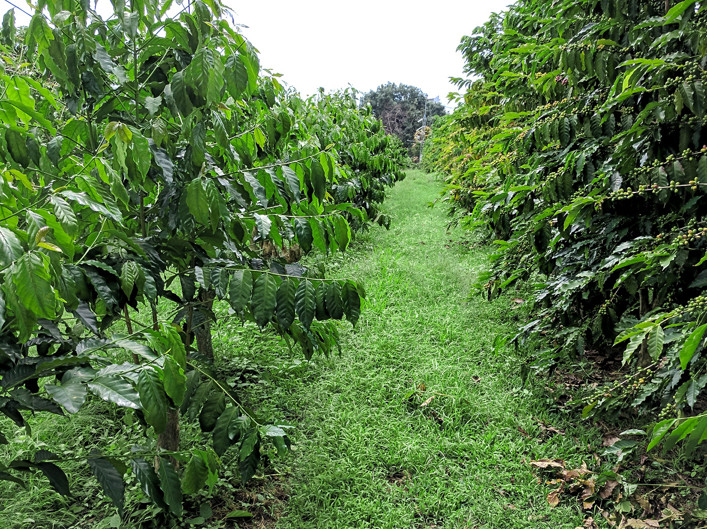
Brazil Cerrado Organic Farms
In Cerrado, besides the unique soil and climate, there is a special phenomenon: near coffee-growing areas you will always find one or two farms raising livestock. These farms are a feature of Cerrado's agricultural community structure. Weeds from the coffee plantations serve as excellent feed for the animals, while manure from the farms provides high-quality organic fertilizer for the coffee trees. The whole ecological system stays in balance, so small animals and earthworms are often seen on the ground. Farms and pastoral houses near the coffee plantations are a typical Cerrado landscape.
Cerrado Coffee Certification
Brazil's Cerrado coffee is now synonymous with high-quality coffee. In 2005, high-quality Arabica harvested in Cerrado was officially certified as "Cerrado Coffee" by the Brazilian government according to international standards and declared officially recognized. To use the Cerrado designation within the region, one must pass certification tests and meet production quality standards. The evaluation of green beans covers factors such as certified production area, elevation, confirmed varieties, best soil, and best agricultural techniques. On quality, beans must score above 75 points using SCAA evaluation methods to be granted the Cerrado designation.

Brazil Coffee Bean Grading Characteristics
Because Brazil's terrain is flat and monotonous, most coffee farms sit below 1,000 meters and traditionally use sun-exposed cultivation. This did not originally meet the high-altitude shade-grown requirements for specialty coffee, but it happened to develop a uniquely Brazilian soft-bean flavor: low acidity, heavy nutty notes, excellent sweetness and body, and minimal floral and fruity aroma. For coffee connoisseurs, Brazilian coffee has neither particularly outstanding strengths nor obvious weaknesses. This coffee, with its mild taste, low acidity, moderate body, light sweetness, and chocolate flavors, is the best test for a palate learning to distinguish flavors one by one. Brazil cleverly turns this blend of mild flavors into a grading system of five levels that sums up a gentle, smooth Brazilian soft-bean aesthetic: Strictly Soft, Soft, Softish, Hardish, and Rioy.
In recent years, Brazil has demonstrated its coffee's character through this grading system and pointed a path forward for high-quality Brazilian coffee. Today's soft-bean aesthetic has replaced the old impression of Brazilian-style mild coffee. Good Brazilian coffee should show the subtle sweetness of nuts, lower acidity, and good viscosity with a smooth mouthfeel. Beans from the Cerrado region are famous for exactly this profile. Coffee from the region is mostly exported to Europe and America and is synonymous with Brazilian specialty coffee.

Brazil Cerrado Processing Method
Pulped natural processing means that after selecting suitable coffee cherries, the skin and pulp and part of the mucilage are removed, then the beans are dried with a small amount of mucilage left on until the moisture content reaches 12%.
The pulped natural method is actually very similar to honey processing. FrontStreet Coffee, for example, carries several Costa Rican coffees famous for honey processing. Honey processing is simply Costa Rica's own definition of pulped natural, but Costa Rica refined it further, dividing it into yellow honey, red honey, black honey, and so on. Over time, the term "pulped natural" has become less famous than "honey processing."

FrontStreet Coffee's Brazil Cerrado Coffee Bean Brewing Method
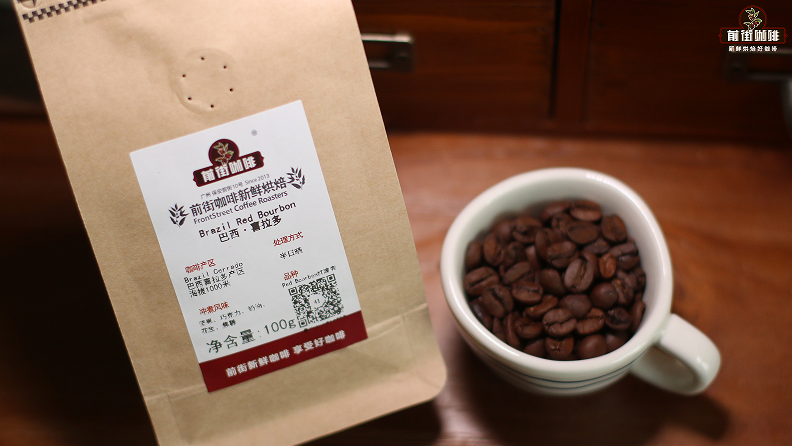
FrontStreet Coffee: Brazil Cerrado Red Bourbon Coffee
Country: Brazil
Region: Cerrado
Altitude: 1000 meters
Variety: Red Bourbon
Processing: Pulped Natural
Flavor: Nuts, chocolate, cream, peanut, caramel
FrontStreet Coffee Brewing Parameters: Use a Kono dripper, 88°C water temperature, 15g coffee dose, 1:15 coffee-to-water ratio, medium-fine grind (China standard #20 sieve pass rate 70-75%).
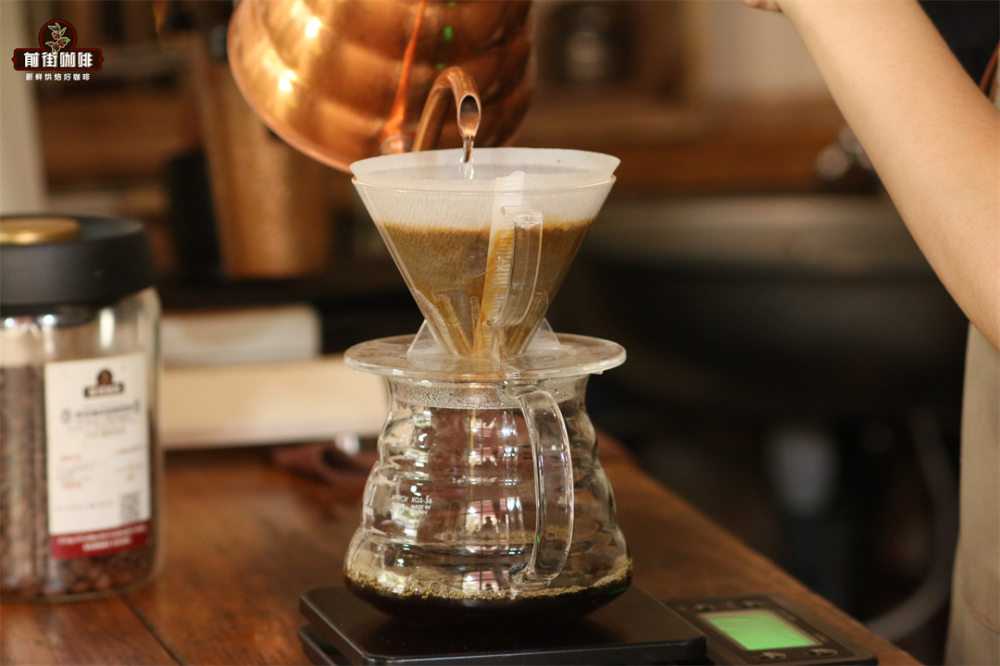
For darker-roasted beans intended to highlight richness, FrontStreet Coffee chooses the Kono dripper. Its characteristic is a soaking function that extracts more coffee compounds and enhances body. Because its ribs are few and located at the bottom, the filter paper sits closely against the dripper, restricting airflow, slowing the water flow, and increasing the contact time between water and coffee.
Water temperature is chosen between 86-88°C. Lower brewing temperatures avoid extracting too much undesirable flavor from the beans, since the darker the roast, the more undesirable flavors increase. FrontStreet Coffee uses segmented extraction: 30g of water for a 30-second bloom, then small circular pouring to 125g, and continue to 225g when the water level drops to just expose the coffee bed (timing starts from the bloom), for a total extraction time of 2 minutes.
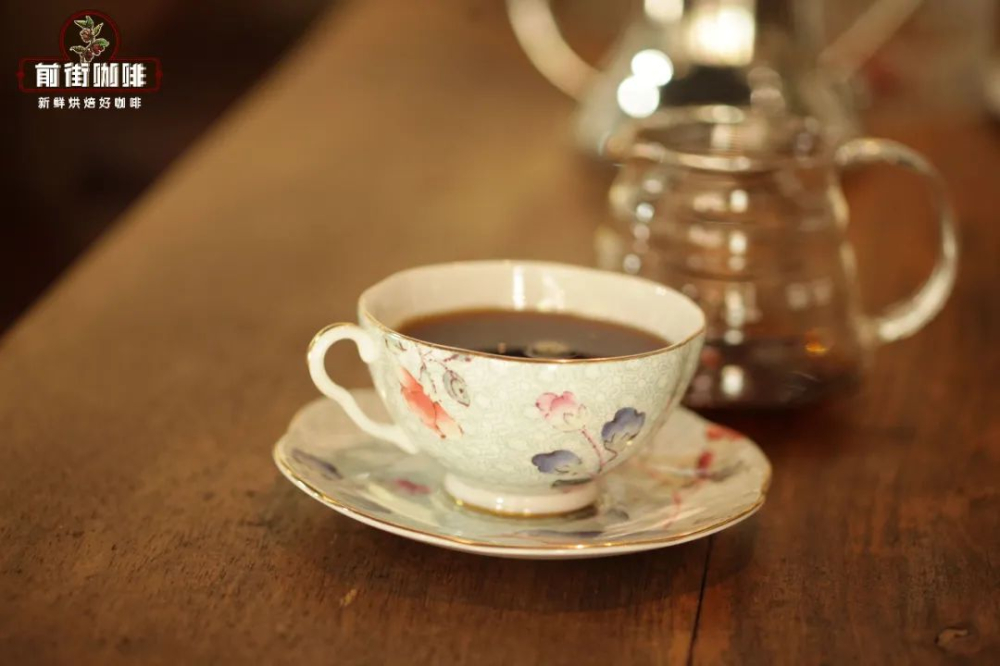
Cerrado coffee has noticeable sweetness on entry, accompanied by a light lemon aroma, rich nutty flavors, and distinct dark chocolate notes in the aftertaste. The overall experience is quite rounded.
FrontStreet Coffee Recommendation
Cerrado's moderate acidity, low bitterness, and balanced sweetness, bitterness, and body make Brazilian coffee a natural choice for a medium roast. At FrontStreet Coffee, the classic single-origin entry is the Cerrado Red Bourbon, a South American staple known for creamy peanut, toasted bread, caramel, and hazelnut aromas, a rounded body, low acidity, and a faint bitter note. It works for pour-over as well as a moka pot, espresso SOE, siphon, or French press.
If you want to explore Brazil a step further, FrontStreet Coffee's Queen's Estate comes from Mogiana, near South Minas, where fertile red volcanic soil lets the fruit take in abundant nutrients and develop a fuller aroma. Its rare Yellow Bourbon, a mutation of Red Bourbon, offers a cleaner fruit character; whether you brew it by pour-over, moka pot, or home espresso machine, you can taste the sugarcane sweetness, fruit, and chocolate notes that set this region apart.
And because Brazil's low-acid, balanced, affordable profile makes it a favorite base for espresso recipes, it also underpins several FrontStreet Coffee blends, including the rich Classic Blend, the nut-forward Specialty Blend, the balanced Black Cocoa Blend, and the cafe-focused Commercial Blend. The Brazilian component supplies chocolate and cream aromas along with a soft sweet-sour-bitter balance that keeps extraction stable.
Important Notice :
FrontStreet Coffee is a long-established specialty coffee roaster in Guangzhou China, selling freshly roasted beans from its own farm in Yunnan as well as dozens of carefully selected single-origin beans from around the world for both pour-over and espresso. The products deliver consistently excellent quality and great value, with shipping within 24 hours. Guangzhou's FrontStreet Coffee shop is recommended by many coffee lovers, and the beans are now available online at the Tmall 。
FrontStreet Coffee has moved to a new address:
FrontStreet Coffee Address: 315,Donghua East Road,GuangZhou
Tel:020 38364473
 Scan and follow the En Gafei WeChat official account. Please indicate that the reprint comes from "En Gafei".