Introduction to Brazil Cerrado Bourbon Coffee: Flavor Characteristics and Story
Brazilian Coffee: The World's Leading Producer

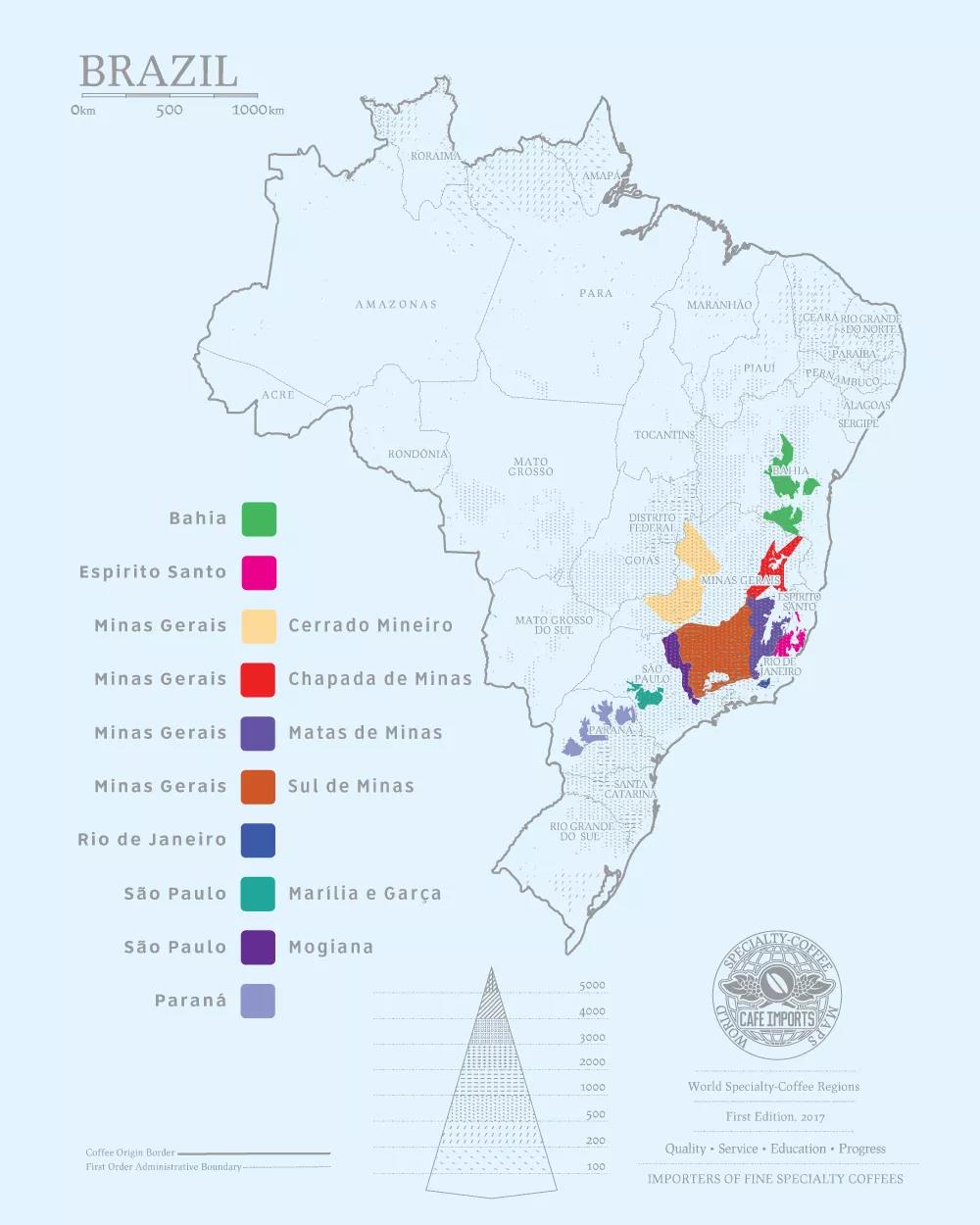
Brazil grows more coffee than any other country on earth, with plantations spread across 17 states and an enormous range of varieties under cultivation—most prominently Red Bourbon, Yellow Bourbon, Mundo Novo, and Catuai. As the world's largest producing country, Brazil deserves a closer look. In this article, FrontStreet Coffee walks through the country's coffee history, its signature regions and varieties, and what makes a classic Cerrado Bourbon taste the way it does.
How Coffee Reached Brazil
Coffee arrived in Brazil in 1727, courtesy of a bit of diplomatic espionage. That year, the Portuguese diplomat Francisco de Mello Palheta was dispatched to French Guiana to mediate a territorial dispute. While there, he charmed the French governor's wife, who hid coffee seeds inside a bouquet she presented to him as he departed. Those smuggled seeds became the founding stock of what is today the planet's largest coffee industry.
The Bourbon Variety
Bourbon is one of the old heirloom varieties of the Arabica species, alongside Typica. The variety takes its name from Réunion Island—known as "Île Bourbon" before 1789—where it was historically cultivated.
Compared with Typica, Bourbon is easy to tell apart in the field: its leaves are broader and grow in denser clusters, and the trees yield roughly 30% more cherries. The beans themselves are relatively round and compact in shape. In the cup, Bourbon is prized for its vivid berry-like acidity, a clear creamy texture and fragrance, and prominent fruit notes. Its weakness is the same as Typica's: poor disease resistance.

As Red Bourbon cherries ripen, they progress through a distinct color sequence: green → pale yellow → light orange → mature red → dark red—hence the name. The variety reached Brazil around 1860 via Campinas in the south of the country and has since become one of Brazil's classic cultivars.
Bourbon branches into several color variants. The red-fruited form is Red Bourbon, while Yellow Bourbon and Orange Bourbon also exist. Yellow Bourbon tends to yield less, but its cup quality is often superior.

Brazil's Southern Minas Region
Southern Minas, where hills rise from 700m to 1200m, was Brazil's earliest coffee-producing region. Rising labor costs have made mechanical harvesting the norm here. It was also the first region to commercialize coffee at scale, which is why so many large exporting houses are headquartered there. Elsewhere in the country, Bahia in the north concentrates on washed Brazilian coffees, while the coastal state of Espírito Santo is the main export hub for Brazilian Robusta.
Brazil's coffee lands fall into two broad terrain types: the Brazilian plateau above 500 meters and the lowland plains below 200 meters. The best-known cultivated varieties are the Bourbon family—Yellow Bourbon, Red Bourbon, and Flat Bean Santos among them. Flavor-wise, Brazilian coffee is defined by low acidity, nutty notes, balance, and moderate body. It may not dazzle on the cupping table in the specialty scene, but it is a staple blending component in espresso, and its high balance has long made it a favorite base for "Blue Mountain style" blends.

Cerrado Mineiro
Growing coffee in the Cerrado (the Brazilian savannah) is one of the great triumphs of Brazilian coffee technology. Plantations here are increasingly large and run with high-tech production methods—few regions anywhere can match this level of mechanization. The plateau climate brings four distinct seasons, which allows the fruit to mature evenly and guarantees dry weather during harvest. Cerrado coffee is generally processed as a natural, a style that remains very much in vogue.

FrontStreet Coffee: Brazil Cerrado Red Bourbon Coffee Beans
- Country: Brazil
- Region: Cerrado
- Altitude: 1000 meters
- Variety: Red Bourbon
- Processing: Pulped Natural
- Flavor: Nuts, Chocolate, Cream, Peanut, Caramel
Processing Method: Pulped Natural
In pulped natural (semi-washed) processing, freshly harvested cherries are first sorted in water channels to float off immature fruit and foreign matter. The skin and part of the pulp are then removed, and a mucilage remover strips away the sticky layer of mucilage. Removing the mucilage shortens the required sun-drying time and lowers the risk of uncontrolled fermentation—handy when the weather refuses to cooperate. High humidity, warm conditions, or rainfall all raise the danger of mold during drying, which is why the semi-washed method dominates among Brazilian beans destined for commercial trade.

How Brazilian Coffee Is Graded
Brazil grades its coffee by a deduction system based on defect counts. Grades are assigned according to the number of defective beans found in a 300-gram sample, running from No.2 to No.8—a sample with a deduction score under 4 qualifies as No.2. In theory, a defect-free sample would be No.1, but such lots are too rare to supply consistently, so Brazil officially treats No.2 as the top grade rather than No.1.
Size grading uses screen sieves based on 1/64-inch increments, with screen sizes typically running from 14 to 20. Note that the screen number measures the bean's short side—its width. The largest screen size for Brazilian beans is 19, but production at that size is limited, so 17/18 is considered the highest practical grade.

FrontStreet Coffee Roasting Analysis
FrontStreet Coffee roasts this Brazilian Red Bourbon to a medium-dark level to bring out the full body Brazilian coffee is famous for, along with its intense flavors of nuts, cocoa, and peanut.
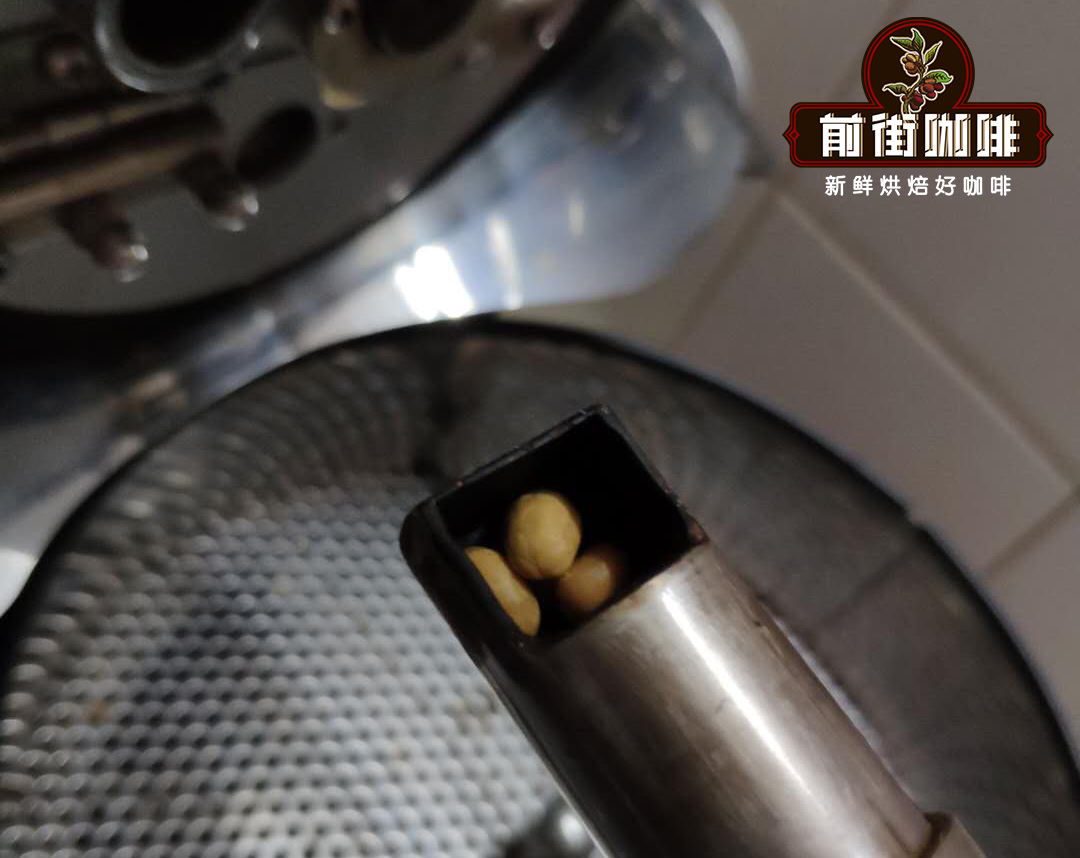
Charge the drum at 175°C, with firepower at 140 and the air damper at 3. The return temperature of 95.6°C arrives at 1 minute 36 seconds. When the drum temperature reaches 140°C, open the damper to 4. At 166°C, lower the firepower to 130 with the damper unchanged. At 176°C, drop the firepower to 110, damper unchanged. At 192°C, reduce firepower to 70 and open the damper to 5.
At 9'45", the bean surface develops uneven wrinkles and small black spots, and the toast aroma clearly turns into coffee aroma—the prelude to first crack. Listen carefully from this point on. First crack begins at 10'51"; open the damper fully to 5. Develop for 2 minutes after first crack and discharge at 201.5°C.
FrontStreet Coffee Brewing Suggestions
For the signature nutty aroma of Brazilian Cerrado, FrontStreet Coffee usually brews it as a pour-over. But for busy office workers with no time to fuss over parameters, a drip bag is the most practical way to enjoy it.

You'll need a vessel for the coffee, a kettle for pouring, and sufficiently hot water—a sharing pot or a drinking mug both work fine.
Tear open the sealed package, remove the drip bag, and rip along the dotted line above the non-woven pocket. Pull the two "ears" apart so the bag opens fully, then hang it on the rim of your cup or sharing pot.

For the first pour, wet all the grounds and let the coffee bloom for about 10-20 seconds. For the second pour, use a small, steady stream to fill the bag nearly to the top. Let the liquid drain, continuing until the flow stops, then pour again to fill. Once the coffee has finished dripping, remove the bag, give the cup a gentle swirl to even out the brew, and enjoy.

Brewing Parameters
- Dose: 15g
- Ratio: 1:15
- Water Temperature: 88°C
- Grind Size: Medium-coarse (70% pass-through rate with a #20 standard sieve)
- Dripper: Kono

Detailed Brewing Steps
- First pour: Pour 30g of water and bloom for 30 seconds.
- Second pour: After blooming, pour the second segment—100g in slow circular motions from the center outward. Take your time with this pour: the coffee needs sufficient contact time for its aromatics to fully extract. Then wait for the water level to drop to half.

- Third pour: Just as the coffee bed is about to be exposed, pour the third segment of 95g, bringing the total to 225g. Once all the liquid has drained through, remove the dripper. Total brew time: 1 minute 52 seconds.
FrontStreet Coffee Recommendation
If you simply want a first taste of what Brazil can offer, the FrontStreet Coffee Pulped Natural Cerrado is the bean to start with—a truly classic Brazilian single origin. Cerrado is one of Brazil's most respected coffee regions, and the beans FrontStreet Coffee sources here are the Red Bourbon variety so common across South America. Roasted medium, the cup opens with rich aromas of creamed peanuts, toast, caramel, and hazelnut. The body is round and smooth, with no acidity to speak of and only a gentle bitterness—a profile that suits it as much for pour-over as it does for a moka pot, espresso SOE, siphon, or French press.
Brazilian coffee's moderate acidity and the balance struck between sweetness, bitterness, and body also make it a favorite base for espresso blends. FrontStreet Coffee's classic blend, its nut-forward premium blend, the well-balanced black cocoa blend beloved by baristas, and FrontStreet Coffee's Commercial Blend designed for café use all include Brazilian components—lending chocolate and cream aromatics, soft and gentle sweetness and acidity, and a stability in extraction that comes precisely from that balanced Brazilian backbone.
Important Notice :
FrontStreet Coffee is a long-established specialty coffee roaster in Guangzhou China, selling freshly roasted beans from its own farm in Yunnan as well as dozens of carefully selected single-origin beans from around the world for both pour-over and espresso. The products deliver consistently excellent quality and great value, with shipping within 24 hours. Guangzhou's FrontStreet Coffee shop is recommended by many coffee lovers, and the beans are now available online at the Tmall 。
FrontStreet Coffee has moved to a new address:
FrontStreet Coffee Address: 315,Donghua East Road,GuangZhou
Tel:020 38364473
 Scan and follow the En Gafei WeChat official account. Please indicate that the reprint comes from "En Gafei".