What do Yirgacheffe G1 and G2 Mean? Yirgacheffe Origin Information and Processing Methods
For professional coffee knowledge exchange and more coffee bean information, please follow Coffee Workshop (WeChat public account: cafe_style)
In recent years, many newly emerging small producing areas and cooperatives in Ethiopia's Sidamo and Yirgacheffe regions have begun marketing themselves under their own cooperative or farm names in the international market - a sign of confidence in their coffee and a desire to build brand recognition and loyalty worldwide. Coffee farmers insist on harvesting mature cherries and meticulously handling every step. Whether washed or naturally sun-dried, both approaches perform outstandingly, delivering unexpectedly fragrant aromas and excellent mouthfeel. That, I believe, is why coffee enthusiasts look forward to each new Ethiopian harvest. For example, the Operation Cherry Red program assisted by the Dutch government - Koret in 2008 and Carmbella Estate in 2009 - both emitted magnificent strawberry cookie aromas that left a deep impression on the world. In recent years, Ethiopian sun-dried beans have further strengthened this characteristic.
Ethiopian coffee is graded G1 and G2 for washed beans, with G1 the highest washed grade; G3 and G4 apply to sun-dried beans, with G3 the highest sun-dried grade. Ethiopian green coffee beans are divided into five grades based on the number of defective beans in a 300-gram sample:
Grade 1: 0-3 defective beans
Grade 2: 4-12 defective beans
Grade 3: 13-25 defective beans
Grade 4: 26-45 defective beans
Grade 5: 46-90 defective beans
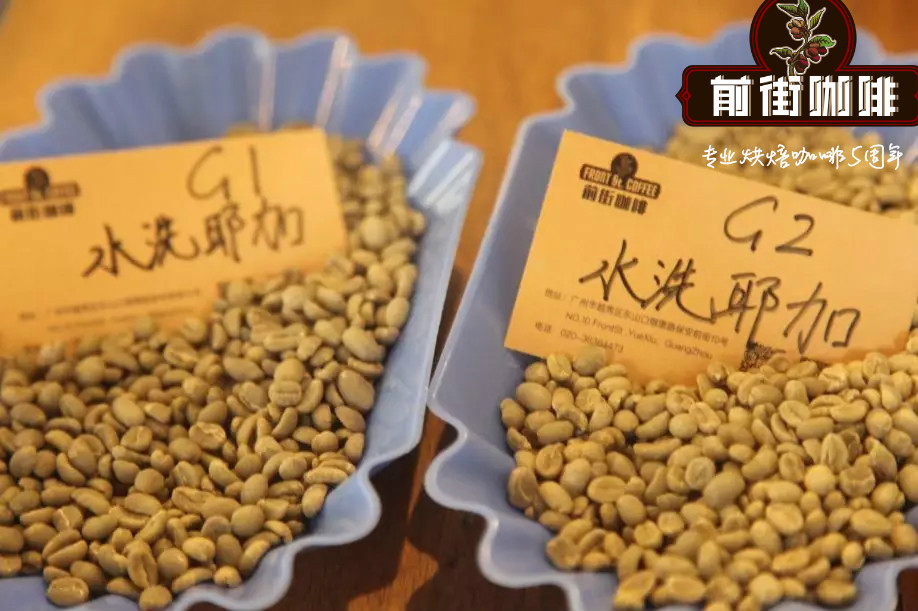
So what exactly separates G1 from G2? FrontStreet Coffee has compared their flavors as follows:
Cupping
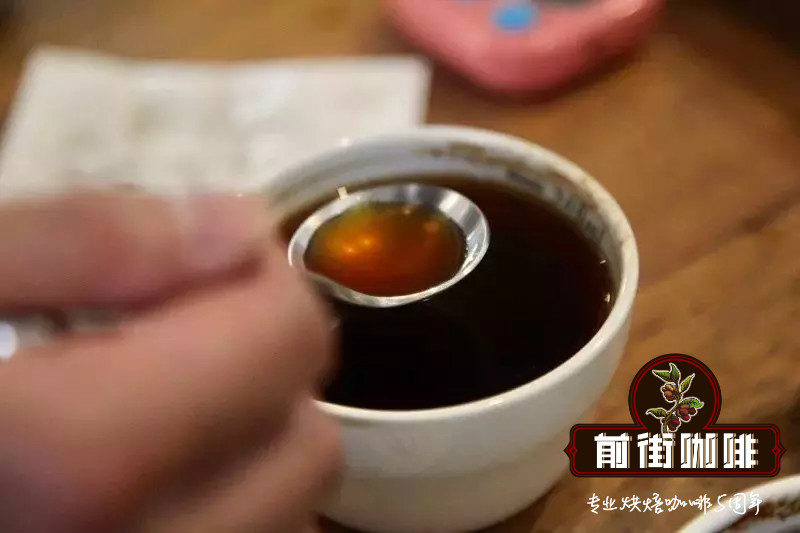
[Washed Yirgacheffe G1] Jasmine, ginger flower, lemon, pomelo, plum, Tieguanyin
[Washed Yirgacheffe G2] Jasmine, lemon, citrus, tea sensation
Pour-Over
Parameters: water temperature 91°C; grind size BG 5R (China standard #20 sieve pass rate 58%); coffee-to-water ratio 1:15.
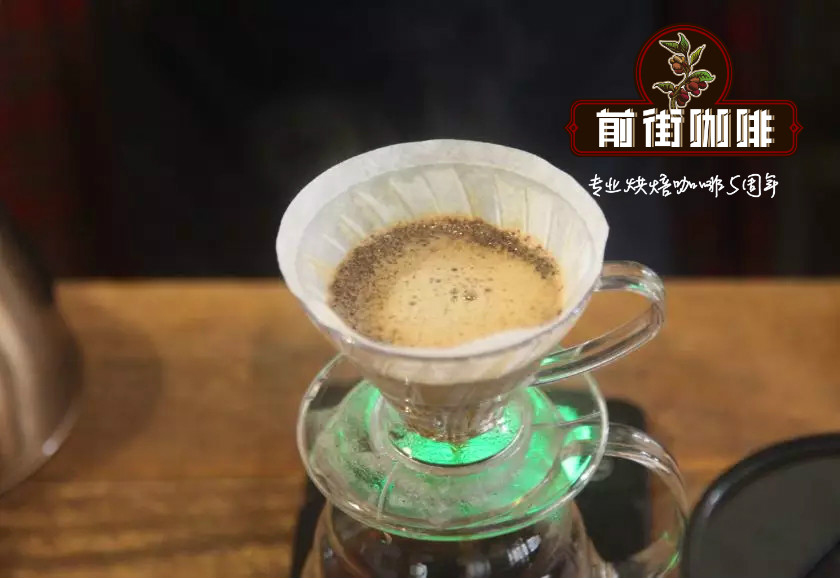
Method: Segmented extraction. Bloom with 35g of water for 30 seconds, then pour with a small flow to 130g in stages. When the level drops and the coffee bed is about to be exposed, pour to 225g and stop. When the level drops again and the bed is about to show, remove the dripper.
[Washed Yirgacheffe G1] Smells of jasmine, fresh lemon, and caramel sweetness. The entry shows soft citrus acidity and a creamy aroma, with mid-notes of lemon acidity, sugarcane sweetness, and an oolong tea aftertaste.
[Washed Yirgacheffe G2] Smells of jasmine and citrus acidity. The entry has lemon and grapefruit acidity with a black tea sensation, some cocoa in the finish, and caramel sweetness.
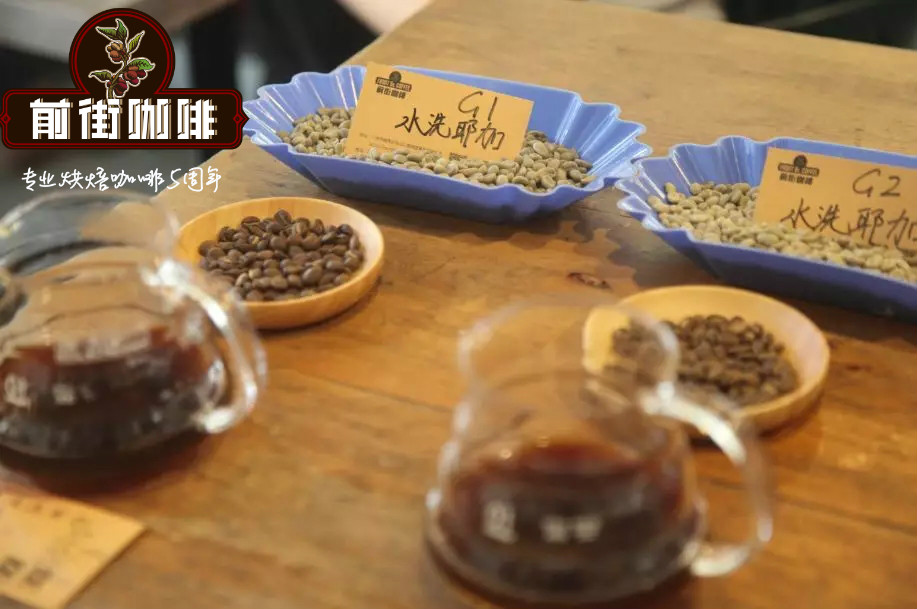
Comparing the two washed Yirgacheffes, FrontStreet Coffee could see clearly from both green and roasted samples that G1 beans are relatively uniform in size, while G2 beans show obvious unevenness with more defects. During roasting, G1 beans release noticeably more aroma, while G2 falls somewhat short in this regard.
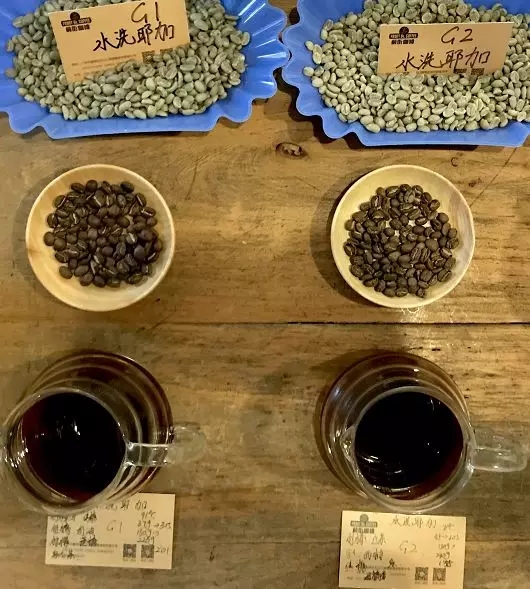
In flavor, G1 and G2 are actually quite similar, both built around lemon, citrus, and jasmine. But by comparison, G1 offers rich, clearly delineated flavor layers, while G2 has fewer, less distinct layers and some off-flavors.
About Yirgacheffe
Yirgacheffe grows in the Sidamo region of southwestern Ethiopia. The beans are small to medium-sized, with green beans showing a light yellow-green color - complete and beautiful, holding a representative place among East African specialty coffees.
The name Yirgacheffe means "single ethnic settlement." The producing area sits in the Sidamo growing region of south-central Ethiopia, on mountains over 2000 meters above sea level, and is the homeland of the Gedegna people. It is one of the few Ethiopian Arabica coffees processed by washing. After medium roasting, it perfectly presents fruit acidity with a distinctive aroma reminiscent of flower tea and lemon peel.
Under the current ECX system, the Yirgacheffe area has been divided into four sub-regions: Yirgachefe, Wenago, Kochere, and Genlena Abaya. The soil is fertile, with an average altitude above 1800 meters - a high-altitude region with significant day-night temperature swings. The production methods of each sub-region, combined with local unique native-tree coffee gardens, give every batch its own distinctive flavor.
Yirgacheffe originally rose to fame - and remains predominantly - a washed coffee, but sun-dried Yirgacheffe has recently won enthusiastic market acceptance for its rich berry sweetness. Because of the sharp increase in demand, sun-dried production has also grown substantially.
About Misty Valley
Growing in the misty valley, this coffee earned its beautiful name. In the town of Yirgacheffe in Ethiopia's Sidamo region, many coffee trees are planted. Abandoning the sun-dried methods used in Sidamo a decade prior, Misty Valley farmers switched to washed processing - and it was this washed coffee that made Yirgacheffe famous. Today, Yirgacheffe is not just a place name but a byword for famous coffee beans.
According to local elders, although Misty Valley's Yirgacheffe is world-famous for washed processing, the area still primarily uses traditional sun-drying, because residents believe sun-drying creates an indescribably wonderful flavor. Given Yirgacheffe's great fame, the country has incorporated the coffee ceremony into banquets for foreign guests. They don't mind whether the beans are complete and full, roasting them directly in iron pans; the usual taboo against over-roasting is set aside for the occasion. Under this traditional and wonderful ceremony, even beans of inconsistent color can brew an unforgettable taste.
FrontStreet Coffee Recommendation: Discovering Yirgacheffe Village by Village
Yirgacheffe town actually contains many micro-regions and even individual villages, home to some remarkably experienced cooperatives - and FrontStreet Coffee's washed Guodingding Cooperative lot is the finest example. Located in the Worka area at Yirgacheffe's southeastern edge, it was once part of the Worka cooperative under the Yirgacheffe Coffee Farmers Cooperative Union (YCFCU), later revealed to the world's coffee hunters as a "single-terroir" origin as traceability became prized. Using the most traditional washed processing, the Guodingding lot shows none of the conventional bitterness - just fresh, bright citrus and lemon acidity wrapped in jasmine fragrance, with green tea and honey tones after medium-light roasting. And if you'd like to taste the natural side of Yirgacheffe too, FrontStreet Coffee's Natural Red Cherry pairs beautifully with it. Brew either with a V60 at 90-91°C, 15g of coffee, and a 1:15 ratio.
Important Notice :
FrontStreet Coffee is a long-established specialty coffee roaster in Guangzhou China, selling freshly roasted beans from its own farm in Yunnan as well as dozens of carefully selected single-origin beans from around the world for both pour-over and espresso. The products deliver consistently excellent quality and great value, with shipping within 24 hours. Guangzhou's FrontStreet Coffee shop is recommended by many coffee lovers, and the beans are now available online at the Tmall 。
FrontStreet Coffee has moved to a new address:
FrontStreet Coffee Address: 315,Donghua East Road,GuangZhou
Tel:020 38364473
 Scan and follow the En Gafei WeChat official account. Please indicate that the reprint comes from "En Gafei".