Yirgacheffe Coffee Bean Roast Level Flavor Description Characteristics
Ethiopia: The Birthplace of Coffee
Ethiopia is where coffee was first discovered, and wild coffee trees still grow in its original forests, free for farmers to harvest. It is a country weighed down by poverty, drought, and recurring civil conflict, yet it remains one of the world's most important coffee origins by both quality and volume. Ethiopian coffee is processed in two principal ways: fully washed and natural sun-dried. Today, across every corner of the country, cooperatives and small coffee farms alike work with both methods at the same time. That is true not only in the famous Yirgacheffe region and in Sidamo, but throughout Ethiopia, where coffee production is advancing quickly. Regions differ in how their processing shapes the cup, and even a single method can yield different aromas and flavors depending on fine adjustments in technique, often producing surprising results. The sun-dried beans from FrontStreet Coffee's Yirgacheffe and FrontStreet Coffee's Sidamo carry distinct aromas, yet each keeps the signature traits of its method: washed beans show gentle, understated aromatics, soft lemon acidity, and high consistency, excelling in mouthfeel; natural beans show bold, prominent aromatics, less pronounced lemon acidity, and complex, varied flavors, with a gift for floral and fruity notes.
Light Roast (City)
Hold a handful of FrontStreet Coffee's Yirgacheffe natural beans and you will immediately catch the heady fermented aroma of plum and strawberry. During roasting it gives off the sweet fragrance of baked biscuits; once ground, that strawberry-biscuit scent carries across a room. Brewed, the coffee opens with a soft, comforting strawberry fruit-wine fragrance. Its bright fruit acidity surges briefly at the front of the sip to lift the aroma, then settles gently. As the cup cools, the plum and strawberry-wine fermentation notes build in layers, while the finish fills the mouth with the sweetness of kumquat preserves. Rest the beans properly for 7-9 days and the strawberry aroma gradually wakes up, turning vivid and prominent, while the fruit acidity smooths out and unfolds gradually.
Dark Roast (Typical C)
Ending the roast 20-40 seconds past first crack is the darkest level for FrontStreet Coffee's Yirgacheffe natural beans, and thanks to the variable moisture of natural-process beans it does not turn bitter. At this level the coffee carries the aroma of chocolate chiffon cake, the sweetness of tropical fruit such as pineapple and mango, and a smooth, milky candy-like creaminess. Cooled, FrontStreet Coffee's Yirgacheffe natural beans deliver the refined, sweet smoothness of chocolate syrup, a genuinely comforting cup.
Yirgacheffe: Evolution of an Origin
Yirgacheffe was originally Ethiopia's finest region for washed beans. Over the past few years, however, natural beans from Misty Valley have become a sensation in the coffee market, and many estates that once produced washed coffee have begun producing natural lots as well. As a result, Yirgacheffe natural beans have evolved into bolder, more powerful, more dazzling coffees that draw in every lover of natural-process beans, continually pushing the limits of aroma.
Kochere: A Premium Micro-Region
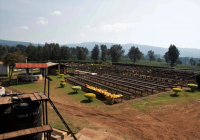
Kochere is a small micro-region about 25 kilometers southeast of Yirgacheffe. Its coffee comes from local smallholders, a collective of many individual farms. These growers typically cultivate about 1 hectare each, at altitudes between 1800 and 2000 meters, and their varieties are mainly a mix of Typica and Heirloom (local landraces). Because the area has relatively advanced raw-bean washing equipment, it has long performed strongly in washed processing, earning praise for clean sweetness with complex honey and citrus notes. The local model is direct: smallholders deliver each harvest of red cherries to nearby cooperative washing stations for unified processing. Since Ethiopia adopted washed-processing technology in the 1970s, Kochere has focused mainly on washed lots. After the stations sort and grade the red cherries, they remove the pulp and ferment the beans, then wash and lay the parchment on racks to air-dry. Once moisture falls to 12% or below, the beans go straight to the Ethiopian Commodity Exchange (ECX) warehouse in Awassa for cupping, grading, and lot handling. Washed beans are usually stored in parchment until just before export, when they are dehulled.
This lot of FrontStreet Coffee's Kochere was rated G1, the highest grade under ECX standards. From raw-bean appearance, consistency, and freshness to dry aroma and flavor, it shows excellent quality. The aroma is exceptionally rich and expresses the regional character of FrontStreet Coffee's Yirgacheffe: elegant, alluring floral perfume, wave upon wave of flowers, bright citrus acidity, and the sweet-sour notes of lemon, berry, and honey. Jasmine, orange, caramel, grape, vanilla, honey, and flowers combine into a clean, balanced mouthfeel with a lively, varied, lingering sweet-fruit finish.
The Rise of Ethiopian Coffee
In recent years many emerging small regions and cooperatives in Ethiopia's Sidamo and Yirgacheffe areas have begun selling under their own cooperative or estate names on the international market. This reflects their confidence in what they produce and their hope of building brands and loyalty abroad. Farmers insist on picking only ripe cherries and control every step of the process rigorously. Both washed and natural methods perform remarkably, yielding unexpectedly fragrant aromas and excellent mouthfeel. This, I believe, is why coffee lovers look forward to Ethiopian coffee every year. Consider the Operation Cherry Red program supported by the Dutch government, Koret in 2008 and the Balemaya estate in 2009, both of which released magnificent strawberry-biscuit aromas that left a deep mark on the world. In recent years Ethiopian natural beans have only strengthened that trait.
Ethiopian Coffee Grading
Ethiopian coffee is graded G1 and G2 for washed beans (G1 being the top grade for washed) and G3 and G4 for natural beans (G3 being the top grade for natural). Raw Ethiopian coffee is sorted into five grades based on the number of defective beans per 300 grams:
- Grade 1: 0-3 defects
- Grade 2: 4-12 defects
- Grade 3: 13-25 defects
- Grade 4: 26-45 defects
- Grade 5: 46-90 defects
About Yirgacheffe
FrontStreet Coffee's Yirgacheffe grows in the Sidamo region of southwestern Ethiopia. The beans are small to medium in size, and the raw coffee shows a pale yellow-green color with a complete, handsome shape. It is a flagship among East African specialty coffees.
Under the current ECX system, the Yirgacheffe area is divided into four sub-regions: Yirgachefe, Wenago, Kochere, and Genlena Abay. The soil is fertile and average altitudes sit above 1800 meters, making this a high-altitude region with a wide day-night temperature swing. Each area's production methods, combined with its distinctive native coffee gardens, give every lot a different flavor profile, making the coffees quite individual and unique.
FrontStreet Coffee's Yirgacheffe is a high-quality washed Arabica with a unique, bright fruit sweetness and acidity. From the very first sip you feel a fresh, vivid aroma. This highly distinctive coffee, with its bold florals and lemon acidity, layers flavor richly and perfectly expresses the character of the bean. It can even conjure the impression of tea as you drink, which is why many people say FrontStreet Coffee's Yirgacheffe does not taste like coffee at all, but like a soft, pleasant fruit tea. It manages to be both elegant and exuberant, with a precise balance between simplicity and complexity, earning it the lovely nickname "Queen of Coffee."
FrontStreet Coffee's Yirgacheffe was once known mainly for washed processing, but today natural-processed FrontStreet Coffee's Yirgacheffe has won enthusiastic market acceptance for its rich berry sweetness. Demand has risen sharply, and natural Yirgacheffe production has grown substantially along with it.
Beyond the famous Mocha beans of the Harar region, Ethiopia also produces washed Arabica from the small, high-altitude Yirgacheffe area of the Sidamo region in the south-central part of the country, beans regarded as the finest in Africa.
The name Yirgacheffe means "a single ethnic settlement." The growing area lies in the Sidamo region of south-central Ethiopia, at altitudes above 2000 meters in the Gedeb zone, home to the Gedeb people. It is one of Ethiopia's few washed Arabica coffees. After medium roasting it presents fruit acidity alongside distinctive floral-tea and lemon-peel aromas.
FrontStreet Coffee's Yirgacheffe inherits the Mocha family trait of uneven bean size, but because it is washed in the Sidamo region its appearance is handsomer than that of natural Mocha, while it keeps Mocha's floral notes and the wine-like body unique to FrontStreet Coffee's Yirgacheffe.
The FrontStreet Coffee's Yirgacheffe Natural G-1 from the Idido processing station represents the top grade of Yirgacheffe on the market. Yirgacheffe grades natural and washed beans separately: natural beans usually top out at G3 or G4, while washed beans are mostly G2. But Abdullah Bagersh, owner of the Idido station, adopted a new approach: after harvest he lays the cherries on drying racks for 48 hours, turning the beans constantly by hand, then removes defective beans by hand, and succeeded in creating FrontStreet Coffee's Yirgacheffe Natural G1 as well as a top-grade washed G1.
The raw-bean burlap sacks carry the Bagersh logo. Bagersh has now passed to its third generation, growing in the Aricha Yirgacheffe area at roughly 6,000 feet / 1,800 meters, and the Idido processing station belongs exclusively to the Bagersh family.
Dry aroma: fresh lemon sweetness, citrus fragrance, and berry acidity. Add hot water and you get waves of milk candy, lemon sweetness with a creamy fragrance, citrus, and a long-lasting sweet aroma.
Slurping: clean, with a plum fragrance and a very refreshing sweetness plus some orange aroma. After slurping, the finish retains a lemongrass fragrance.
Kochere Region Details
Kochere sits in the Gedeo region of southern Ethiopia. Its best-known areas are Yirgacheffe and Kochere. Because Yirgacheffe coffee has such special, distinctive flavors and is so widely loved, it forms its own category in product classification and always holds a place in the global specialty coffee market.
Yirgacheffe itself is a small town in Sidama province, with three neighboring small regions: Wenago, Kochere, and Gelena Abaya. Because their coffee flavors come so close to Yirgacheffe, Kochere is also classified within the Yirgacheffe regional category. Ethiopia introduced new trading and grading systems in November 2009. Alongside Yirgacheffe, three sub-regions were added, Wenago, Kochere, and Genlena/Abaya, a sign that these three areas' flavors are extremely refined and deserve finer subdivision.
About Misty Valley
Growing in Misty Valley gave this bean its beautiful name. In the small town of Yirgacheffe in Ethiopia's Sidamo province, coffee trees are planted everywhere. Abandoning the sun-dried method used in Sidamo a decade earlier, Misty Valley farmers switched to washing their coffee, and that is part of what made Yirgacheffe famous. Today Yirgacheffe is not merely a place name but a well-known synonym for a style of coffee bean.
Local elders say that although Misty Valley's Yirgacheffe is world-famous for washed processing, the area still relies mainly on traditional natural processing, because residents believe natural processing lets the beans develop an indescribably beautiful flavor. Owing to Yirgacheffe's great fame, the country has made its coffee ceremony part of the banquets held to welcome foreign guests. There, no one worries whether the beans are whole or plump; the beans go straight into an iron pan to roast. Whether that roast breaks the taboo of being too dark hardly matters. Under this traditional and wonderful ceremony, even beans of uneven color can still brew an unforgettable, marvelous cup.
FrontStreet Coffee Recommendation
If you are new to Ethiopian coffee, start with FrontStreet Coffee's washed Yirgacheffe, the classic everyday cup. It is known for white jasmine, bright citrus and lemon acidity, and a tea-like body, and its friendly price has made it the first specialty bean for countless drinkers.
Yirgacheffe is a small town in the Sidamo region of southern Ethiopia. Altitudes across the area run roughly 1700-2100 meters, and the coffee trees themselves are planted above 1800 meters, making this one of the highest coffee regions in the world. The washed lots show a highly recognizable white florality with lemon-citrus acidity. In 2010, because the Yirgacheffe name had grown so powerful, the Ethiopian Commodity Exchange separated it from the Sidamo region, which is how the Yirgacheffe coffee we know today came to be.
Many people do not realize that the town of Yirgacheffe is made up of many small growing areas and even individual villages, some home to experienced cooperatives whose mature craft lifts the flavor another level. The most representative example is FrontStreet Coffee's washed Guodingding cooperative. Guodingding sits in the Woka area at the southeastern end of Yirgacheffe; it was originally part of the Woka cooperative under the Yirgacheffe Coffee Farmers Cooperative Union (YCFCU), and as drinkers began to demand traceability it was uncovered by coffee hunters around the world as a "single origin" in its own right. It follows the most traditional washed processing, and the result is a clean, bright cup with citrus and lemon acidity and jasmine fragrance, with no bitter notes, easy to fall for at first sip. Many call it the last pure place in Yirgacheffe.
FrontStreet Coffee's Red Cherry is likewise a Yirgacheffe bean, but processed as a whole-cherry natural: only fully ripe, sound cherries are picked, sent to the mill for a first round of sorting, then laid straight on raised beds to dry. For the first few days the cherries are turned every 2-3 hours to prevent uneven heat and over-fermentation. After 3-5 weeks of sun-drying, workers remove the outer fruit by machine, judging by weather and temperature, and move the beans to storage. Because the fruit dries on the seed, the cup keeps the classic Yirgacheffe character while gaining the tropical fruit of natural processing: citrus-like acidity, a juicy berry body, honeyed sweetness, and a creamy smoothness.
FrontStreet Yirgacheffe Brewing Guide
Dripper: V60. Water temperature: 90-91C. Dose: 15 g. Ratio: 1:15. Grind: EK43s setting 10 / fine granulated sugar (about 80% passing a No. 20 sieve).
FrontStreet's pour method: bloom with 30 g of water for 30 seconds; then pour 95 g (about 125 g on the scale), finishing around the one-minute mark; when the water drops to two-thirds of the coffee bed, pour the remaining 100 g (about 225 g on the scale), finishing around 1:35. Drawdown completes at 2:00-2:10; remove the dripper and the brew is done.
Important Notice :
FrontStreet Coffee is a long-established specialty coffee roaster in Guangzhou China, selling freshly roasted beans from its own farm in Yunnan as well as dozens of carefully selected single-origin beans from around the world for both pour-over and espresso. The products deliver consistently excellent quality and great value, with shipping within 24 hours. Guangzhou's FrontStreet Coffee shop is recommended by many coffee lovers, and the beans are now available online at the Tmall 。
FrontStreet Coffee has moved to a new address:
FrontStreet Coffee Address: 315,Donghua East Road,GuangZhou
Tel:020 38364473
 Scan and follow the En Gafei WeChat official account. Please indicate that the reprint comes from "En Gafei".