How are Guatemala Huehuetenango Coffee Beans Flavor Description and Growing Region Characteristics
Introduction to Ethiopian Yirgacheffe and Guatemalan Huehuetenango Coffee
When you first start drinking coffee, it is easy to confuse Ethiopian Yirgacheffe with Guatemalan Huehuetenango, because both are acidic. Not being able to tell them apart at first is normal. FrontStreet Coffee explains how to distinguish the two.
Coffee is an agricultural product, so it expresses the character of a growing region. African Ethiopian coffee has bright acidity and floral aromas, representing African beans; Central and South American Guatemalan coffee, thanks to volcanic soil, has a rich flavor with nutty and chocolate notes plus a smoky sensation, making it representative of Central American coffee.
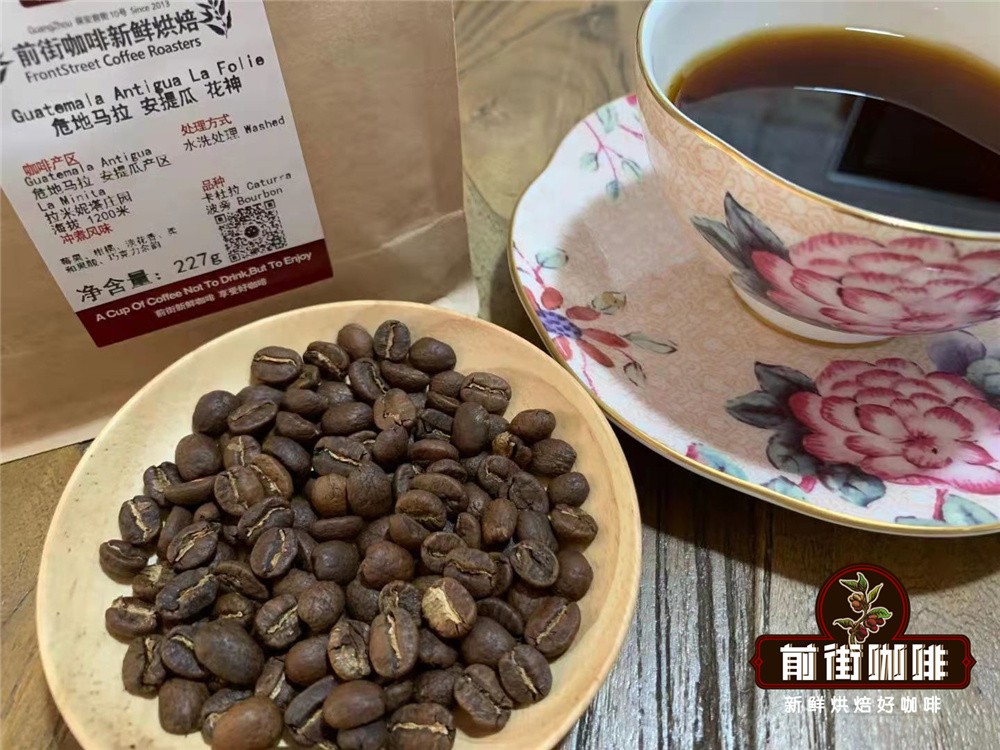
The Unique Characteristics of Guatemalan Coffee
Some people may not like this smoky style, but it is exactly what sets Guatemalan coffee apart. Compared with other coffees, cuppers often prefer this mixed-flavor coffee with spicy notes. Guatemalan coffee ranks among the world's best. Guatemala's high-altitude volcanic terrain provides ideal growing conditions. The strictly hard beans (SHB) from the region are rare, excellent coffee — full-bodied, delicious, with balanced acidity. Its giant coffee beans have also drawn considerable attention to Guatemala.
FrontStreet Coffee's Daily Selection Beans
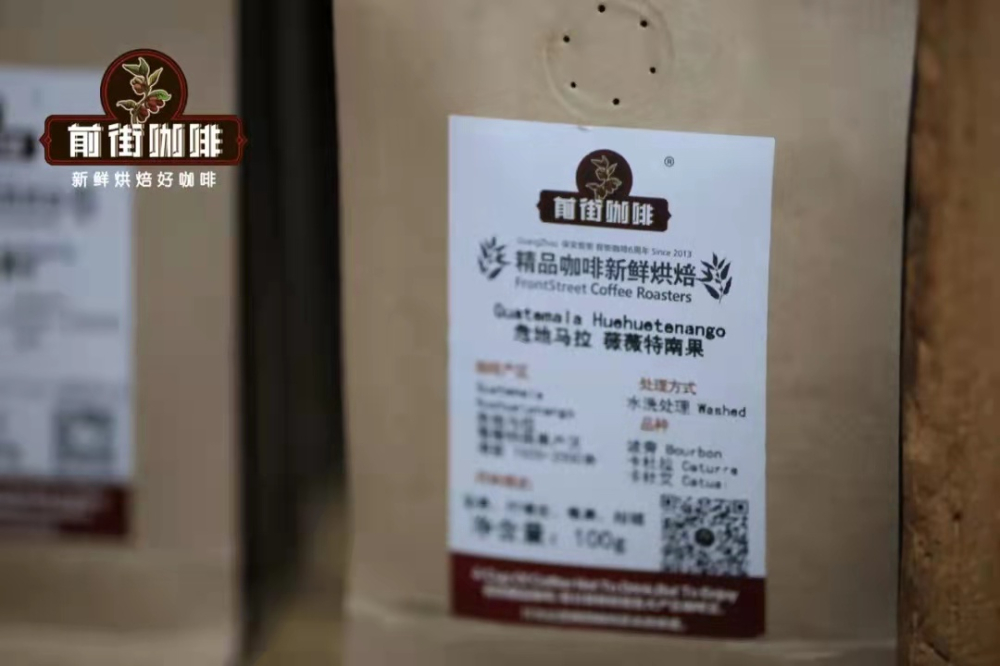
FrontStreet Coffee offers daily selection beans because it knows coffee flavor varies from country to country and region to region. To help everyone taste those differences, FrontStreet Coffee offers 8 different daily selection beans from various producing countries, including Panamanian Geisha. These are the most representative coffees of each country, offering great value and a perfect way to taste and choose your preferred flavors.
Geographical and Historical Context
Guatemalan coffee's smoky quality is inevitably tied to the local volcanic soil. Guatemala lies at the center of the Americas, occupying an important position in Central America. It covers an area of approximately 108,899 square kilometers. Its terrain divides into highland volcanoes, lowland tropical forests, Pacific coastal volcanic sandy plains and Caribbean coastal virgin land. The Sierra Madre mountain range of Central America runs east to west across Guatemala, covering about 2/3 of the country, with 34 volcanoes within its borders. Rivers and lakes dot the landscape, while equatorial forests and plains jungles cover the land, and the Pacific and Caribbean coasts feature undeveloped volcanic beaches.
Coffee was truly introduced to Guatemala in 1750 by Jesuit priests, and by the end of the 19th century German colonists developed the coffee industry here. Today, most coffee production takes place in the country's south. Guatemala has eight major coffee-producing regions, each growing coffee with a different flavor, but generally Guatemalan coffee shows a gentle, mellow texture, an elegant aroma and a special, pleasant acidity like fruit acid — a true aristocrat among coffees. Among them, Antigua Classic is highly recommended by coffee connoisseurs worldwide.
Guatemalan Coffee Regions
Guatemala's eight coffee regions all lie on highland terrain under a subtropical climate, with abundant, stable rainfall and fertile volcanic ash soil, giving the whole country extremely suitable conditions for coffee.
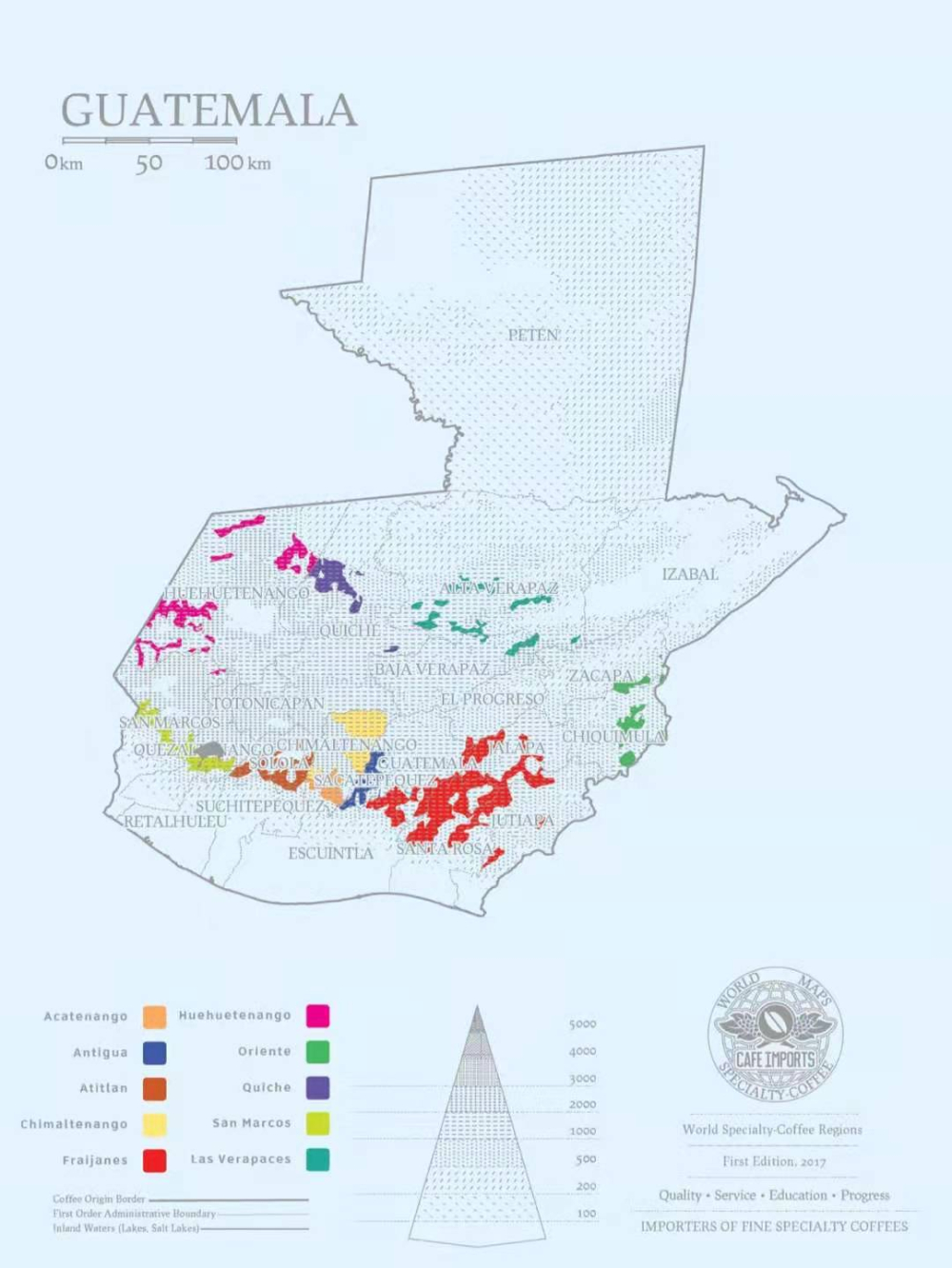
Guatemala's coffee areas include Antigua, Huehuetenango, Cobán, San Marcos, Atitlán, Acatenango, Fraijanes and Nuevo Oriente.
Antigua
Antigua is recognized worldwide as Guatemala's most popular coffee region. Its soil is rich in nutrients, which come from minerals deposited by nearby volcanic eruptions. The still-active Fuego volcano continues to deposit new minerals, keeping the soil fertile. Fertile soil, abundant rainfall and stable temperatures have made Antigua coffee world-famous.
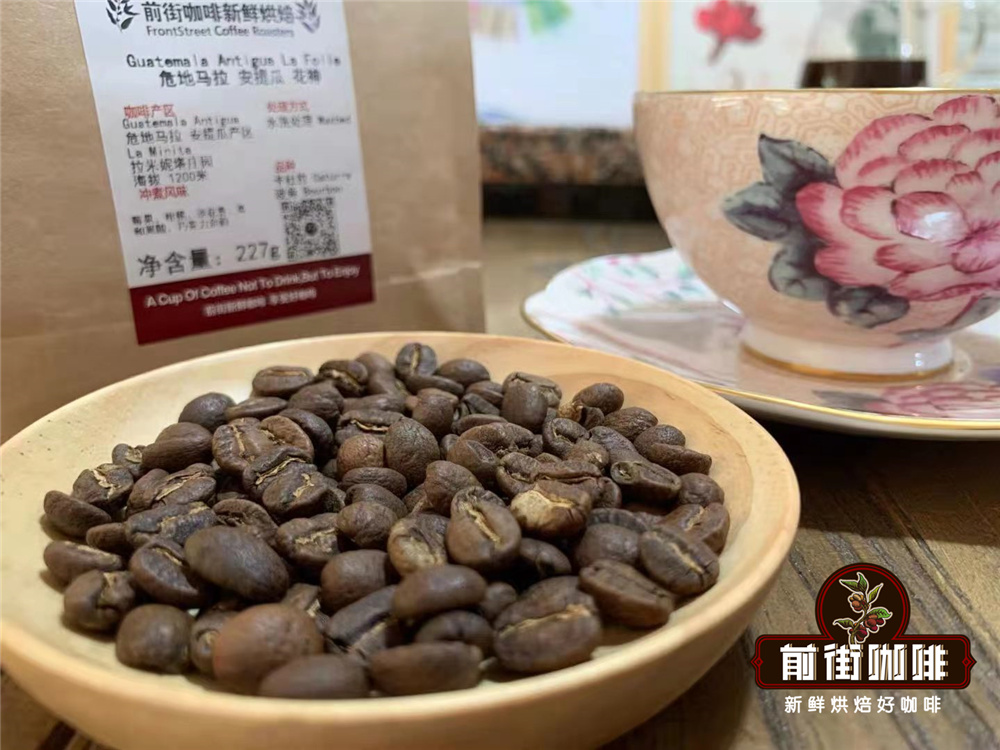
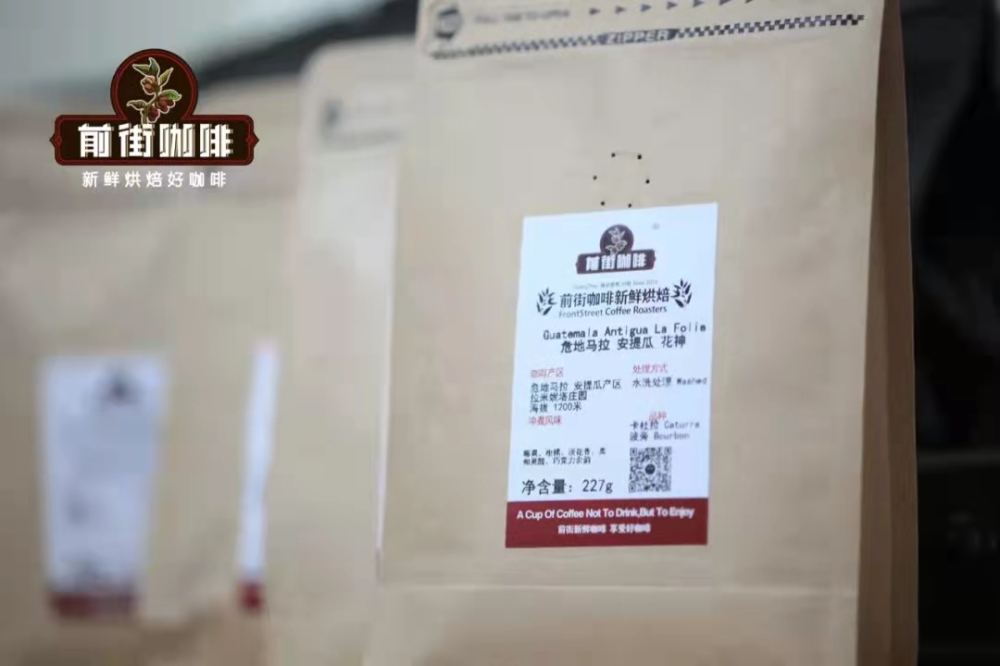
The charm of Antigua lies in its balanced, smooth fruit acidity and rich spicy flavor. The coffee has smooth beans of high hardness and good quality, a perfect blend of richness and sweetness, and a hint of smoke that deepens its sense of mystery. That smoky flavor is especially distinctive. FrontStreet Coffee's selection includes a Flora bean from Antigua; it is washed-processed, with varieties including Caturra and Catuai, and shows citrus, nut and cocoa in the aftertaste — refined and elegant overall.
Huehuetenango
FrontStreet Coffee's daily selection Huehuetenango lacks the strong smokiness of other regions, offering instead a more comfortable cup with rich fruit flavor. Among Guatemala's three non-volcanic regions, Huehuetenango is the highest and driest. Although Guatemala has many highlands, in coffee-region terms only Huehuetenango can be called "Huehuetenango Highlands." Its coffee belongs to the typical S.H.B. (Strictly Hard Bean) category, worthy of the title champion of Guatemalan coffee.
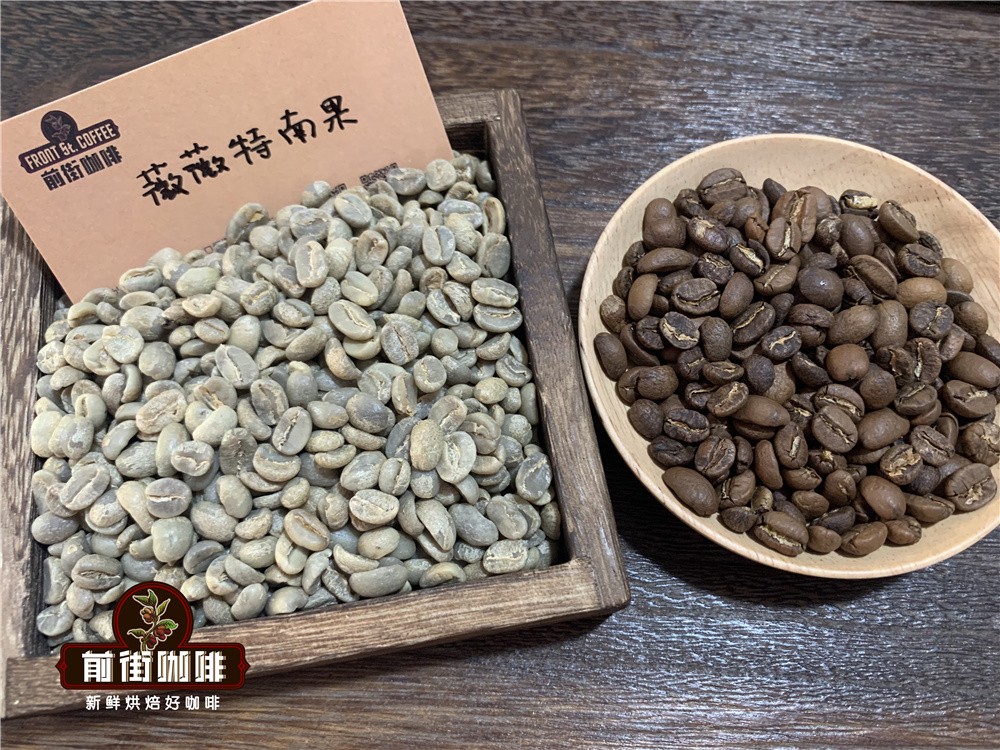
Coffee from the Huehuetenango Highlands is a typical strictly hard bean — slightly weaker in floral and fruit aroma, but with lively, bright fruit acidity, grapefruit-citrus aroma, berry fragrance and body, making it the crown of Guatemalan coffee and a favorite among acidity lovers. It sometimes carries lemon or citrus fragrance, similar in tone to Yirgacheffe. Most winning beans in Guatemala's annual competitions come from the Huehuetenango Highlands, often taking cupping awards. FrontStreet Coffee has also chosen Huehuetenango as the representative of Guatemalan coffee.
Huehuetenango is a coffee region located in Guatemala's most remote northwestern highlands. The name has ancient origins, coming from the Nahuatl language and meaning "land of the ancients (or ancestors)," and it is one of the country's three non-volcanic producing regions.
Coffee cultivation in Huehuetenango began in the 19th century, with processing methods steadily improved to raise overall quality and gradually bring the coffee to perfection. Some high-quality estates sit in valleys between mountains, where unique microclimate changes create distinctive flavors. This region has the driest climate and the highest altitude among Guatemala's coffee zones, with coffee grown at 1800-2100 meters. Warm, moist air from the Caribbean moving through the central mountain range means the area is high but not cold, often shrouded in clouds and mist with variable weather. It belongs to the volcanic zone, with fertile volcanic soil. Sitting at the edge of active plate tectonics, it has many alpine basin terrains. Dry, hot winds from Mexico's Tehuantepec plateau protect the region's beans from frost. Local people plant coffee trees up to nearly 2000 meters — truly a heavenly environment for coffee. Although Huehuetenango is dry, streams crisscross the area, providing plenty of clean water for irrigation or washing stations. During harvest, washing can be done directly in the mountains.
New Oriente
With abundant rainfall and year-round cloud shade, New Oriente's climate resembles Cobán's, with only minor differences. Formerly a volcanic area, its soil contains metamorphic rocks, whose abundance balances the soil's minerals. Coffee cultivation also differs from typical Guatemalan volcanic areas — New Oriente coffee grows in volcanic soil but without volcanic activity during the growing period.
Guatemalan Coffee Varieties
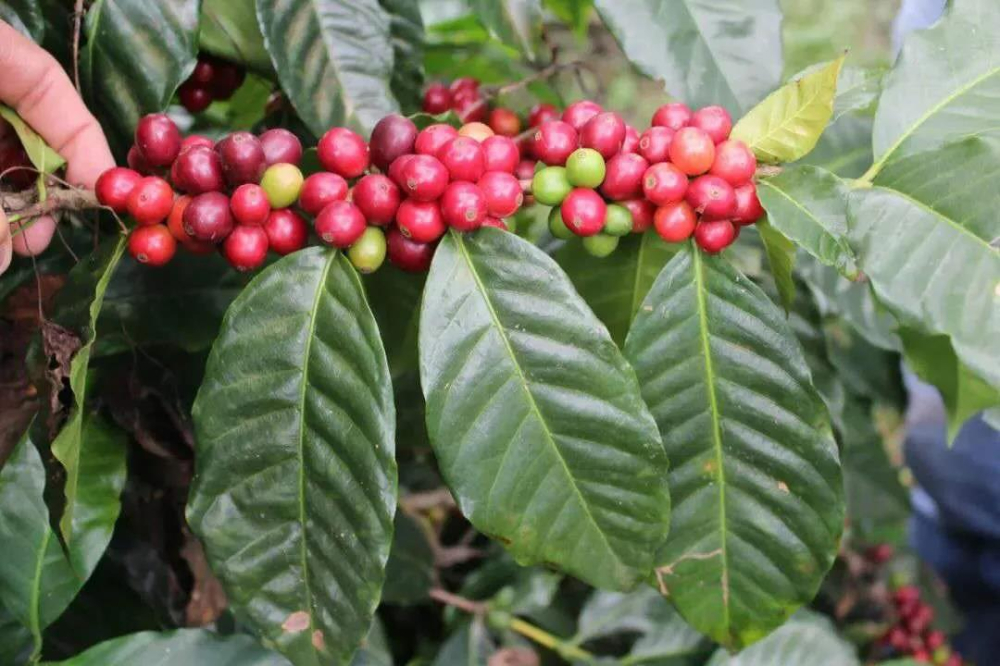
Guatemalan coffee varieties are very diverse, mainly Bourbon, Typica, Catuai and Caturra, with small amounts of Yellow Bourbon, Geisha and Pacamara — a typical American coffee variety mix. Bourbon is the origin of many of today's varieties, first discovered on Réunion Island; when brought to the Americas its characteristics changed. Caturra was first successfully cultivated in Brazil, with shorter trees and stronger resistance to wind and rain. Catuai is a hybrid of Mundo Novo and Caturra, with short, stout trees and extremely high yields when properly fertilized. FrontStreet Coffee selected this bean because it can express the regional character of Guatemalan coffee — fruit acidity fused with nuts.
Guatemalan Coffee Processing Methods
Guatemalan coffee is washed-processed, with 45% of it specialty grade — quite a high proportion — along with a small amount of Robusta.
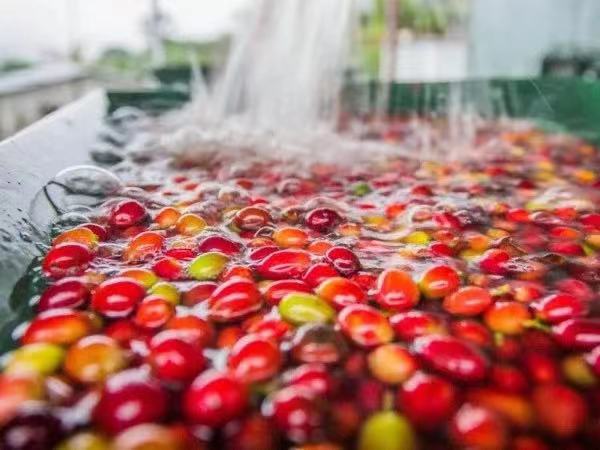
Washed processing: after harvesting, selected cherries go into a depulper to remove the skin and pulp. The beans with remaining mucilage are then placed in water for about 24 hours of fermentation. Afterward they are washed in flowing channels, then dried in the sun or by machine until moisture drops to about 12%, then moved to warehouses, and finally the parchment is removed from the green beans awaiting sale. This method produces a very clean flavor.
FrontStreet Coffee's Brewing Parameters for Guatemalan Coffee
To present an elegant floral aroma, a tea-like quality and fruit fragrance, FrontStreet Coffee shortened the caramelization time after first crack and used a medium roast. When brewing this bean, FrontStreet Coffee uses a higher water temperature and a finer grind to maximize the aroma.
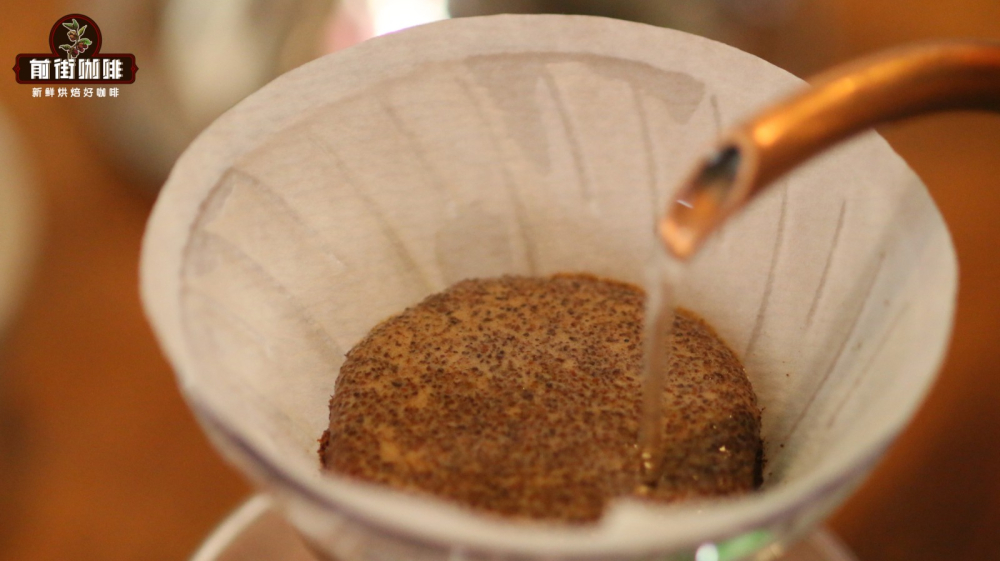
FrontStreet Coffee's specific brewing parameters are: V60 dripper, water temperature 91°C, water-to-coffee ratio 1:15, coffee amount 15g, medium-fine grind (80% pass-through rate with a China #20 standard sieve).
FrontStreet Coffee's segmented extraction: first use 30g of water to fully wet the coffee bed into a "hamburger" shape for a 30s bloom; second segment — at 1'00" on the timer, pour to 125g, then wait for the water level to drop to 2/3 of the bed before the third segment; third segment — at 1'40" on the timer, pour to 225g, waiting for the coffee to finish dripping with a total extraction time of 1'59". Total brewing time is 2'00". After extraction, gently shake to mix the coffee fully before tasting.
FrontStreet Coffee's Brewing Suggestions
To brew a good cup, pay attention to bean freshness. FrontStreet Coffee has always believed that freshness greatly affects flavor, so it ships beans roasted within 5 days. FrontStreet Coffee's roasting philosophy is "freshly roasted good coffee," ensuring every customer receives the freshest coffee. The resting period is about 4-7 days, so when customers receive it, it is at peak flavor.
For those who need ground coffee, a gentle reminder: pre-ground coffee needs no resting period, because during transport the pressure from carbon dioxide buildup in the package helps mellow the flavor, so you can brew a cup immediately on receiving it. Ground coffee must be brewed promptly, however, because it oxidizes quickly in air and the flavor dissipates relatively fast, so the coffee will not taste as good. FrontStreet Coffee therefore suggests buying whole beans and grinding fresh before brewing to enjoy the coffee's flavor fully.
FrontStreet Coffee Recommendation
If Huehuetenango's bright acidity is what you enjoy, Ethiopian Yirgacheffe is the classic comparison — and the best introduction to it is the FrontStreet washed Yirgacheffe, known for white jasmine, bright citrus and lemon acidity and a tea-like body, at a friendly price that has made it a first specialty coffee for many. Yirgacheffe is a small town in Ethiopia's Southern Sidama zone at about 1,700-2,100 meters, with coffee planted above 1,800 meters — one of the highest regions in the world — and its distinctive white florals and lemon-citrus acidity made the name a synonym for Ethiopian specialty coffee.
Within Yirgacheffe, the FrontStreet Gutingding Cooperative is a standout: it sits in the Worka area at Yirgacheffe's southeastern edge, originally part of the Worka cooperative under the Yirgacheffe union YCFCU before traceability work split it out as a single-origin source. It follows the traditional washed method and produces a fresh, bright citrus and lemon acidity with jasmine fragrance instead of the traditional bitter note.
For a natural-process counterpart, the FrontStreet natural Red Cherry uses only fully ripe, sound cherries, dried directly on raised beds and turned every 2-3 hours in the first days to avoid over-fermentation; after three to five weeks the outer fruit is machine-scraped off. Because the fruit dries on the bean, the coffee carries both classic Yirgacheffe character and tropical natural-fruit notes — citrus acidity, a berry-juice body, honey sweetness and a creamy smoothness.
Important Notice :
FrontStreet Coffee is a long-established specialty coffee roaster in Guangzhou China, selling freshly roasted beans from its own farm in Yunnan as well as dozens of carefully selected single-origin beans from around the world for both pour-over and espresso. The products deliver consistently excellent quality and great value, with shipping within 24 hours. Guangzhou's FrontStreet Coffee shop is recommended by many coffee lovers, and the beans are now available online at the Tmall 。
FrontStreet Coffee has moved to a new address:
FrontStreet Coffee Address: 315,Donghua East Road,GuangZhou
Tel:020 38364473
 Scan and follow the En Gafei WeChat official account. Please indicate that the reprint comes from "En Gafei".