Catuai Coffee Variety Introduction | Catuai Coffee Taste and Flavor Description
What is the Catuai Coffee Variety?

Catuai, judging by its name alone, clearly has a strong connection with Caturra. It is an artificially cultivated hybrid developed by the Instituto Agronômico de Campinas (IAC) in São Paulo State, Brazil, using Mundo Novo and Yellow Caturra. It was initially called "H-2077." Mundo Novo itself is the result of natural hybridization between Bourbon and Typica, first discovered in 1943 in Itimirim, São Paulo, Brazil.
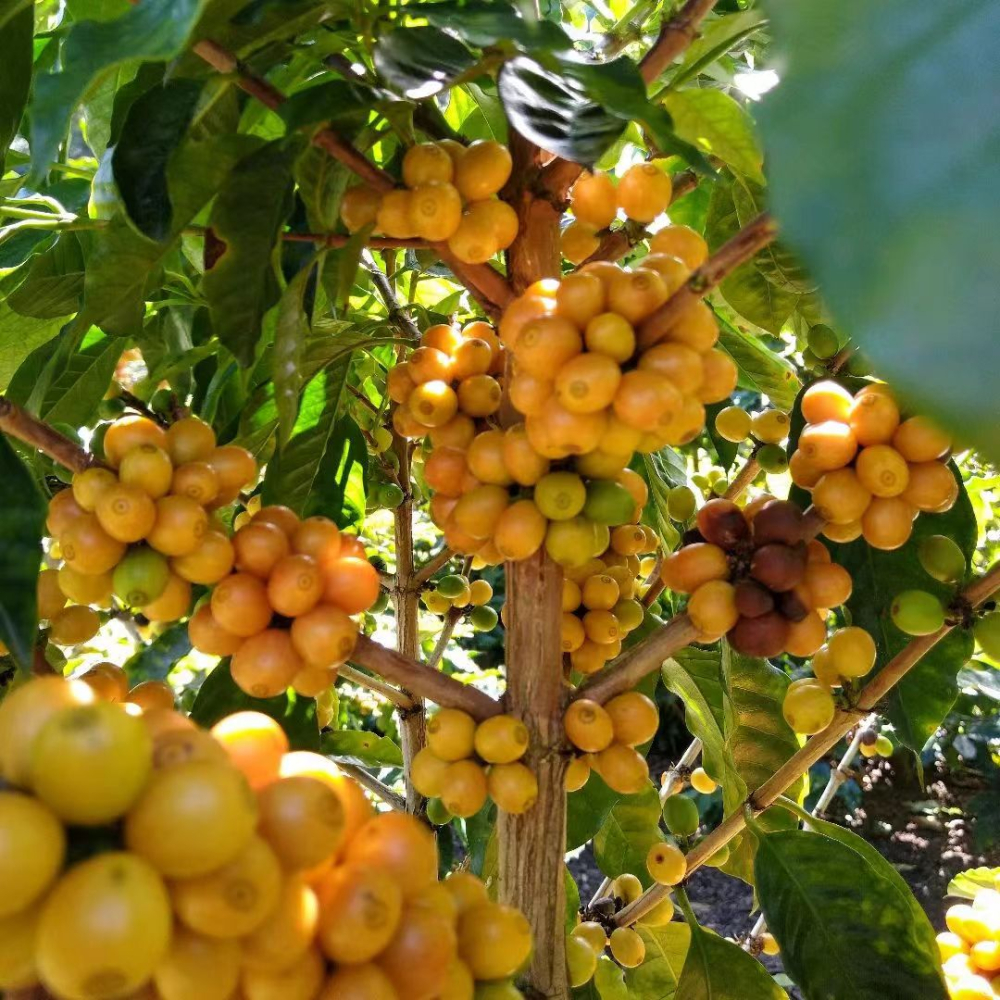
Catuai inherits Mundo Novo's high yield, strong disease resistance, and excellent cup quality, while also possessing Caturra's compact plant size, superior acidity, and sun-dried coffee properties. As a result, Catuai resists natural disasters well, especially wind and rain. Because of its smaller plant size, it can be planted at double density, and its compact height makes pest and disease treatment relatively easier. Catuai grows vigorously and stays short, but it is susceptible to leaf rust.
Because the variety performed so well, it was named Catuai, which means "very good" in the Guaraní language. The variety initially called "H-2077" did not cup especially well, however, even though it excelled in disease resistance, pest resistance, yield, and environmental adaptability.
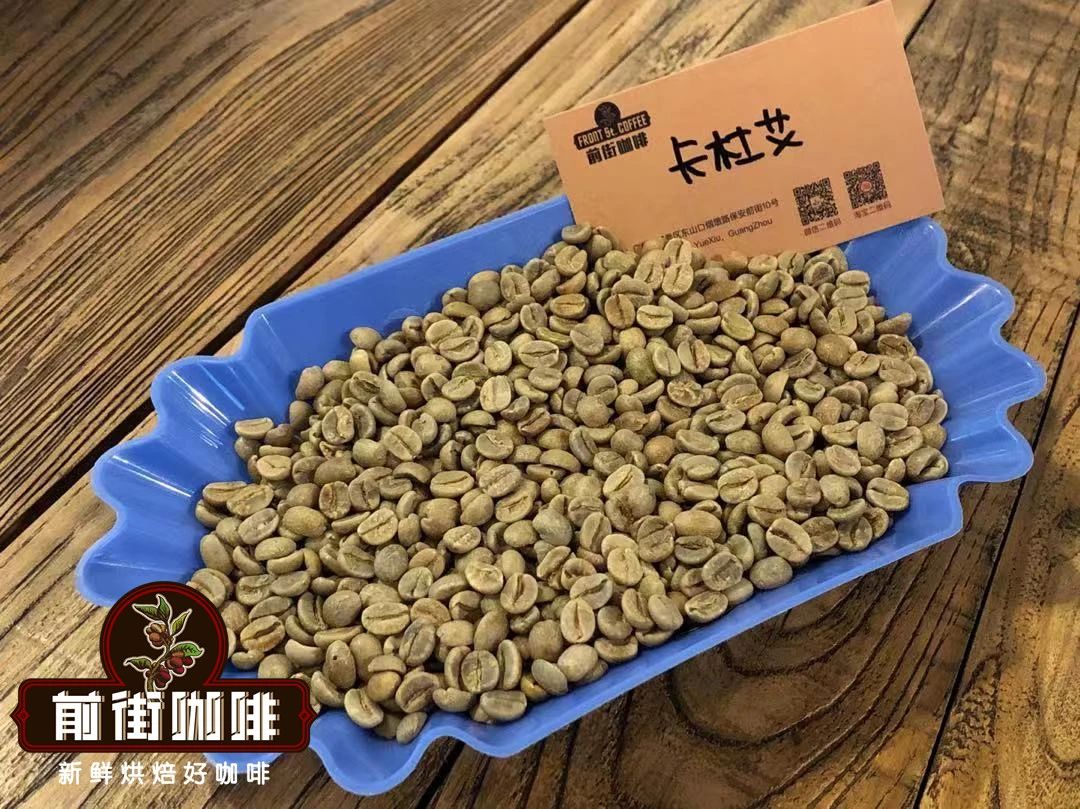
The São Paulo State Agricultural Institute therefore put "H-2077" through pedigree selection (continuous generational selection of individual plants), and it was widely promoted and planted in Brazil in 1972. Catuai's high yield also drew Central American countries to introduce it. Research found, though, that Catuai transplanted to Central America seemed to lose some productivity.
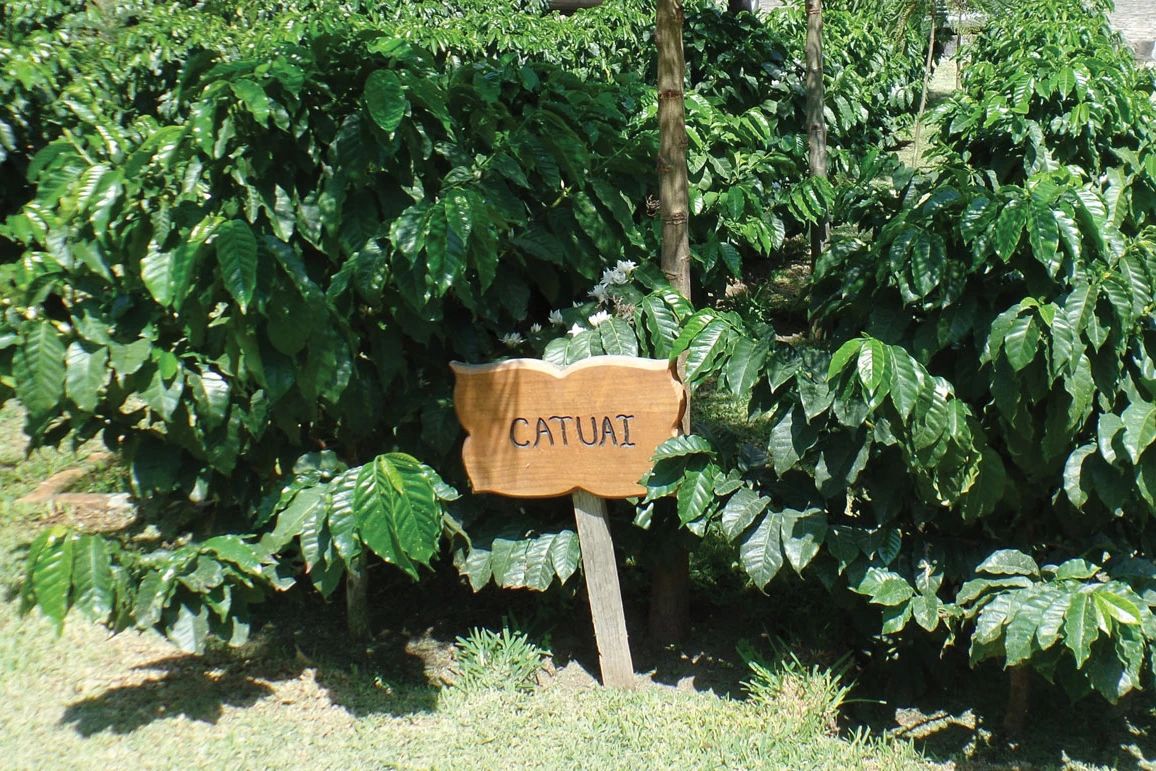
Catuai performs well in the cup, and it also comes in red and yellow fruit varieties, planted in different countries according to their characteristics. Costa Rica, for example, introduced the yellow-fruit Catuai in 1985. The Costa Rica Musician Series Beethoven offered by FrontStreet Coffee is a coffee composed entirely of the Yellow Catuai variety. It has excellent acidity and a clean taste, and importantly, fruity aromatics.
Why Do Caturra and Catuai Often Appear Together on a Single Coffee?
Research conducted in Honduras and Costa Rica (tested by the Honduran Coffee Institute, IHCAF, which selected two strains to begin cultivation) observed no significant productivity differences between Caturra and Catuai. Central American estates were already growing Caturra as a replacement for Bourbon, and when Catuai was introduced for localized cultivation, Catuai already contained Caturra genes, so their biological habits gradually converged. That made secondary classification within a single growing area costly in labor. As a result, when we buy estate-level beans from Latin America today, the varieties are often listed as including Caturra, Catuai, and others.
Catuai is now widely grown in Brazil, Costa Rica, Honduras, and other Central American regions. Examples include the Costa Rica Musician Series Baha and Mozart (Caturra, Catuai) offered by FrontStreet Coffee, natural processed Catuai from Panama's Elida Estate, Catuai from Honduras's Dulce Naranjo Estate, and Panama's Flower Butterfly (70% Geisha, Caturra, Catuai), among others.
What Does Catuai Taste Like?
FrontStreet Coffee demonstrates with the natural processed Catuai from Elida Estate:

FrontStreet Coffee: Panama Elida Estate Catuai
Region: Panama Boquete
Estate: Elida Estate
Altitude: 1850 meters
Variety: Catuai
Processing: Natural Process
As a century-old prestigious estate, Elida Estate was established in 1918 in Kentucky, USA, when Robert Lamastus founded it near Barú Volcano in Boquete, Panama. The estate's name is something everyone emphasizes when introducing Elida, because Mr. Robert named it after his wife.

After founding the estate, Mr. Robert focused on the production and cultivation of high-quality coffee. His passion for coffee seemed imprinted in his blood, passing down through the generations. Today, Elida Estate has been handed to the fourth generation of the Lamastus family, with each generation expressing their passion for coffee in different ways. In recent years, the Lamastus family acquired a brand new high-altitude estate - Trompo Estate - marking the family's fifth estate. Although the Lamastus family has five estates in Panama, only three currently produce coffee, and each is an extremely well-known Panamanian estate. Besides our protagonist Elida Estate, there are also Donkey Estate and Luisito Estate. Because the three estates sit in very different areas, their coffee-growing terroirs vary considerably, and those differences give each estate's coffee its own character.

Returning to Elida itself: it is the largest and highest-altitude farm among the three, covering an impressive 65 hectares. Although its total area is large, the usable area for coffee is much smaller, because more than half of Elida Estate lies within the Barú Volcano National Park, where all trees are strictly protected from cutting as part of a nationally protected natural environment.
So of 65 hectares, only 30 hectares can be used for coffee. Even so, the excellent growing environment (microclimate, volcanic soil, pristine nature) and towering altitude laid a solid foundation for Elida coffee's quality, and that is inseparable from the Lamastus family's strict, meticulous care in every aspect of harvesting and processing. This is why coffee from Elida Estate is unforgettable.

Over the years, Elida Estate has mainly cultivated three varieties: the traditional Typica, the modern Catuai, and today's coffee king, Geisha. Elida Estate was also one of the estates amazed by Geisha's spectacular performance by Hacienda La Esmeralda at the 2004 BOP competition. Consequently, third-generation owner Wilford Lamastus, like other estate owners, began the journey of Geisha cultivation. The following year, in 2005, both Elida Estate and Donkey Estate began planting Geisha.
How to Brew Elida Natural Catuai?
For brewing, to highlight this coffee's sweet orange aroma and comfortable acidity, a fine grind is used, with a consistency similar to fine sugar, achieving 80% pass-through on a national standard 850-micron sieve. The water temperature is set relatively high at 92°C, since higher temperatures can extract the coffee's aroma and sweetness. A V60 filter cup is chosen - this fast-draining dripper highlights specific coffee flavors, and this brew aims to emphasize the peach-like sweetness.

This brew still uses 15g of coffee grounds with a 1:16 ratio. After grinding, you can clearly detect aromas of melon seeds and fresh berries. Pour in the grounds, first inject 30g of water and bloom for 30 seconds, and you can watch the coffee expand and release gas after absorbing water.
The second pour involves circular injection of 150g of water. The post-bloom pour is crucial, as it basically determines the main flavor direction of the cup. Injecting to a 1:10 ratio further highlights the coffee's sweetness. Wait for the coffee bed to drop slightly before injecting 60g of water, raising the bed to the height of the second pour. End the extraction once all the coffee liquid has flowed into the lower vessel, with a total time of 2 minutes.

Flavor: Brewed this way, Elida Catuai clearly presents flavors of peach, raisin, and orange on entry. Gradually, sweetness of sucrose and muskmelon emerges, with the finish carrying grapefruit and green tea-like characteristics.
FrontStreet Coffee Recommendation
If you want to taste how Catuai's clean acidity and sweetness play out in Brazil itself, FrontStreet Coffee's Brazil Queen Estate Yellow Bourbon is a good place to start. This yellow bourbon from Mogiana is medium roasted and shows a sugarcane sweetness with fruit and chocolate notes and a round, low-acid body.
For a daily, easygoing cup built on the same Brazilian softness, choose FrontStreet Coffee's Brazil Cerrado Half-Natural Red Bourbon: cream-peanut, toast, caramel, and hazelnut aromas with a mellow, balanced taste that works for pour-over, moka pot, espresso SOE, siphon, or French press.
Important Notice :
FrontStreet Coffee is a long-established specialty coffee roaster in Guangzhou China, selling freshly roasted beans from its own farm in Yunnan as well as dozens of carefully selected single-origin beans from around the world for both pour-over and espresso. The products deliver consistently excellent quality and great value, with shipping within 24 hours. Guangzhou's FrontStreet Coffee shop is recommended by many coffee lovers, and the beans are now available online at the Tmall 。
FrontStreet Coffee has moved to a new address:
FrontStreet Coffee Address: 315,Donghua East Road,GuangZhou
Tel:020 38364473
 Scan and follow the En Gafei WeChat official account. Please indicate that the reprint comes from "En Gafei".