Yunnan Coffee Production, Yunnan Coffee History - What Are the Flavor Characteristics of Yunnan Small Bean Coffee?
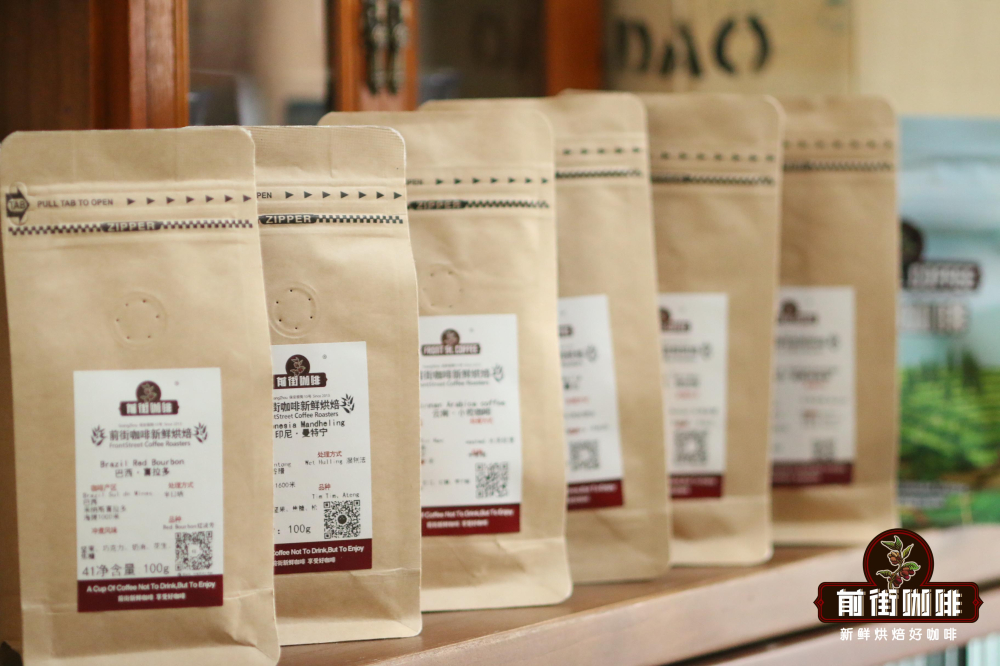
In recent years FrontStreet Coffee has watched coffee culture rise in China, and with it Yunnan coffee has slowly found its way to coffee lovers. Yunnan's reputation still sits far below premium, high-priced origins like Ethiopia Yirgacheffe, Indonesia Mandheling, or Panama Geisha, but FrontStreet Coffee sees it as an excellent choice for its strong value. That is why FrontStreet Coffee has released seven daily coffee beans, hoping to help newcomers get to know this growing region quickly. Among them, the small-grain coffee from Baoshan, Yunnan is the most representative, and it is the best way to taste what Yunnan has to offer.
Yunnan Coffee History

According to materials reviewed by FrontStreet Coffee, a French missionary named Alfred Liard brought a batch of coffee seeds from Vietnam to Zhukula Village in Binchuan County, Dali City, Yunnan in 1902 and planted the first coffee tree there. Descendants of those plants still survive: more than 30 trees in Binchuan County flower and bear fruit today.
As the country developed, in the spring of 1952 scientific personnel from the Yunnan Provincial Academy of Agricultural Sciences distributed 80kg of coffee seeds to farmers in Lujiangba, Baoshan for trial planting. The plants showed excellent adaptability and superior quality, and Yunnan coffee cultivation has kept expanding ever since. Then in 1988 Nestlé set up a joint venture in China, creating a coffee agronomy service department that bred seeds suited to the local soil and climate, advised local farmers on raising yields and quality, and bought beans at the US spot market price of the time. That push is what set Yunnan coffee on its rise.

Today Yunnan is China's largest coffee-growing province, producing more than 98% of the national total. From 2019 to 2021 the planted area was 1.57 million mu, 1.5 million mu, and 1.39 million mu respectively, with raw coffee bean output of 145000 tons, 135100 tons, and 140300 tons, which shows how central Yunnan is to the domestic market. By the end of 2024 the planted area stood at 1.193 million mu with output of 150000 tons, ranking 13th in the world. In 2024 Yunnan exported 32500 tons of coffee, up 358% year on year. Beyond Nestlé, chain brands such as Starbucks and Maxwell House have entered the Yunnan market as well.
Yunnan Coffee Growing Regions
Western and southern Yunnan lie in the tropics between 15°N and the Tropic of Cancer, with most areas at elevations of 1000-2000m. The terrain is mostly mountainous and sloped, and the variation is dramatic. Fertile soil, abundant sunlight, plentiful rainfall, and a wide day-night temperature swing together create the distinctive character of Yunnan small-grain coffee: rich without bitterness, fragrant without intensity, with a slight fruit note.

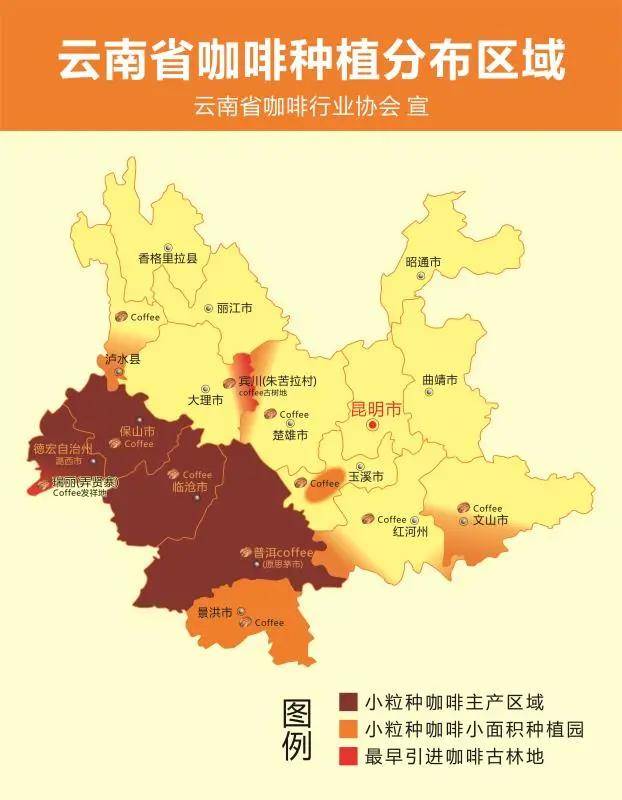
Yunnan's coffee is planted mainly across four growing regions, Baoshan, Pu'er, Dehong, and Lincang, which together account for more than 85% of the province's planted area and output. They are also the main distribution areas for small-grain coffee cultivation.
Dehong
In 1951 the Luxi County Cotton Experiment Station in Dehong Prefecture brought coffee seeds in from the China-Myanmar border and planted a coffee production trial on 6 mu of land, marking the start of large-scale coffee cultivation. That is how Dehong earned the title "Hometown of Chinese Coffee." Its natural conditions are exceptionally favorable, making it one of the earliest coffee-growing areas in Yunnan. Dehong also hosts China's largest coffee seed gene bank, the Ministry of Agriculture's Ruili Coffee Germplasm Resource Garden, one of the first nine tropical crop germplasm resource gardens authorized by the Ministry of Agriculture.
Baoshan
Coffee cultivation in Baoshan began in the mid-1950s, with the first seedling brought in from Southeast Asia by the late patriotic overseas Chinese Mr. Liang Jinshan. In 2010 Baoshan small-grain coffee was designated a national geographical indication product by China's General Administration of Quality Supervision, Inspection and Quarantine.
Baoshan's average temperature is around 21.3°C and peaks at 40.4°C, with essentially no frost through the year, which is why it is recognized as the best region for growing small-grain coffee. As international trade expanded, Lujiangba small-grain coffee gained recognition from coffee experts at home and abroad, who described it this way: rich but not bitter, fragrant but not intense, with a mellow aroma; rich in oils, with strong fruit acidity and a lasting sweet aftertaste; a superior grade of coffee.
Lincang
Named for its proximity to the Lancang River, Lincang sits in southwestern Yunnan, bordering Myanmar to the west. The terrain here is complex, with elevations above 1000 meters, an average annual temperature of 17.3°C, and no distinct four seasons, only a dry season and a rainy season. The rains begin each June and last 3-4 months, and the large day-night temperature swing makes the area very well suited to high-altitude tropical plants like coffee.
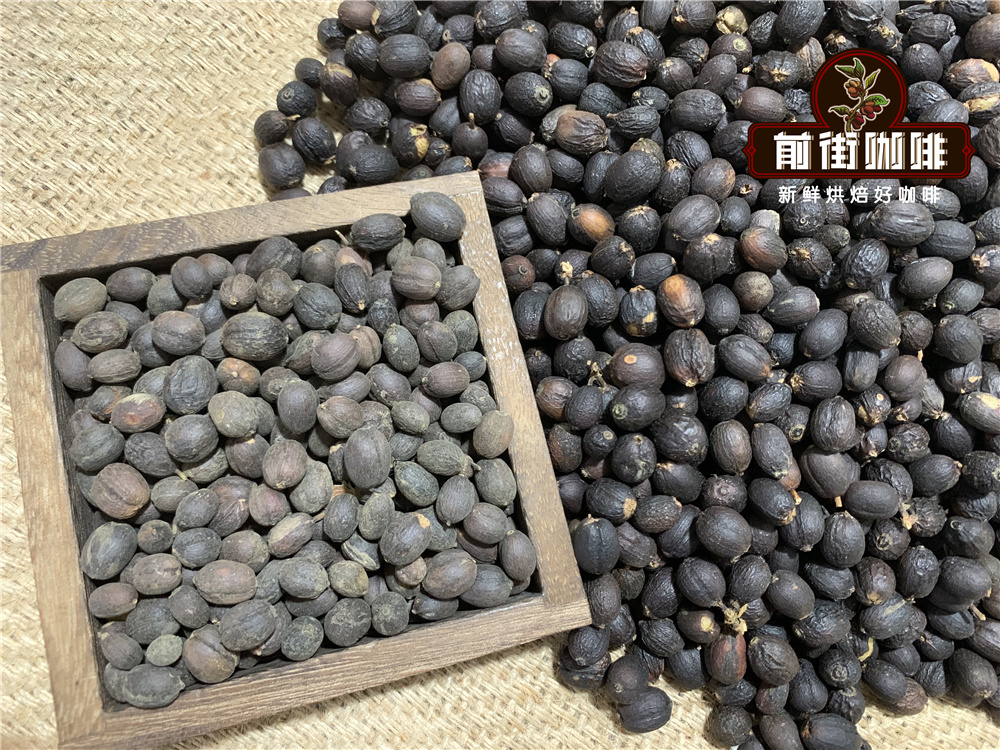
That is why FrontStreet Coffee also took a liking to this "treasure land" of Lincang, establishing its own plantation to grow Typica and producing its first self-grown Yunnan beans in 2020, the FrontStreet Coffee 2013 coffee beans you see today.
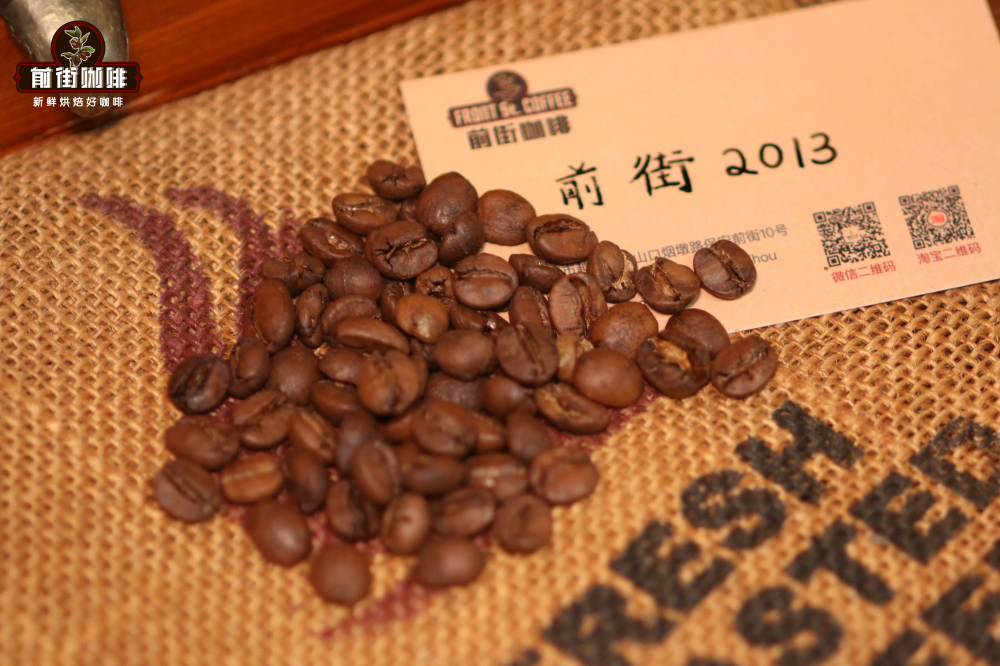
FrontStreet Coffee: FrontStreet Coffee 2013 Coffee Beans
Region: Lincang, Yunnan
Estate: FrontStreet Coffee Estate
Elevation: 1300 meters
Variety: Typica
Processing: Natural processing
Small-Grain Coffee Varieties
FrontStreet Coffee figures that anyone who has a basic grasp of coffee varieties knows Arabica. Among the three main species (Arabica, Robusta, and Liberica), Arabica beans are the smallest, which is why small-grain coffee is another name for Arabica. Yunnan coffee is named for its Typica plantings, the oldest coffee variety in the province. Because Typica resists disease poorly and cannot be mass-produced, cultivation shifted to higher-yielding, more resistant varieties, above all Catimor. Yunnan first introduced the leaf-rust-resistant S288 and later the higher-yielding Catimor, a hybrid of Timor and Caturra. Today most coffee trees planted in Yunnan are Catimor, with only a small number of Typica remaining.
Because Catimor carries one-quarter Robusta genes, it yields more and is easier to cultivate. Early on its cupping performance was fairly ordinary, with rather monotonous flavors compared with the pure aroma of the ancient Typica. In recent years, though, better farm management and green coffee processing have let Yunnan Catimor perform well on the international market, and its nutty and black tea aromas with plum-like sweet-sour notes have won over more and more drinkers. As a representative of Yunnan flavor, FrontStreet Coffee selected Baoshan's Catimor, so that everyone can taste nutty aroma, brown sugar sweetness, soft plum acidity, and a black tea aftertaste at the lowest price. This coffee is washed, because FrontStreet Coffee believes washing presents the Yunnan region's character best.
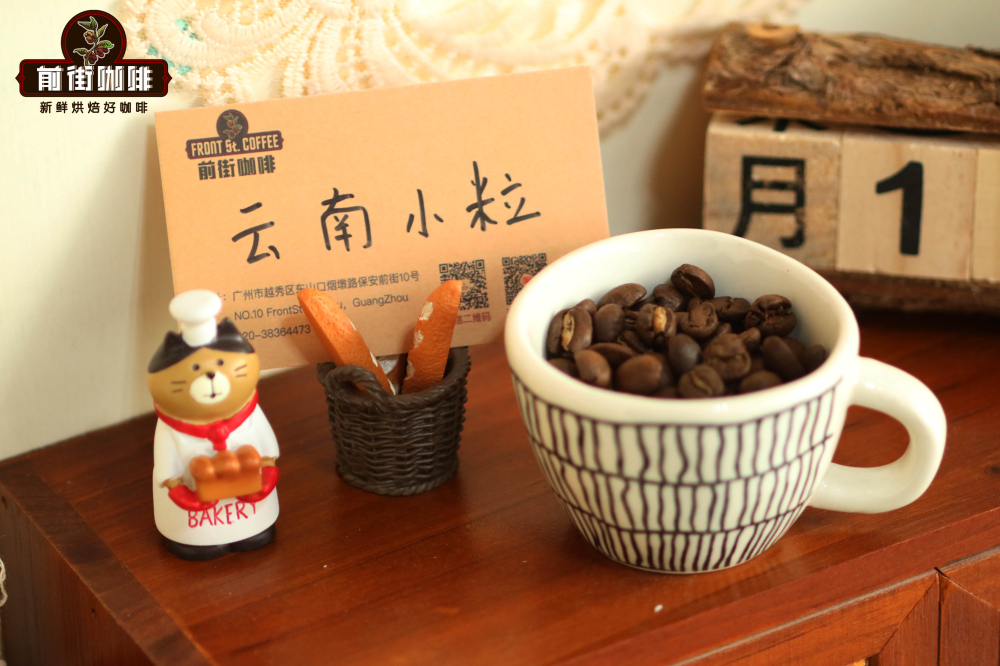
FrontStreet Coffee: Yunnan Small-Grain Coffee
Region: Baoshan, China
Elevation: 1200m
Variety: Catimor
Processing: Washed Processing
Brewing Recommendations
So how should this Yunnan small-grain coffee be brewed to taste its best? Since Yunnan coffee's flavor does not lean on acidity but on nutty notes, FrontStreet Coffee chose a medium roast to preserve the beans' herbal aroma and soft acidity. To avoid over-extraction, 91°C water and a V60 pour-over are recommended.
Filter: V60
Water Temperature: 91°C
Grind Size: 80% pass-through rate with #20 standard sieve
Coffee-to-Water Ratio: 1:15
Coffee Dose: 15 grams

FrontStreet Coffee knows some friends do not have a grinder at home. Not to worry: FrontStreet Coffee provides a grinding service. Still, because coffee releases aroma more easily once ground and its flavor window shortens, FrontStreet Coffee recommends having your own grinder and grinding fresh right before brewing if you want a better cup. (The flavor window is the best period for aroma, roughly 3-7 days after roasting once degassing is done, after which flavors fade over time. Optimal drinking generally falls 4-30 days after roast. FrontStreet Coffee's beans are typically freshly roasted within 5 days, so they arrive close to their peak.)
Pour the ground coffee into the filter, where the beans' herbal and nutty aroma comes up. Bloom first with 30g of water for 30 seconds, then pour 95g in circles from the center outward, keeping the stream fine throughout. When the coffee bed drops to half the height of the filter, continue pouring in circles with 100g of water until the liquid has filtered through, about 2 minutes (give or take 10 seconds).
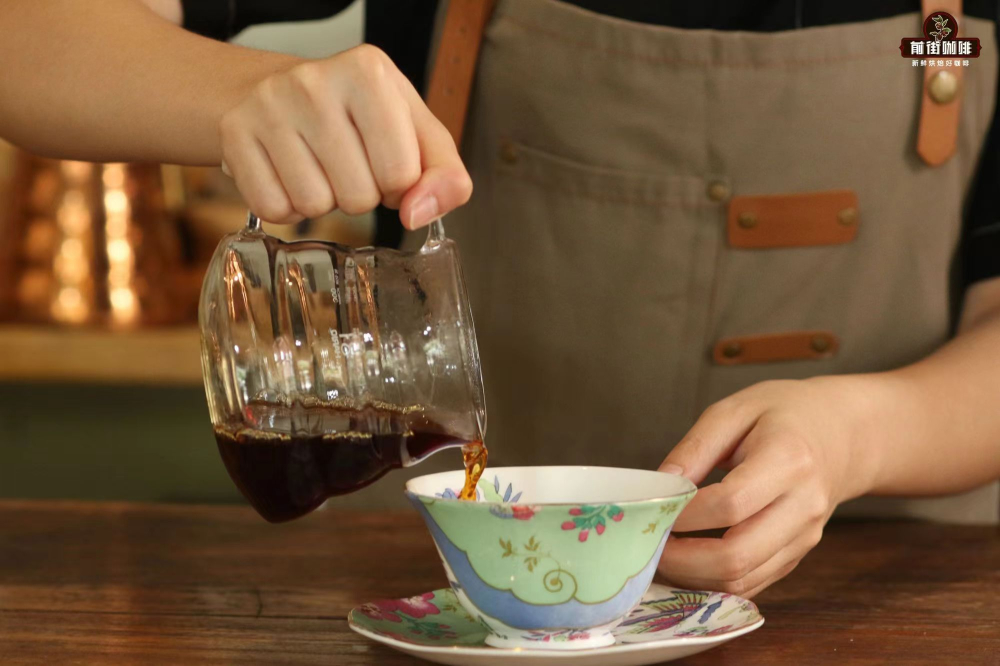
Brewed this way, the Yunnan small-grain daily coffee enters with nutty and brown sugar sweetness. As it cools, the plum acidity appears, followed by a black tea aftertaste, for an overall soft profile.
FrontStreet Coffee Recommendation
FrontStreet Coffee has been working with Yunnan since 2013, when it built its own estate in Lincang and planted a block of Typica, partly because the variety carries the pure Arabica genes behind its elegant, clean cup, and partly because Typica was the first coffee ever planted in Yunnan, brought in by a French missionary, so returning to it is a way of rediscovering the region's original flavor. FrontStreet Coffee's Yunnan Typica is picked from fully ripe red cherries only, processed naturally, and roasted medium so the cup stays balanced and the sweet-sour note stands out. It shows dark berry character along with caramel sweetness, chocolate, and a hint of dried apricot, and finishes on black tea.
If you want to start with the classic Yunnan profile, FrontStreet Coffee's Yunnan small-grain coffee is the introductory bean. It comes from Baoshan, is washed and roasted medium, and pours out soft nutty and chocolate sweetness with a light plum acidity, all at a friendly price. FrontStreet brews it conservatively: 15g of coffee as a single serving, a 1:15 ratio, 90°C water, fine-sugar grind, and a V60. Bloom with twice the coffee's weight in water for 30 seconds until the bed domes, then pour in a fine stream in circles from the inside out to 125g, wait for the bed to drop to half the height of the dripper, and finish with a third pour to 225g, taking about 2 minutes in total.
For espresso with a Yunnan accent, FrontStreet Coffee's Black Cocoa blend is the option to buy. It pairs washed Yunnan small-grain with Brazil Cerrado, Brazil supplying the mixed-nut aroma and balanced body while Yunnan carries the chocolate and citrus notes. The result is an Americano balanced across sweet, tart, and bitter with nuts and brown sugar, and a latte with the silky feel of almond and cream, which makes it especially easy for beginners to work with.
Important Notice :
FrontStreet Coffee is a long-established specialty coffee roaster in Guangzhou China, selling freshly roasted beans from its own farm in Yunnan as well as dozens of carefully selected single-origin beans from around the world for both pour-over and espresso. The products deliver consistently excellent quality and great value, with shipping within 24 hours. Guangzhou's FrontStreet Coffee shop is recommended by many coffee lovers, and the beans are now available online at the Tmall 。
FrontStreet Coffee has moved to a new address:
FrontStreet Coffee Address: 315,Donghua East Road,GuangZhou
Tel:020 38364473
 Scan and follow the En Gafei WeChat official account. Please indicate that the reprint comes from "En Gafei".