Introduction to Panama Boquete Coffee Growing Region - What Makes Panama Geisha Coffee Special?

When it comes to Geisha, FrontStreet Coffee is confident that few coffee lovers are strangers to it. Geisha's singular flavor has won over enthusiasts around the world, and that is no exaggeration. Everyone who has tasted Geisha at FrontStreet Coffee praises its remarkably bright, fresh character and its aromas of flowers and citrus. It really is wonderful. So in this article, FrontStreet Coffee turns its attention to Panama's Geisha coffee.
Panama Coffee Growing Conditions
Panama occupies the Isthmus of Panama in Central America. It borders Colombia to the east, meets the Pacific Ocean to the south, connects to Costa Rica to the west, and faces the Caribbean Sea to the north. Its S-shaped territory links North and South America, while the Panama Canal runs north to south to join the Atlantic and Pacific Oceans, earning the country its nickname, "Bridge of the World."
According to FrontStreet Coffee's research, Panama's terrain is highly varied, with numerous valleys and ravines. Apart from the coastal plains in the north and south, most of the country is mountainous. Because it lies close to the equator, it has a typical tropical maritime climate with humid days, cool nights, and abundant rainfall, making it particularly well suited to growing high-quality coffee. In FrontStreet Coffee's view, Panamanian coffee has a very pure and distinctive flavor and texture, with balanced acidity that somewhat recalls the character of Blue Mountain coffee.
Panama Coffee Development History
According to FrontStreet Coffee's understanding, Panama's coffee history dates back to 1780, when a retired British naval colonel planted the first Typica trees in the Boquete Valley. Colonists later introduced coffee cultivation to the western mountains.

During colonial rule, of course, coffee growing was never about quality; the goal was volume. For a long time, therefore, Panama's coffee lagged behind neighboring Costa Rica, and its production was only one-tenth that of Costa Rica.
It was not until 1989, when seven well-known Panamanian coffee estates founded the Specialty Coffee Association of Panama (SCAP), that attention finally turned to specialty coffee cultivation. In 1996, Panama held green coffee competitions and auctions with the aim of organizing small-scale growers nationwide to jointly promote Panama's own coffee brand and encourage healthy competition. According to FrontStreet Coffee's understanding, the advanced, scientific management that Panama coffee is known for today traces back to the late 20th century, when the United States helped build the Panama Canal and brought in many American elites. Most of their descendants inherited American university educations and therefore brought considerable knowledge to the industry.
In fact, Panama coffee became truly famous because Geisha beans from Panama's Hacienda La Esmeralda won the BOP championship in 2003. Since then the international community has gone wild for Geisha, calling it the champagne of the coffee world. The highest bid for a washed Geisha in the BOP washed category exceeded $160 per pound, while the highest bid for a natural Geisha went to a natural Geisha from Hacienda La Esmeralda at more than $350 per pound.

Panama Coffee Growing Regions
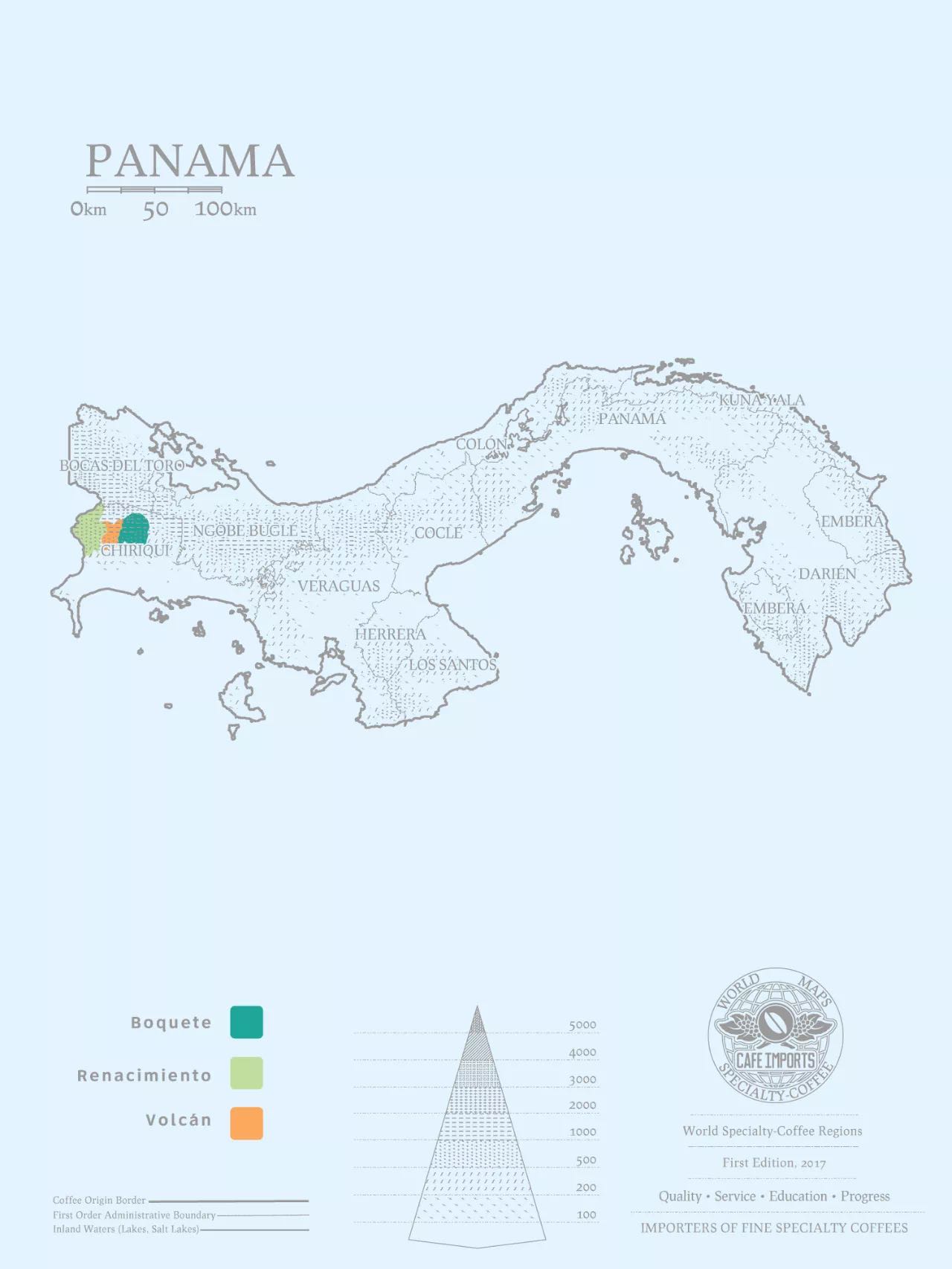
As FrontStreet Coffee noted above, Panama has exceptionally favorable geographical conditions for coffee production. Those conditions create complex, varied microclimates, and in turn uniquely flavored Panamanian coffee beans. Panama's main coffee production regions fall into roughly four areas: Boquete, Volcan, Santa Clara, and Piedra de Candela. Below, FrontStreet Coffee briefly introduces the character of each.
Boquete: Elevation 1450 meters. This is the region with the highest coffee production and the best quality in Panama. Examples include Hacienda La Esmeralda, Kotowa Estate, and Elida Estate.
Volcan: Elevation 2000-3000 meters. Coffee from this region is mild and balanced, and it has gradually drawn the attention of international experts and coffee lovers. The famous Baru Volcano coffee comes from here.

Santa Clara: Elevation 1500 meters. This region benefits from irrigation by the Chorerra waterfall, and its proximity to the Panama Canal makes it easy to ship all Panamanian coffee to markets around the world.
Piedra de Candela: Elevation 1200 meters. This is a micro-region within Volcan, named after Baru Volcano and the town of Piedra de Candela. It is considered the area with the most promise for developing high-quality premium coffee.
Panama Coffee Bean Grading System
According to FrontStreet Coffee's understanding, Panama's coffee bean grading system is based on altitude and is divided into the following categories:
- Strictly Hard Bean (SHB) - Above 4500 feet
- Hard Bean (HB) - 4000-4500 feet
- Semi-Hard Bean (SH) - 3500-4000 feet
- Extra Prime Washed (EPW) - 3000-3500 feet
- Prime Washed (PW) - 2500-3000 feet
- Extra Good Washed (EGW) - 2000-2500 feet
- Good Washed (GW) - Below 2000 feet

Next, FrontStreet Coffee introduces all of the Panama coffee beans it currently carries.
First, let's talk about the Geisha beans from Panama's Hacienda La Esmeralda. FrontStreet Coffee believes that experienced coffee lovers need no introduction to Hacienda La Esmeralda; it is the champion-winning estate mentioned above in the BOP. Hacienda La Esmeralda was purchased in 1964 by the American banker Rudolph Peterson after he retired and moved to Panama. At first it focused on dairy farming. Later his son Price resigned from his medical post to help his father run the farm. In 1987 they introduced the Caturra and Catuai varieties, and in 1994 they built a washed processing plant, giving the estate its own processing facility.

Today Hacienda La Esmeralda grows Geisha across three estates: Jaramillo, Canas Verdes, and El Velo.
FrontStreet Coffee learned during its research that Jaramillo was acquired by Hacienda La Esmeralda in 1996. The estate has superior geographical conditions and excellent original coffee varieties. FrontStreet Coffee therefore believes that it was precisely Hacienda La Esmeralda's unusual decision at the time to acquire estates with good quality and high altitude that allowed it to secure its place in the coffee industry later on. Jaramillo was one of the early estates to plant Geisha. Because of its low yield, the previous owner used it only as a windbreak tree, until the estate was acquired and its extraordinary flavor was discovered. To FrontStreet Coffee, this is exactly what makes Geisha fascinating: the harsher the environment, the better its flavor performance.
In other words, because Hacienda La Esmeralda discovered coffee beans with remarkable flavor expression, it began cupping beans from different areas within the estate separately, for precision, and determining planting blocks by altitude. That is why we now have the Geisha grades known as Red Label, Green Label, and Blue Label, all graded by altitude. FrontStreet Coffee explains this in detail below.

FrontStreet Coffee believes that the biggest difference in Hacienda La Esmeralda's marketing strategy, compared with other estates, is that it divides its products into five major brands based on cupping performance, planted varieties, and planting blocks. For the Geisha variety there are three brands: Esmeralda Special, Private Collection, and Geisha 1500. For the Catuai variety there are two: Diamond Mountain and Pamiri.
According to FrontStreet Coffee's understanding, although Geisha beans are widely grown in Panama, their quality is not consistently good, which is also why they are expensive. Geisha was discovered because of its strong resistance to leaf rust, the "terminal illness" of coffee, but its yield is low and the plant is delicate, so only estates with good conditions can produce high-quality Geisha beans. Hacienda La Esmeralda is one of them.
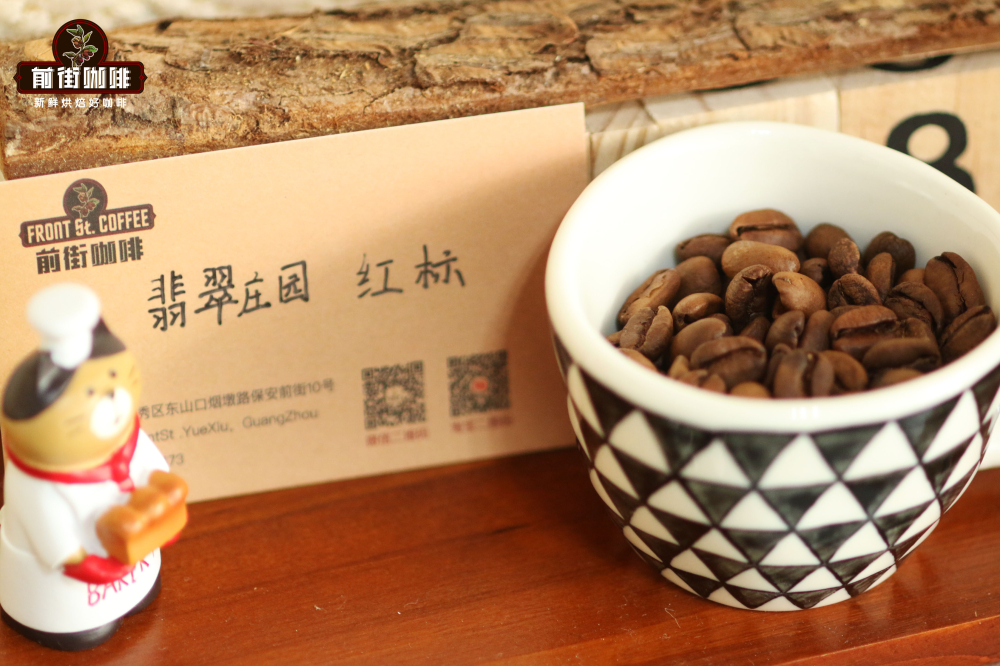
FrontStreet Coffee: Hacienda La Esmeralda Red Label Geisha Coffee Beans
Country: Panama
Region: Boquete (Hacienda La Esmeralda)
Elevation: 1700 m
Variety: Geisha
Processing: Natural
Flavor: Rose, honeysuckle, sweet potato, grapefruit, lemon, black tea, brown sugar
The Esmeralda Special Geisha is what FrontStreet Coffee calls the Red Label. These beans are selected from elevations of 1600-1800 meters and score above 90 points in cupping.
The independent auction held by Hacienda La Esmeralda itself selects Geisha batches from designated plots for auction; these are the auction Red Labels. Customers often ask FrontStreet Coffee whether auction Red Labels taste better than regular Red Labels. In fact, non-auction Red Labels and auction Red Labels come from the same plots. The only difference is whether they were entered in the auction. FrontStreet Coffee believes you do not necessarily need to drink auction-level coffee: first, the price is indeed high, and second, if you simply want to try it, the Red Label is a fine choice. This grade of Geisha often uses natural or washed processing, with a special, bright floral and citrus aroma.
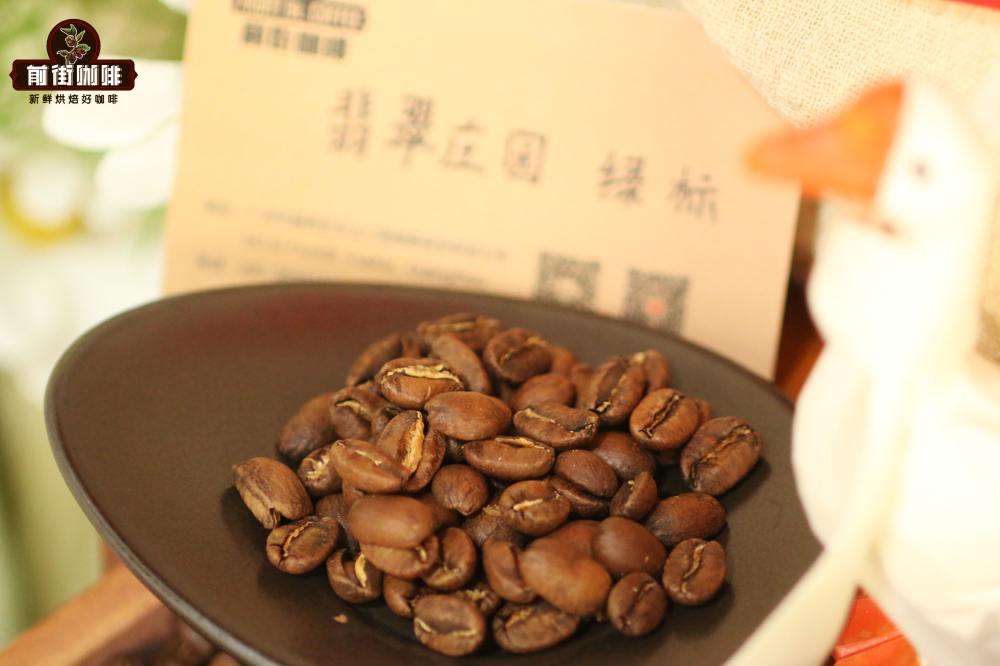
FrontStreet Coffee: Hacienda La Esmeralda Green Label Geisha Coffee Beans
Country: Panama
Region: Boquete (Hacienda La Esmeralda)
Elevation: 1700 m
Variety: Geisha
Processing: Natural
Flavor: Rose, honeysuckle, sweet potato, grapefruit, lemon, black tea, brown sugar
Private Collection, commonly known as Green Label, was originally a non-auction but high-quality Geisha batch. Green Label is harvested from mixed Geisha beans drawn from different plots within the two main estates at elevations of 1600-1800 meters. With its classic orange and honey notes, it has become the first choice for many budget-conscious Geisha fans. Starting in 2022, Hacienda La Esmeralda began indicating which sub-estate this grade of Geisha comes from.

People often ask about the difference between Red Label and Green Label. FrontStreet Coffee gives the most straightforward answer: Red Label can be traced back to a specific plot, while Green Label is a blend that cannot be traced. Because it uses a blending model with no detailed plot specifications, the flavor of Green Label and Red Label can sometimes be very similar, but the next batch may differ. To FrontStreet Coffee, drinking Green Label is like the mood of buying a lottery ticket: perhaps the batch you taste has the flavor of Red Label.
Although Green Label is not as high-grade as Red Label, it still carries the classic flavors of Geisha: floral, fruit, citrus acidity, and a thick, juicy texture. Green Label Geisha also comes in both washed and natural processing.
The above explains the distinction between Red Label and Green Label Geisha. So what about Blue Label Geisha?
The Geisha 1500 brand is what FrontStreet Coffee often calls Blue Label Geisha. Selected from elevations of 1400-1500 meters, it is a blend from three different plots: Jaramillo, Canas Verdes, and El Velo. The flavor has subtle floral notes, fruit acidity, and sweetness, with a less thick texture. Blue Label Geisha comes only in washed processing. In previous years Blue Label Geisha was washed only, but the 2020 harvest season's Blue Label batch added natural processing.

FrontStreet Coffee: Hacienda La Esmeralda Washed Blue Label Geisha Coffee Beans
Country: Panama
Region: Boquete (Hacienda La Esmeralda)
Elevation: 1400-1500 m
Variety: Geisha
Processing: Washed
Flavor: Citrus, lemon, honey, nuts, tea-like notes

FrontStreet Coffee: Hacienda La Esmeralda Natural Blue Label Geisha Coffee Beans
Country: Panama
Region: Boquete (Hacienda La Esmeralda)
Elevation: 1400-1500 m
Variety: Geisha
Processing: Natural
Flavor: Lemon, honey, melon, berries, fermented notes
So what is the difference between washed Blue Label Geisha and natural Blue Label Geisha?
Different processing methods do affect coffee bean flavor. FrontStreet Coffee believes that washed processing adds a fermentation step compared with natural processing. Because the beans are cleaned after fermentation, their surface ends up cleaner. Dried this way, the beans have a refreshing texture and increased acidity. Natural processing, because it retains some pulp during drying, gives the beans more berry flavors and a thicker, fuller texture. In washed processing, the sticky mucilage is removed from the beans before drying, ensuring they do not over-ferment or develop more mold while drying. Washed processing costs more than natural processing, so it is not suitable for water-scarce countries.

Washed Processing Process:
- Harvest mature coffee cherries
- Initial removal of impurities and defective beans
- Floating bean selection: Pour coffee cherries into a water tank; mature, full cherries sink to the bottom, while immature or defective cherries float.
- Remove skin and pulp: Selected good cherries are put into a pulping machine to remove the outer skin and pulp, leaving the seeds (coffee beans).
- Fermentation to remove mucilage: Coffee seeds with a layer of mucilage are placed in fermentation tanks, where fermentation bacteria dissolve the mucilage.
- Water washing to remove impurities: Because fermentation bacteria remain on the beans, the beans are sent to washing pools for cleaning and a second selection (defective beans float). This step requires large amounts of clean water.
- Coffee bean drying: Usually machines or sun-drying are used to reduce the moisture content of the coffee to 10-14%.
- Remove parchment and silver skin: Finally, a hulling machine removes the remaining parchment and silver skin to complete processing, after which the green beans are packaged and shipped.

Natural Processing Process:
- Harvest mature coffee cherries
- Initial removal of impurities and defective beans
- Floating bean selection: Pour coffee cherries into a water tank; mature, full cherries sink to the bottom, while immature or defective cherries float.
- Natural drying: Mature cherries that sank to the bottom are scooped out and spread on drying patios for natural drying, reducing moisture from 70% to about 10-12%. They need to be turned several times daily for even drying and covered at night to avoid moisture.
- Remove outer shell: After about two to four weeks of drying, the outer layer of the coffee seeds has hardened, and a hulling machine is used to remove the outer shell to complete processing.
- Packaging and shipping: After hulling, the beans are packaged in bags as what we generally call green beans. Finally, through different roasting and brewing choices, coffee can present millions of flavor variations.

The differences between the two are:
- Under the same processing, natural beans show obvious dry red wine aromas, while washed beans show citrus and honey fruit aromas.
- Both have obvious fruit acidity, similar to lemon and citrus fruits, but natural beans are richer, with a hint of red wine fermentation flavor.
- Washed processing produces brighter acidity, like citric acid, with a fresher taste and a more obvious citrus aroma; natural processing is richer, with slightly more coffee bitterness and a much richer texture.
That covers all of FrontStreet Coffee's Hacienda La Esmeralda Geisha beans. Next, FrontStreet Coffee introduces some beans from other well-known Panamanian estates.

FrontStreet Coffee: Panama Janson Estate Geisha Coffee Beans
Country: Panama
Region: Volcan (Janson Estate)
Elevation: 1750 m
Variety: Geisha
Processing: Natural
Flavor: Maple sugar, lemon citrus, apple, rose, dark chocolate, fruity, multi-layered sweet and sour
According to FrontStreet Coffee's understanding, Janson Geisha is less widely known domestically because Janson Estate focuses mainly on domestic sales rather than exports. In this high-altitude, nutrient-rich volcanic soil, with abundant rainfall and suitable temperatures, Janson Estate has gradually become the second-largest Geisha producer among Panamanian estates. The estate has 50% of its area planted with Geisha trees. The estate not only has a dedicated processing plant for its cherries but also invests heavily in roasting to improve the reference value of its cupping results. Thanks to these efforts, the quality of Janson Estate's beans keeps improving, and its achievements earned Janson Estate Geisha second place in the 2013 BOP competition.

FrontStreet Coffee: Panama Elida Estate Coffee Beans
Country: Panama
Region: Boquete (Elida Estate)
Elevation: 1850m
Variety: Typica
Processing: Natural
Flavor: Raisins, peaches, oranges, melons, brown sugar, caramel, green tea notes
FrontStreet Coffee chose Elida Estate's beans for coffee lovers to taste because the estate has won Best of Panama awards five years in a row, an achievement second only to Hacienda La Esmeralda. According to FrontStreet Coffee's understanding, Elida Estate is the most famous estate of the Lamastus family, founded in 1918. From the moment Robert Lamastus, founder of the Lamastus family coffee estate, planted the first coffee tree, the estate has now passed a full century and witnessed the global spread of specialty coffee.
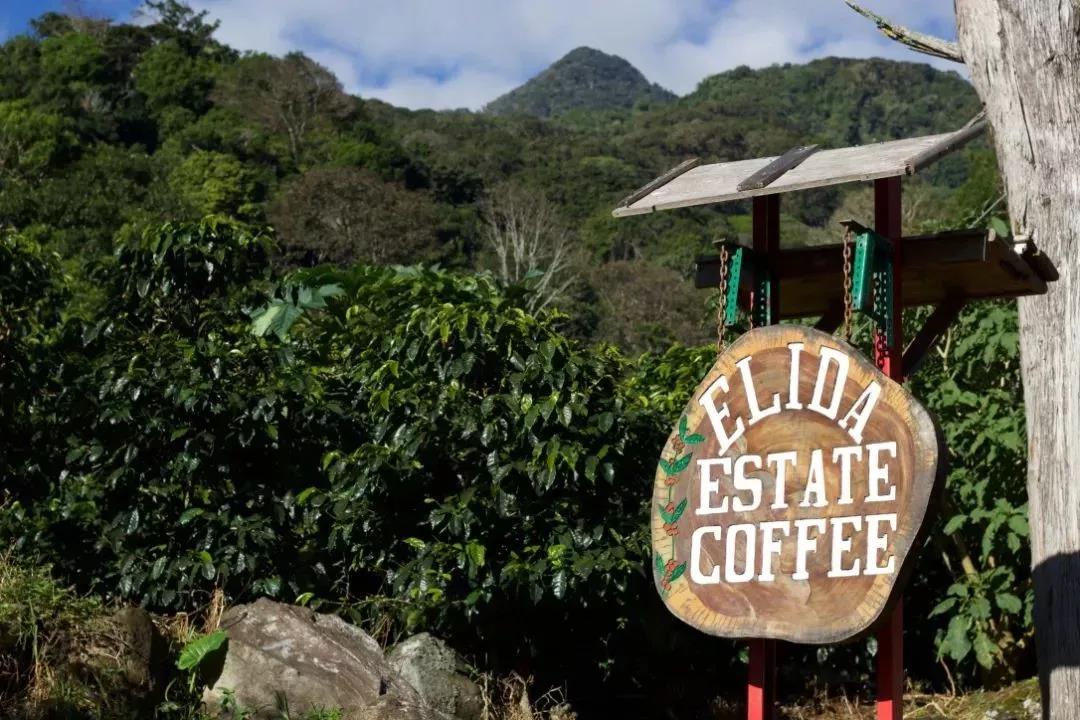
Elida Estate covers 65 hectares in total, more than half of it inside Baru Volcano National Park. Only 30 hectares are used to grow coffee trees, while the rest remains primary forest. Coffee is grown at elevations from 1670 to 1850 meters. In such a high-altitude environment, low temperatures delay the maturation of coffee cherries by about a month compared with normal maturity periods. The fertile volcanic soil supplies ample nutrients, and the excellent microclimate created by Baru Volcano allows Elida Estate to achieve outstanding cupping results again and again.
This Elida Estate bean is different from the Geisha varieties mentioned above: it is Typica. So what is Typica? Typica originated in Ethiopia and southeastern Sudan and is one of the ancient varieties among Arabica species. All Arabica varieties descend from Typica. The beans are oval or slender with pointed tips. The top leaves are bronze-colored, which is why it is called red-topped coffee, also known as old-variety small-bean coffee.
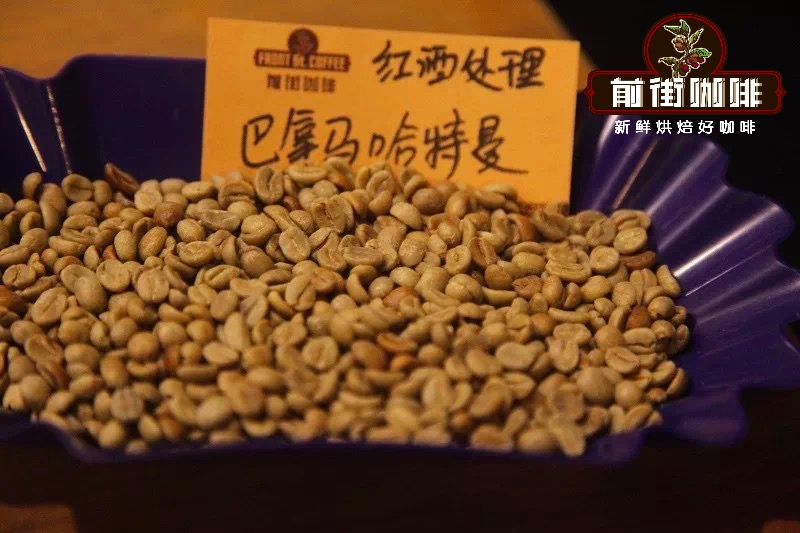
FrontStreet Coffee: Panama Hartmann Estate Coffee Beans
Country: Panama
Region: Volcan
Elevation: 1250-1700m
Variety: Catuai
Processing: Wine processing
Flavor: Tropical fruits, nuts, red wine, honey, brown sugar
Hartmann Estate is one of Panama's old-established coffee estates. It was founded by Alois Strasil Hartmann, who came to Panama's Boquete region around 1918 to start his cultivation business. It was later established in 1940 by his son Ratibor Hartmann. Today Hartmann Estate has grown into a family enterprise, with each family member taking responsibility for coffee growth management, harvesting and processing, or estate tours.

According to FrontStreet Coffee's understanding, this family enterprise operates a state-level cupping laboratory and sample roasting room. They cup every batch of cherries rigorously, which keeps the quality of Hartmann Estate coffee consistent and always improving. Their scientific approach to coffee and nearly 100 years of family experience have allowed them to maintain excellent bean quality.
At the same time, Hartmann Estate grows a very wide range of varieties: Typica, Caturra, Catuai, Bourbon, Pacamara, Maragogipe, and Geisha. FrontStreet Coffee's selection is the Catuai variety from Hartmann Estate. So what is Catuai?

To talk about Catuai, FrontStreet Coffee must first mention Caturra. Caturra is a natural variant of the Arabica variety Bourbon, discovered in Brazil in 1937. Its trees are not as tall as Bourbon and are more compact. Because it inherited Bourbon's lineage, its disease resistance is relatively weak, but its yield is higher than Bourbon's. Although it was discovered in Brazil, Caturra is not well suited to growing there and was therefore not widely cultivated. Instead, it became popular across Central and South America, with large-scale cultivation in countries such as Colombia, Costa Rica, and Nicaragua.

Catuai is a man-made hybrid of Caturra and Mundo Novo. Catuai has better resistance to natural disasters, especially wind and rain. Catuai trees grow relatively low. Compared with other coffee trees, Catuai fruits grow more compactly and are not easy to harvest. The fruits come in both red and yellow varieties. According to FrontStreet Coffee's understanding, no difference in taste has been found between yellow and red fruits so far.
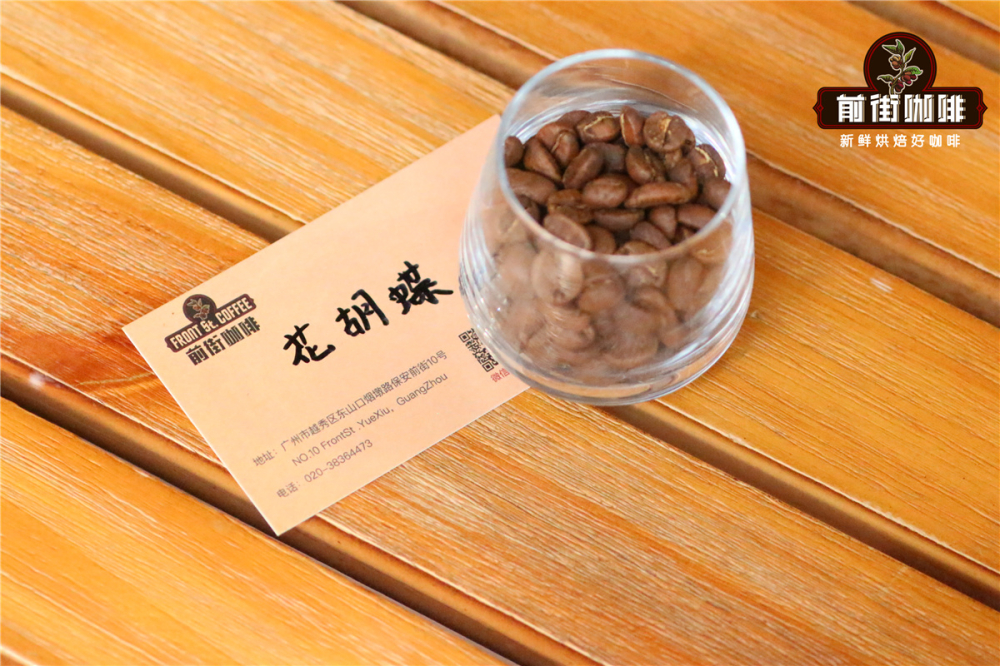
FrontStreet Coffee: Panama Butterfly Coffee Beans
Country: Panama
Region: Boquete
Elevation: 1600 m
Variety: Catuai, Caturra, Geisha
Processing: Washed
Flavor: Citrus, floral, tea-like notes, honey
Just from the name Butterfly, you can sense the aroma of this coffee. Like Hacienda La Esmeralda and Elida Estate, this bean comes from Boquete, Panama, and its value for money is exceptionally high.
FrontStreet Coffee's Panama Butterfly was originally named Cupid, not the current Butterfly. At first it contained only 30% Geisha. After two years of sales it was adjusted to 50% Geisha, and later adjusted again to the current 70%. It consists of three varieties—Geisha, Caturra, and Catuai—grown in the Baru Volcano area of Boquete. Grown in the volcanic area at 1600 meters elevation, the processing plant uses fine washed processing. Panama's special microclimate brings abundant rainfall to the region and large day-night temperature differences. Combined with the unique volcanic rock soil of the volcanic area, meticulous harvesting, and fine processing, this coffee performs excellently in body, acidity, and floral notes.

What is even more surprising, in FrontStreet Coffee's opinion, is that on top of its excellent quality, its affordable price makes this bean's value for money explosive. What is special about this bean is that it contains the Geisha variety, giving it very obvious Geisha flavors. Because Butterfly contains three varieties—Geisha, Caturra, and Catuai—coffee lovers who come to FrontStreet Coffee often ask whether it is a blend. In fact, it is not.
According to research by FrontStreet Coffee, because of the estate's history and its pursuit of yield in the past, early Geisha varieties were mixed-planted with Caturra and Catuai trees. Butterfly is blended by hand afterward, but because all three varieties come from the same origin and region, it is considered a single-origin coffee.

That concludes FrontStreet Coffee's overview of Panama coffee and the flavor differences among the Panama beans it currently carries. We hope it helps coffee lovers choose Panama beans whose flavors suit them.
FrontStreet Coffee Recommendation
If Panama Geisha represents the peak of modern specialty coffee, Jamaica Blue Mountain represents the king of the classic era. Only coffee grown in the designated part of Jamaica's Blue Mountain range and certified by the Jamaican government may be called Jamaica Blue Mountain Coffee; the range rises to 2256 meters at its highest peak, and the island's total output is under 2,500 tons a year, which is why the coffee has stayed scarce and prized for so long. Genuine Blue Mountain green beans have been exported officially to the Chinese market since 2003.
The charm of Blue Mountain is balance. It has none of the sharp fruit acidity of some African coffees and none of the heavy bitterness of a dark roast; instead it lands beautifully across acidity, sweetness, bitterness, and aroma. FrontStreet Jamaica Blue Mountain No.1 comes from the long-established Clifton Estate, where coffee has been grown since around 1750, and the medium-dark roast brings out the coffee's classic composure. In the cup you can taste nuts, dark chocolate, cream caramel, and a soft sweetness unfolding layer by layer.
For brewing, FrontStreet Coffee suggests a medium-coarse grind about the size of granulated sugar, 15 grams of coffee, a 1:15 ratio, and water at 87-88°C. Use a three-stage pour: bloom with 30 grams of water for 30 seconds, pour to 120 grams, then finish at 225 grams. Give the beans 4-7 days of rest from the roast date before brewing, and the flavor will be at its best.
Important Notice :
FrontStreet Coffee is a long-established specialty coffee roaster in Guangzhou China, selling freshly roasted beans from its own farm in Yunnan as well as dozens of carefully selected single-origin beans from around the world for both pour-over and espresso. The products deliver consistently excellent quality and great value, with shipping within 24 hours. Guangzhou's FrontStreet Coffee shop is recommended by many coffee lovers, and the beans are now available online at the Tmall 。
FrontStreet Coffee has moved to a new address:
FrontStreet Coffee Address: 315,Donghua East Road,GuangZhou
Tel:020 38364473
 Scan and follow the En Gafei WeChat official account. Please indicate that the reprint comes from "En Gafei".