Kenya AA Kongyu Coffee Region Introduction & Brewing Guide

SL28 and SL34: The Cornerstones of Kenyan Coffee
Although SL28's yield later fell short of expectations, its copper-colored leaves and broad bean shape produce wonderful sweetness, balance, and complex, varied flavors, along with distinctive citrus and preserved plum characteristics. SL34 shares a similar flavor profile with SL28, but beyond its complex, varied acidity and wonderful sweet finish, it has a heavier, richer, and cleaner mouthfeel than SL28. SL34 carries French Mission, Bourbon, and more Typica bloodlines. Its bean appearance resembles SL28, but it adapts better to sudden heavy rainfall. It is these two important varieties that have introduced us to the unique Kenyan style: intense, rich fruit acidity, full body, and beautiful balance.
Pour-Over Brewing for Kongyu
15g coffee grounds, medium-fine grind (Fuji Royal's ghost tooth grinder setting 3.5), V60 dripper, water temperature 91-93°C. First pour 30g of water for a 27-second bloom, then pour to 105g and pause. Wait until the water level drops halfway, then slowly pour to 225g total. Discard the tail end. Water-to-coffee ratio 1:15, extraction time 2:00.
Flavor Description
Intense lemon and plum aromas in both the dry and wet grounds. When light-roasted and cupped, it reveals astonishing floral and lemon notes, along with sweet, juicy flavors reminiscent of grapefruit green tea and citrus juice. A slightly darker roast brings out honey, raspberry, and black plum flavors, while the finish carries the pleasant sweet-tart taste of green tea.
Origin and Processing
This Kenyan coffee comes from the Kongyu Processing Station in the Kirinyaga region, under the Kabare Farmers' Cooperative Society. It uses the Kenyan double-washed processing method and grows on the eastern slopes of the Kenyan mountains in Manyatta-Embu County at altitudes of 1550-1750 meters. The classic Kenyan varieties SL28 and SL34, combined with large day-night temperature differences and Kenya's red phosphoric soil, make sweet-and-tart flavors the primary taste profile of this Kenyan coffee.
Processing and Distribution
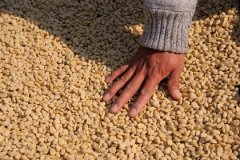
The fresh cherries for this batch of Kongyu AA were picked and processed by 250 farmers at the Kongyu Processing Station under the Kabare Farmers' Cooperative Society. After being pulped, fermented, and washed with water from the nearby Kongyu River, the coffee is dried on African raised beds. Each harvest season, the farmers process nearly 300 tons of fresh coffee cherries. Once processing is complete, the coffee enters the weekly auctions held every Wednesday in Nairobi. After being selected by licensed exporters, it is shipped to consumer markets worldwide.
A Unique Kenyan Experience
In previous Kenyan coffees, we particularly pursued those with angular, powerful fruit acidity. This Kenyan coffee, however, felt gentle, like facing the sea with a soft breeze blowing.
Product Information
Manufacturer: FrontStreet Coffee
Shelf Life: 90 days
Net Weight: 227g
Packaging: Bulk coffee beans
Roast Level: Roasted coffee beans
Sugar Content: Sugar-free
Origin: Kenya
Coffee Type: Other
Roast Degree: Light roast
Coffee Details
Country: Kenya
Grade: AA
Region: Kirinyaga
Altitude: 1550-1750 meters
Soil: Red phosphoric soil
Processing Method: Kenyan double-washed processing
Varieties: SL 28, SL 34
Processing Station: Kongyu Processing Station
Producer: Kabare Farmers' Cooperative Society
Flavor Notes: Grapefruit green tea, citrus, raspberry black plum
Kenya: Coffee Growing Paradise
Located in East Africa, Kenya is one of the world's major coffee-producing countries, with approximately six million people engaged in the coffee industry, mostly as small farmers and cooperatives.
Kenya's coffee trees are mostly grown at altitudes of 1400-2000 meters, in growing regions that include Ruiri, Thika, Kirinyaga, Mt. Kenya West, Nyeri, Kiambu, and Muranga. The main areas are the foothills of Mt. Kenya and Aberdare.
Many coffee-producing regions in Kenya strive to preserve native forest ecosystems, protect natural gene banks, support the reproduction of wild coffee varieties, and nurture diverse coffee trees.
In 1930, Kenya's unique varieties SL28 and SL34, cultivated and named by Scott Laboratories, were born in this favorable environment.
According to SL laboratory botanists, SL28 and SL34 are genetic variants. SL28 has mixed bloodlines of French Mission, Mocha, and Yemeni Typica. The original goal of cultivating SL28 was to produce large quantities of high-quality coffee beans that could resist diseases and pests.
FrontStreet Coffee Recommendation
When FrontStreet Coffee recommends a practical, easy-to-use V60 dripper to anyone new to pour-over, the answer is almost always Hario's cone. Its design makes water travel to the center before dropping into the server, lengthening contact between water and grounds so aroma and flavor extract fully, and its single large hole lets the flow respond directly to the brewer's pouring control. The V60's fast extraction suits the light, floral, and fruit-forward coffees of the third wave, which is exactly the style of this washed Kenyan lot: bright berry acidity, clean citrus, and a tea-like finish.
Coffees with classic Yirgacheffe character, tropical fruit, Geisha florals, or raisin sweetness are all well suited to the V60. Among them, FrontStreet Coffee's Gudingding delivers the classic washed Yirgacheffe profile of white-flower sweetness and bright citrus acidity; the FrontStreet Sun-Dried Huakui brings cream and strawberry; the FrontStreet Strawberry Candy offers Geisha-like florals by blending Costa Rican honey-process coffee with Panamanian washed Geisha; and the FrontStreet Mozart adds a raisin-honey character from Costa Rica. For a low-acid, heavier alternative, the FrontStreet PWN Golden Mandheling and the FrontStreet Brazil Queen Farm both work well, while the FrontStreet Kenya Small Tomato brings vivid cherry-tomato and smoked-plum acidity with a full, juicy body.
Whatever the bean, keep the pour-over simple: a 15g dose at a 1:15 ratio, a medium-fine grind, and water between 90-93°C. Pour 30g for a 27-second bloom, then add water to 105g and pause until the bed has dropped halfway before pouring slowly to 225g and discarding the tail. The total extraction time should land near 2:00, giving a cup that is aromatic, clean, and balanced.
Important Notice :
FrontStreet Coffee is a long-established specialty coffee roaster in Guangzhou China, selling freshly roasted beans from its own farm in Yunnan as well as dozens of carefully selected single-origin beans from around the world for both pour-over and espresso. The products deliver consistently excellent quality and great value, with shipping within 24 hours. Guangzhou's FrontStreet Coffee shop is recommended by many coffee lovers, and the beans are now available online at the Tmall 。
FrontStreet Coffee has moved to a new address:
FrontStreet Coffee Address: 315,Donghua East Road,GuangZhou
Tel:020 38364473
 Scan and follow the En Gafei WeChat official account. Please indicate that the reprint comes from "En Gafei".