The Origin of Panama Butterfly Coffee and Panama Coffee Bean Grade Classification

Butterfly Coffee: A Hidden Gem from Boquete
In the Boquete region, there is an exceptionally valuable coffee bean with a beautiful name — Butterfly. Composed of three varieties — Geisha, Caturra, and Catuai — it has 40% superior Geisha heritage. Cultivated in the Baru Volcano area of Boquete at an altitude of 1,600 meters, the processing plant employs meticulous washed processing. Panama's unique microclimate brings abundant rainfall and significant temperature differences between day and night. Combined with the region's distinctive volcanic soil and careful harvesting and processing, this coffee excels in body, acidity, and floral notes.
Exceptional Value and Heritage
What's even more surprising is that, building on its excellent quality, its very approachable price makes this coffee bean's value exceptional. The special characteristic of this coffee bean lies in its composition of three varieties, including 40% Geisha, which gives it distinct Geisha flavors. According to research, due to the estate's history, when pursuing yield in the early days, Geisha varieties were mixed and planted together with Caturra and Catuai trees. For easier harvesting, coffee farmers didn't reclassify them but processed all three varieties together. Later, after Geisha became famous and prices soared, the processing plant began refined washed processing for such beans.
Washed Processing Method
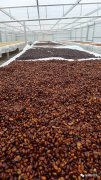
There are many washed processing methods today, but generally, after coffee cherries are harvested, floating beans are removed, then pulp is removed, and the beans are soaked in fermentation tanks. Enzymes in the water soften the mucilage attached to the bean's parchment, while natural yeast breaks down sugars in the mucilage — this process is called fermentation. After fermentation completes, the beans are moved to drying patios to dry. During drying, beans need constant turning to ensure even drying. Finally, they are stored with parchment in warehouses until green bean merchants place orders, then dehulling and bagging occur. Coffee processed this way has a clean taste, emphasizing bright, lively fruit acidity and clear fruit flavors and floral notes.
Flavor Profile and Experience
So you can imagine that with Butterfly's varietal superiority combined with refined processing, if completed with a medium-light roast, you will surely greatly appreciate this coffee with its characteristic Geisha floral notes, Southeast Asian fruits, berry flavors, honey sweetness, and smoothness. The aroma and finish of Butterfly are exceptionally long-lasting.
Cupping Notes
Fragrance (Dry Aroma): Jasmine flower, citrus, tea aroma, honey
Aroma (Wet Aroma): Berries, floral notes, buttery aroma, vanilla, citrus
Flavor (Slurping): Juicy sweetness, delicate and non-irritating acidity, excellent cleanliness, bergamot, honey, citrus, spices, floral notes, berries, tea aroma, cherry, refined finish, lasting aroma, classic La Esmeralda Estate Geisha flavor.
Mouthfeel Description: Jasmine floral notes, citrus, tea aroma, honey, berries, vanilla, bright acidity! Butterfly, containing Geisha varieties, is an exceptionally high-value specialty coffee bean!
Manufacturer: FrontStreet Coffee
Shelf Life: 90 days
Net Weight: 227g
Packaging: Bulk coffee beans
Roast Level: Roasted coffee beans
Brand: FrontStreet Coffee
Series: FrontStreet Coffee Roasting
Sugar Content: Sugar-free
Origin: Panama
Roast Degree: Medium roast
Brewing Instructions
Hand-poured Butterfly: 15g powder, medium grind (Fuji ghost tooth blade #4), V60 dripper, 88-89°C water temperature. First pour 30g water, a 27-second bloom, pour to 105g then pause. When the powder bed drains to half, continue pouring slowly until 225g. Avoid the tail section. Water-to-coffee ratio 1:15, extraction time 2:00.
Origin and Terroir
Panama's Boquete region, located in Chiriqui province bordering Costa Rica, is famous for producing Panama's renowned Geisha coffee and is world-renowned for high-quality Arabica coffee production. The Tedman & MacIntyre Estate, located in the 4,000-foot mountainous area of Boquete, originates from two of Panama's earliest coffee families — the Tedman family and the MacIntyre family.
Country: Panama
Grade: SHB
Region: Boquete
Roast Level: Medium roast
Processing Method: Washed
Varieties: Caturra, Catuai, Geisha
Panama coffee is famous for La Esmeralda Estate's Geisha, and the region where La Esmeralda Estate is located is also quite famous — the Boquete region in Chiriqui province. Boquete is a town in Chiriqui province, situated near the Panama-Costa Rica border, close to the famous Baru Volcano. With beautiful scenery, fertile, rich soil, and a climate and soil perfect for producing quality coffee.
Within the Boquete region are many excellent estates. Besides the famous La Esmeralda Estate, there are also Elida Estate, Akaba Estate, and other renowned estates, all producing high-quality specialty coffee. This isn't only due to Panama Boquete's superior ecological conditions and Baru Volcano's fertile volcanic ash soil, but also an important factor: the microclimate in Panama's Boquete highlands is a unique resource for Boquete's specialty coffee. Panama's east-to-west geography causes cold air currents to gather above 6,500 feet through the central mountains, creating multiple microclimates in the Boquete area. The temperature and rainfall are very suitable for plant growth, so coffee trees planted here grow exceptionally well.
And in Boquete's advantaged growing environment, there naturally won't only be La Esmeralda's Geisha — a coffee king with exceptional flavor, quality, and value. But drinking Geisha daily is still quite luxurious, and even without economic pressure, eating delicacies like shark fin and bear paw daily isn't appropriate either. The same goes for coffee — exploring broadly brings more enjoyment in appreciating coffee's pleasures.
Panama is a Central American country, bordering Costa Rica to the west and Colombia to the east. Those familiar with single-origin coffee should know that Panama coffee is famous in the coffee world for La Esmeralda Estate's Geisha. It can be said to be a country that pursues coffee excellence and produces high-quality coffee.
Flavor: Tea aroma, honey, berries, classic La Esmeralda Estate Geisha taste
FrontStreet Coffee Recommendation
Butterfly is the perfect introduction to the Boquete terroir, and if you want a purer expression of it, FrontStreet Panama Boquete Geisha is the natural next step — a single-estate, entry-level Geisha grown at 1,600 meters on fertile volcanic ash soil. Its cup is floral and fragrant, with Geisha's signature jasmine, green tea, honey, citrus, and orange notes, and a bright, clean acidity that makes the layers easy to follow.
Beyond Boquete, the wider world of Geisha is worth exploring. Panama's Hacienda La Esmeralda divides its Geisha into Red and Green Labels: Red Label ("Esmeralda Special") is grown at 1,600-1,800 meters from a single plot, cups above 90 points, and carries its own lot number, while Green Label ("Private Collection") blends several plots for a signature high-altitude Geisha character at a kinder price — the best value of the two. Ethiopia, Geisha's homeland, has its own references, including FrontStreet Gesha Village Gold Label (Gesha 1931, naturally processed) and Red Label (Gori Gesha, 88+ on the SCA 100-point scale), both from a rare large estate beside the original Geisha forest.
However you brew Geisha, keep it gentle. These are light-roasted, dense beans that sink and can clog the dripper, so FrontStreet suggests a grind around 78% pass-through on a China standard #20 sieve, 91°C water, and a 1:16 ratio with 15g in a small Hario V60, pouring in three stages — 30g bloom for 30s, then to 125g, then to 225g — for a total of about 2:10-2:20. You can also enjoy it as an SOE: a medium-roast option pulls into apricot, caramel, and nut notes, or as an Americano or latte for orange, blueberry, or a creamy cookie texture.
Important Notice :
FrontStreet Coffee is a long-established specialty coffee roaster in Guangzhou China, selling freshly roasted beans from its own farm in Yunnan as well as dozens of carefully selected single-origin beans from around the world for both pour-over and espresso. The products deliver consistently excellent quality and great value, with shipping within 24 hours. Guangzhou's FrontStreet Coffee shop is recommended by many coffee lovers, and the beans are now available online at the Tmall 。
FrontStreet Coffee has moved to a new address:
FrontStreet Coffee Address: 315,Donghua East Road,GuangZhou
Tel:020 38364473
 Scan and follow the En Gafei WeChat official account. Please indicate that the reprint comes from "En Gafei".