Where Do Premium Specialty Coffees from São Paulo, Brazil Originate? What Are the Differences Between Pulped Natural and Natural Processing Methods?

As the world's largest coffee-producing country, Brazil naturally turns out coffee of exceptional quality. At FrontStreet Coffee, we think the beans that best express the character of Brazil's growing regions are the Bourbon variety from Queen Estate. This article looks at what makes Brazilian Queen Estate coffee beans so distinctive.
FrontStreet Coffee Brazilian Queen Coffee Beans

Country: Brazil
Region: São Paulo State (Queen Estate)
Altitude: 1400-1950m
Variety: Yellow Bourbon
Processing Method: Pulped Natural/Natural
Flavor: Nuts, Cream, Peanuts, Fermented Fruits, Sugarcane
Brazilian Queen Estate
Seasoned coffee drinkers are no strangers to Brazilian Queen Estate. The estate is owned by the renowned Carvalho Dias coffee family. The family's four major estates have won awards every year since the first Brazil Cup of Excellence (COE) competition in 1999, collecting more than 12 awards in 7 years. In 2004 they even swept the field, taking the championship plus 9th place, 11th place, and more. Many estates across Brazil have spent years hoping to qualify for such honors and found it difficult, yet the Carvalho Dias estates keep winning multiple awards. Queen Estate (Fazenda Rainha), for example, has a brilliant record of its own: 2nd place in 2000, 3rd place in 2001, and 29th place in 2005. To date, Queen Estate has won awards three times.
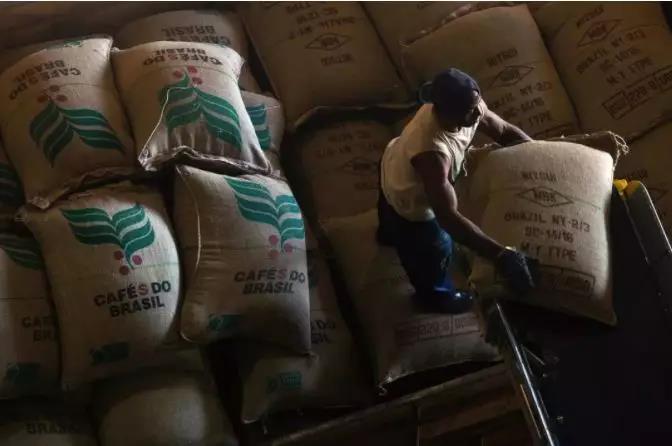
The Carvalho Dias family is also a founding member of the Brazilian Specialty Coffee Association, and its commitment to coffee quality and environmental protection is plain to see. On the family farms, natural waterfalls are harnessed to generate pollution-free hydroelectric power, making the estates self-sufficient in electricity. They have built churches, classrooms, nurseries, and medical stations, and they insist on preserving native forest and replanting continuously. Queen Estate is a case in point. Because of its high altitude and broken, non-flat terrain, machines cannot be used for harvesting, so every cherry is picked by hand. The family cultivates low-yield, high-quality Bourbon varieties, which makes Queen Estate a showcase of the finest Brazilian coffee has to offer.
It follows that the beans from Queen Estate best represent the flavors of Brazil's growing regions. As FrontStreet Coffee has noted in earlier articles, the flavor of a fine coffee bean comes down to origin, variety, and processing method. The sections below explain how those three factors shape the cup at Queen Estate.

Brazilian Coffee Growing Conditions
Brazil lies in the Latin American region of the Western Hemisphere, in eastern South America on the Atlantic coast. On land it borders every country on the continent except Ecuador and Chile. The vast majority of its territory lies between the equator and the Tropic of Capricorn, giving it the most extensive tropical range of any country in the world. One-third of its territory has a tropical rainforest climate and two-thirds a tropical savanna climate. These tropical conditions suit the growth and production of tropical cash crops such as coffee extremely well.
Brazilian Coffee Growing Regions
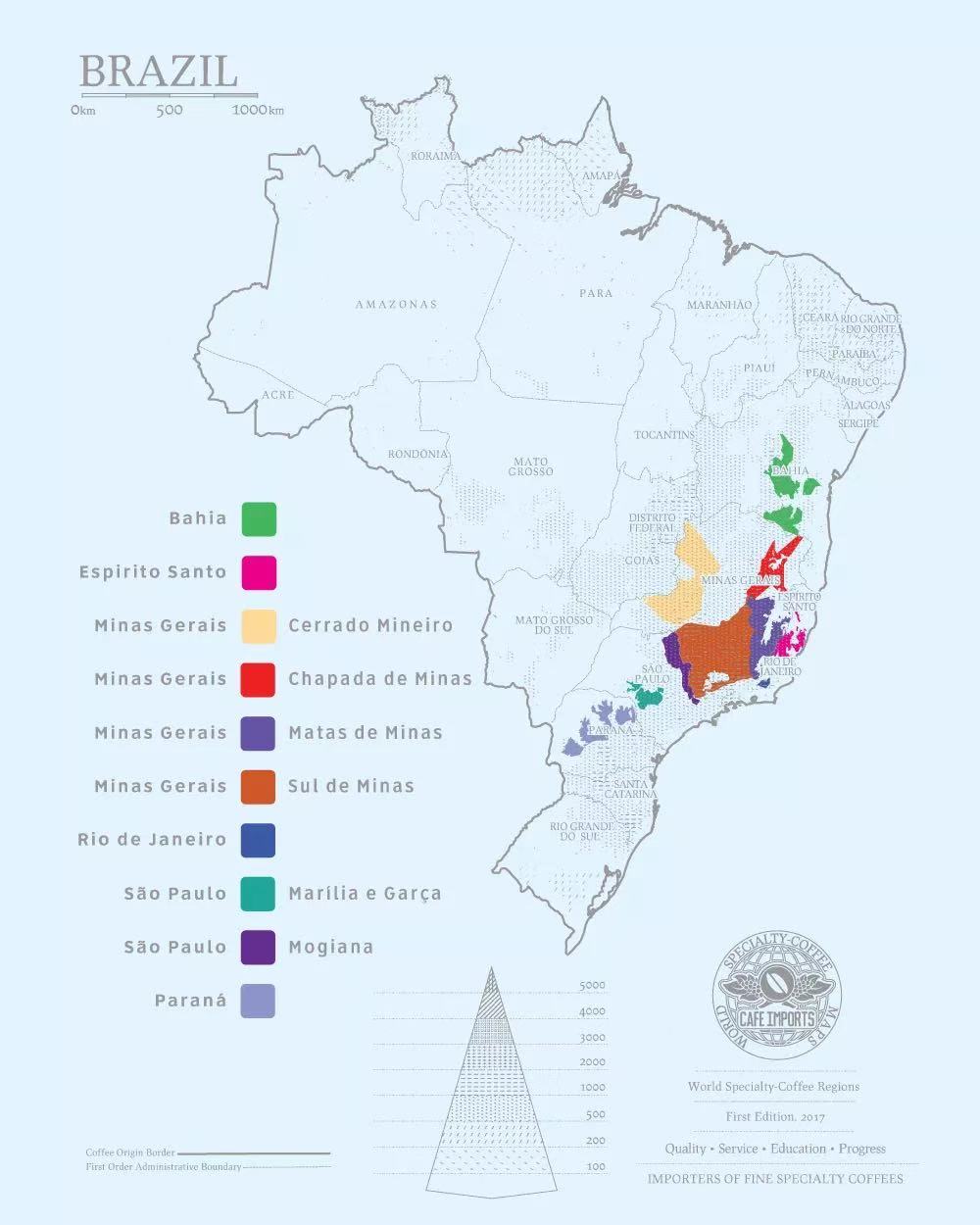
Brazil has 21 states, and 17 of them currently produce coffee. Production, however, is concentrated in four states: Paraná, São Paulo, Minas Gerais, and Espírito Santo, which together account for 98% of the country's total output. Among them, Paraná in the south is the most astonishing, with a single state accounting for 50% of the total.
Brazilian Queen Estate sits in São Paulo State, where coffee grows among shrubs, grassland, and other vegetation. The region is home to many farming families; some run traditional large-scale farms, while others take a small-scale, modern approach. It is this blend of modern technology and mountain coffee-growing culture that has produced some of Brazil's finest beans.

Brazilian Queen Estate Coffee Bean Varieties
As noted above, the beans from Brazilian Queen Estate are mainly of the Yellow Bourbon variety. Yellow Bourbon is a genetic mutation of Bourbon, long considered a leader among coffee varieties for its low yield and high quality. Yellow Bourbon is a unique Bourbon variety found only in São Paulo State. Unlike Red Bourbon, whose cherries turn red when ripe, Yellow Bourbon cherries turn orange-yellow, hence the name. Grown at very high altitudes, Yellow Bourbon delivers excellent flavor, which is why the Brazilian Queen Estate beans sold by FrontStreet Coffee are so popular with our regular customers.
Bourbon
The Bourbon variety was discovered in Brazil, which makes it a mainstay of Brazilian coffee as well. Because Brazil is the world's largest exporter and producer, many growing regions across Latin America now cultivate Bourbon. Bourbon coffee was first cultivated on Réunion Island, known as Bourbon Island before 1789. It originates from a natural mutation of the Typica variety within Arabica, making it one of the oldest coffee varieties still in existence.
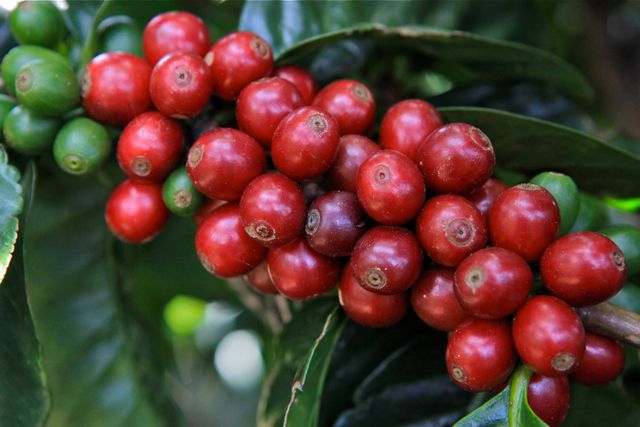
Typical Bourbon cherries change from green to a ripe bright red, which is what we know as Red Bourbon. The cherries are relatively short and round, so it is also called round-bodied Bourbon. The flesh and seeds are dense, giving high sweetness and bright acidity. Besides Red Bourbon, there are Yellow Bourbon, the rare Orange Bourbon, and the prized Pink Bourbon.
What Are Red Bourbon and Yellow Bourbon?
As noted above, Yellow Bourbon is a unique Bourbon variety found only in São Paulo State. When the cherries ripen they do not turn red but instead show an orange-yellow color, hence the name. In FrontStreet's cupping experience, Yellow Bourbon grown at high altitude performs beautifully. For two consecutive years, the top three places in the Brazil Cup of Excellence were almost entirely taken by Yellow Bourbon, which is how it became so popular in the specialty coffee world.
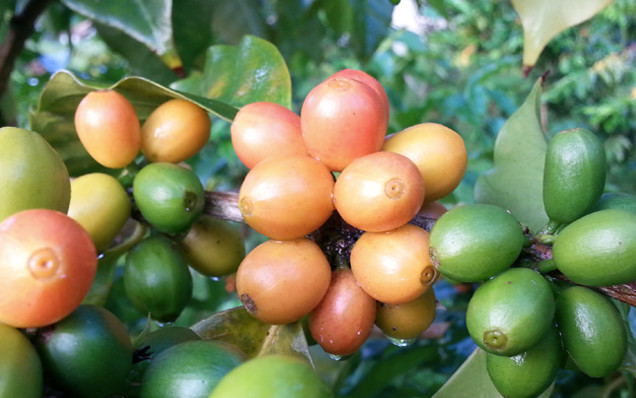
Yellow Bourbon typically shows nutty and chocolate flavors, with balanced, smooth acidity and a weak, clean bitterness, for an overall bright, refreshing cup.
Red Bourbon, by contrast, follows the usual color progression of coffee cherries after flowering: green, light yellow, light orange, ripe red, and finally a darker ripe red, hence the name. Its aroma is fuller, its acidity brighter, and it can even show red-wine notes in the cup.
For that reason, FrontStreet Coffee also carries Brazilian Red Bourbon beans as an everyday coffee for enthusiasts to enjoy. Its flavor is good and keeps the hallmarks of Brazilian coffee, though it is slightly less impressive than Brazilian Queen Estate.
FrontStreet Coffee Brazilian Red Bourbon Coffee Beans

Country: Brazil
Region: South Minas
Altitude: 1000m
Variety: Red Bourbon
Processing Method: Pulped Natural
Flavor: Nuts, Chocolate, Cream, Peanuts, Caramel
Brazilian Queen Estate Coffee Bean Processing Method
Brazilian coffee is most commonly processed in four ways: natural, pulped natural, semi-washed, and washed. Of these, washed processing started relatively late in Brazil and has not yet won wide market acceptance.
Until 1990, Brazil relied almost exclusively on rough natural processing, which made Brazilian beans prone to woody or earthy flavors. Because the cherries had to sit in the sun for two to three weeks, rain and humidity could easily cause moldy flavors and hurt quality. Brazilian farmers therefore developed the pulped natural method to shorten processing time.

Pulped natural can also be called semi-washed, and it is essentially a combination of the natural and washed methods. Brazil has water shortages and unpredictable flood seasons: full washing cannot guarantee enough water, while full natural processing cannot guarantee long stretches of dry weather. Using their natural advantages, farmers created the pulped natural method, which sharply reduces both water use and drying time and reversed two hundred years of crude Brazilian coffee quality.
Pulped Natural Processing Method
Pulped natural processing removes the skin and pulp of the coffee cherry, then lets the farmer control how far the mucilage-covered beans ferment after depulping. Traditional natural processing dries the cherry with skin and pulp intact, so the fermentation of the mucilage cannot be monitored. The pulped natural method sits between natural and washed processing but skips the "tank fermentation, water rinsing" step of washed processing, putting the beans straight into the sun to dry. Although the methods look similar, the absence of fermentation makes the flavor completely different. During depulping, ripe pulp comes away easily while the skins of unripe green cherries are hard to remove, which allows a second screening that filters out unripe fruit and standardizes cherry maturity. Compared with natural processing, this selection yields cleaner, more mature beans and a more uniform flavor.

Because both FrontStreet's Brazilian Cerrado coffee and Brazilian Queen Estate have rich nutty aromas and balanced flavors, they suit many extraction methods: moka pot, American-style drip, siphon, and drip bags among them.
Brazilian Coffee Bean Grading Standards
Among the many coffee-growing countries of Central and South America, Brazil sits at a relatively low altitude. It therefore does not emphasize the hard beans that only grow high up, as Colombia and others do. Instead, Brazilian beans are graded on four criteria: bean size, defect rate, cupping score, and flavor.
Flavor Grading: From high to low: Strictly Soft, Soft, Softish, Hardish, Rioy (iodine flavor).
Defect Rate Grading: Based on the number of defective beans. In every 300g of green beans, 6 defective beans is NY.2. Completely defect-free beans can be NY.1, but such beans are rare and cannot be supplied steadily, so the best grade among Brazilian green beans is NY.2.

Cupping Quality Grading: From high to low: Fine Cup, Fine, Good Cup, Fair Cup, Poor Cup, Bad Cup. FC (Fine Cup) and GC (Good Cup) are the most common.
Bean Size Grading: The largest screen size for Brazilian coffee beans is 19, but production is limited, so screen sizes 17 and 18 are considered the highest grades.
The above is FrontStreet's roundup of the varieties and characteristics of Brazilian coffee beans, and we hope it helps enthusiasts who want to understand Brazilian Queen Estate coffee. Before FrontStreet Coffee launches any new bean, the team runs extensive roasting and brewing tests to find the most suitable pour-over parameters, ensuring the coffee shows its best flavor. Next, FrontStreet Coffee shares the roasting and brewing parameters for these Brazilian Queen Estate beans.

FrontStreet Coffee Roasting Analysis
Brazilian Yellow Bourbon Roasting Suggestions: Yangjia 800N, 550g charge: preheat to 200°C, adjust heat to 150, damper open to 3, return temperature at 1'30". Maintain heat; the beans turn yellow at 5'10", the grassy smell disappears, and the dehydration stage begins; reduce heat to 125, open the damper to 3.5. Dehydration finishes at 8'20", wrinkles and dark spots appear on the bean surface, and the toasting aroma gives way to coffee aroma, the prelude to first crack. At 178°C, reduce heat to 80 and listen for the first crack. First crack begins at 9'14"; open the damper fully to 5. Post-first-crack development time 3'00", discharge at 201°C.
FrontStreet Coffee Brewing Suggestions

Dripper: KONO
Dose: 15g
Water Temperature: 90°C
Grind Size: Medium grind, 70% passing through a #20 standard sieve
Water-to-Coffee Ratio: 1:15

FrontStreet uses staged extraction. The bloom water equals twice the coffee dose, so 30g of water for a 30-second bloom. Pour in small circles to 125g, then pause. When the water level drops and is about to expose the coffee bed, continue pouring to 225g and stop. Total extraction time is 2 minutes.
Brazilian Queen Estate Coffee Bean Flavor: A balanced mouthfeel, with sugarcane sweetness standing out over the main notes of almond and cocoa, making it a full-bodied coffee with rich sweetness.
FrontStreet Coffee Recommendation
For an easy introduction to Brazilian coffee, FrontStreet's Brazil Cerrado Red Bourbon is a classic single-origin choice. Grown in the well-known Cerrado region and roasted to a medium level, it shows the creamy, peanut, toasted-bread, caramel, and hazelnut aromas that define the country's signature style: a round body, little acidity, and a faint bitterness. It works just as well as a pour-over, in a moka pot, as an espresso SOE, in a siphon, or in a French press.
For something rarer, FrontStreet's Brazil Queen Estate Yellow Bourbon comes from Mogiana, close to South Minas, where fertile red volcanic soil feeds the fruit. The variety is the uncommon Yellow Bourbon, a mutation of Red Bourbon that gives a cleaner fruit character and the sugarcane sweetness other regions cannot match, alongside fruit and chocolate notes. It suits pour-over, moka pot, and home espresso machine alike.
Because both beans are low in acidity and well balanced, they also make an excellent base for espresso blends, where they add chocolate and cream aromas plus a gentle sweet-sour-bitter balance that keeps extraction stable.
Important Notice :
FrontStreet Coffee is a long-established specialty coffee roaster in Guangzhou China, selling freshly roasted beans from its own farm in Yunnan as well as dozens of carefully selected single-origin beans from around the world for both pour-over and espresso. The products deliver consistently excellent quality and great value, with shipping within 24 hours. Guangzhou's FrontStreet Coffee shop is recommended by many coffee lovers, and the beans are now available online at the Tmall 。
FrontStreet Coffee has moved to a new address:
FrontStreet Coffee Address: 315,Donghua East Road,GuangZhou
Tel:020 38364473
 Scan and follow the En Gafei WeChat official account. Please indicate that the reprint comes from "En Gafei".